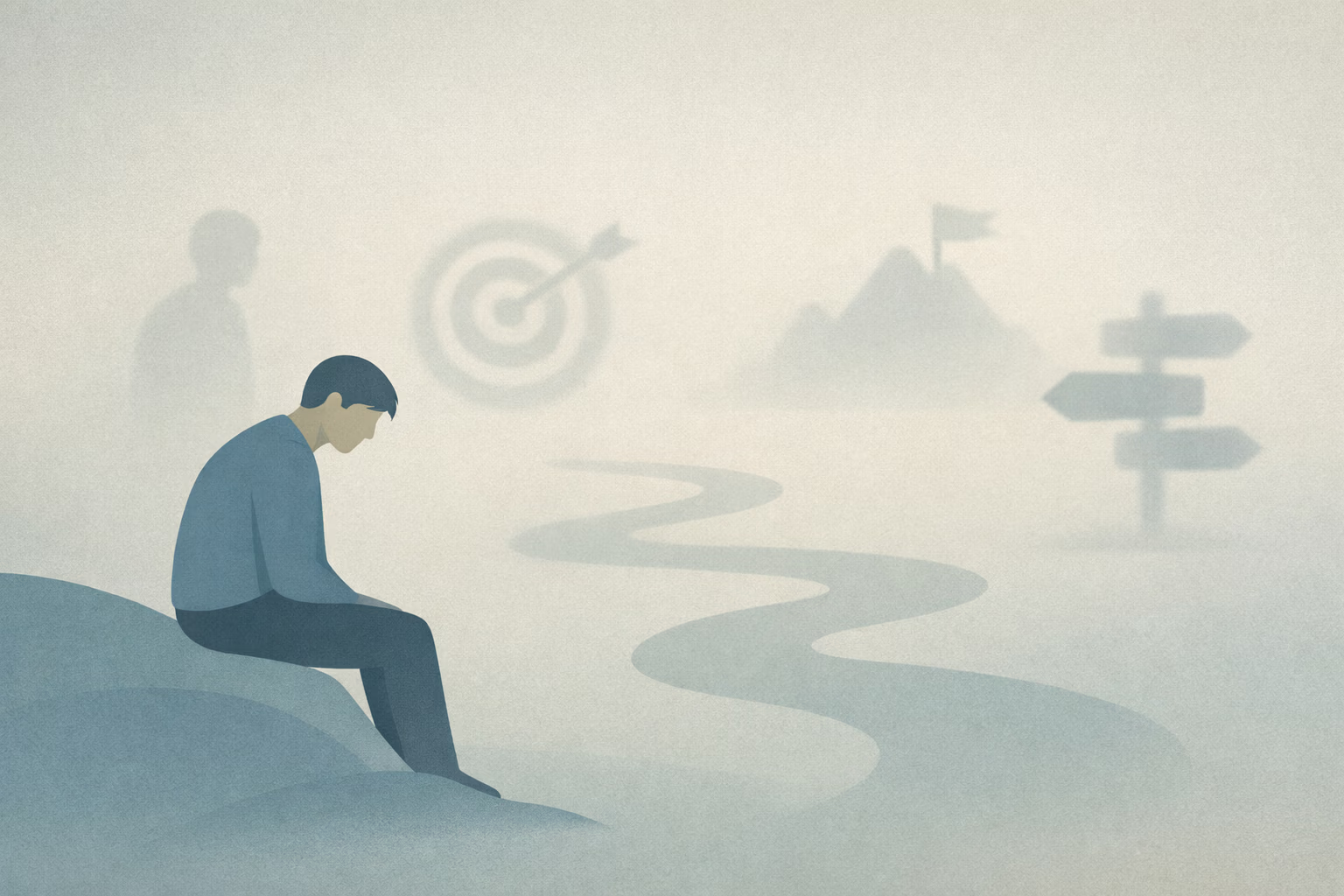
Existential Fatigue: When Life Feels Heavy for No Reason
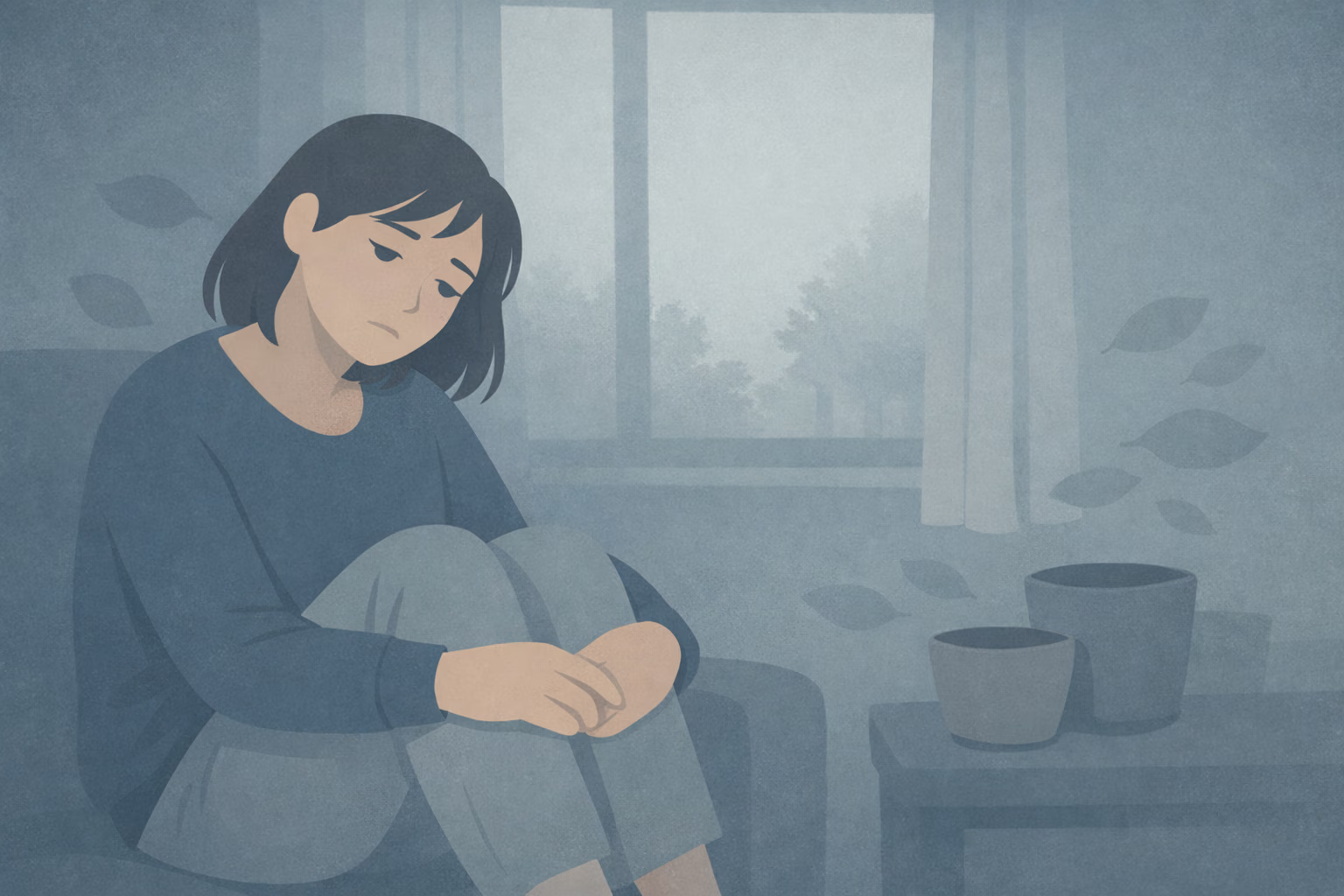
In short: Some mood changes aren’t “about” anything in the psychological sense. They’re about inputs—basic signals the body expects in order to set its internal clocks, balance alertness, and keep emotional tone from drifting toward flatness.
Some mood changes aren’t “about” anything in the psychological sense. They’re about inputs—basic signals the body expects in order to set its internal clocks, balance alertness, and keep emotional tone from drifting toward flatness.
Low sunlight exposure can quietly look like low motivation, low interest, or a kind of gray heaviness that doesn’t respond to pep talks. This isn’t a character problem. It’s often what a nervous system does when it’s running without a key environmental cue that normally supports steadiness and vitality.
What if the dullness isn’t you—what if it’s missing daylight?
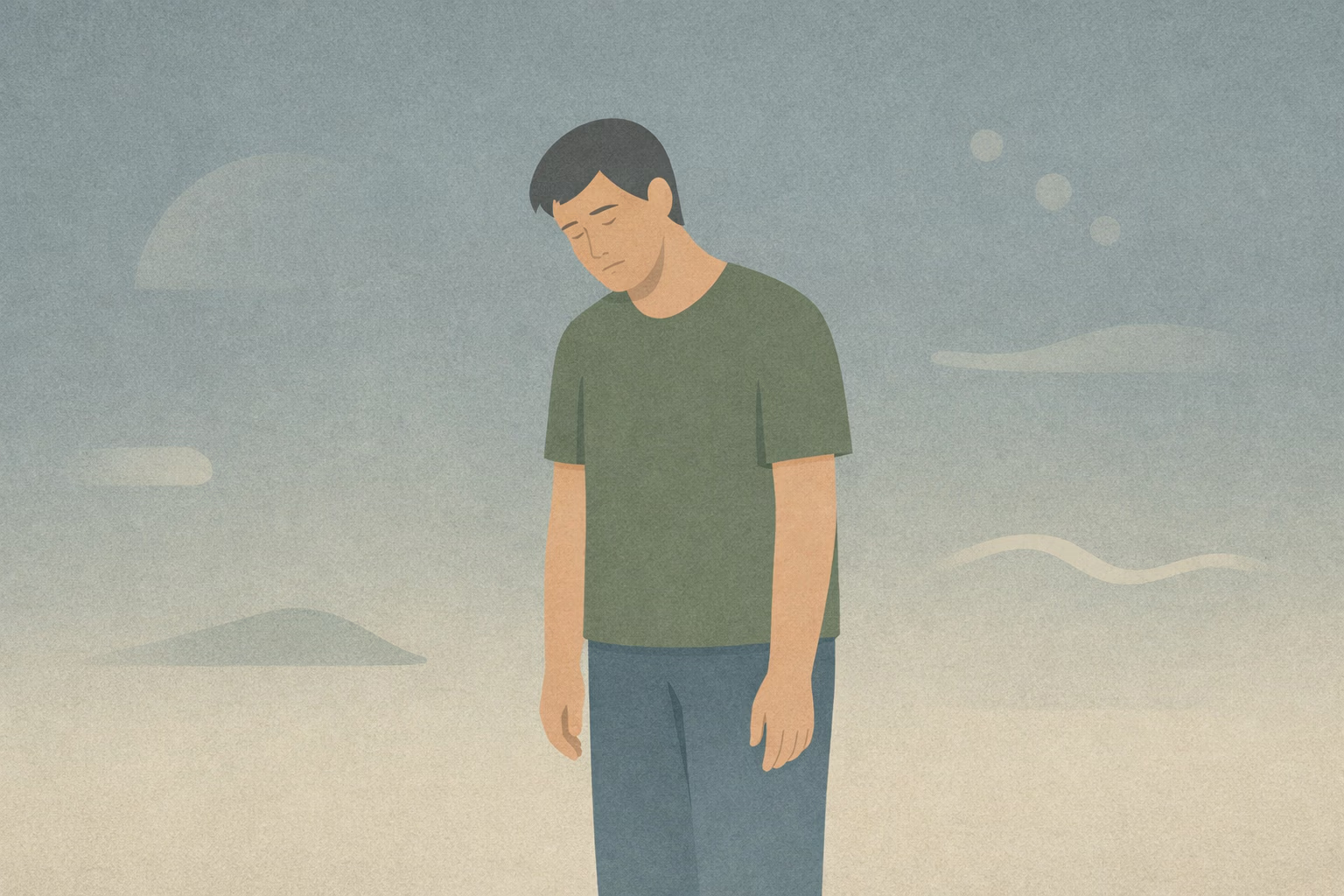
When days happen mostly indoors, under artificial lighting, the body can begin to conserve. Many people describe it as heaviness, fog, or emotional blunting—less sparkle, less range, less natural lift. It can feel like life is happening behind glass.
This isn’t dramatic and it isn’t always sad. It can be more like a quiet reduction in signal: fewer internal “go” cues, fewer natural pivots between focus and rest, and less appetite for movement or connection.
In that state, even simple tasks can seem oddly effortful—not because you’re failing, but because your baseline activation is lower than it’s built to be. [Ref-1]
Natural light is one of the body’s strongest timing signals. It influences circadian rhythms—those daily patterns that coordinate sleep timing, alertness, hormone release, and many aspects of mood regulation. When light exposure is insufficient or poorly timed, the system can drift.
That drift can show up as a subtle mismatch: sleepiness arriving at inconvenient hours, alertness feeling delayed, or mornings feeling like the brain is still “offline.” Mood tone can flatten because the underlying chemistry and timing cues that support steadier emotional balance are running without clear external anchors. [Ref-2]
Importantly, this isn’t about willpower. Circadian signaling is a body-level orchestration. When the conductor’s cues are faint, the whole orchestra plays less cohesively.
For most of human history, daily life took place under a powerful, predictable light cycle: bright outdoor days and truly dark nights. The nervous system learned to use that pattern as a stable map—when to mobilize, when to recover, when to feel safe enough to soften.
Modern living often replaces that map with a blur: dim indoor days, bright screens at night, and irregular transitions. The body doesn’t interpret that as “modern convenience.” It interprets it as uncertainty—low environmental vitality, unclear timing, and reduced safety cues. [Ref-3]
When a system can’t read the day, it can’t fully settle into a coherent rhythm. And without rhythm, mood often loses its natural contours.
Indoor life can feel immediately regulating: fewer weather demands, fewer social exposures, fewer sensory variables. For a nervous system under load, that reduced demand can register as relief.
But relief is not the same as restoration. The body may experience short-term comfort while losing the input that would help it calibrate energy, sleep timing, and emotional tone across the day. Over time, the system can become both less taxed and less resourced—less activated, but also less buoyant. [Ref-4]
Sometimes “safe” just means “low-input.” And low-input can slowly become low-vitality.
It’s understandable to assume that lights are lights: a bright room, a laptop screen, a phone—surely the body can adapt. But biologically, daylight carries a particular intensity and spectrum that indoor lighting often doesn’t match, especially in the hours that matter most for circadian anchoring. [Ref-5]
Meanwhile, screens can deliver concentrated light at times the body historically expected darkness. The result can be a confusing signal environment: too dim when the system needs “day,” too bright when it needs “night.” That confusion doesn’t always feel dramatic; it can feel like chronic “not quite right.”
When your day lacks daylight, what does your body use as its clock?
Low sunlight exposure often forms a self-reinforcing loop. When light is low, energy and mood tone can downshift. With less baseline vitality, going outside can feel like a larger demand—more transitions, more sensory input, more effort.
So the system chooses the lower-load option: staying in. That choice makes sense in the short term. But it also reduces the very input that would help the body regain clearer circadian signaling and steadier mood regulation. Over time, withdrawal can become less a decision and more the path of least strain. [Ref-6]
This is not “avoidance” as a personality trait. It’s a regulatory pattern that emerges when the nervous system is trying to conserve under low-signal conditions.
Light deprivation doesn’t always announce itself as sadness. It often shows up as a cluster of practical, embodied patterns—small enough to dismiss, consistent enough to wear you down.
These patterns are understandable attempts to generate a “daytime” state when the environment isn’t providing strong daytime cues. [Ref-7]
Over time, reduced daylight can erode circadian stability—making the system more sensitive to stressors and less able to rebound. When the baseline is already lowered, normal demands can feel disproportionately draining.
This is one reason people can swing between numbness and overstimulation: the body lacks a steady rhythm, so it alternates between conserving (flattening) and searching for intensity (compensating). The issue isn’t emotional deficiency; it’s rhythm deficiency—fewer “done” signals and fewer reliable transitions between states. [Ref-8]
In that landscape, it becomes harder to sense internal completion. Days blur, and the nervous system stays partially “open-loop.”
When circadian rhythms are disrupted, motivation often drops—not as a choice, but as an output of lowered alertness and reduced reward signaling. The body is less likely to generate initiation energy, and tasks can feel like they require extra push.
This can create a painful misunderstanding: you may assume you’re uncommitted, undisciplined, or “stuck.” But what’s often happening is that the system is biologically downregulated. That downregulation then makes light exposure less likely—less getting outside, less morning brightness—deepening the drift. [Ref-9]
In other words, the loop isn’t “I don’t care, so I don’t go out.” It’s “my internal timing and energy are mis-set, so the cost of going out feels higher.”
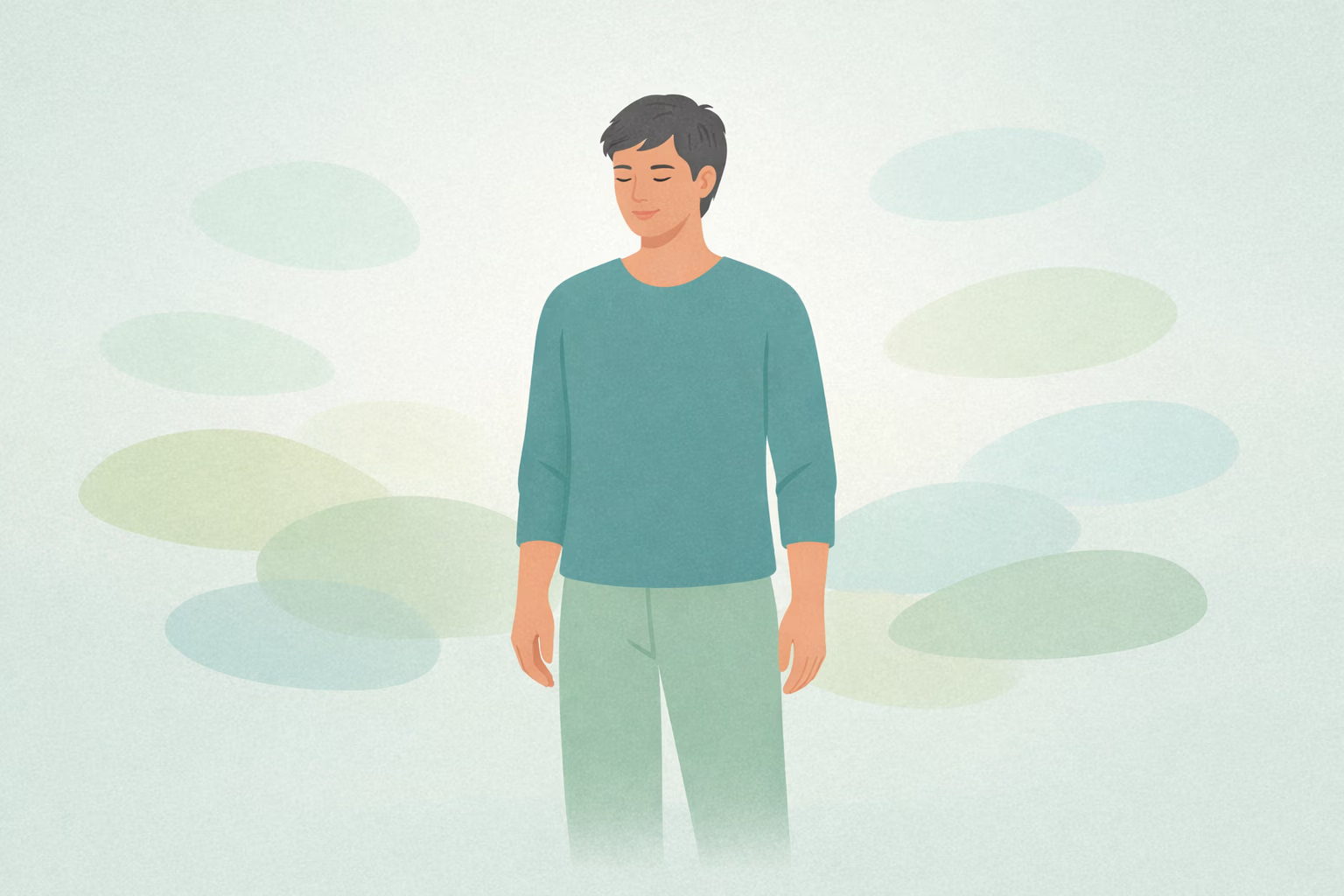
When the body begins receiving clearer natural light cues, something subtle can happen: the day starts to feel more segmented—morning feels more like morning, evening more like evening. This isn’t a mindset shift. It’s a timing system regaining signal.
With stronger circadian anchoring, mood tone often becomes less flat and less brittle. Energy may feel more evenly distributed rather than arriving in spikes. The nervous system can spend less effort guessing what state it should be in. [Ref-10]
It can feel like your inner world stops free-floating and starts finding its edges again.
As baseline vitality returns, engagement can become more spontaneous. Not “more social” as a goal—more responsive as a capacity. The body has more room for interaction because it isn’t spending as much energy compensating for low signal.
This can look like improved tolerance for everyday contact: answering messages without dread, joining a conversation without needing a performance, being present without needing constant novelty to stay awake. Large population data links more outdoor daylight exposure with better sleep and mental health correlates, which fits this capacity-based view of engagement. [Ref-11]
When the system isn’t fighting its own rhythm, it can meet the world with less bracing.
When light-regulation needs are met, clarity tends to return gradually. Not as a dramatic “aha,” but as a steadier baseline: better wakefulness, more consistent sleep pressure, and a more reliable sense of internal timing.
With that steadiness, emotional range often becomes less constrained. People may notice more natural interest, more warmth, more ability to be moved by ordinary things. This isn’t about accessing feelings; it’s about reduced load and restored biological closure—fewer unfinished internal loops competing for attention. [Ref-12]
The experience can be surprisingly physical: less fog, fewer abrupt crashes, more continuity from one day to the next.
Meaning is hard to sustain in a body that can’t find the day. Values can be clear on paper and still feel unreachable when the nervous system is underlit, under-anchored, and running on compensations.
As circadian alignment improves, the system often gains a form of readiness: an ability to orient toward life without constant self-push. This is where agency can reappear—not as motivation, but as an internal “yes, I can meet this.” In research contexts, light is increasingly discussed as a time-setting intervention for mood, underscoring how foundational this signal is. [Ref-13]
Coherence feels less like effort and more like direction: choices start to match identity because the body is no longer fighting for basic regulation.
When sunlight exposure is low, the nervous system may downshift in ways that look like apathy, avoidance, or disconnection. Seen through a meaning-and-coherence lens, these are not moral failings. They’re regulatory outcomes of deprivation—too little of a primary signal that helps the body coordinate sleep, mood, and energy.
This matters because shame tends to add load. And load further reduces capacity. A kinder, more accurate framing is that your system may be operating with incomplete inputs—making it harder to complete days, harder to feel “done,” and harder to access a stable sense of self-direction. Circadian disruption is closely tied to mood in the scientific literature, supporting this non-blaming interpretation. [Ref-14]
When the environment supports closure and rhythm, meaning becomes easier to hold—because your biology is no longer working against your intentions.
Natural light isn’t a productivity hack or a wellness badge. It’s one of the simplest, oldest signals the human body uses to know where it is in time—when to rise, when to settle, and how to distribute vitality across a day.
If your mood has been flattened, it may not be a story about who you are. It may be a story about what your system has been missing. And when that missing signal returns, people often describe something quiet but profound: life feels more inhabitable again. [Ref-15]
From theory to practice — meaning forms when insight meets action.
No, and treating it as one tends to add load without resolving the cause. When daylight exposure drops, the body loses one of its most reliable timing cues — the signal that helps set circadian rhythms, alertness, and emotional tone. What looks like apathy or laziness is often a regulatory downshift: the nervous system conserving because environmental vitality is low. This is an Evolutionary Mismatch in plain view — humans evolved under bright days and dark nights, not dim indoor offices. Low-light fatigue isn't a moral failing; it's a missing input. The body isn't refusing to engage; it's running without a clock.
Indoor life often registers as immediate relief for the Threat & Safety System: fewer demands, fewer transitions, fewer sensory variables. That short-term comfort can be genuine. But relief isn't the same as restoration. Without daylight, the body loses the cues it needs to calibrate sleep timing, alertness, and mood across the day. So the system becomes both less taxed and less resourced — quieter, but also less buoyant. Over time, low-input becomes low-vitality. The Avoidance Loop forms quietly: less light means lower energy, lower energy makes going outside feel costly, and the very input that would help becomes harder to access.
Not really, and assuming they can keeps the loop running. Daylight carries an intensity and spectrum that indoor lighting rarely matches, especially during the hours that anchor circadian timing. Screens can deliver concentrated light when the body historically expected darkness, creating a confusing signal environment — too dim when you need 'day,' too bright when you need 'night.' That mismatch doesn't always feel dramatic. It often feels like chronic 'not quite right': groggy mornings, delayed alertness, and reliance on caffeine or scrolling to manufacture a daytime state your environment isn't providing.
The shift is rarely a breakthrough. It's more like settling. The day starts to feel segmented again — morning feels like morning, evening like evening — because the timing system is regaining signal. Mood tone becomes less flat and less brittle. Energy distributes more evenly instead of arriving in spikes. The Done Signal becomes possible again: closures land, days finish, sleep pressure builds at the right hour. Engagement gets easier not because you tried harder, but because the body isn't spending its budget compensating for low signal. Meaning has something to land on when rhythm returns.
From Science to Art.
Understanding explains what is happening. Art allows you to feel it—without fixing, judging, or naming. Pause here. Let the images work quietly. Sometimes meaning settles before words do.
One Quiet Window, one insight, one reflection — every Sunday