
News Addiction: Global Stress Loops You Don’t Notice
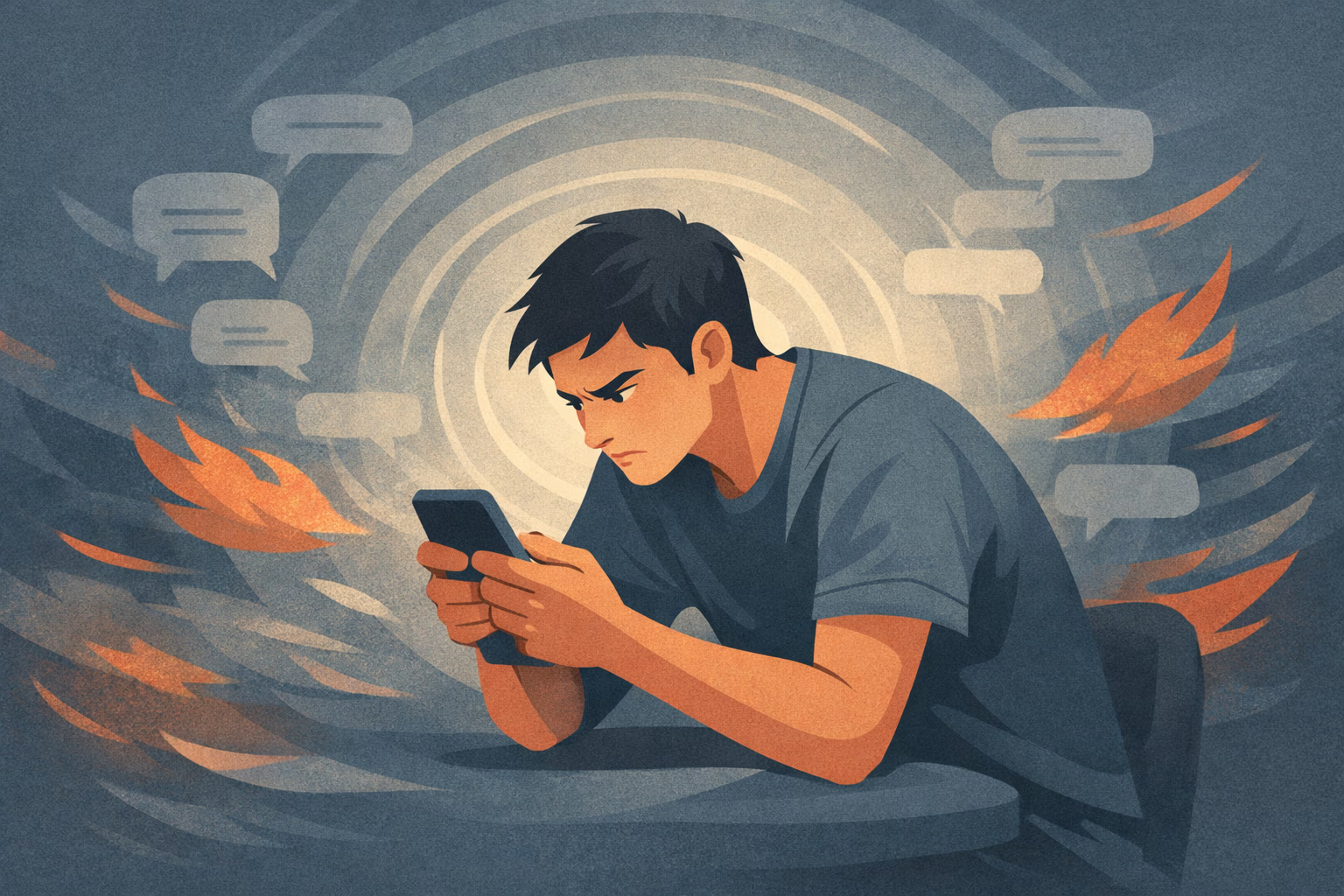
In short: If you’ve ever opened your phone for a quick check and ended up in a comment war, a quote-tweet spiral, or an hour of reactive scrolling, you’re not alone. For many people, online anger doesn’t just happen—it repeats.
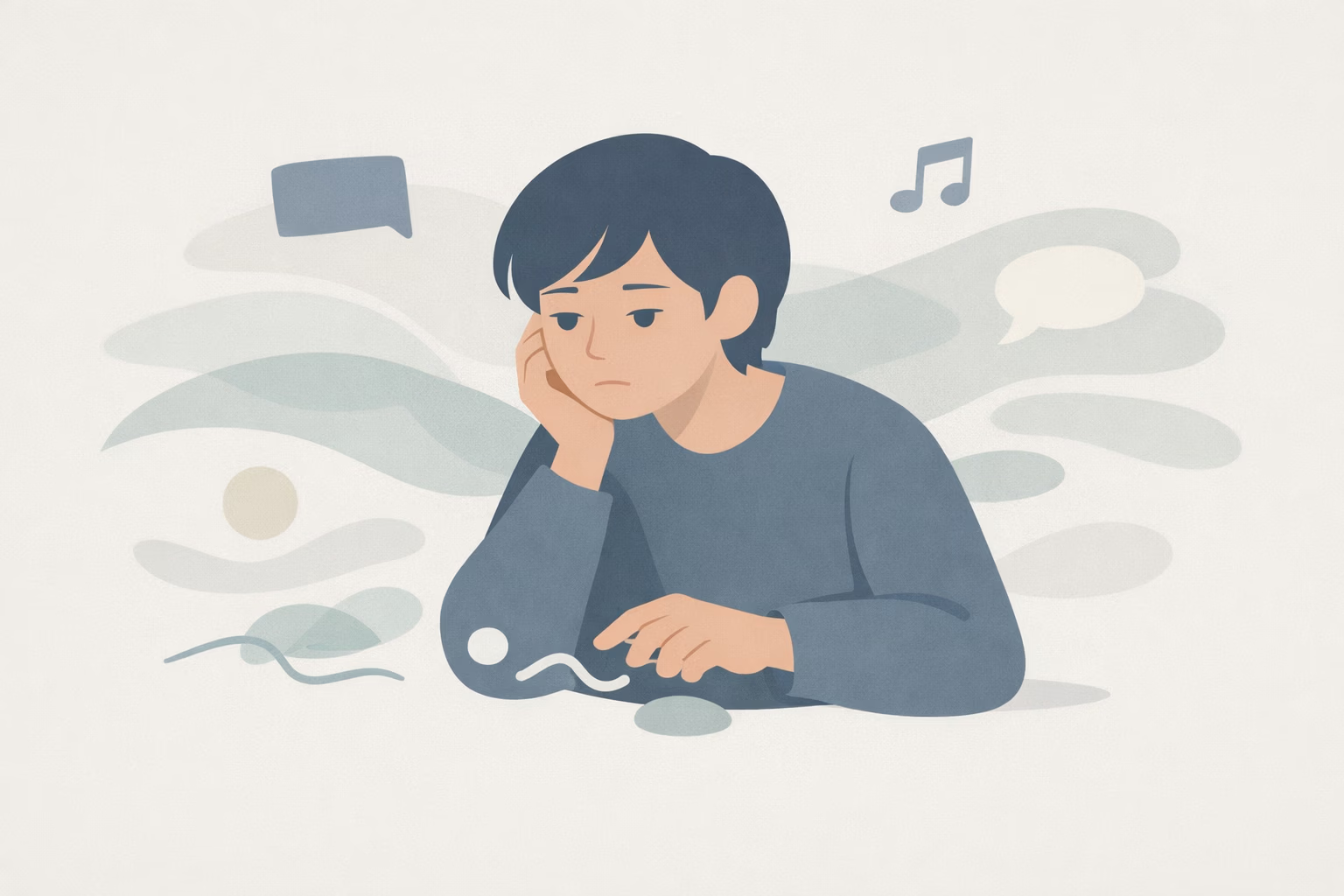
If you’ve ever opened your phone for a quick check and ended up in a comment war, a quote-tweet spiral, or an hour of reactive scrolling, you’re not alone. For many people, online anger doesn’t just happen—it repeats. It spikes, it narrows attention, it feels urgent, and then it leaves a strange aftertaste: fatigue, tension, and a sense of being “pulled away” from yourself.
Why can outrage feel energizing in the moment and draining afterward?
From a body-brain perspective, outrage loops aren’t a personal flaw or a character issue. They’re a predictable regulatory pattern that can form when a fast, evaluative environment repeatedly activates threat and status systems without offering real closure.
Outrage loops often begin as a tiny tug: a headline, a clip, a screenshot, a “can you believe this?” post. The body shifts into readiness—attention tightens, posture changes, breathing gets shallow, and thinking can become sharp and fast. In the moment, it can feel like purpose.
Then the other side arrives: hours later you might notice jaw tension, restless sleep, irritability, or a heavy mental “hangover.” It can feel confusing because the content looked like engagement or justice, but the nervous system registered it as extended mobilization without a clear end point. That mismatch—activation without completion—creates the sense of being both compelled and depleted. [Ref-1]
Sometimes the body is still arguing long after the screen is off.
Anger has a reputation for being “hot,” but physiologically it often functions as a mobilizer. When the brain reads a situation as violating safety, fairness, or control, it can recruit the threat system: stress hormones rise, attention gets selective, and uncertainty can temporarily shrink. That narrowing can feel like strength.
Online environments intensify this because they deliver fast cues—provocation, conflict, certainty, and instant feedback—at a pace the nervous system treats like urgency. The result is a state that feels both alert and compelling: you feel driven to respond, correct, expose, or defend. This isn’t you being irrational; it’s a predictable outcome of threat activation paired with rapid stimulation. [Ref-2]
In small groups, outrage served important functions. It signaled that a boundary had been crossed, rallied allies, and discouraged behaviors that threatened group survival. It also communicated status: who protects the group, who enforces norms, who can’t be ignored.
The problem is scale. Digital life takes an ancient signal—“pay attention, something threatens our group”—and broadcasts it into a constant stream. Instead of a brief, situational burst followed by resolution or repair, outrage becomes ambient. The nervous system keeps encountering “tribal” cues without the stabilizing features of real community: shared context, shared consequences, and shared endings. [Ref-3]
Outrage doesn’t only create intensity; it can also create relief. When life feels ambiguous, slow, or powerless, anger can produce immediate structure: right/wrong, us/them, action/inaction. That structure can feel like coherence, even when it’s temporary.
It can also provide belonging. When others agree, amplify, or laugh along, the body receives social safety cues: “I’m not alone,” “my stance is shared,” “I’m seen.” In a high-noise environment, outrage can function like a shortcut to identity—fast alignment, fast certainty, fast group membership. This helps explain why moral outrage can be so compelling online. [Ref-4]
What if the “addictive” part isn’t the anger—it's the momentary closure it seems to promise?
Outrage often carries the sensation of moving something forward—exposing truth, achieving justice, showing strength. But many online encounters don’t produce completion. There’s no shared repair, no agreed consequence, no settled outcome the body can register as “done.” Instead, the stimulus resets: a new outrage appears, the same argument returns, the goalposts shift.
In networked spaces, outrage expression can also be socially learned and amplified: people observe what gains attention and replicate it, which increases the volume and frequency of provocation. The loop then becomes self-sustaining—more outrage appears, more outrage is rewarded, more outrage is expected. That dynamic entrenches polarization and keeps nervous systems loaded, even when people are trying to stand for something meaningful. [Ref-5]
One way to understand outrage loops is as a Power Loop: the body detects threat, moves into a dominance-and-defense posture, and receives quick reinforcement for staying there. The reinforcement can be overt (likes, retweets, agreement) or subtle (the internal sensation of certainty and force).
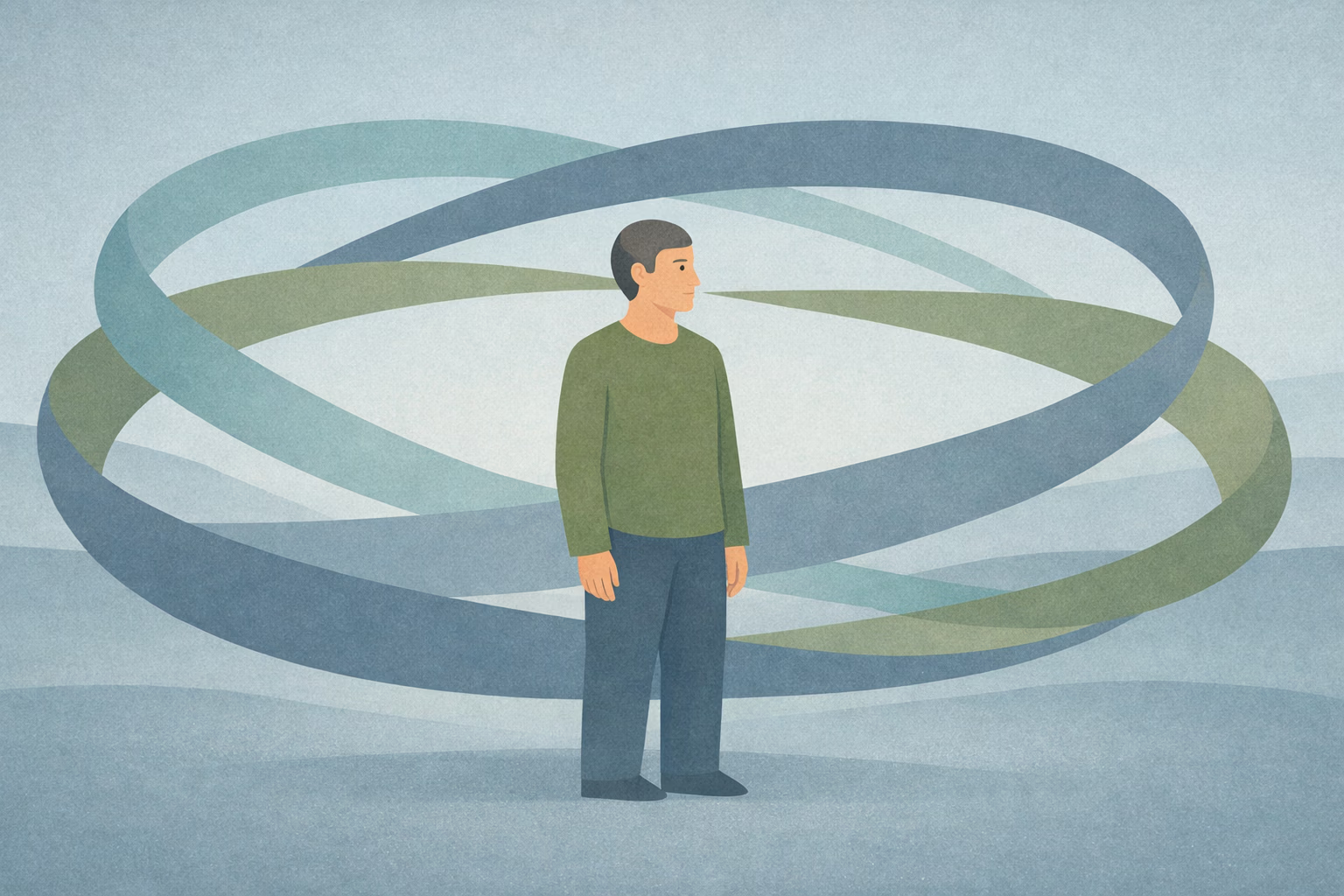
Because this loop is rewarded repeatedly, vigilance begins to feel like a baseline. The nervous system learns that standing down equals losing ground. The body starts to equate disengagement with vulnerability, even when nothing immediate is at stake. Over time, the “safe” stance becomes perpetual readiness—an expensive state to live in. [Ref-6]
Outrage loops don’t always look dramatic. They can show up as small, repeated pulls toward content that spikes activation, followed by difficulty returning to a settled state.
These aren’t moral failures. They’re signals that the system is operating under high load with repeated incomplete endings.
When the threat system stays online, the brain prioritizes detection over digestion. Attention becomes more scanning and less spacious. Thinking can become more rigid because flexibility is costly in a threat state—you can’t easily hold complexity while preparing for impact.
Over time, this can erode regulation capacity: shorter fuse, poorer sleep, diminished patience, and reduced tolerance for relational repair. Empathy may narrow—not because you “lack it,” but because threat states naturally privilege in-group protection over broad connection. The social world can start to feel like a battlefield of signals rather than a place where trust can accumulate. [Ref-8]
Digital systems don’t just show content; they shape what feels consequential. Algorithms tend to elevate posts that generate engagement, and outrage reliably generates engagement. Social feedback then becomes a powerful teacher: the body learns which tone gets attention, which stance gets allies, which enemies “prove” you matter. [Ref-9]
This can make disengagement feel like loss of power. Not participating can register as: “I’m letting them win,” “I’m abandoning the cause,” or “I’m disappearing.” Even when the conscious mind knows better, the nervous system experiences reduced signaling as reduced safety. The loop continues not because you don’t understand it, but because understanding isn’t the same as the body receiving closure.
When threat activation decreases—whether through time, changed context, or fewer triggers—something subtle can reappear: flexibility. Attention becomes less magnetized by provocation. Nuance becomes tolerable again. The urge to respond instantly loosens.
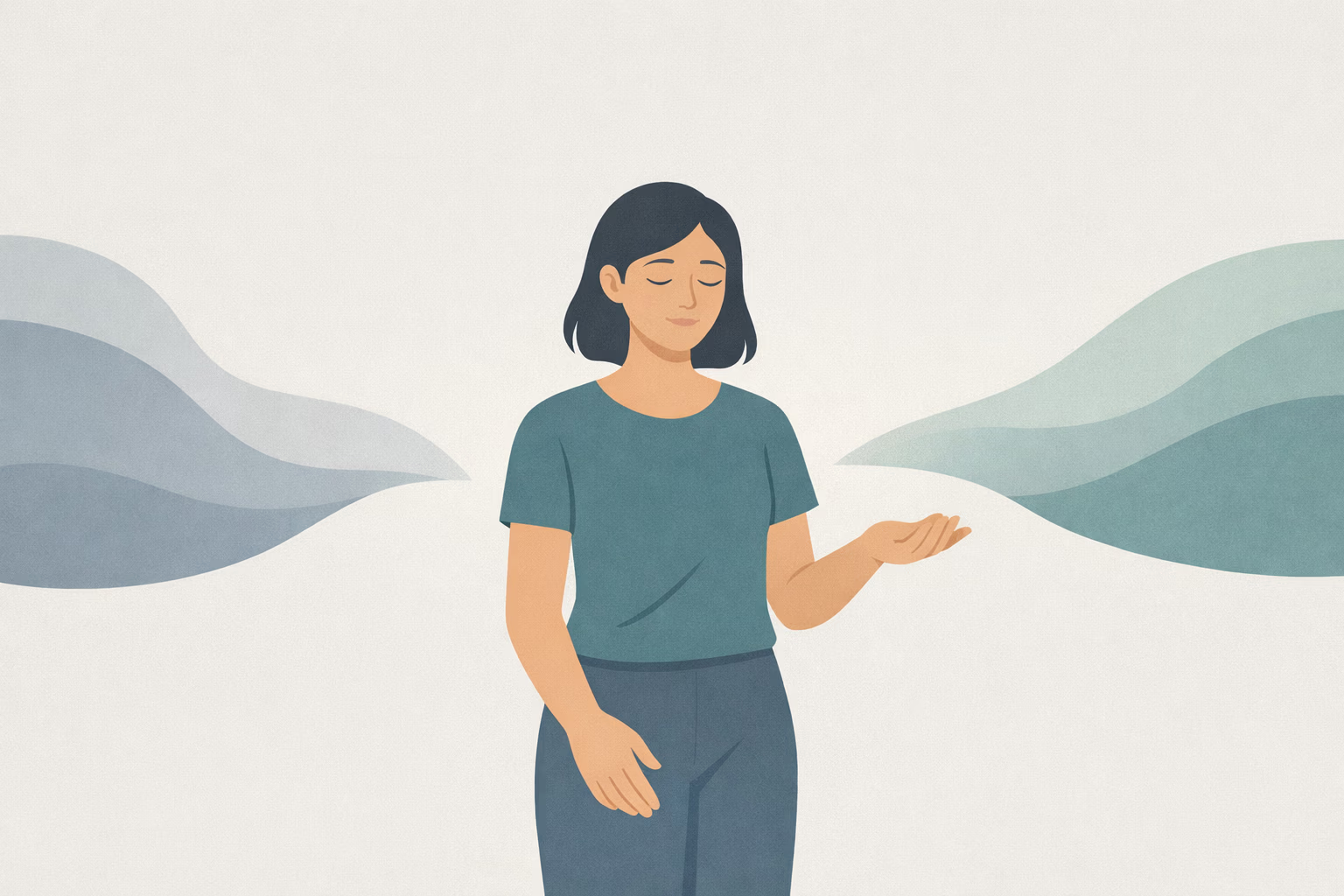
This shift isn’t a “better mindset.” It’s a physiological change in load. With less vigilance, the brain can allocate resources to context, long-term consequence, and relationship. People often describe it as a calmer kind of strength: not louder, not faster—just less compelled. That’s not passivity; it’s the nervous system regaining the capacity to choose rather than reflex. [Ref-10]
It’s not that you stop caring. It’s that caring no longer requires combustion.
In an outrage loop, interaction easily becomes dominance signaling: winning, exposing, defending, proving. The body is oriented toward threat management, so the social field becomes a place to hold the line.
When the loop loosens, relationships often become more selective and more real. Listening becomes possible without immediate counter-argument. Boundaries can exist without performance. Participation becomes something you enter and exit with less identity cost—because the self is no longer fused to constant public defense. This is one reason online moral outrage can distort social norms: it rewards display over repair. [Ref-11]
Chronic outrage shrinks the window for complexity. Everything must be sorted quickly: ally/enemy, safe/dangerous, right/wrong. That sorting can feel protective, but it also reduces perspective and increases cognitive rigidity.
As activation eases, the system can again tolerate mixed motives, partial truths, and slow change. You might notice more patience with uncertainty and less hunger for total certainty. This isn’t about “becoming nicer.” It’s about the nervous system no longer needing constant threat clarity to stay oriented. [Ref-12]
What becomes possible when you don’t need the world to be simple in order to feel stable?
Outrage is often a signal that something you value feels threatened: dignity, fairness, safety, truth, belonging. The loop happens when that signal keeps firing without reaching completion—without consequences that land, repair that holds, or contribution that feels real.
When reactivity decreases, space opens for a different kind of coherence: values become less performative and more lived. Identity shifts from “who I oppose” toward “what I stand for,” not as a slogan but as a settled orientation. Agency becomes quieter and more durable—less dependent on immediate wins, more connected to sustained contribution in the world you can actually touch. Digital systems can shape outrage cycles at scale, which makes this return to grounded meaning feel especially significant. [Ref-13]
Outrage can feel like truth because it brings instant clarity and social confirmation. But clarity is not the same as completion, and intensity is not the same as agency. In many cases, outrage is better understood as a signal: something you care about feels threatened, and the system is trying to restore control.
When you hold outrage as signal rather than identity, the experience can become less shaming and more informative. The question shifts from “Why am I like this?” to “What values are getting hit, and what kind of response would actually create closure?” That shift doesn’t demand more effort; it points toward coherence. [Ref-14]
In online spaces, anger can be rewarded like a currency: the louder the signal, the more visible the person. But nervous systems don’t thrive on constant signaling. They stabilize when experiences complete and when identity can rest.
Agency isn’t the ability to stay outraged forever. It’s the ability to engage when engagement aligns with your values—and to stand down when it doesn’t—without feeling erased. That kind of power is quieter than a feed, but it lasts longer. [Ref-15]
From theory to practice — meaning forms when insight meets action.
Because the body received extended mobilization without a clear end point. Outrage activates the threat system: stress hormones rise, attention tightens, posture changes, and certainty briefly shrinks uncertainty — that narrowing can feel like purpose. Online environments deliver provocation, conflict, and instant feedback at a pace the nervous system reads as urgency, so the activation keeps renewing. Then the other side arrives: jaw tension, restless sleep, irritability. The mismatch between activation and completion is what creates the compelled-and-depleted feeling. The body is still arguing long after the screen is off, because no Done Signal ever landed.
It's threat plus dominance signaling plus repeated reward. The body detects that something it values feels threatened, moves into a defense-and-correction posture, and gets reinforced for staying there — through likes, agreement, or the internal sensation of certainty and force. Because that reinforcement is frequent, vigilance starts to feel like baseline. The nervous system learns that standing down equals losing ground, so it begins to equate disengagement with vulnerability even when nothing immediate is at stake. Within the Power Loop, perpetual readiness becomes the safe stance — an expensive state to live in, and one the algorithm keeps refreshing.
Because disengagement registers as loss of power. Algorithms elevate posts that generate engagement, and outrage reliably generates engagement, so the body learns which tone gets attention and which stance gets allies. Reduced signaling can feel like letting them win, abandoning the cause, or disappearing — even when the conscious mind knows better. The nervous system experiences quiet as exposure. The loop also offers fast belonging and instant clarity (us/them, right/wrong) which mimics coherence. Understanding the dynamic isn't the same as the body receiving closure, which is why insight alone rarely breaks the pull.
Flexibility quietly returns. With less vigilance, the brain can allocate resources to context, long-term consequence, and relationship. People describe it as a calmer kind of strength: not louder, not faster, just less compelled. Complexity becomes tolerable again — mixed motives, partial truths, slow change — instead of needing the world to be simple in order to feel stable. Identity can shift from who I oppose toward what I stand for, as a settled orientation rather than a slogan. Caring no longer requires combustion. Real power becomes the ability to engage when it aligns with values and stand down when it doesn't.
From Science to Art.
Understanding explains what is happening. Art allows you to feel it—without fixing, judging, or naming. Pause here. Let the images work quietly. Sometimes meaning settles before words do.
One Quiet Window, one insight, one reflection — every Sunday