Emotional Eating: Using Food to Regulate Overwhelming Feelings
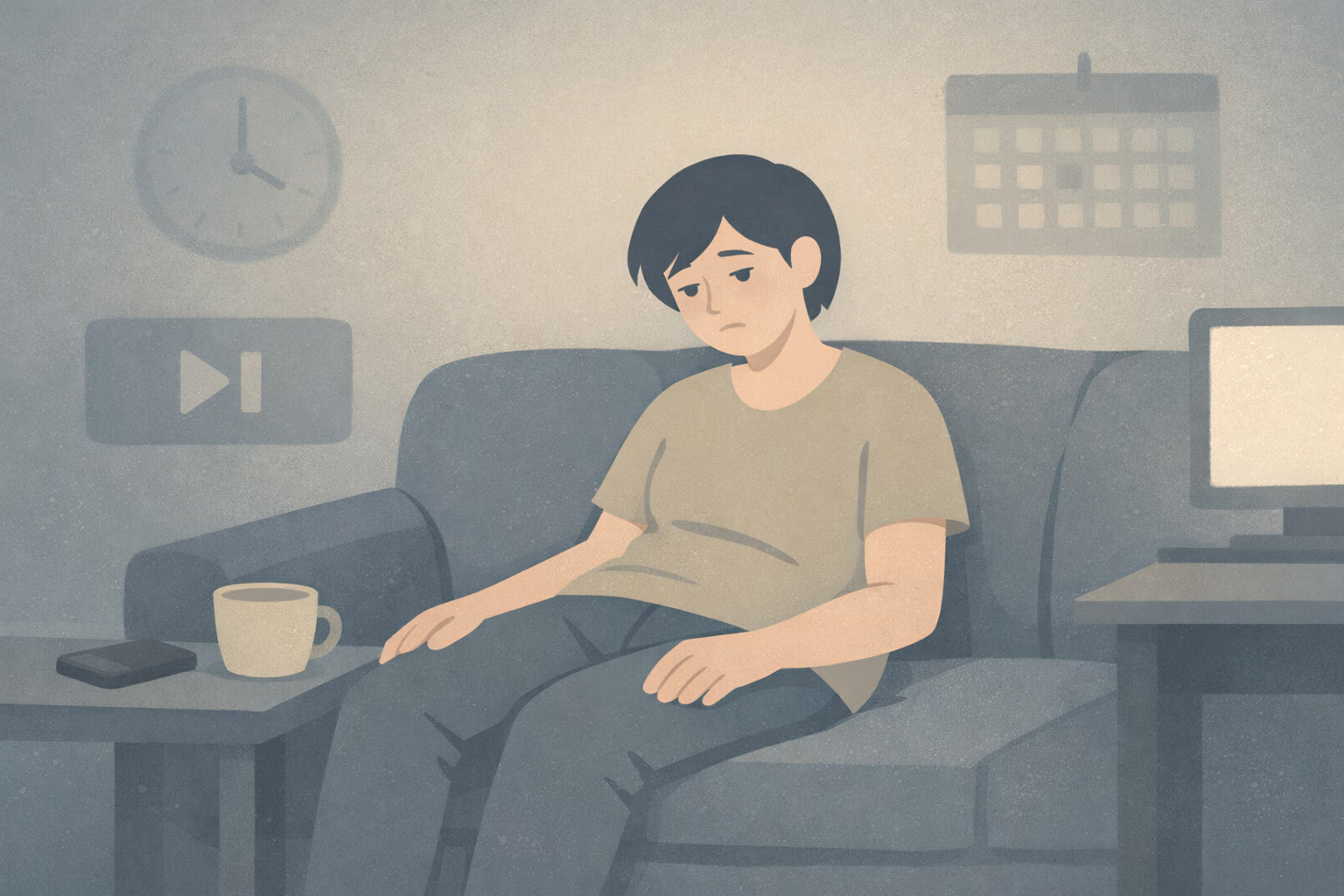
In short: It’s possible to go through a day that looks “fine” on paper—work done, messages answered, meals eaten—and still feel oddly dulled out inside. Just flat, foggy, heavy, or vaguely restless in a way that never quite resolves.
It’s possible to go through a day that looks “fine” on paper—work done, messages answered, meals eaten—and still feel oddly dulled out inside. Not sad exactly. Not anxious exactly. Just flat, foggy, heavy, or vaguely restless in a way that never quite resolves.
In a Meaning Density frame, this isn’t a personal defect. It’s often a coherence problem: a nervous system built for frequent movement is asked to run on stillness, screens, and long sitting. When a basic biological input is missing, the system doesn’t just lose energy—it loses the “done” signals that help mood settle and attention feel workable.
What if the problem isn’t your willpower—but a body that hasn’t gotten the movement it uses to regulate?
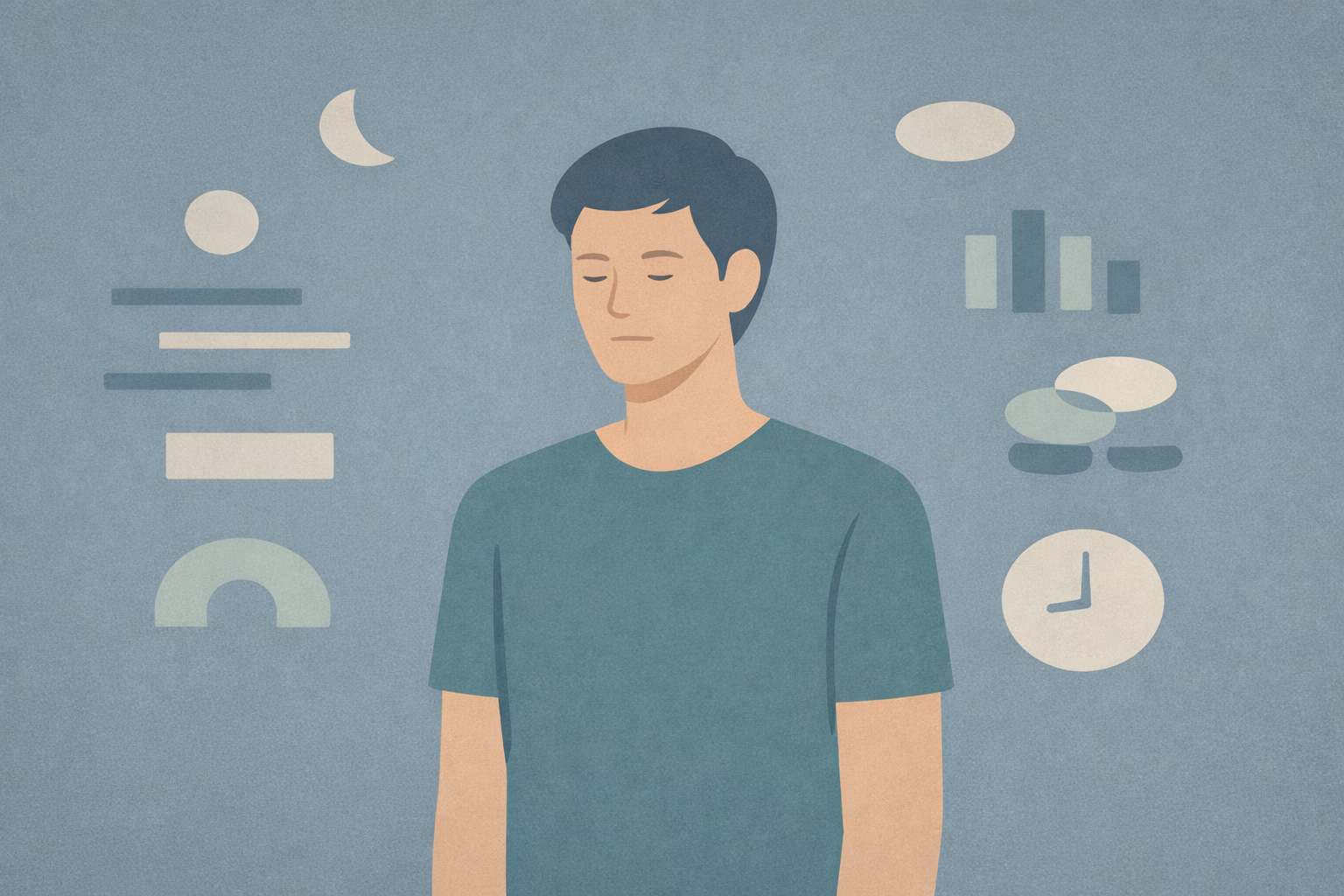
Sedentary mood dysregulation often announces itself subtly. It can feel like living with the dimmer switch turned down: you can still function, but it takes more effort to initiate, sustain, or care.
Many people describe a specific blend: mental fog, emotional flatness, low-grade irritability, and a kind of “stuck” sensation that isn’t dramatic enough to name—yet persistent enough to shape choices. Over time, this can start to resemble personality (“I’m just low-energy”), when it may be a state pattern tied to low movement. Shifts in sedentary time have been linked with shifts in mental wellbeing in large samples, suggesting this isn’t only subjective impression. [Ref-1]
Sometimes it isn’t that life is unbearable. It’s that nothing lands as complete.
Movement is not only “exercise.” It’s a regulatory input that influences circulation, muscle activation, metabolic signaling, and brain arousal systems. When movement drops, the body’s usual rhythm of activation and stand-down becomes harder to generate.
Reduced movement is associated with changes that can impact mood and cognition: lower overall physiological stimulation, fewer natural spikes of alertness, and less frequent shifts that help attention reset. Sedentary behavior has been associated with depression and anxiety outcomes across studies, which fits with the idea that prolonged stillness can lower baseline mood without a person consciously choosing that shift. [Ref-2]
This matters because mood is not just “what you think.” Mood is also a readout of bodily state: energy availability, safety cues, and whether the system expects action to be possible.
Human biology developed in environments where movement was woven into daily life: walking, carrying, changing positions, scanning, gathering, building. Not constant strain—varied, frequent, ordinary motion.
When the environment becomes chair-based and screen-based, the nervous system encounters a mismatch. There may be food, shelter, and information, yet the body’s older expectations—“we move through the world”—remain unmet. That mismatch can degrade mood and increase vulnerability to depressive states in population research, suggesting the body treats prolonged sedentariness as a meaningful condition, not a neutral one. [Ref-3]
In Meaning Density terms, movement helps experiences complete. Without it, days can feel like they never fully “close,” even when tasks are finished.
Remaining still often brings immediate relief: fewer sensations, less exertion, fewer transitions. This isn’t laziness—it’s short-term load management. When the nervous system is already carrying stress, movement can register as “more input,” and stillness can feel like the fastest way to conserve resources.
But prolonged inactivity quietly changes the baseline. The body gets fewer signals of capability and less physiological variation, which can reduce energy availability and make initiation feel heavier later. In other words, what starts as conservation can become inertia. This basic relationship—less movement, lower energy—shows up in everyday clinical observations as well. [Ref-4]
What if the pull toward the couch is a regulation strategy—one that stops working after a while?
Rest is real. Recovery is real. But there’s a difference between restorative rest and prolonged inactivity that never allows the system to re-engage and complete its cycles.
When hours or days stack up with minimal physical shifting, the body can interpret the pattern as low-demand, low-vitality living. That can amplify fatigue rather than relieve it: sleepiness without refreshment, downtime without a reset. Health organizations often note that sedentary patterns correlate with poorer overall health and energy, which can cascade into mood and regulation. [Ref-5]
From a coherence perspective, the issue isn’t that a person “should do more.” It’s that the body’s normal restorative loop includes movement as part of how rest becomes complete.
In an Avoidance Loop, the system moves away from something that would add immediate load (effort, discomfort, transition) and toward something that lowers activation quickly (stillness, scrolling, sitting longer). It’s a short-term regulation trade that can become a long-term trap.
Low movement can reduce baseline mood and energy, and that lower baseline makes movement feel less available—so the system withdraws further. Over time, this loop can look like “I never feel like it,” when the deeper mechanism is a body that hasn’t been getting the inputs that support drive and emotional regulation. In research, changes in sedentary time track with changes in wellbeing, consistent with a reinforcing cycle. [Ref-6]
Sedentary dysregulation doesn’t always feel like sadness. Often it shows up as a narrowing of range: fewer spontaneous impulses, less emotional texture, less willingness to start.
Some common patterns include:
Sedentary behavior has been associated with depression and anxiety outcomes, which helps validate that these patterns can be condition-shaped rather than character-based. [Ref-7]
Resilience isn’t a trait you either have or don’t have. It’s capacity: how much input your system can handle before it tips into overwhelm, numbness, or shutdown.
When movement is chronically low, the body gets fewer chances to practice controlled activation and safe stand-down. The result can be a thinner margin for stress: small demands feel bigger, minor uncertainty feels sharper, and recovery takes longer. Research links sedentary behavior patterns with depressive risk, consistent with the idea that prolonged stillness can degrade regulation capacity over time. [Ref-8]
This can create a confusing inner landscape: you may be “doing less” externally while feeling more taxed internally—because the system is managing load with fewer stabilizing inputs.
Once the loop is established, it can run without conscious choice. Low mood tends to reduce movement drive: the body predicts that action will cost more than it returns. Then inactivity further reduces the physiological signals that support alertness and positive affect.
This is one reason people can feel stuck even when they intellectually understand what’s happening. The bottleneck isn’t insight; it’s state. In population-level findings, physical activity and sedentary behavior show measurable associations with depression outcomes, consistent with a bidirectional, reinforcing pattern. [Ref-9]
In Meaning Density terms, the system isn’t failing. It’s adapting to a low-movement environment by lowering output—an energy-saving mode that becomes hard to exit once it feels “normal.”
When gentle, consistent movement re-enters life, the change people often notice first is not motivation or inspiration. It’s a quieter stabilization: attention feels less sticky, the day has more rhythm, and the internal sense of “I can” becomes more available.
This is not about intensity or performance. It’s about the body receiving a missing regulatory input—one that supports circulation, arousal balance, and brain-body communication. Research on how movement affects brain and body function describes pathways through which activity can support mood and cognitive clarity, fitting with the lived experience of increased baseline steadiness. [Ref-10]
Not a new personality—just a system that can finally stand down and reboot.
Importantly, this kind of shift isn’t just “thinking differently.” It’s a physiological settling that tends to appear after enough repetition and completion that the system begins to trust the pattern.
When baseline regulation improves, social life often changes in small, practical ways. You may find it easier to respond, to track a conversation, or to tolerate the normal unpredictability of other people. This isn’t about becoming more social; it’s about having more bandwidth.
With more regulated energy, the nervous system can send clearer safety cues—steadier voice, more flexible facial expression, more timing accuracy. Some behavior-focused frameworks emphasize that physical activity can support regulation and responsiveness, which aligns with the idea that movement can indirectly improve social availability. [Ref-11]
Connection becomes less of a performance and more of a natural byproduct of capacity.
As movement needs are met over time, many people notice a gradual return of internal momentum: waking up feels less like climbing out of glue; transitions are less costly; there’s more natural variation between effort and rest.
Mood tone can also become more nuanced—less all-or-nothing. Instead of needing constant stimulation to feel alive or constant withdrawal to feel safe, the system can tolerate ordinary life with fewer extremes. The relationship between physical activity and mental health is widely described, including benefits for mood and stress regulation, which fits with this “tone returning” experience. [Ref-12]
This isn’t a dramatic makeover. It’s the slow reappearance of options: the ability to start, pause, and finish without as much internal drag.
When energy and clarity return, agency often returns with them. Not as a pep talk—more as a lived sense that actions can actually land and complete. This is where meaning density increases: choices begin to align with values because the system has enough steadiness to follow through.
In this state, movement isn’t the “point.” The point is that life starts to feel orientable again—meals, conversations, chores, creativity, caregiving, learning. Research describing how moving affects brain and body helps explain why restored vitality can make daily direction feel more possible. [Ref-13]
What changes when your day contains more completion—and less stuckness?
A sedentary season can be many things: an environment designed around chairs, a job that immobilizes you, a body that’s conserving after stress, an attention economy that keeps you still while your mind runs. In this light, “can’t get moving” is often a signal of deprivation, not a verdict on your character.
Large-scale evidence links sedentary behavior with depression risk, underscoring that this is a public-health condition as much as a private struggle. [Ref-14] When the body is missing a basic regulatory input, it makes sense that mood and agency would wobble.
Meaning doesn’t return through pressure. It returns when the system has enough capacity to complete loops—so your life can start to feel like it belongs to you again.
Movement is often framed as self-improvement. But for many people, it’s closer to self-return: a way the body remembers it is alive, capable, and not trapped in low-power mode.
When mood steadies and attention clears, the change isn’t merely “feeling better.” It’s being able to choose direction with less internal resistance—because the nervous system has the energy to cooperate. Physical activity’s connection to mental health is frequently noted for exactly this reason: it supports the conditions under which engagement becomes possible. [Ref-15]
Not a new you. A more available you.
From theory to practice — meaning forms when insight meets action.
Because mood is also a readout of bodily state — energy availability, safety cues, whether the system expects action to be possible. Movement is a regulatory input that influences circulation, muscle activation, and brain arousal balance. When movement drops, the body's usual rhythm of activation and stand-down becomes harder to generate. The result is the dimmer-switch experience: not sad, not anxious, just dulled. You can still function, but it takes more effort to initiate or care. This isn't personality — it's a state pattern tied to a missing biological input. Days can feel like they never fully close, even when tasks technically finish.
Yes — and a self-reinforcing one. Stillness brings immediate relief: fewer sensations, less exertion, fewer transitions. That's short-term load management, not laziness. But prolonged inactivity changes baseline. Less movement lowers physiological signals that support alertness, which makes movement feel less available, which leads to more sitting, which delivers fewer Done Signals across the day. The loop runs without conscious choice. I never feel like it isn't a character verdict; it's a body that's been getting low-vitality inputs and adapting by lowering output. The Avoidance Loop here is biological as much as behavioral, which is why insight alone rarely shifts it.
Because human biology developed in environments where movement was woven into daily life — walking, carrying, changing positions, scanning, gathering. Not constant strain, but varied, frequent, ordinary motion. When the environment becomes chair-based and screen-based, the nervous system encounters a structural mismatch: food, shelter, and information are present, but the body's older expectation that we move through the world remains unmet. The system reads prolonged sedentariness as a meaningful low-vitality condition, not a neutral one. That's why mood and regulation margins thin out even when nothing obvious is wrong — the basic regulatory rhythm of activation and stand-down is missing.
The first thing people notice usually isn't motivation — it's a quieter stabilization. Attention feels less sticky, the day has more rhythm, and the internal sense of I can becomes more available. With more regulated energy, the nervous system sends clearer safety cues, social presence becomes easier without forcing extroversion, and mood tone gets more nuanced — less all-or-nothing. The window of tolerance widens because the body has practiced controlled activation and safe stand-down again. Movement here isn't self-improvement or discipline; it's re-entry — a way the body remembers it's alive and capable, restoring conditions where engagement and Meaning Density become possible.
From Science to Art.
Understanding explains what is happening. Art allows you to feel it—without fixing, judging, or naming. Pause here. Let the images work quietly. Sometimes meaning settles before words do.
One Quiet Window, one insight, one reflection — every Sunday