Sugar as Stress Relief: A Hidden Coping Mechanism
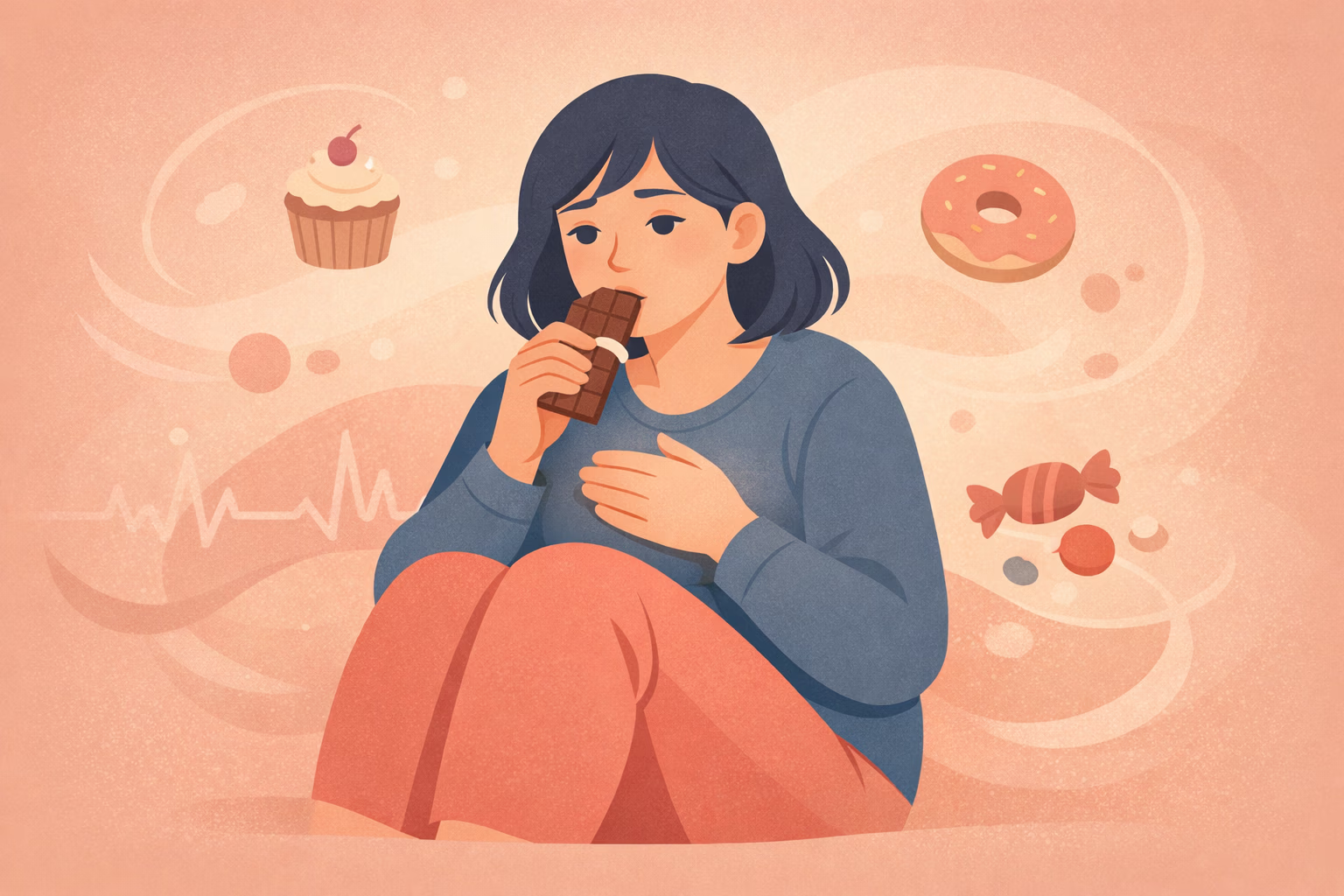
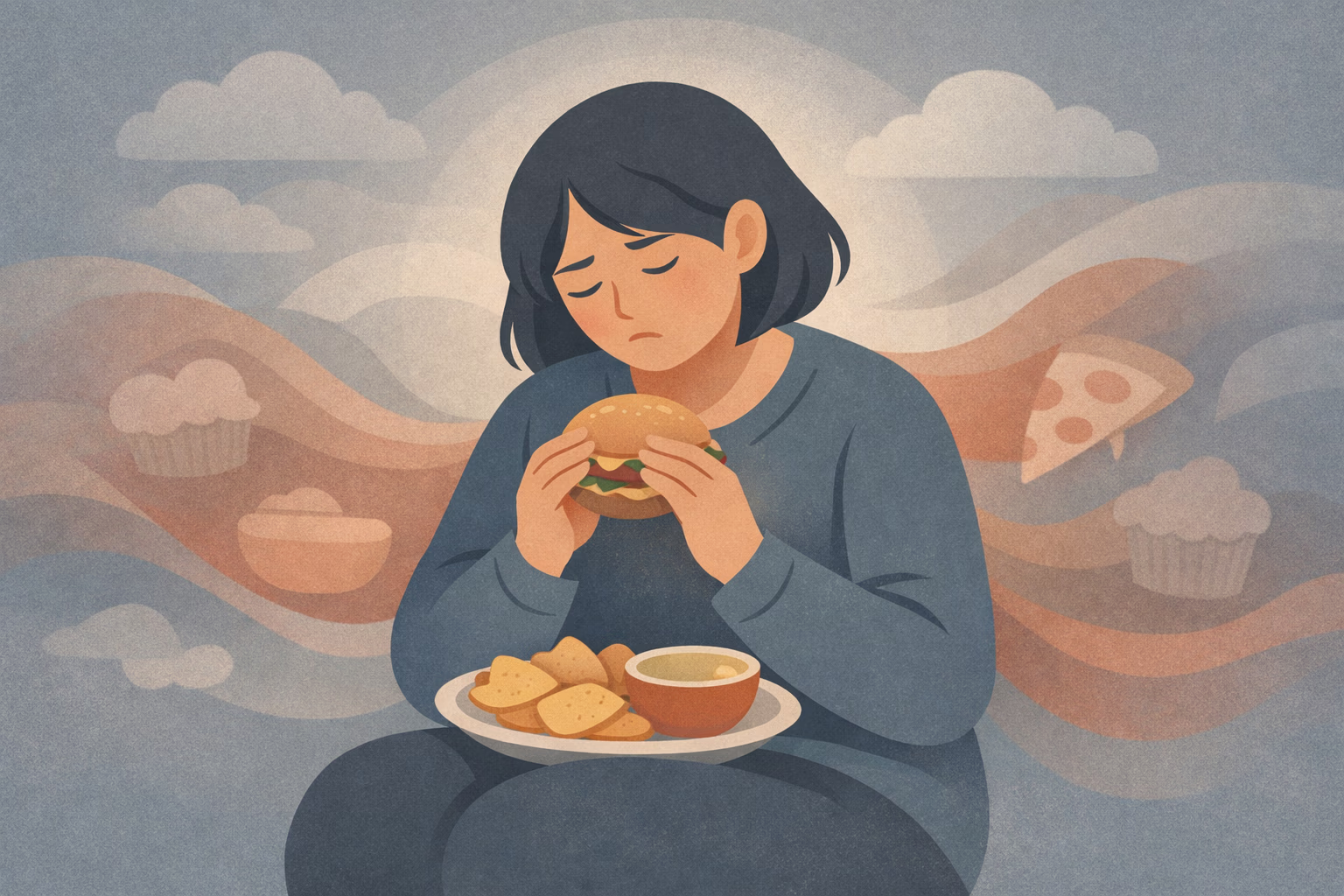
In short: Many people don’t reach for sugar because they “don’t care” or “lack discipline.” They reach for it because, in a high-load moment, the nervous system is scanning for something that changes state quickly. Sweetness is one of the fastest, most reliable signals of immediate reward and comfort a modern environment can offer.
Many people don’t reach for sugar because they “don’t care” or “lack discipline.” They reach for it because, in a high-load moment, the nervous system is scanning for something that changes state quickly. Sweetness is one of the fastest, most reliable signals of immediate reward and comfort a modern environment can offer.
What if your sugar cravings are less a character flaw—and more a sign that your system is carrying too much without a clean “done” signal?
When life stays unfinished—too many open tabs, unresolved tension, constant evaluation—regulation often shifts from long-term stability to short-term relief. Sugar can become a portable form of closure: not real completion, but a brief stand-in that quiets urgency for a moment.
During overwhelm, decision-making doesn’t disappear—but it changes shape. The brain prioritizes whatever reduces strain fastest, especially when attention is fragmented, sleep is short, or demands are constant. In that context, sugar can land as “obvious,” even if you had other intentions earlier. [Ref-1]
This isn’t mysterious. It’s what a stressed system does: it reaches for a strong, immediate signal that says something has shifted. When internal pressure is high and there’s no clear endpoint to the day, sweet foods can function like a quick lever—one that reliably moves the body out of a tight state, at least briefly.
Sugar doesn’t just taste good. It rapidly activates reward pathways associated with dopamine signaling, which can create a noticeable change in how effort, stress, and urgency are perceived. Even a small spike in reward can make the present moment feel more tolerable. [Ref-2]
Under stress load, that shift can register as calming—not because the stressor is resolved, but because the body receives a potent “something good happened” cue. The system briefly downshifts from chasing safety to absorbing reward, and that pivot can feel like relief.
Importantly, this is state-change, not integration. The stress loop may still be open—deadlines, conflict, uncertainty, loneliness—yet the nervous system gets a short-lived reduction in perceived strain.
Human nervous systems evolved in conditions where concentrated sweetness was relatively rare and often paired with valuable calories. In that world, strong attraction to sugar was not a problem to solve—it was a survival advantage. [Ref-3]
In modern life, that same circuitry meets constant availability: sweets everywhere, delivered instantly, marketed heavily, and paired with stress that can be chronic rather than episodic. The reward system isn’t “broken.” It’s responding to an environment that offers high-intensity relief without requiring completion of the underlying stressors.
So the craving isn’t evidence of personal failure. It’s a predictable outcome when ancient reward pathways are asked to regulate modern, unresolved load.
When regulation capacity drops, the body tends to seek signals that are simple, strong, and reliable. Sugar is unusually good at this. It can bring a sense of comfort, mental quiet, and “I can breathe for a second,” especially when the day contains too many micro-demands and not enough completion. [Ref-4]
Often, what people call “emotional eating” is really a nervous system choosing the shortest path to a downshift. Not because feelings are being hidden, but because the system is trying to reduce load with whatever works quickly in the moment.
Sometimes the sweet thing isn’t the point. The point is the momentary sense that the pressure finally moved.
Sugar can change state quickly, but it doesn’t complete the loop that created the strain. And when the effect wears off, the body may rebound—through energy dips, irritability, sleep disruption, or a return of urgency that feels sharper by contrast. Over time, this can create a sense that stress is “getting worse,” when the system is cycling between spikes and drops. [Ref-5]
This is where shame often enters: people notice the crash, judge themselves, and add another layer of pressure on top of the original pressure. The problem isn’t that sugar “caused” stress. The problem is that repeated short-term relief can leave the original stressor unfinished while adding more physiological up-and-down to carry.
When something reliably reduces discomfort fast, the brain learns it. That’s not weakness; it’s basic reinforcement. The body tags sugar as a dependable regulator: quick reward, quick shift, quick quiet. [Ref-6]
Over time, the loop can tighten: stress rises, sugar lowers it briefly, the system learns that sweetness is the shortest bridge back to tolerable. The more often this happens, the more “automatic” the urge can feel—because the pathway becomes well-rehearsed under load.
This is why willpower often feels irrelevant in the moment. Under pressure, the nervous system doesn’t negotiate; it recruits what has worked before.
Stress-driven sugar coping tends to follow recognizable patterns—not because people are identical, but because nervous systems respond similarly when relief is scarce and demands stay open-ended. [Ref-7]
These patterns are not moral failures. They’re often what happens when the body has learned that sweetness is a fast substitute for closure.
When sugar becomes a primary regulator, the cost isn’t only physical—it’s also about predictability. Repeated spikes and dips can affect mood stability and energy steadiness, and over time the body may feel harder to read: hunger cues blur, fatigue intensifies, and the line between “need” and “urge” gets noisier. [Ref-8]
There can also be a quieter consequence: reduced self-trust. Not because someone is unreliable, but because the system keeps reaching for relief in ways that don’t match longer-term intentions. That mismatch can fragment identity—“Who am I around food?”—and fragmentation itself is stressful.
Chronic high sugar intake has also been associated in research with mental health risks, including depressive outcomes in some populations, underscoring that this is a whole-system issue, not just a preference problem.
Stress lowers regulation capacity. Lower capacity increases the appeal of fast relief. Sugar provides that relief—briefly. Then the crash (or the return of pressure) increases stress again. The loop isn’t psychological drama; it’s a structural feedback system that reinforces itself. [Ref-9]
In many modern lives, the deeper driver is not “liking sweets too much.” It’s that stressors often don’t complete: work is never fully done, social comparison never ends, notifications keep reopening attention, and the nervous system rarely gets a clean signal that the day has resolved.
In that environment, sugar can become a small, immediate “ending”—a mini conclusion in a world that won’t conclude.
There is a particular kind of internal steadiness that can appear when regulation no longer hinges on sharp reward spikes. It’s not a constant calm, and it’s not a new personality. It’s more like the baseline becomes less brittle—less dependent on a fast lever to feel okay. [Ref-10]
When the body isn’t repeatedly pushed into high-reward peaks and low-energy drops, recovery can look quieter: stress responses resolve more cleanly, and the “need something now” signal becomes less frequent and less intense.
In Meaning terms, this steadiness often comes with more coherence: actions and values line up more often, and the nervous system receives more real closure instead of repeated substitutes.
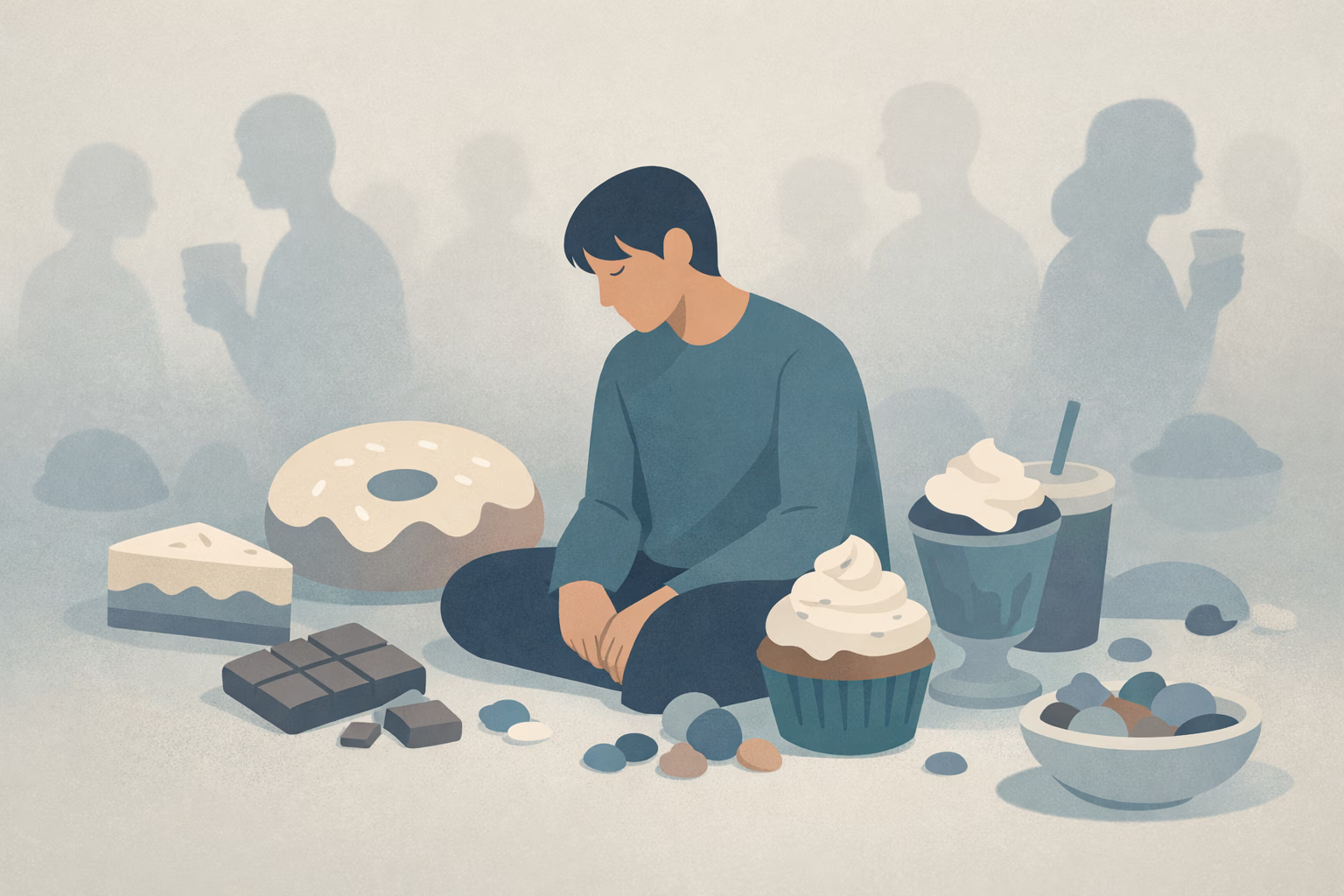
When eating is used to manage overload, it can become private, urgent, or disconnected—less about nourishment and more about getting through a moment. That can shape how people relate to themselves and others: secrecy, negotiation, tension, or feeling “apart” even in company. [Ref-11]
As the reliance on sugar-as-relief decreases, many people notice a subtle social shift. Meals can become more neutral. Connection can feel less interrupted by internal bargaining. The nervous system has more room to register safety cues from people, not just from food.
When comfort isn’t outsourced to sweetness, it can start to show up in ordinary places again—conversation, rest, quiet, belonging.
Reduced urgency is often less about “trying harder” and more about lower overall load. When sleep, stress, and daily pressure are less relentless—or when life contains more completion—cravings can lose some of their emergency quality. The system has more capacity to wait, to choose, to recover without immediate reward. [Ref-12]
Research on emotional eating and high-sugar intake suggests that stress and emotional load are closely tied to increased consumption, which supports the idea that cravings often track regulation strain more than preference alone.
Over time, steadier energy and fewer spikes can support a calmer internal rhythm. Not perfection—just fewer moments where the body feels like it’s falling off a ledge and needs sugar to catch itself.
When the nervous system is not constantly recruited into quick relief strategies, a different kind of choice becomes possible. Not the brittle kind of choice that requires pressure, but the quieter kind that comes from having more internal space.
In that space, nourishment can start to align with long-term well-being—not as a rule, but as a reflection of who you are when you’re not overloaded. This is how meaning becomes stabilizing: actions repeat, settle, and become part of lived identity. [Ref-13]
Sugar can still exist in life. The shift is that it no longer has to serve as the primary tool for regulation or the only accessible “ending” in a day that never ends.
Craving sugar under stress is often the body communicating something simple: load is high and closure is missing. That message doesn’t need blame attached to it. It’s data from a system trying to protect you with the tools it has. [Ref-14]
When the signal is recognized as overload rather than defect, the story changes. The focus shifts from “What’s wrong with me?” to “What conditions am I carrying, and what isn’t getting to finish?” That orientation tends to restore agency—not through force, but through coherence.
Short-lived relief loops are compelling because they work—briefly. They change state fast. But lasting comfort usually comes from restored capacity and real completion, where the nervous system can stand down without needing a spike. [Ref-15]
If sugar has been your system’s quickest bridge to “okay,” that’s not a reason for shame. It’s a sign of how much your body has been asked to hold. And it’s a reminder that stability is built less by pressure and more by the return of genuine closure—enough to let your signals become clear again.
From theory to practice — meaning forms when insight meets action.
Because under load, the nervous system scans for what changes state quickly — and sweetness is one of the fastest, most reliable signals of immediate reward and comfort modern environments offer. Sugar rapidly activates dopamine-linked reward pathways, which can briefly shift how effort, stress, and urgency are perceived. The body gets a potent 'something good happened' cue, and that cue feels like calming even when the stressor is unresolved. The craving isn't a character flaw. It's a survival-era circuit (energy is precious, sweetness signals calories) meeting a high-stimulation marketplace where stress is chronic instead of episodic. The pull is the reward system doing exactly what it evolved to do.
Because state change isn't closure. Sugar can shift internal weather quickly, but it doesn't complete the loop that created the strain. When the effect wears off, the body rebounds — energy dips, irritability, sleep disruption, or urgency that feels sharper by contrast. Over time, the system cycles between spikes and drops, which can make stress feel like it's getting worse. Shame often enters here too: people notice the crash, judge themselves, and add another layer of pressure on top of the original pressure. Sugar didn't 'cause' the stress. The repeated short-term relief leaves the original stressor unfinished while adding more physiological volatility to carry.
Through repetition that trains the body to associate discomfort with consumption. Brains learn through pairing: when discomfort repeatedly precedes sugar and sugar repeatedly precedes relief, the body tags sugar as a dependable regulator — quick reward, quick shift, quick quiet. With enough repetition, the urge arrives before conscious thought. The Pleasure Loop tightens: stress rises, sugar lowers it briefly, the system learns sweetness is the shortest bridge back to tolerable. Willpower feels irrelevant in the moment because the system isn't negotiating. It's recruiting what has worked before. Cravings often track regulation strain more than preference. The point isn't the sweet thing. It's the shift.
Not perfection — just less brittleness. The baseline becomes less dependent on a fast lever to feel okay. Stress responses resolve more cleanly, and the 'need something now' signal becomes less frequent and less intense. As reliance decreases, hunger cues clear up, fatigue gets more honest, and the line between 'need' and 'urge' becomes readable again. Self-trust often returns because the system stops reaching for relief in ways that contradict longer-term intentions. Nourishment can align with values instead of functioning as anesthesia. Sugar can still exist in life. The shift is that it no longer has to be the primary tool for regulation — or the only accessible Done Signal in a day that never ends.
From Science to Art.
Understanding explains what is happening. Art allows you to feel it—without fixing, judging, or naming. Pause here. Let the images work quietly. Sometimes meaning settles before words do.
One Quiet Window, one insight, one reflection — every Sunday