Sugar as a Stress Coping Mechanism
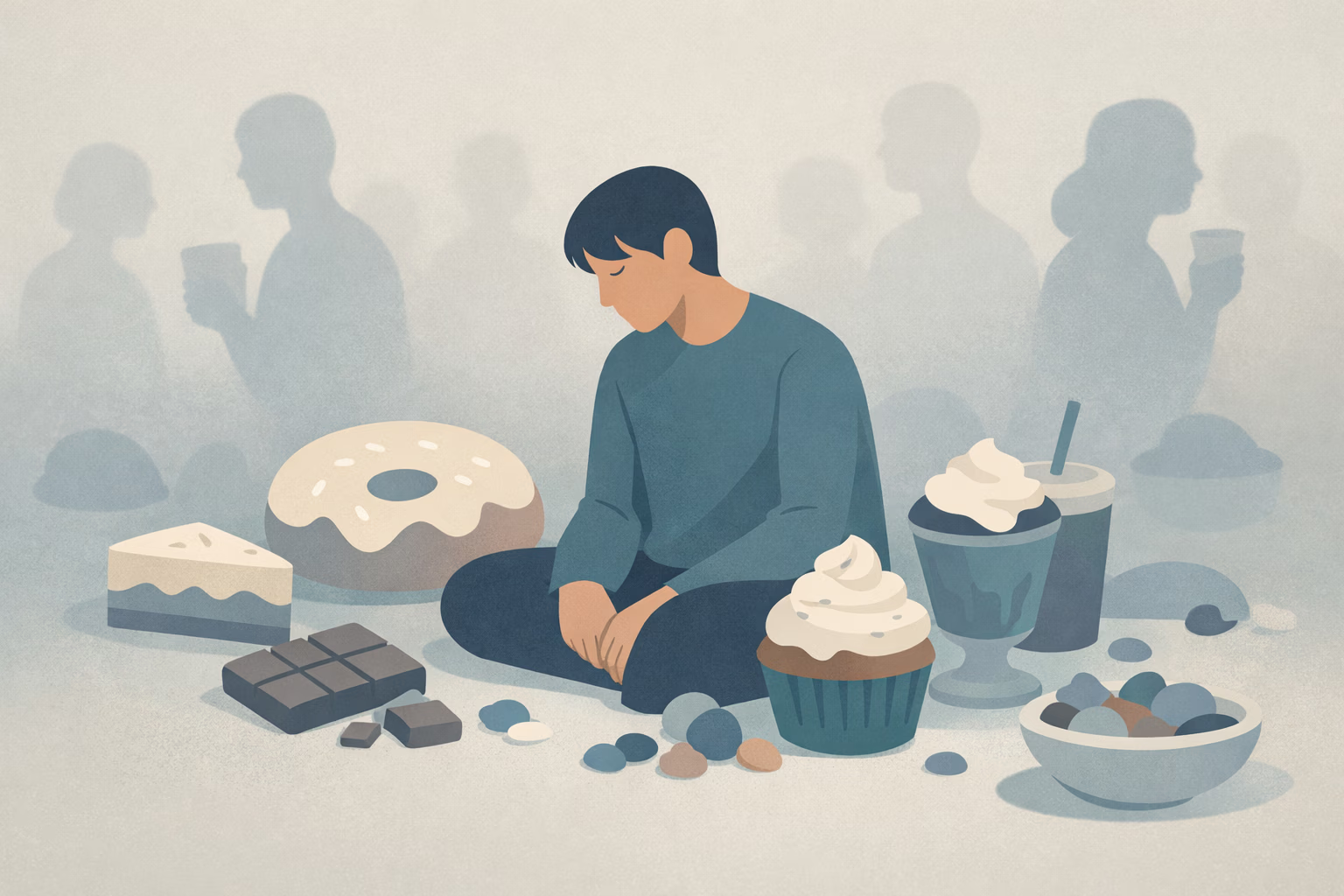
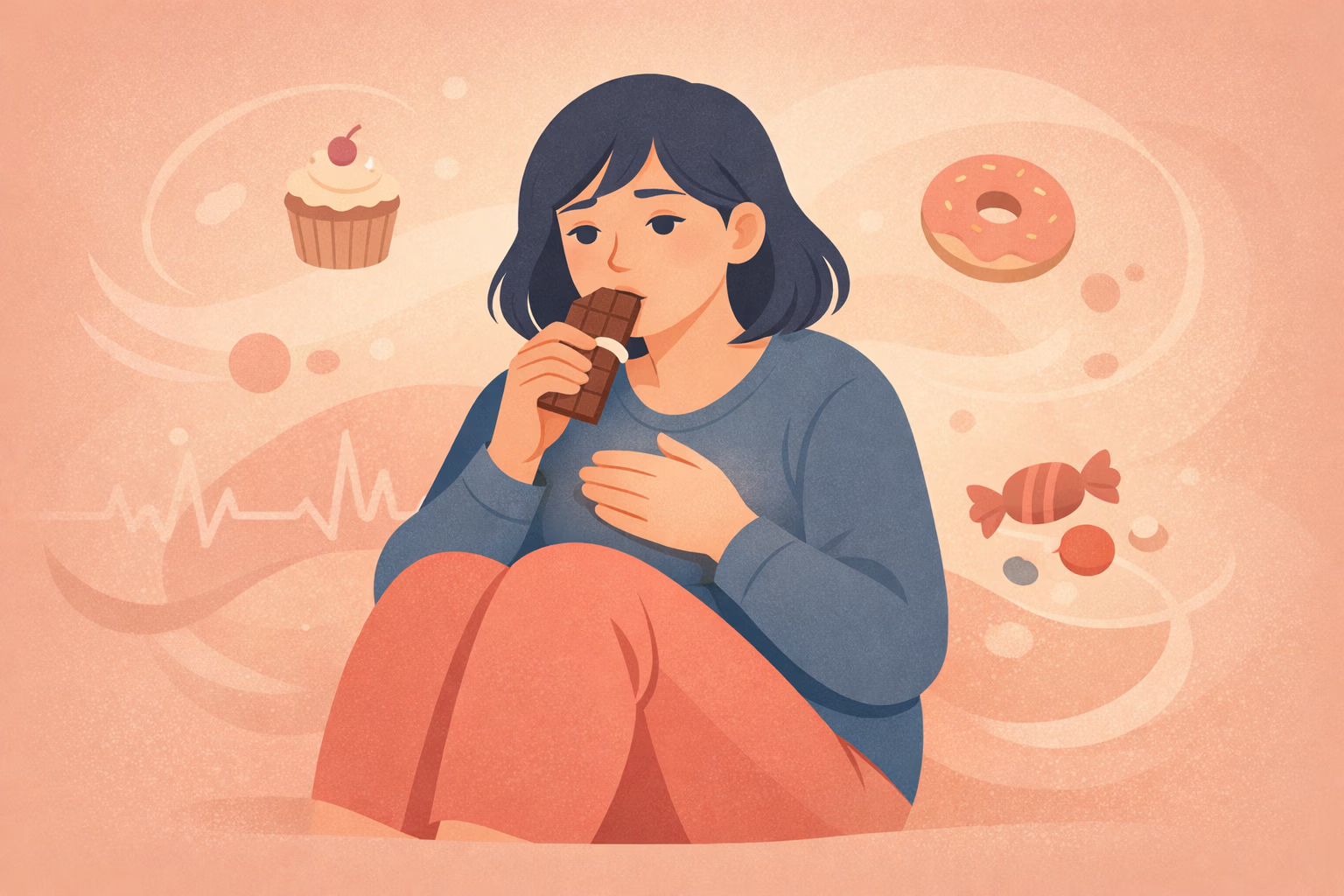
In short: For many people, sugar doesn’t just taste good—it functions like a small emergency exit. A cookie, a soda, a handful of candy can briefly soften the edge of a hard day, quiet inner noise, or create a moment of comfort when everything feels too loud.
For many people, sugar doesn’t just taste good—it functions like a small emergency exit. A cookie, a soda, a handful of candy can briefly soften the edge of a hard day, quiet inner noise, or create a moment of comfort when everything feels too loud.
In a Meaning Density view, this isn’t “lack of discipline.” It’s a regulatory response under load: the system reaches for whatever reliably changes state, quickly. In modern life, sugar is one of the most available, socially accepted, and rapid options.
What if the craving isn’t the problem—but a signal that your system hasn’t had a chance to complete something?
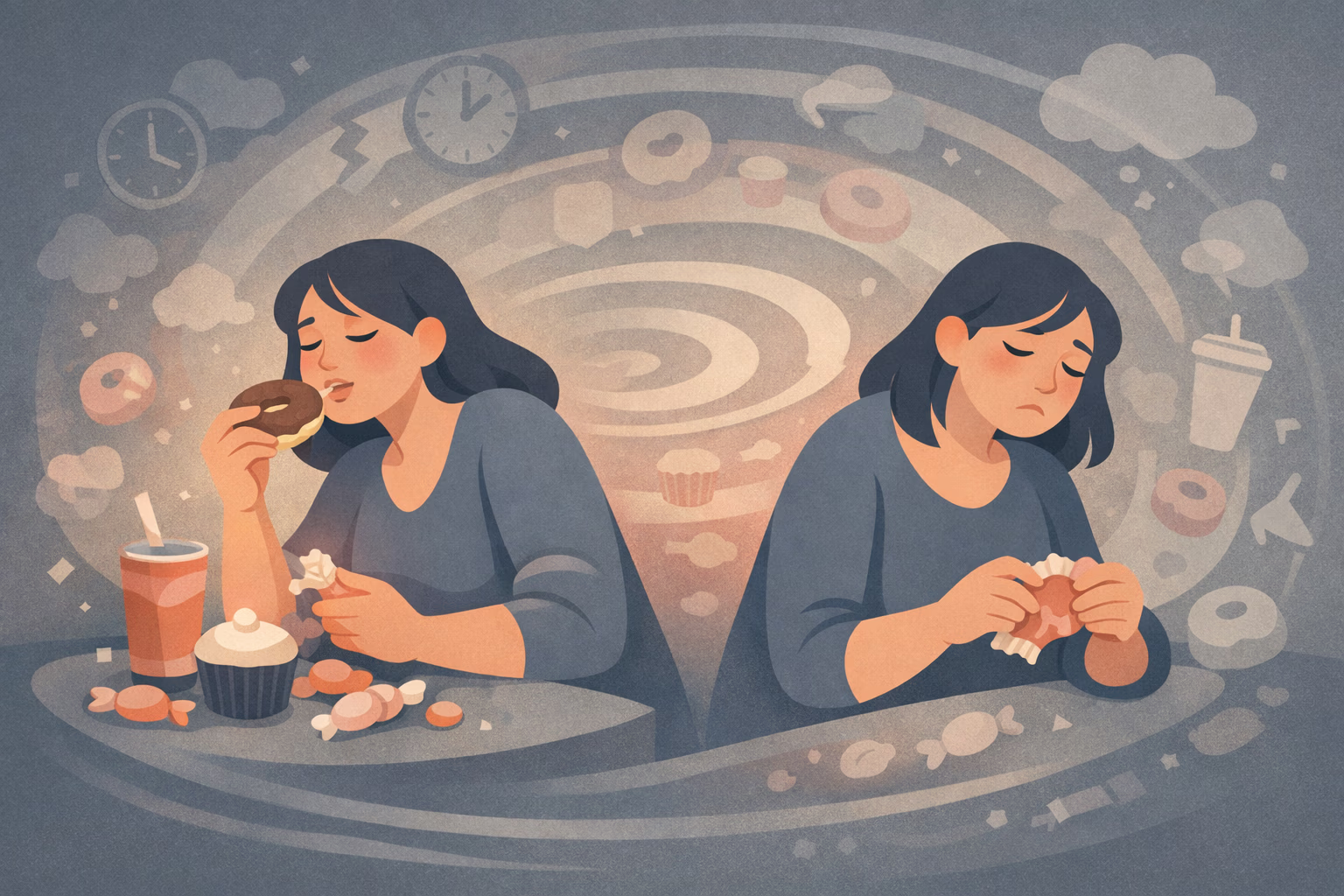
A common pattern looks like this: pressure rises, attention fragments, and the body feels keyed up or dulled out. Then a craving arrives with urgency—less like a preference and more like a pull.
After sugar, there’s often a brief settling: a small mood lift, a softer internal tempo, a sense of “I can breathe again.” But soon after, the rebound can show up as fatigue, irritability, brain fog, or a harsh inner commentary that wasn’t there before. That swing—relief followed by cost—can make the next craving feel even more compelling. [Ref-1]
“It’s not that I want dessert. It’s that I want the day to stop happening inside my body.”
Under stress load, the body shifts priorities toward immediate energy availability and fast relief. Stress hormones (including cortisol) can increase appetite and tilt desire toward highly palatable, quick-carbohydrate foods—because they deliver rapid fuel and rapid sensation. [Ref-2]
Sugar also produces a fast glucose rise that can interact with dopamine-based reward signaling, followed by insulin responses that may contribute to a later dip in energy. When the system is already taxed, these oscillations can be experienced as “something is wrong—fix it now,” even when the deeper issue is cumulative strain rather than hunger.
This pull toward sweetness isn’t random. In ancestral conditions, high-energy carbohydrates were valuable—especially when life was physically demanding and threat required mobilization. Under pressure, seeking fast calories could be adaptive: it helped restore depleted energy and supported continued action.
Stress can also interact with appetite-related signals (like ghrelin) and craving pathways in ways that make highly palatable foods feel unusually salient. [Ref-3] In other words, the “drive” can be a predictable output of a system doing what it evolved to do: prioritize immediate energy and quick stabilization when conditions feel unsafe.
Sugar often “works” because it changes state fast. It can create a short window where the body feels less tense, the mind feels less crowded, and the world feels slightly more manageable. That’s not imaginary—rapid reward and sensory comfort can temporarily dampen stress-driven activation. [Ref-4]
Importantly, this isn’t integration. It’s relief. Relief is a state shift—useful, understandable, and sometimes necessary. Integration is different: it’s the system receiving a real “done” signal after completion, so it no longer has to keep recruiting urgency.
When sugar is doing regulation work, it’s often filling a gap created by incomplete closure.
Because sugar brings quick comfort, it can feel like the stress has been handled. But often what happened is that the stress signal was briefly muted—without the underlying loop reaching completion.
When the effect fades, the system may be left with: lower energy, more irritability, and a renewed sense of pressure. This can make the original problem feel bigger, even if nothing external changed. Over time, the brain can learn the association: stress → sugar → temporary quiet. That learning is not moral failure; it’s conditioning under strain. [Ref-5]
In a pleasure loop, the nervous system discovers a rapid lever for changing state. The lever isn’t chosen because it’s “bad” or “weak”—it’s chosen because it’s reliable, immediate, and available when capacity is low.
Stress increases the need for fast stabilization, and sugar is one of the quickest routes. Over time, this can reinforce reliance: the body starts to treat sweetness as a safety cue, especially when cortisol is elevated and the day feels like it’s running you. [Ref-6]
Stress-sugar coping isn’t one “type” of person. It shows up across roles, ages, and bodies—often most strongly when the day has contained a high volume of micro-demands without completion.
Common expressions include: [Ref-7]
Notice how many of these are less about “taste” and more about timing: the body reaches for sweetness when the system is most loaded and least resourced for slower forms of closure.
Repeatedly using sugar for relief can blur internal signals. Hunger, fatigue, and stress can start to feel like the same message: urgent need. When the body doesn’t get consistent closure, it may amplify urgency just to be heard.
Over time, frequent spikes and crashes can strain metabolic steadiness and stress tolerance, making it harder to trust what the body is asking for in the first place. [Ref-8] This isn’t about “being out of touch.” It’s what happens when a system keeps getting state changes without completion.
Relief can be immediate. Stability takes closure.
When energy dips or sleep timing shifts, the body often interprets it as another stressor. That can elevate stress hormones again and sharpen cravings for quick fuel—especially later in the day when reserves are already thin.
This is one reason the cycle can feel self-propelling: the “fix” can create conditions that look like a new threat to the body, which then increases the urge for the same fix. Nighttime eating patterns, in particular, often sit at the intersection of circadian strain, stress load, and the search for fast comfort. [Ref-9]
It can help to distinguish two different needs that can wear the same costume. Sometimes the body is asking for fuel. Other times, it’s asking for reduced activation—an internal signal that the day has exceeded capacity and the system is seeking a rapid safety cue.
Research on stress-eating suggests sucrose can function like “self-medication” for stress physiology, temporarily dampening stress responses. [Ref-10] In that frame, the craving is less a “temptation” and more a communication: load is high, closure is missing, and the system is seeking a quick stand-down.
Meaning begins to reform when the nervous system gets real signals of safety and completion—when the body can stop scanning and start returning to baseline on its own timeline.
Humans regulate in context. When stress is carried alone—especially under constant evaluation—quick private relief becomes more attractive. When stress is shared, witnessed, or metabolized in relationship, the body often needs less chemical comfort to get through the same moment.
This isn’t about “talking it out” as a moral ideal. It’s about co-regulation: cues of safety that arrive through tone, presence, and being understood, which can reduce the system’s urgency for rapid reward. Sugar’s link to reward signaling is part of why it can feel emotionally supportive in isolation. [Ref-11]
Sometimes the sweet craving is a proxy for “I can’t carry this by myself anymore.”
As load decreases and closure becomes more available, the body’s signals often separate again. Hunger becomes more specific. Cravings lose some of their emergency quality. Energy steadies enough that choices don’t feel like a constant negotiation with urgency.
People often describe a quieter internal landscape: fewer sharp spikes in need, less sudden fatigue after quick fixes, and more accurate recognition of what the body is actually requesting in the moment. Sugar spikes and crashes can influence brain chemistry and perceived mood/clarity, so steadier rhythms can translate into steadier experience. [Ref-12]
Coherence feels like fewer “alarms,” not louder self-control.
When sugar has been serving as stress relief, it often carries symbolic weight: a small promise of comfort, a punctuation mark at the end of a relentless day, a private refuge from demands. As true regulation returns, that symbolism can soften.
Instead of being the primary route to relief, sweetness becomes one experience among many—less loaded with urgency, less tied to rescue. The deeper shift is identity-level: you begin to experience yourself as someone who can move through stress without needing to override signals to survive it. In that environment, coping naturally aligns more with stability and meaning than with rapid escape. [Ref-13]
If sugar has become your stress relief, it doesn’t mean you’re broken. It can mean you’ve been operating under sustained pressure with too few “done” signals—too little closure, rest, or safety in the nervous system sense.
From that view, the craving is information: an indicator of unmet settling needs, not proof of weakness. The loop becomes easier to understand when you see what it’s been trying to accomplish—rapid comfort in a high-demand environment. And understanding the function can make room for dignity: you weren’t choosing chaos; you were choosing relief. [Ref-14]
Agency often returns when the system is no longer forced to solve everything with urgency—when meaning can accumulate through completion, and the body can stand down without being bribed into calm.
Sweetness is meant to be a pleasure, not a life raft. When stress is consistently met with real completion—enough settling, enough closure, enough safety cues—the nervous system doesn’t have to recruit sugar to do emergency regulation.
In that kind of life, cravings tend to become simpler and less charged. Not because you “won” against your body, but because your body finally received the message it was asking for: it’s safe to stop. [Ref-15]
From theory to practice — meaning forms when insight meets action.
Because under stress load, the body shifts priorities toward immediate energy and fast relief. Cortisol can increase appetite and tilt desire toward highly palatable quick-carbohydrate foods because they deliver rapid fuel and rapid sensation. Sugar also produces a fast glucose rise that interacts with dopamine reward signaling, briefly muting stress activation. The pull isn't really about taste — it's about timing. The system reaches for whatever reliably and quickly changes state when capacity is low. The craving feels like preference; it operates more like an emergency exit. That's an Evolutionary Mismatch: ancient quick-fuel wiring meeting an environment with sugar permanently within arm's reach.
Yes — research even describes sucrose as functioning like self-medication for stress physiology, temporarily dampening stress responses. The craving is less a temptation and more a communication: load is high, closure is missing, and the system is seeking a quick stand-down. The Pleasure Loop here isn't chosen because it's weak; it's chosen because it's reliable, immediate, and available when other forms of regulation aren't. Sometimes the sweet craving is a proxy for I can't carry this by myself anymore. Naming the function returns dignity: you weren't choosing chaos; you were choosing relief in the only fast lane available.
Because the post-sugar dip can register as another stressor. Energy drops or insulin oscillations elevate stress hormones again and sharpen cravings for more quick fuel — especially later in the day when reserves are thin. Repeated spikes and crashes also blur internal signals: hunger, fatigue, and stress start to feel like the same urgent need. The body amplifies urgency just to be heard. Worse, the relief doesn't deliver completion — only state change. The original Done Signal never lands, so the loop restarts. People can end up feeling more fragile after the fix than before, with a renewed sense of pressure and a sharper inner commentary.
Signals separate again. Hunger becomes more specific. Cravings lose some of their emergency quality. Energy steadies enough that choices stop feeling like negotiations with urgency. The internal landscape gets quieter — fewer sharp spikes in need, less sudden fatigue, more accurate recognition of what the body is actually requesting. Sugar returns to its proper size: an experience among many, not a private rescue. The deeper shift is identity-level — you start experiencing yourself as someone who can move through stress without overriding signals to survive it. Coherence feels like fewer alarms, not louder self-control.
From Science to Art.
Understanding explains what is happening. Art allows you to feel it—without fixing, judging, or naming. Pause here. Let the images work quietly. Sometimes meaning settles before words do.
One Quiet Window, one insight, one reflection — every Sunday