Attention Extraction: How Platforms Monetize Your Focus
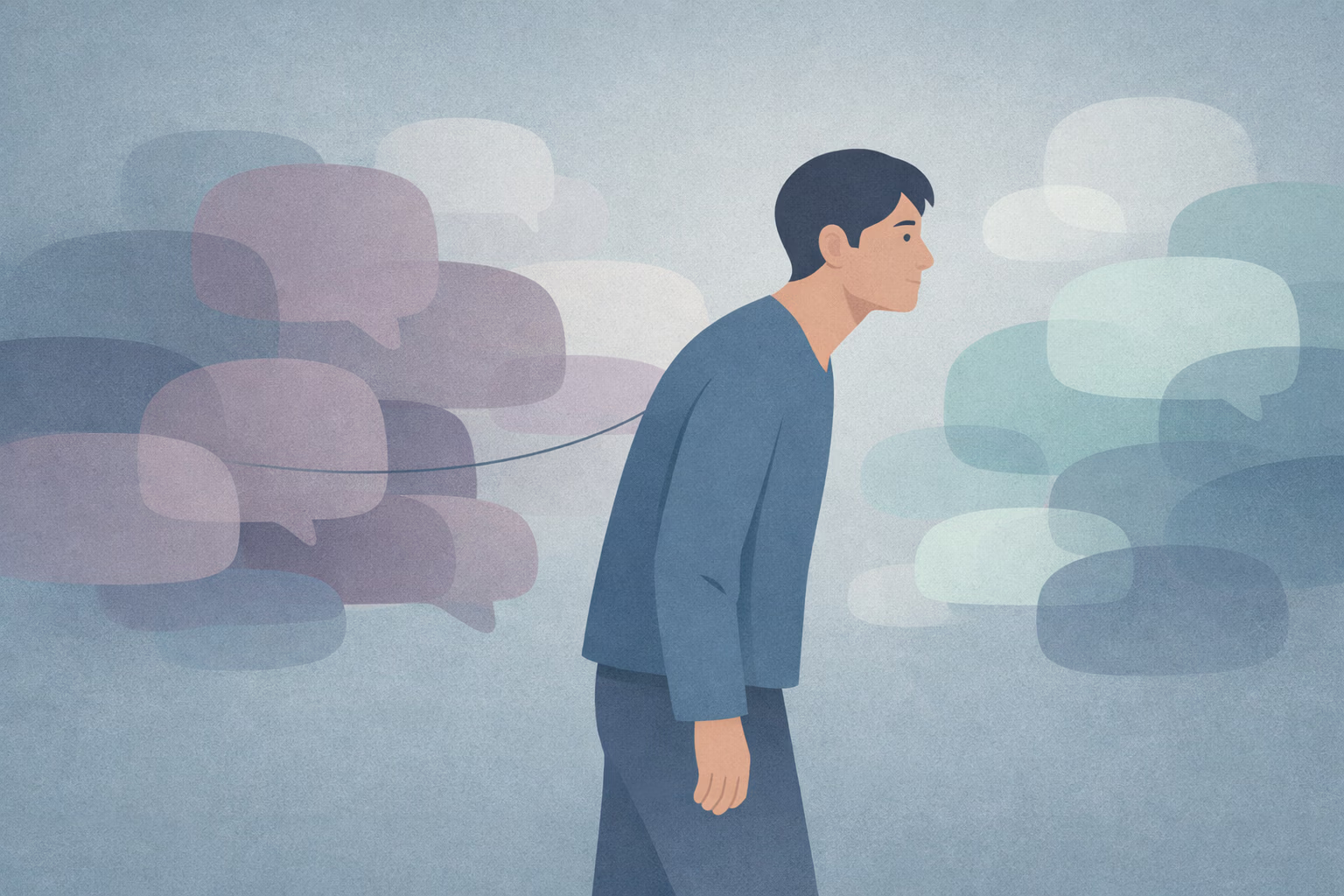
In short: For many people, social media doesn’t feel like a simple preference. It can feel like gravity: a hand reaching for the phone before you’ve even decided, a few minutes that turn into an hour, and a familiar aftertaste of “Why did I do that again?” What if “can’t stop” isn’t a character flaw, but a nervous system caught in an open loop?
For many people, social media doesn’t feel like a simple preference. It can feel like gravity: a hand reaching for the phone before you’ve even decided, a few minutes that turn into an hour, and a familiar aftertaste of “Why did I do that again?”
What if “can’t stop” isn’t a character flaw, but a nervous system caught in an open loop?
In modern feeds, the brain isn’t only seeking entertainment. It’s tracking belonging, relevance, and safety cues—signals that mattered for survival long before screens existed. When those signals arrive in fast, unpredictable bursts, it can be genuinely hard to stand down.
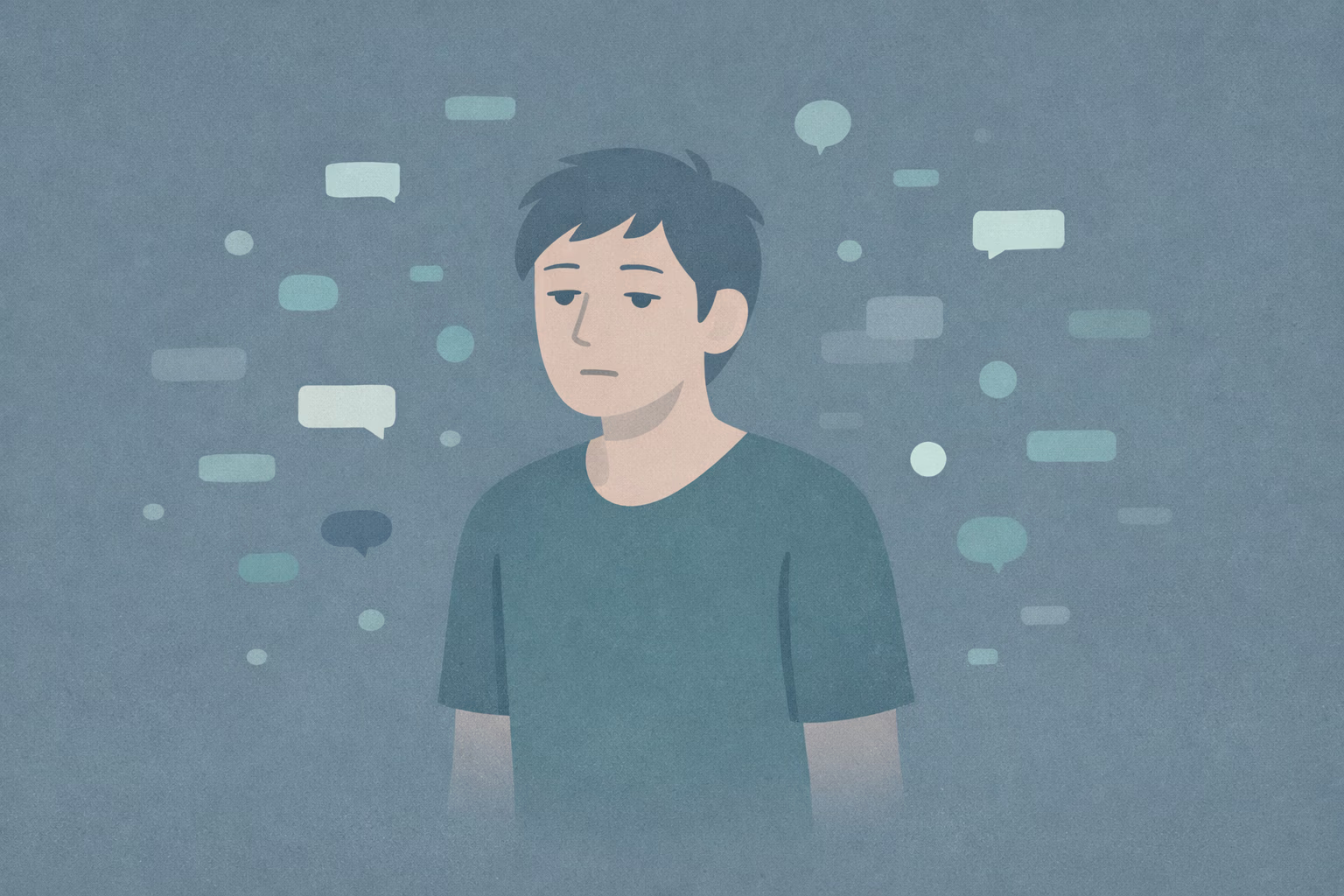
Compulsive scrolling often has a recognizable pattern: you open an app for a quick check, the feed delivers a few hits of interest or social information, and the next thing you know you’ve lost time. When you finally look up, there can be guilt, irritability, or a slightly unreal feeling—like you were there, but not fully there. [Ref-1]
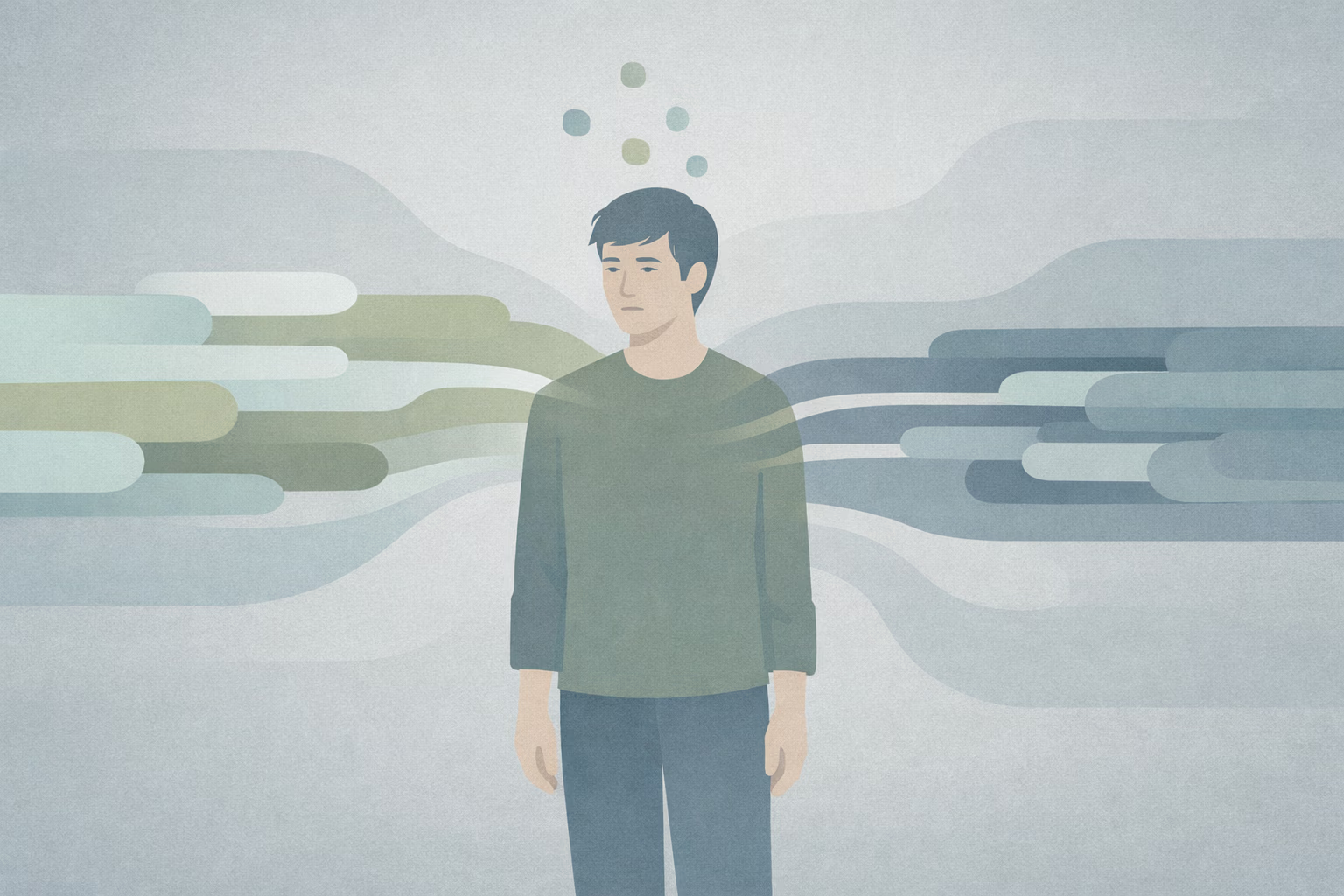
That pattern makes sense in a body that’s trying to regulate. The nervous system prefers completion: clear beginnings and endings, a “done” signal, a settled sense that you’re caught up. Feeds are built to keep that “done” signal just out of reach, so the system keeps scanning.
Social platforms combine two powerful attention magnets: variable rewards (novelty, humor, surprise) and social evaluation (who saw you, who responded, what it might mean). When these arrive unpredictably, attention becomes sticky—because the brain learns that the next refresh could matter. [Ref-2]
This isn’t only “dopamine chasing” in a simplistic sense. It’s a full-body orienting response: checking for updates can function like checking the horizon. The difficulty disengaging is often the nervous system treating the feed as an active environment that requires monitoring.
Humans are built to track status, inclusion, and social standing. In small groups, these cues were slow, contextual, and embodied: tone of voice, facial micro-signals, repair after conflict, shared tasks. Social media compresses those cues into counts, icons, and short text—high-intensity signals with low context. [Ref-3]
So a “like” can land as more than a “like.” It can register as: “I’m visible,” “I’m safe,” “I’m not forgotten.” And a lack of response can register as: “I might be missing something,” “I might be out of the loop.” The system isn’t being dramatic; it’s doing what social nervous systems do—only with distorted inputs.
In a feed, belonging can feel measurable, even when it’s not deeply knowable.
It’s important to name what works about social media. It can provide companionship during isolated hours, quick reassurance, and micro-moments of shared humor. For some, it creates access to communities that are hard to find locally. This is part of why the pull feels so strong—it genuinely changes state. [Ref-4]
When life is demanding, the brain naturally gravitates toward anything that lowers uncertainty or provides a sense of social contact. Under high stress load, fast connection can feel like relief—even if it’s not the kind of connection that fully settles the system.
Many people describe leaving social media feeling oddly “full” yet not nourished. That’s not a contradiction. The feed can provide stimulation and social information without the signals that create safety and completion: mutual attention, paced interaction, repair, and shared context. [Ref-5]
In other words, the system may receive plenty of cues that it should stay alert (new posts, new reactions), while receiving fewer cues that it can stand down. This mismatch can keep the body in a low-grade readiness—scrolling as a way to manage an environment that never quite resolves.
Why does it feel calming and agitating at the same time?
Because stimulation can soothe uncertainty in the short term, while unfinished social meaning keeps the orienting system engaged.
Some habits are driven mainly by reward (novelty, entertainment). Others are driven mainly by belonging (contact, acceptance). Social media often fuses both: a reward loop with social significance attached. That fusion is powerful because it recruits multiple systems at once—attention, motivation, and social safety tracking. [Ref-6]
When the brain learns that a small action (a tap, a refresh) can produce both stimulation and social relevance, it becomes a quick route out of flatness, boredom, or uncertainty. The loop doesn’t need extreme distress to run; it only needs the sense that something important might appear.
Habitual checking often shows up alongside a subtle discomfort when offline: restlessness, mental scanning, a sense that you’re behind. This isn’t necessarily “fear” in the dramatic sense; it’s the system noticing incomplete information in a social environment that updates constantly. [Ref-7]
Silence used to mean the group was quiet, the day’s tasks were done, the fire was low. Now silence can mean: “Something is happening and I’m not seeing it.” Not because you’re fragile—because the environment has been redesigned to keep social consequence ambiguous. When consequence is muted and updates are endless, completion is hard to reach.
Over time, the same loop that provides relief can also thin out attention. Rapid switching, constant novelty, and background evaluation can leave the mind less able to stay with one thing long enough to feel finished. [Ref-8]
Comparison adds another layer of load. The feed often presents highlight reels as everyday life, which can quietly tighten the system—more self-monitoring, more micro-judgments, less ease. Some people also notice an “emotional flattening”: not numbness as a personality trait, but a predictable response when the nervous system is processing too many signals without enough closure.
Fear of missing out (FoMO) isn’t only a thought like “I should be included.” It’s often a bodily readiness: the sense that something relevant could happen at any moment. Anticipation itself becomes activating—because the next update might resolve uncertainty, restore belonging, or provide a rewarding jolt. [Ref-9]
This is how the loop restarts: not because you “chose poorly,” but because the system is organized around prediction. In an environment designed for continuous novelty and social signaling, prediction never fully completes—so the checking impulse can return quickly, even after you’ve just checked.
One of the most dignifying reframes is this: the urge to check is frequently the nervous system requesting a “closed circle.” Not more information forever—just enough certainty to stand down. In feeds, that closure rarely arrives, so the body keeps leaning forward.
Importantly, understanding this isn’t the same as integration. Integration looks more like a physical settling: less background scanning, fewer internal negotiations, more moments where attention returns on its own. That settling tends to appear when life supplies clearer endpoints, richer context, and belonging that feels real enough to become part of identity—rather than a score that must be refreshed. [Ref-10]
Relief changes your state. Completion changes your baseline.
Belonging stabilizes best when the body receives layered safety cues: eye contact, tone, timing, shared environment, the subtle back-and-forth of being responded to. These cues create a sense of attunement—information that you are not only seen, but met. [Ref-11]
Online interaction can be meaningful, but it often arrives stripped of context and repair. A message can be left on read; a post can be ignored without explanation; a comment can be misinterpreted without tone. That ambiguity keeps the social nervous system slightly “on,” still tracking. In-person or truly reciprocal contact tends to provide more complete social information—enough for the system to resolve the question, “Am I okay here?”
As social input becomes less constant and more coherent, many people notice a gradual shift: less urgency, fewer reflexive checks, and a calmer relationship with silence. This isn’t about becoming less social—it’s often about the nervous system needing fewer pings to feel oriented. [Ref-12]
Steadiness can show up as capacity returning: attention holds longer, rest feels more “real,” and the day has clearer edges. Social media may still be present, but it no longer has to function as the primary regulator of boredom, uncertainty, or belonging.
The deeper shift isn’t abstinence; it’s agency. Automatic use tends to happen when the environment constantly opens loops and the body stays on call. Intentional engagement tends to emerge when your identity has other stable anchors—relationships, roles, values, projects, places—things that create completion and continuity.
This is how meaning reforms: not as a motivational speech, but as lived coherence. The feed becomes one channel among many, instead of the channel that decides your attention for you. Over time, the nervous system learns a new expectation: “I can miss things and still belong.” [Ref-13]
Social media often promises connection in a form that’s easy to access but hard to finish. Presence, by contrast, tends to create endings: conversations conclude, laughter lands, shared experiences become memory, and the body receives a “done” signal.
When connection is rooted in shared meaning—mutual recognition, shared time, shared context—it becomes less fragile. It doesn’t need constant checking to stay real. That’s when agency quietly returns: not as a forceful push, but as a growing sense that your attention belongs to your life. [Ref-14]
If social media feels impossible to quit, it may be because it’s addressing real human needs with an incomplete kind of closure. There’s no shame in having a nervous system that responds to reward and belonging signals. [Ref-15]
Over time, many people find that the most stabilizing change isn’t “never again,” but “I can choose.” Choice becomes possible when the loop loses its urgency—when life provides enough coherence that your system doesn’t have to stay on call for the next ping.
From theory to practice — meaning forms when insight meets action.
Because the brain isn't only seeking entertainment — it's tracking belonging, relevance, and safety cues that mattered for survival long before screens. Feeds combine variable rewards (novelty, humor, surprise) with social evaluation (who saw you, who responded), arriving unpredictably. That makes attention sticky: the next refresh could matter. The nervous system prefers completion — clear beginnings, endings, a Done Signal — but feeds are built to keep that signal just out of reach, so the system keeps scanning. 'Just one more' is often the mind searching for closure. Difficulty disengaging is the nervous system treating the feed as an active environment that requires monitoring, not a character flaw.
Because humans are built to track status, inclusion, and standing. In small groups those cues were slow and embodied — tone of voice, facial micro-signals, repair after conflict, shared tasks. Social media compresses them into counts, icons, and short text: high-intensity signals with low context. So a like can register as 'I'm visible, I'm safe, I'm not forgotten,' and silence can register as 'I might be missing something.' The Attachment & Belonging System isn't being dramatic; it's doing what social nervous systems do — only with distorted inputs. In a feed, belonging can feel measurable, even when it's not deeply knowable.
Because connection isn't the same as attunement. The feed provides stimulation and social information without the signals that create safety and completion: mutual attention, paced interaction, repair, shared context. The system receives plenty of cues to stay alert (new posts, new reactions) and fewer cues that it can stand down. This mismatch keeps the body in low-grade readiness — scrolling as a way to manage an environment that never resolves. Stimulation can soothe uncertainty short-term while unfinished social meaning keeps the orienting system engaged. That's the Pleasure Loop fused with belonging: reward and social significance recruiting multiple systems at once.
As social input becomes less constant and more coherent, urgency softens, reflexive checks decrease, and silence stops feeling unfinished. Steadiness shows up as capacity returning: attention holds longer, rest feels real, the day has clearer edges. The deeper shift isn't abstinence; it's agency. Automatic use happens when the environment opens loops constantly and the body stays on call. Intentional engagement emerges when identity has other stable anchors — relationships, roles, values, projects, places — things that create completion and continuity. The nervous system learns a new expectation: 'I can miss things and still belong.' Connection is built, not refreshed.
From Science to Art.
Understanding explains what is happening. Art allows you to feel it—without fixing, judging, or naming. Pause here. Let the images work quietly. Sometimes meaning settles before words do.
One Quiet Window, one insight, one reflection — every Sunday