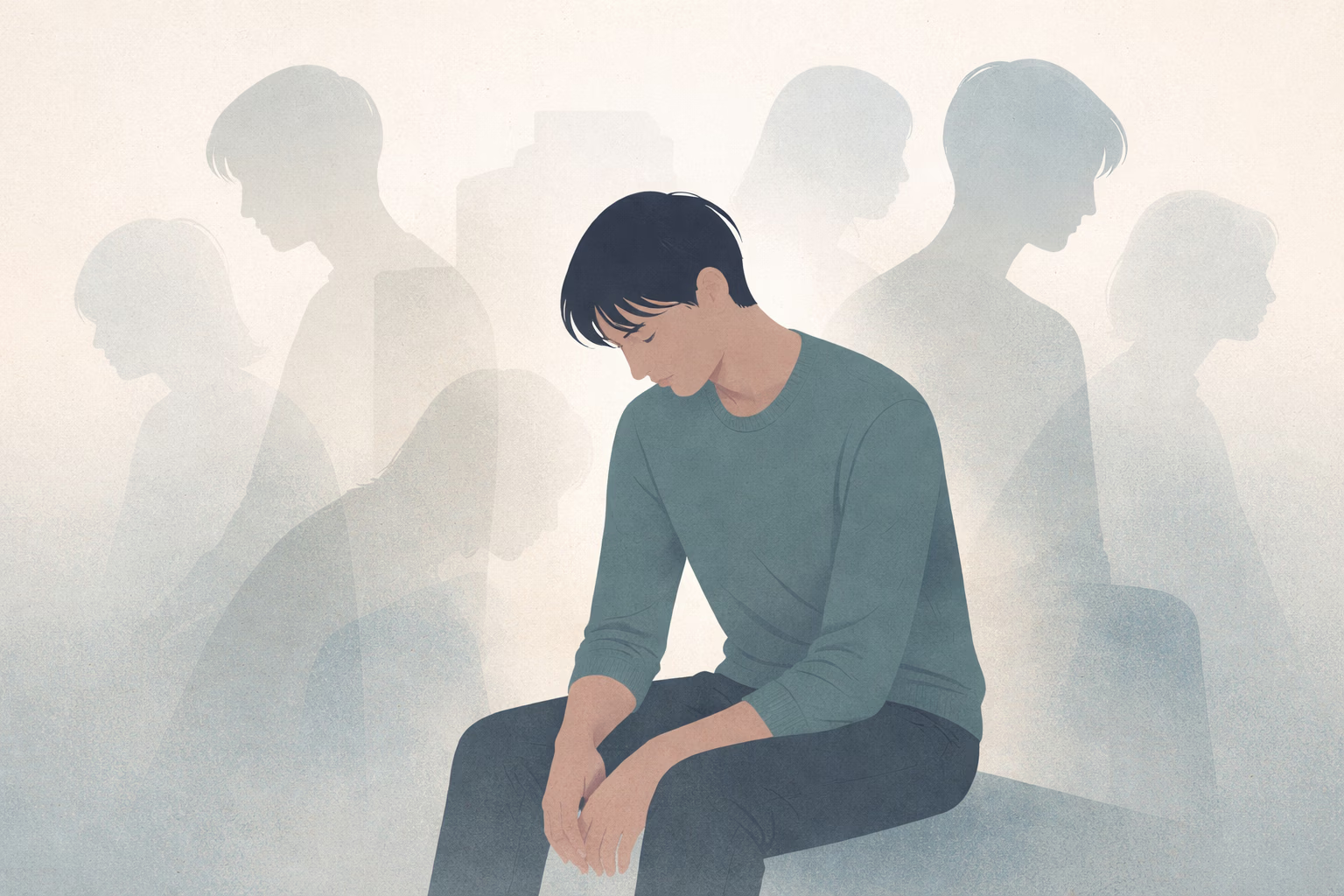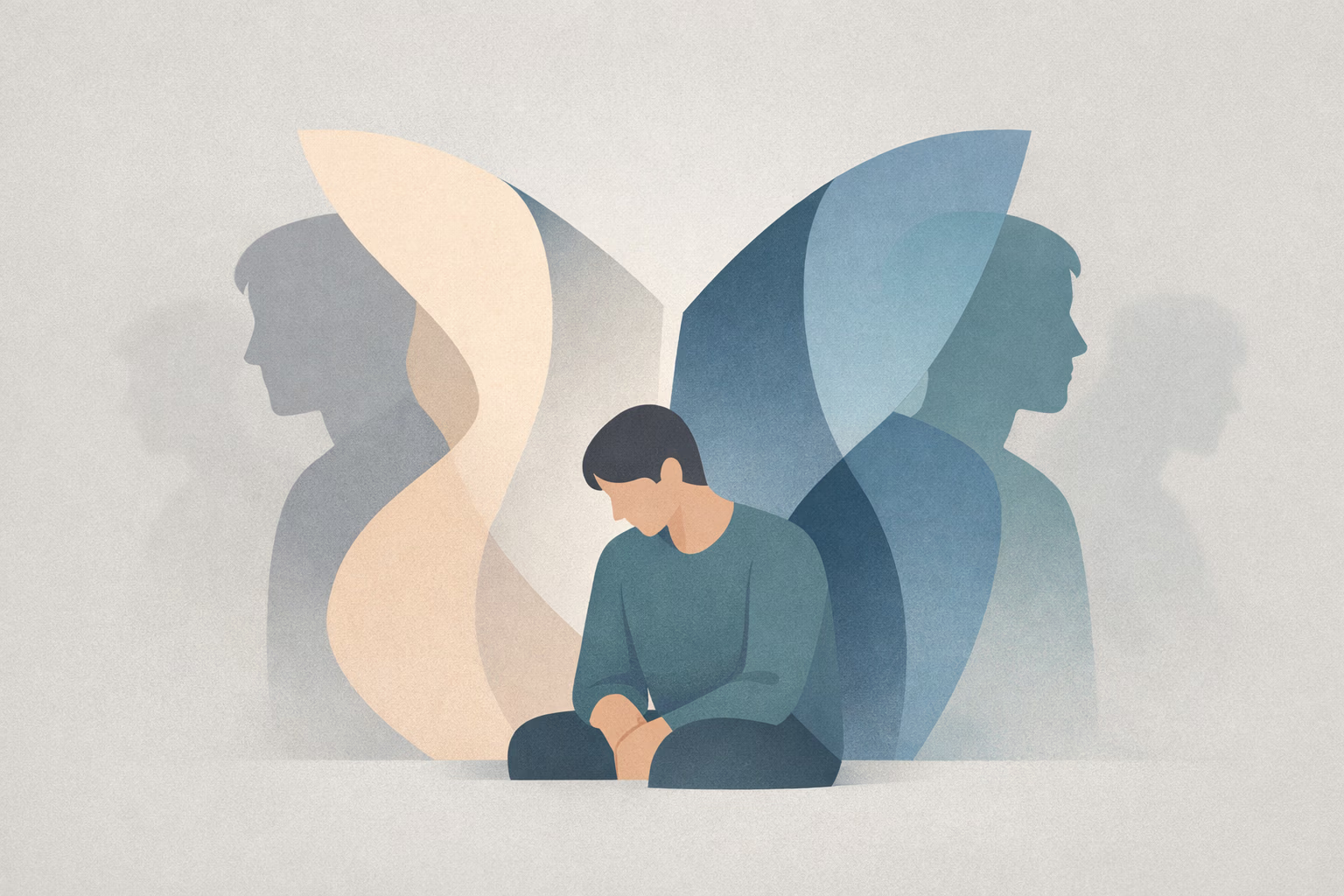
When Your Old Self Fights Your New Self: Identity Conflict
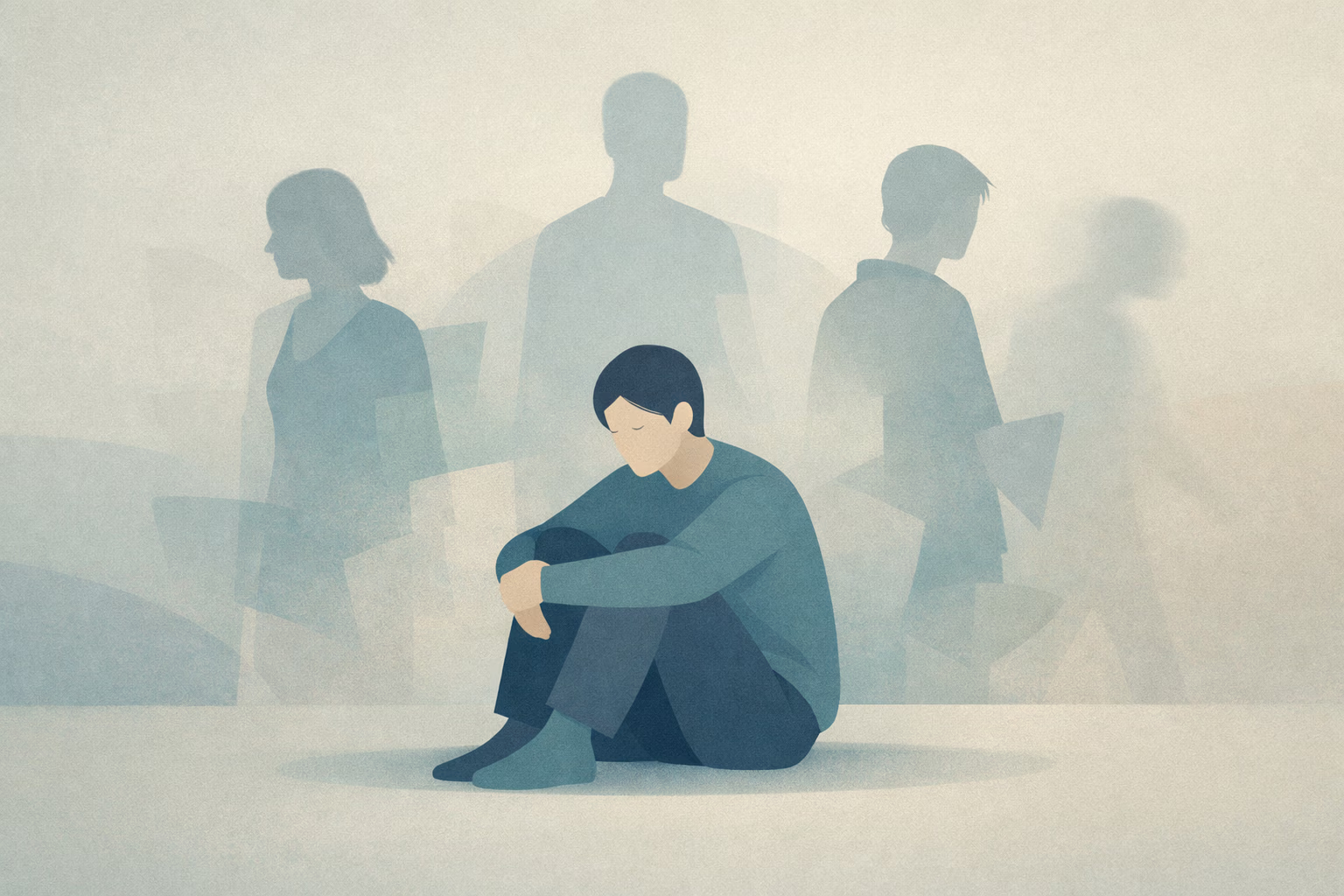
In short: There’s a particular kind of hesitation that shows up right at the edge of a meaningful change: a new role, a different way of relating, a creative risk, a healthier boundary. You can want it—and still feel an internal “no” that doesn’t sound like a thought so much as a full-body stall.
There’s a particular kind of hesitation that shows up right at the edge of a meaningful change: a new role, a different way of relating, a creative risk, a healthier boundary. You can want it—and still feel an internal “no” that doesn’t sound like a thought so much as a full-body stall.
What if the fear isn’t about the change itself, but about what the change would make you?
In a meaning-based view of wellbeing, this resistance is less about motivation and more about coherence. Your system is oriented around the identity you’ve already lived into—what others expect, what you can predict, what has closure. When a new possibility threatens that continuity, your nervous system often responds the way it would to any uncertain social terrain: with caution, tightening, and delay.
The fear of becoming someone new often looks ordinary from the outside: postponing a conversation, reworking a draft endlessly, staying in a role that no longer fits. Inside, it can feel like static—anxiety, self-doubt, or a sudden inability to access clarity when a decision would shift your self-concept.
These responses are common when a change would alter “who I am” in a visible or lasting way. Research on identity threat and resistance to change suggests that when a behavior or choice collides with an established self-view, resistance increases even when the change is beneficial. [Ref-1]
Identity is not just a story you tell; it’s also a set of neural predictions about how you will act, how others will respond, and what will be safe. When a potential future self is unfamiliar, the brain has fewer reliable templates for “what happens next.” That unpredictability can be processed as threat—especially in social contexts where belonging and credibility matter. [Ref-2]
Under load, the system tends to prioritize what’s known. Not because the known is best, but because the known is easier to stabilize. The result can be a subtle reflex: returning to familiar roles, familiar standards, familiar problems—anything with a well-worn pathway and a clear script.
When your system can’t predict the social cost of a new identity, it often treats the uncertainty itself as the cost.
Humans evolved in groups where role clarity mattered. Predictability supported cooperation, reduced conflict, and protected belonging. The “social brain” is designed to track status cues, inclusion cues, and relational stability—often automatically and quickly. [Ref-3]
So when you consider becoming someone new—more visible, more assertive, more honest, more ambitious, more tender—your system may run an implicit scan: Will this change my place with people? The fear is not necessarily about emotion; it’s often about consequences that haven’t been fully mapped.
What might your system be trying to keep continuous?
Identity transitions often contain a “between” period—no longer fully the old self, not yet stabilized in the new one. That liminal zone can feel exposed: fewer scripts, fewer automatic competencies, less certainty about how you’ll be received. [Ref-4]
In that context, resisting change can deliver quick relief. It narrows the range of outcomes. It returns you to a role you can perform without extra processing. In nervous-system terms, it reduces demand and restores predictability, even if only temporarily.
This is why the resistance can be so convincing: it doesn’t present itself as fear. It presents itself as “not yet,” “not sure,” “not enough information,” or “I’ll do it when I’m more ready.”
The tricky part is that short-term comfort can come from stepping away from self-awareness and self-updating—especially after a perceived ego threat. [Ref-5] The system experiences a reduction in internal friction, and that relief can be mistaken for proof that avoidance was the correct choice.
But meaning doesn’t grow from perpetual stand-down. Over time, repeatedly choosing what preserves the old identity can thin out coherence: your values point one way, your daily behavior points another, and your internal narrative has no clean ending.
That mismatch can feel like:
Identity evolves through lived completion: trying, updating, receiving feedback, and integrating what’s now true. Without that completion, the system keeps open loops—unfinished roles, half-decisions, postponed conversations, unrealized commitments to values.
In an avoidance loop, hesitation protects the current identity, and the immediate relief reinforces the hesitation. Over time, “who I am” becomes defined not only by what you’ve done, but by what you reliably step away from.
Developmental research on identity formation shows that identity can include both change and stability over time; what matters is whether the system can form coherent commitments rather than staying indefinitely unformed. [Ref-6]
Relief changes state. Closure changes structure.
Many people assume avoidance is a single decision—an obvious “I won’t.” More often, it’s distributed across small protective maneuvers that reduce exposure and delay consequence. Some of these maneuvers resemble classic defense patterns described in psychology, but they don’t need to be treated as pathology to be understandable. [Ref-7]
When a choice would transform identity, you might notice:
Structurally, these patterns share one function: they reduce exposure to the consequences of becoming someone new.
When avoidance becomes a long-term strategy, identity can shrink toward what is most defensible rather than what is most meaningful. You may become highly skilled at maintaining continuity, but less able to tolerate the natural instability that comes with growth.
Research on fearing identity-based judgment suggests that concealment and vigilance around how you’ll be evaluated can carry costs—stress load, reduced wellbeing, and constrained self-expression. [Ref-8] Even when the “new self” is not a stigmatized identity, the same structural pressure can appear: keep it hidden until it’s guaranteed safe.
Over time, this can reinforce a self-limiting narrative: not as a belief problem, but as a lived pattern that keeps producing the same evidence.
Your nervous system is a learning system. When it detects threat, it looks for what reduces the threat. If postponing, minimizing, or returning to an old role lowers activation, that reduction becomes informative: this worked. The loop tightens.
Studies suggest humans can detect identity-threatening information in a rapid, non-strategic way—meaning the “alarm” can occur before you consciously endorse it. [Ref-9] That helps explain why people can feel thrown off by a simple email, an opportunity, or a compliment that implies a larger identity shift.
The result is not just one avoided change. It can become a broader narrowing: fewer risks, fewer endings, fewer chances for a new identity to become real enough to feel settled.
The turning point is often not a sudden boost in confidence, but a change in the conditions around the identity transition. When nervous-system load lowers and safety cues increase, the system can tolerate experimentation without treating every step as a referendum on your worth.
Research linking mindfulness and emotion regulation to brain function is often interpreted as “better awareness,” but the deeper relevance here is capacity: more room to stay present with uncertainty without immediately collapsing back into the old script. [Ref-10]
In this frame, reflection is not the same as integration. Understanding can name the pattern; integration happens when a new identity gains real-world closure—when the body and the social environment register, repeatedly, that the new way of being can complete and continue.
What if becoming someone new isn’t a leap—what if it’s a series of completions?
Identity is formed in contact with other people. When you’re held in a relational field that offers steadiness—mentorship, friendship, community, healthy partnership—the cost of transition drops. You’re less alone with uncertainty, and the new role has a place to land.
Social support and social integration are robustly associated with better health and stress buffering, which matters because identity shifts are inherently demanding on regulation systems. [Ref-11] Support doesn’t “convince” you to change; it reduces the penalty of being in-between.
Social modeling can also soften the threat signal: seeing someone embody a value-aligned life provides a template. It offers the nervous system an example of continuity on the other side of change.
As the system finds more stability, the “new self” stops feeling like a performance and starts feeling like an orientation. There’s often more curiosity and less internal debate—not because doubt disappears, but because the decision no longer requires constant re-authorization.
In contextual approaches like ACT, flexibility is supported by processes that help people relate differently to thoughts and internal signals while staying oriented to values. [Ref-12] In a meaning-density frame, the felt difference is subtle but important: choices begin to carry a sense of “this fits” that is grounded in lived alignment, not in motivational intensity.
You may notice:
When identity transitions complete, energy often shifts. Less fuel is spent on protecting the old self-concept, and more becomes available for direction: relationships, work, creativity, service, play. This isn’t about becoming a different person overnight; it’s about letting the next version of you become socially and physiologically real.
Research on identity transitions and possible selves describes how voluntary change can involve instability followed by new coherence—where the emerging identity becomes organized enough to guide action. [Ref-13] In lived terms, it can feel like fewer internal negotiations and more straightforward movement.
Agency grows when your life stops arguing with your values.
This is one of the quiet signs of integration: the new identity doesn’t need constant protection or explanation. It holds.
The fear of becoming someone new is often a signal that your system is approaching an identity boundary—an edge where the old coherence can’t fully contain what matters now. That signal isn’t evidence that you’re not ready or not capable. It may simply indicate that the costs and consequences haven’t yet found enough closure to feel safe.
When people develop more psychological flexibility, they’re better able to stay oriented to values even in the presence of discomfort and uncertainty. [Ref-14] In a meaning-centered frame, that flexibility isn’t “pushing through”; it’s the capacity to remain in contact with what matters while the new identity takes shape through completion.
Becoming someone new, then, isn’t a betrayal of who you were. It can be the nervous system’s slow, careful way of updating your life so it matches what you already know is meaningful.
Identity change can feel threatening because it asks for a new kind of continuity. Not a tighter grip on the old self, and not a forced reinvention, but a coherent next chapter that your body and your relationships can recognize as real.
When flexibility and self-leadership increase, people tend to experience more choicefulness and less entanglement with threat-based loops. [Ref-15] In everyday language: the future stops feeling like a verdict, and starts feeling like a direction.
And that is often what “someone new” actually is—someone more aligned, more complete, and more able to stand down.
From theory to practice — meaning forms when insight meets action.
Because identity isn't just a story you tell — it's a set of neural predictions about how you'll act, how others will respond, and what will be safe. When a potential future self is unfamiliar, the brain has fewer reliable templates for 'what happens next.' That unpredictability gets processed as threat, especially in social contexts where belonging and credibility matter. The hesitation often shows up as overthinking, perfection cycles, sudden practicality ('this isn't the right time'), or self-doubt that intensifies right before a meaningful step. These aren't character flaws. They're the social brain doing its evolutionary job — preferring continuity because predictability supports cooperation and protects belonging.
Because identity transitions contain a 'between' period — no longer fully the old self, not yet stabilized in the new one. That liminal zone feels exposed: fewer scripts, fewer automatic competencies, less certainty about how you'll be received. Resisting change delivers quick relief by narrowing outcomes and returning you to a role you can perform without extra processing. In nervous-system terms, it reduces demand and restores predictability. The Avoidance Loop is convincing because it doesn't present as fear. It presents as 'not yet,' 'not sure,' 'I'll do it when I'm more ready.' But short-term comfort can come from stepping away from self-updating, and that relief gets mistaken for proof that avoidance was the correct choice.
Coherence. Identity evolves through lived completion — trying, updating, receiving feedback, integrating what's now true. Without that completion, the system keeps open loops: unfinished roles, half-decisions, postponed conversations, unrealized commitments to values. Over time, 'who I am' becomes defined not only by what you've done, but by what you reliably step away from. Identity can shrink toward what's most defensible rather than what's most meaningful. You may become highly skilled at maintaining continuity while losing tolerance for the natural instability that comes with growth. The mismatch shows up as dullness, background restlessness, increased sensitivity to judgment, and the sense that life is busy but not completing.
Conditions, mostly — not willpower. The turning point isn't a sudden boost in confidence; it's a change in load and supports. When safety cues increase and capacity rises, the system tolerates experimentation without treating every step as a referendum on your worth. Becoming someone new isn't a leap. It's a series of completions — small, real-world experiences where the new way of being can finish and continue. Supportive relationships matter because identity forms in contact with others. Held in a steady relational field, the cost of transition drops; you're less alone with uncertainty and the new role has somewhere to land. Agency grows when your life stops arguing with your values.
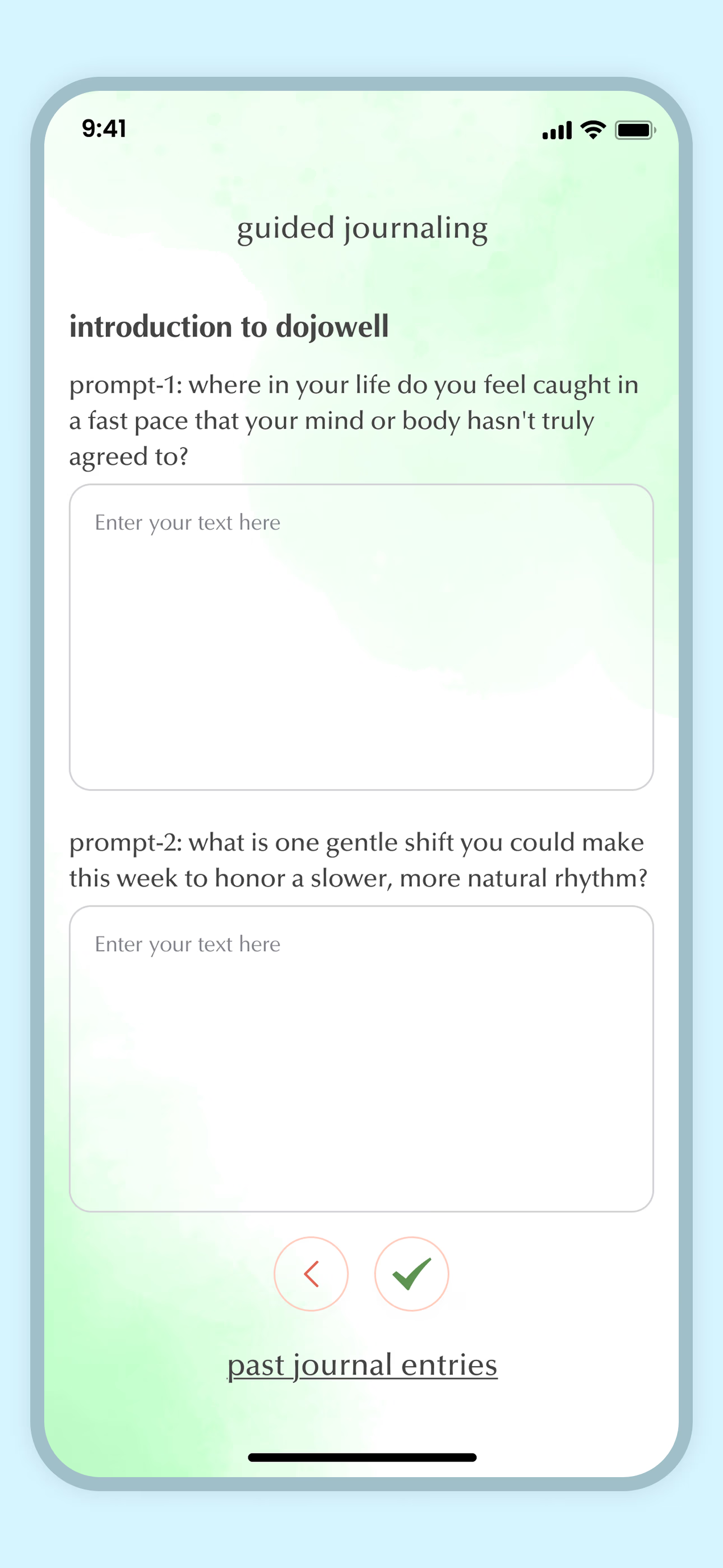
From Science to Art.
Understanding explains what is happening. Art allows you to feel it—without fixing, judging, or naming. Pause here. Let the images work quietly. Sometimes meaning settles before words do.
One Quiet Window, one insight, one reflection — every Sunday