The Fear of Silence: Why Stillness Feels Uncomfortable
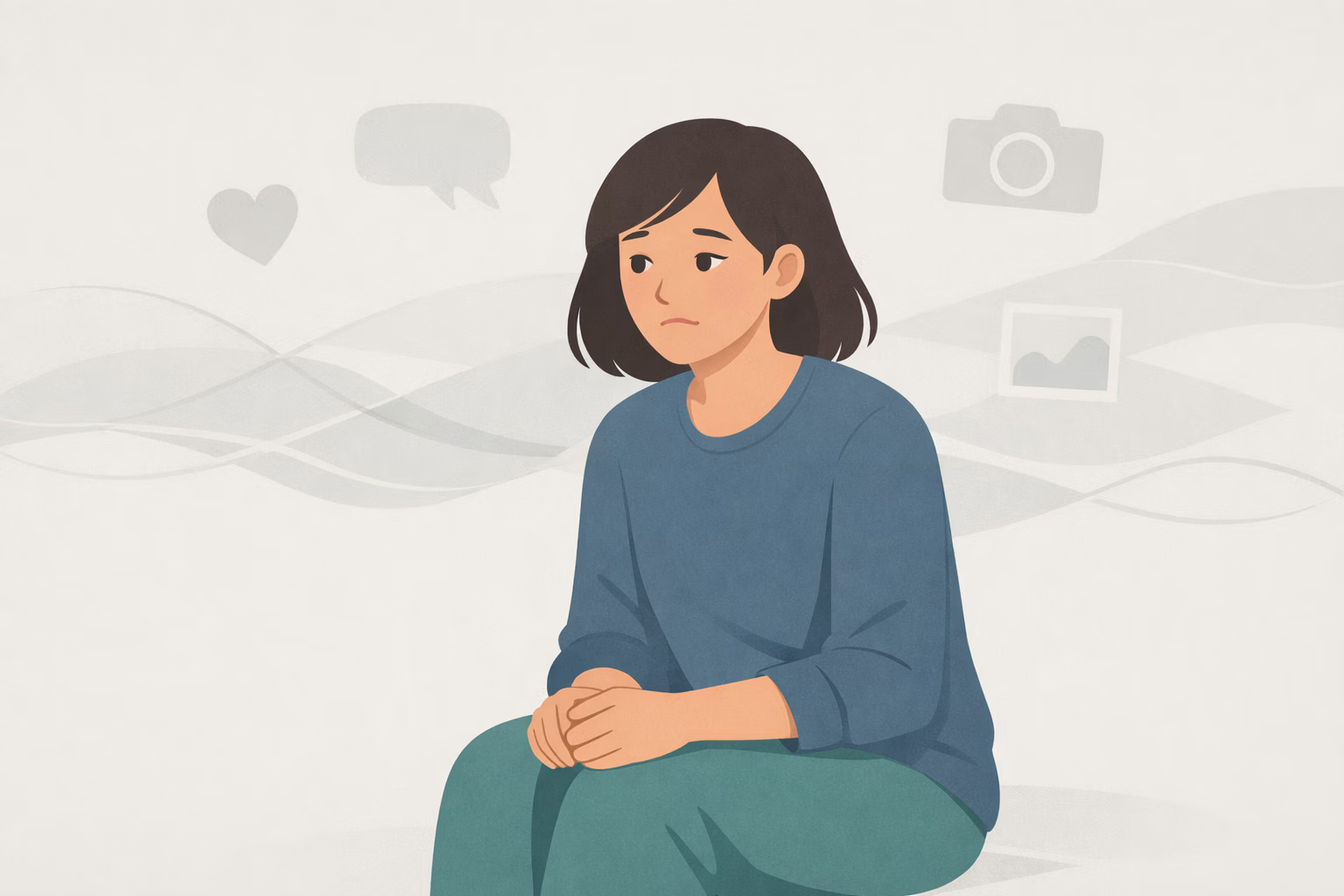
In short: In many digital spaces, “being seen” quietly becomes shorthand for “being real.” A day without posting can feel less like a neutral pause and more like a small social disappearance—like you’re slipping out of the group photo of life. Why does silence feel like you’re falling behind, fading out, or failing?
In many digital spaces, “being seen” quietly becomes shorthand for “being real.” A day without posting can feel less like a neutral pause and more like a small social disappearance—like you’re slipping out of the group photo of life.
Why does silence feel like you’re falling behind, fading out, or failing?
This pressure isn’t a personal flaw or a lack of confidence. It’s often what happens when a nervous system is asked to use visibility as proof of belonging, stability, and worth—inside an environment that rarely offers a clean sense of “done.”
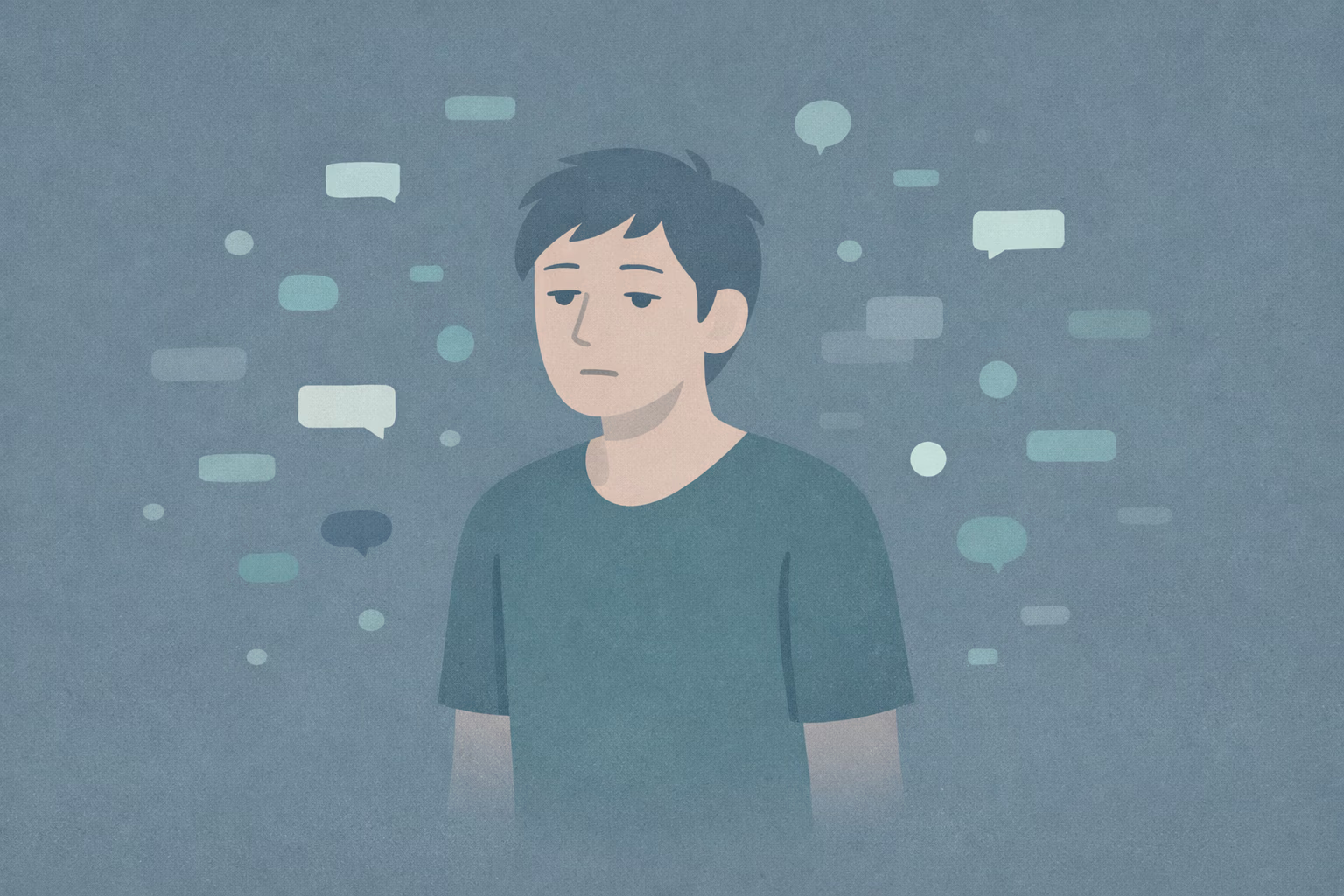
Silence can register as more than quiet. For many people, it lands as a subtle threat: If I’m not active, I’m not included. If I’m not visible, I’m forgettable. That sensation can show up as restlessness, checking impulses, or a low-grade urgency to “put something out.”
From the inside, it can feel like the world is moving and you’re not moving with it. Not because you truly need to broadcast, but because your system is tracking social time—who’s present, who’s noticed, who’s still in the loop. Research on FoMO describes how perceived social absence can heighten unease and preoccupation with what others are doing. [Ref-1]
This is not vanity. It’s a coherence problem: when your social existence is measured by signals, the absence of signals can feel like a loss of place.
Human nervous systems are built to monitor social standing because, historically, exclusion carried real consequences. In modern contexts, that same monitoring system can treat “online quiet” as a possible drop in status, access, or belonging.
So the urge to share can function like a protective reflex: a quick way to reduce uncertainty and restore a sense of social location. Studies on social media–induced FoMO describe how these platforms can intensify perceived social threat and drive compensatory behaviors aimed at re-establishing connection or relevance. [Ref-2]
In other words, posting isn’t always about expression. Sometimes it’s about stabilizing a body that doesn’t like ambiguous social silence.
Long before phones, people signaled presence through proximity, routine, shared work, and repeated contact. The group had many ways to confirm: you’re here, you matter, you belong. That confirmation created closure—your place in the social fabric was repeatedly re-established without needing constant performance.
Digital life compresses those signals into small, frequent tokens: posts, stories, reactions, comments. These become fast proxies for older forms of social confirmation. And because they’re quick, they can become the default language of belonging—especially when offline life is busy, mobile, or isolated.
Many wellness resources note that heavy social media involvement can shape mood and self-evaluation by repeatedly tying social value to visible feedback. [Ref-3]
When you share and receive any response—views, likes, a message—your system often gets a short-lived “all clear.” It’s not just psychological reassurance; it’s a state shift. Uncertainty drops, social risk feels lower, and your mind can settle for a moment.
But because the environment keeps moving, that relief is rarely allowed to complete into stable closure. The signal decays quickly: the feed refreshes, attention shifts, and the nervous system returns to scanning. This is one reason FoMO and posting urges can cycle—brief soothing followed by renewed activation. [Ref-4]
“It felt good for a minute. Then it felt like I needed to do it again so I wouldn’t disappear.”
There’s a common belief that frequent updates sustain closeness: if people know what you’re doing, you’re connected. Yet constant sharing can also fragment presence by turning lived experience into a stream of outputs—each one needing to be packaged, timed, and interpreted.
Instead of experiences completing in the body as “that happened, and it’s mine,” moments can become half-lived: one part happening, another part being translated for display. Qualitative work on social media FoMO describes how ongoing comparison and ongoing monitoring can pull attention away from the present and into constant social accounting. [Ref-5]
When meaning requires completion, fragmentation matters. Not because sharing is wrong—but because an experience that never fully lands can keep the system subtly unfinished.
In a “power loop,” visibility becomes a stand-in for stability. Instead of knowing where you stand through grounded relationships and lived continuity, you know where you stand through metrics and updates. Your social location becomes something you must re-confirm.
This creates a structural swap: lived identity (“I am this kind of person, I’m in these relationships, I have this place”) gets replaced by broadcast identity (“I am what I last posted, and how it landed”). The system then treats posting not as optional expression but as maintenance—like keeping a signal alive.
Research discussions of FoMO and social media describe how these cycles can reinforce repeated checking and repeated engagement, especially when the platform environment keeps uncertainty high. [Ref-6]
When visibility becomes tied to safety and worth, certain patterns make sense as regulation strategies—not as personality defects.
Studies on Instagram self-image regulation and contingent self-worth describe how anxiety and self-evaluation can become linked to managing impressions and monitoring feedback. [Ref-7]
Perpetual sharing doesn’t only consume time—it can change the texture of attention. When the mind is repeatedly preparing to present, experiences can become thinner, more performative, or more externally referenced.
Over time, this can reduce the capacity for unmediated moments—experiences that don’t need a caption, justification, or audience. Research linking social anxiety, contingent self-worth, and authenticity suggests that when social evaluation becomes central, self-expression can become less natural and more strategically managed. [Ref-8]
This isn’t about “being more emotional” or “going deeper.” It’s about load and completion: when attention is split, fewer experiences get to fully finish inside you.
Platforms often reward consistency, immediacy, and engagement. That reward structure doesn’t just influence what people post; it can train nervous systems to treat visibility as a resource that must be protected.
The result is a feedback loop: posting reduces uncertainty, engagement provides a brief “signal return,” and the absence of engagement can feel like a drop in social oxygen—even when your actual relationships haven’t changed.
Resources summarizing the mental health impacts of social media describe how intermittent rewards and comparison pressures can contribute to compulsive use patterns and heightened anxiety. [Ref-9]
There’s a difference between state change and settling. Posting can change state quickly—reducing uncertainty for a moment. But inner steadiness tends to come when experiences complete: when your day, your choices, and your relationships register as “real” without needing external confirmation.
This is where silence can become something other than absence. Not a void to fill, but a space where the nervous system stops scanning long enough to let life consolidate into identity.
What if invisibility isn’t failure—just the system learning that you can still be held without a signal?
General mental health guidance on social media notes that balance and well-being improve when online engagement doesn’t dominate self-evaluation or daily rhythm. [Ref-10]
Some relationships are maintained through a steady sense of each other, not constant proof. They can tolerate gaps without turning them into stories about worth. In those bonds, silence doesn’t automatically mean distance—it can simply mean life is being lived.
When relational security is grounded in shared presence (in person, voice, meaningful exchange), the nervous system receives clearer safety cues. That reduces the need to perform existence publicly. Research reviews on social media and social anxiety discuss how certain use patterns can intensify evaluation concerns, while supportive connection can buffer stress. [Ref-11]
“The people who know me don’t need updates to remember I’m here.”
When the pressure to broadcast eases, many people notice a specific kind of relief: fewer internal interruptions, less scanning, and more capacity for moments to feel complete on their own. It’s not a dramatic transformation; it’s a gradual stand-down.
In that quieter state, attention can return to ordinary details—taste, temperature, timing, conversation cadence—without the extra layer of translation into shareable output. Research discussing social media exposure and stress describes how reduced pressure and more mindful engagement are associated with improved well-being and less FoMO-driven activation. [Ref-12]
Silence, here, isn’t withdrawal. It’s a context where the system can finish what it starts.
When visibility is the main measure of relevance, life can start to feel like it exists for the record. Not because you’re shallow, but because the environment keeps rewarding documentation over completion.
As the loop loosens, a different orientation becomes possible: experiences don’t have to become content to count. Identity can become less about what’s broadcast and more about what’s consistently lived—values expressed in real time, in private as well as in public.
Many platform-facing discussions emphasize consistency for reach, which can unintentionally reinforce the idea that frequent posting equals importance. [Ref-13] A coherent life, however, doesn’t require constant proof—because its meaning is carried internally, not only displayed.
In a high-velocity culture, silence is often misread as absence. But silence can also be where experience ripens into meaning—where the nervous system gets the “done” signal that constant sharing can interrupt.
If quiet has been feeling like failure, it may simply indicate how strongly visibility has been trained to function as reassurance. Under sustained social and digital stress, it’s common for systems to cling to whatever provides quick certainty. [Ref-14]
There is dignity in being unposted and still intact—still connected, still real, still here.
Visibility can be meaningful, and sharing can be generous. But a life fully lived is not made real by frequency. It’s made real by completion—by moments that land, relationships that hold, and values that remain true even when no one is watching.
The internet may reward consistency and constant output. [Ref-15] Your nervous system, though, often stabilizes through closure, not performance. And your existence is not conditional on being seen.
From theory to practice — meaning forms when insight meets action.
Because your nervous system is tracking social time, and silence registers as more than quiet — it lands as a subtle threat. If I'm not active, I'm not included; if I'm not visible, I'm forgettable. That's not vanity or weakness. It's a coherence problem. When social existence is measured by signals, the absence of signals can feel like a loss of place. Human nervous systems monitor social standing because exclusion historically carried real consequences. The urge to share functions like a protective reflex — a quick way to reduce uncertainty and restore a sense of social location. Posting isn't always about expression. Sometimes it's about stabilizing a body that doesn't like ambiguous social silence.
Because the relief decays before it can complete into closure. When you share and receive any response, your system gets a short-lived 'all clear' — uncertainty drops, social risk feels lower, the mind settles for a moment. But the environment keeps moving. The feed refreshes, attention shifts, and the nervous system returns to scanning. The signal decays quickly, which is why posting urges cycle: brief soothing followed by renewed activation. It felt good for a minute. Then it felt like I needed to do it again so I wouldn't disappear. Connection isn't the same as contact, and constant sharing can fragment presence by turning lived experience into a stream of outputs.
Often, yes — though not in a moralizing way. Perpetual sharing changes the texture of attention. When the mind is repeatedly preparing to present, experiences become thinner, more performative, more externally referenced. Instead of moments completing in the body as 'that happened, and it's mine,' they become half-lived: one part happening, another part being translated for display. This is a Power Loop where visibility replaces orientation. Lived identity ('I am this kind of person, I'm in these relationships') gets swapped for broadcast identity ('I am what I last posted, and how it landed'). The system treats posting as maintenance — like keeping a signal alive — rather than optional expression.
Like ripening rather than disappearing. When the pressure to broadcast eases, people notice fewer internal interruptions, less scanning, and more capacity for moments to feel complete on their own. It's a gradual stand-down. Attention returns to ordinary details — taste, temperature, conversation cadence — without the extra layer of translation into shareable output. Silence becomes a context where the system can finish what it starts. The people who know me don't need updates to remember I'm here. Your nervous system stabilizes through closure, not performance, and your existence isn't conditional on being seen. There's dignity in being unposted and still intact.
From Science to Art.
Understanding explains what is happening. Art allows you to feel it—without fixing, judging, or naming. Pause here. Let the images work quietly. Sometimes meaning settles before words do.
One Quiet Window, one insight, one reflection — every Sunday