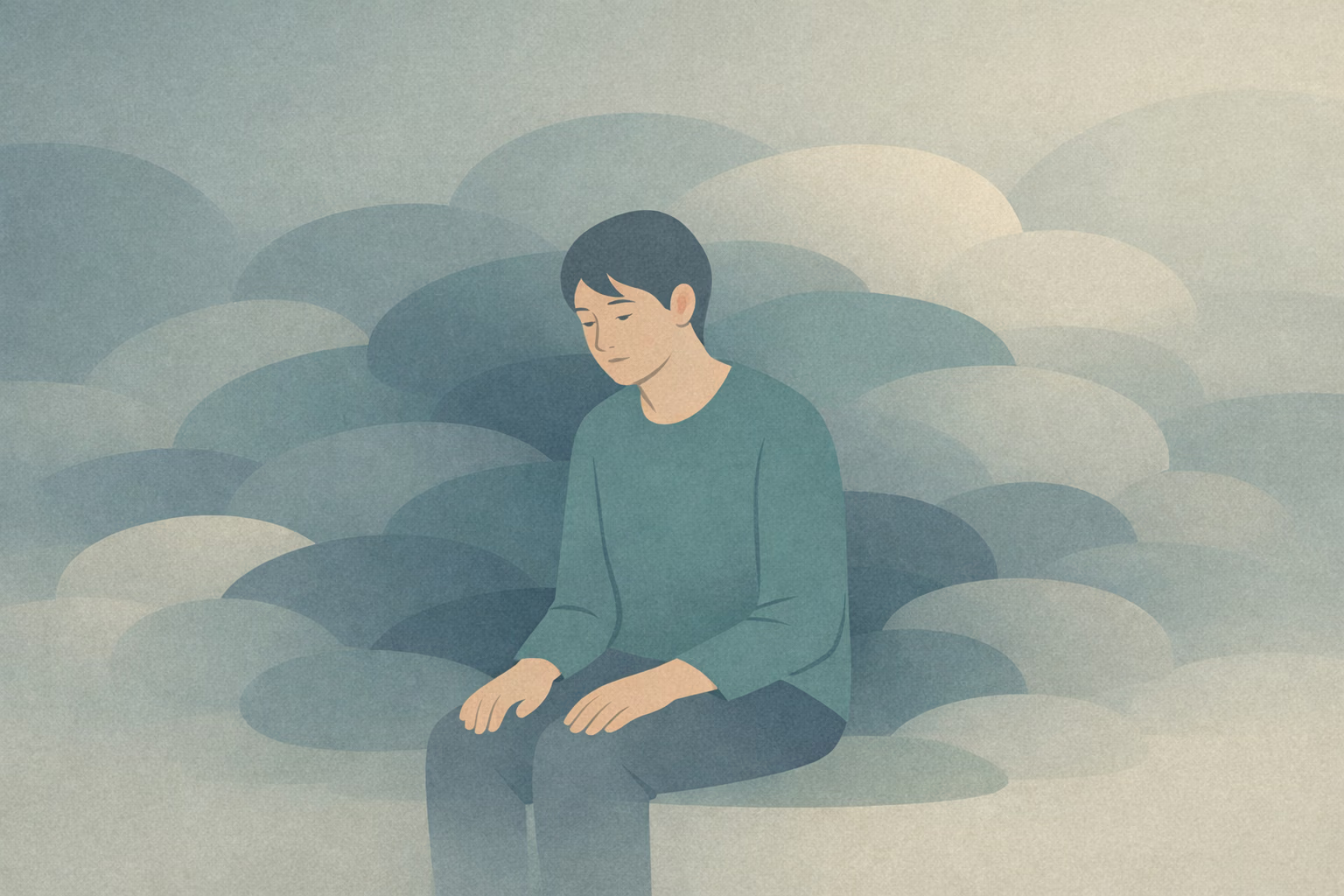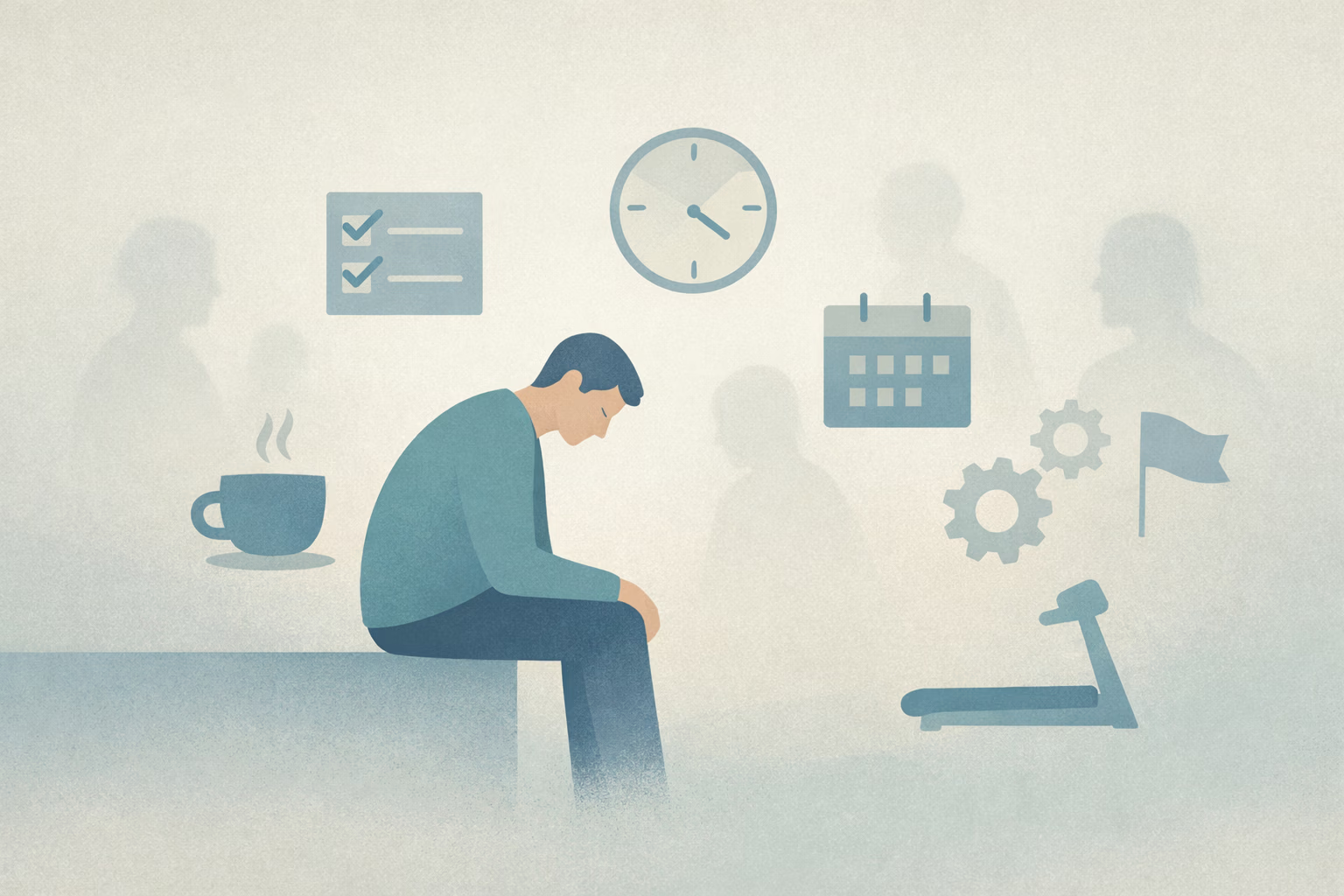
Emotional Exhaustion: When Your Tank Is Empty but Life Keeps Going

In short: Fantasizing more during a hard season can look like “spacing out,” getting pulled into imagined conversations, replaying a different life, or living in a future that feels more breathable than today. Many people interpret this as immaturity, procrastination, or lack of discipline.
Fantasizing more during a hard season can look like “spacing out,” getting pulled into imagined conversations, replaying a different life, or living in a future that feels more breathable than today. Many people interpret this as immaturity, procrastination, or lack of discipline. But often it’s something more basic: a nervous system and a meaning-making mind trying to reduce load.
When life is heavy, your internal world may become the only place that still offers a sense of movement, safety cues, or completion. Imagination can temporarily provide what the day isn’t supplying: relief, coherence, and a version of “done.” That doesn’t make you broken. It suggests your system is trying to protect continuity of self when reality feels too pressurized to metabolize.
What if fantasizing isn’t a character flaw—but a sign that the present has stopped giving your mind a “completion” signal?
There’s a particular kind of heaviness that doesn’t always look dramatic from the outside. It can be steady responsibility, unresolved conflict, chronic uncertainty, or a long stretch of demands without relief. In that terrain, fantasizing often increases—not because someone is “avoiding life,” but because life is not currently offering enough space for the nervous system to settle.
In practice, this can show up as drifting into imagined alternatives: a different relationship, a different job, a different version of you. It’s often paired with longing and a subtle detachment, like your attention is physically present but internally elsewhere. For some people, the pull can become intense and repetitive, especially when stress load remains high. [Ref-1]
Under high load, the system prioritizes immediate stability. That doesn’t always look like calm; it can look like narrowing. Attention becomes more selective, tolerance for friction drops, and the mind seeks states that reduce demand quickly. One common route is narrative simulation: imagining scenes that feel smoother than the current environment.
This shift can be especially pronounced when sleep is disrupted or recovery time is thin. When the body doesn’t get enough stand-down signals, the mind may compensate by creating a self-generated environment that feels more controllable and less effortful to inhabit. In that sense, fantasizing isn’t “random distraction.” It can be a load-management strategy. [Ref-2]
Humans don’t only regulate through sensation; we regulate through story. Your brain continually builds a sense of “who I am” and “where my life is going,” even when circumstances are messy. When reality becomes too constraining or incoherent, imagination can step in to preserve continuity—an internal thread of meaning that says, “There is still a self here, and there is still a future.”
This is one reason fantasizing can intensify during times when you feel stuck, unseen, or unable to influence outcomes. The mind generates alternative scenes not just for pleasure, but to keep identity from collapsing into helplessness or blankness. Some modern descriptions call the more impairing end of this spectrum “maladaptive daydreaming,” but the underlying function often begins as protection and self-stabilization. [Ref-3]
Fantasizing can provide a temporary refuge because it offers what the present may be withholding: agency, tenderness, resolution, recognition, or simply a quieter pace. In imagined space, you can reach endings. You can be understood. You can be chosen. You can finish the conversation. You can become the version of yourself that feels more coherent.
That relief is not “fake” in the body. The nervous system responds to imagery and narrative with real shifts in state—softening, energizing, settling, or numbing—depending on what the fantasy supplies. So it makes sense that the mind returns to the place where the system feels more held. [Ref-4]
Sometimes the fantasy isn’t about wanting more. It’s about needing the present to stop pressing on you for a minute.
Fantasy often comes with a feeling of resolution: the scene lands, the tension releases, the story makes sense. The body may register that as a kind of “closure,” even though nothing in the external world has changed. This is where things get tricky. The nervous system can receive a short-lived done-signal from imagination, while the lived situation remains open-ended.
Over time, this can create a split: your inner world offers completion, while the outer world continues to generate unresolved loops—unfinished decisions, unclear belonging, chronic evaluation, ongoing conflict. Research on maladaptive daydreaming notes that day-to-day increases can track with stress and distress, which fits the idea that fantasy rises when completion in real life is scarce. [Ref-5]
When your mind “finishes” something internally, what stays unfinished externally?
In an avoidance loop, the system finds a fast state-change that reduces pressure—without reducing the conditions creating the pressure. Fantasizing can serve that role. It changes how the present feels, even when the present remains structurally the same.
This doesn’t require a story about fear or denial. A simpler explanation is mechanical: when reality offers high demand and low closure, the mind seeks a lower-demand channel that still produces coherence. Imagination is portable, private, and immediate. That makes it a reliable relief mechanism under stress, which is why some sources link increased daydreaming with stress states and overwhelm. [Ref-6]
Because fantasizing is internally soothing, it can quietly expand—especially when life feels relentless or meaning feels thin. People often notice patterns like these:
None of these patterns automatically mean something is “wrong with you.” They can reflect a nervous system seeking stability when stability is not being supplied by the environment.
The cost isn’t that fantasizing is “bad.” The cost is that when imagination becomes the primary refuge, lived time can start to lose its weight and traction. Presence—your ability to stay with what’s here—can weaken simply because the present is repeatedly outcompeted by a smoother internal alternative.
As that happens, agency can feel smaller. Not because you lack willpower, but because the system has learned a reliable route to relief that doesn’t require engaging with friction. The present starts to feel like a place where nothing completes, while fantasy feels like the only place where things resolve. Over time, some people report functional impacts: diminished focus, lowered engagement, and more difficulty meeting life on its actual terms. [Ref-8]
Fantasy provides contrast. If your internal world reliably delivers recognition, control, romance, competence, or peace, the external world can start to feel harsher—not necessarily because it worsened, but because the comparison sharpened. This is a common reinforcement pattern: the more relief fantasy provides, the more stark reality can feel.
Then the mind has an even stronger reason to retreat again, especially in moments of boredom, ambiguity, or low reward. Some clinical and counseling descriptions note that when fantasy becomes problematic, it can intensify dissatisfaction with daily life, creating a feedback loop where disengagement grows. [Ref-9]
It’s not that reality is unbearable all the time. It’s that fantasy makes “bearable” feel far away.
There’s a difference between imagination as a creative capacity and imagination as a life-support system. When internal safety is low and closure is scarce, fantasy may take on the job of stabilization. When safety cues increase and load reduces, fantasy can return to its original role: a companion to living, not a substitute for it.
This shift isn’t driven by insight alone. Understanding why you fantasize can be orienting, but the deeper change tends to show up as physiological settling: less urgency to leave, more tolerance for ordinary moments, and a growing ability to remain with the present long enough for experiences to complete. In discussions of maladaptive daydreaming, the distinction between immersive fantasy and disruptive escape is often framed around impact and control, not morality. [Ref-10]
Fantasy often becomes strongest where aloneness is strongest—especially the kind of aloneness where your experience isn’t mirrored, named, or received. When a person has to carry their full meaning-making privately, the narrative system works overtime. Imagined relationships, imagined recognition, imagined belonging can become substitutes for the stabilizing effect of being understood.
When there is shared understanding—someone who can hold context, reflect your reality, and reduce the sense that everything must be processed alone—the nervous system often spends less time generating private shelter. This is not about “opening up” as a virtue. It’s about load distribution. Research and writing on escapism frequently notes the role of stress, unmet needs, and disconnection in driving retreat into fantasy. [Ref-11]
When life becomes more coherent—when demands are not constantly spiking, when your days contain more completion, when your identity feels less contested—attention often returns on its own. Not as a forced focus, but as a natural re-entry. The present becomes less punishing to inhabit.
People sometimes describe this as having more “bandwidth.” Ordinary tasks carry less internal resistance. Moments feel more contiguous instead of fractured. Imagination doesn’t disappear; it simply stops being the only place where the self can breathe. In trauma-informed discussions, fantasy is often described as a way the mind creates distance when the system is overburdened; as burden reduces, the need for distance can soften. [Ref-12]
What changes when the present starts giving you small “done” signals again?
Imagination is not the enemy of reality. In its healthy form, it helps humans plan, create, empathize, and orient toward meaning. The same capacity that builds escape scenes can also illuminate direction: what you value, what kind of relationships fit, what environments support your nervous system, what endings you’re longing for.
The difference is the role it plays. As shelter, fantasy provides relief without completion. As guidance, fantasy points toward completion—toward choices and identities that can eventually settle into lived experience. In broader writing on escapism, this distinction is often framed as the difference between entertainment that restores and escape that displaces living. [Ref-13]
If you’ve been fantasizing more, it may be less about weakness and more about unmet needs for closure, rest, belonging, or coherent direction. Your system may be asking for a life that is more livable—not through pressure, but through reduced load and more completed loops.
There can be agency here without forcing anything: noticing what your fantasies reliably provide can clarify what feels missing in the present. Often, the content of the fantasy is not random—it’s a map of meaning, safety cues, and identity that wants a place to land. Many descriptions of escapism point to it as a response to stress and dissatisfaction, not a moral failure. [Ref-14]
When life is heavy, the mind may build lighter worlds so you can keep going. That is a form of protection. And over time, it can also become a signal: the self is looking for completion, not constant escape.
Imagination tends to become steadier when it’s allowed to be what it originally was—an inner guide and creative resource—rather than the only place where your nervous system can rest and your identity can feel whole. [Ref-15]
From theory to practice — meaning forms when insight meets action.
Because life isn't currently offering enough space for the nervous system to settle, so the mind reaches for lighter worlds. Under high load, the system prioritizes immediate stability — that doesn't always look like calm, it can look like narrowing. Attention becomes more selective, tolerance for friction drops, and the mind seeks states that reduce demand quickly. One common route is narrative simulation: imagining scenes that feel smoother than the current environment. Fantasizing isn't random distraction. It's load-management. The narrative system also protects identity continuity — keeping a thread of meaning that says there is still a self here, and there is still a future, even when reality feels unlivable.
Because the nervous system responds to imagery and narrative with real shifts in state — softening, energizing, settling. The body can register imagined closure as a kind of Done Signal, even though nothing in the external world has changed. That's the trick: inner closure paired with outer incompletion. Over time, this creates a split. Your inner world offers resolution while the outer world keeps generating unresolved loops — unfinished decisions, unclear belonging, ongoing conflict. The fantasy isn't fake in the body, but it doesn't move the structural conditions creating the heaviness. The relief is real and temporary; the situation remains.
Mechanically. When reality offers high demand and low closure, the mind seeks a lower-demand channel that still produces coherence. Imagination is portable, private, and immediate, which makes it a reliable relief mechanism under stress. The Avoidance Loop here doesn't require fear or denial — it's structural substitution: relief replaces regulation. Fantasy provides contrast, so the more relief it delivers, the starker reality can feel. Then the mind has stronger reason to retreat again in moments of boredom or low reward. Disengagement grows. Sometimes the fantasy isn't about wanting more — it's about needing the present to stop pressing on you for a minute.
Yes. Imagination isn't the enemy of reality — in its healthy form, it helps humans plan, create, empathize, and orient toward meaning. The same capacity that builds escape scenes can illuminate direction: what you value, what kind of relationships fit, what environments support your nervous system, what endings you're longing for. The difference is the role it plays. As shelter, fantasy provides relief without completion. As guidance, fantasy points toward completion — toward choices and identities that can eventually settle into lived experience. Often the content of a recurring fantasy is a map of meaning, safety cues, and identity wanting a place to land.
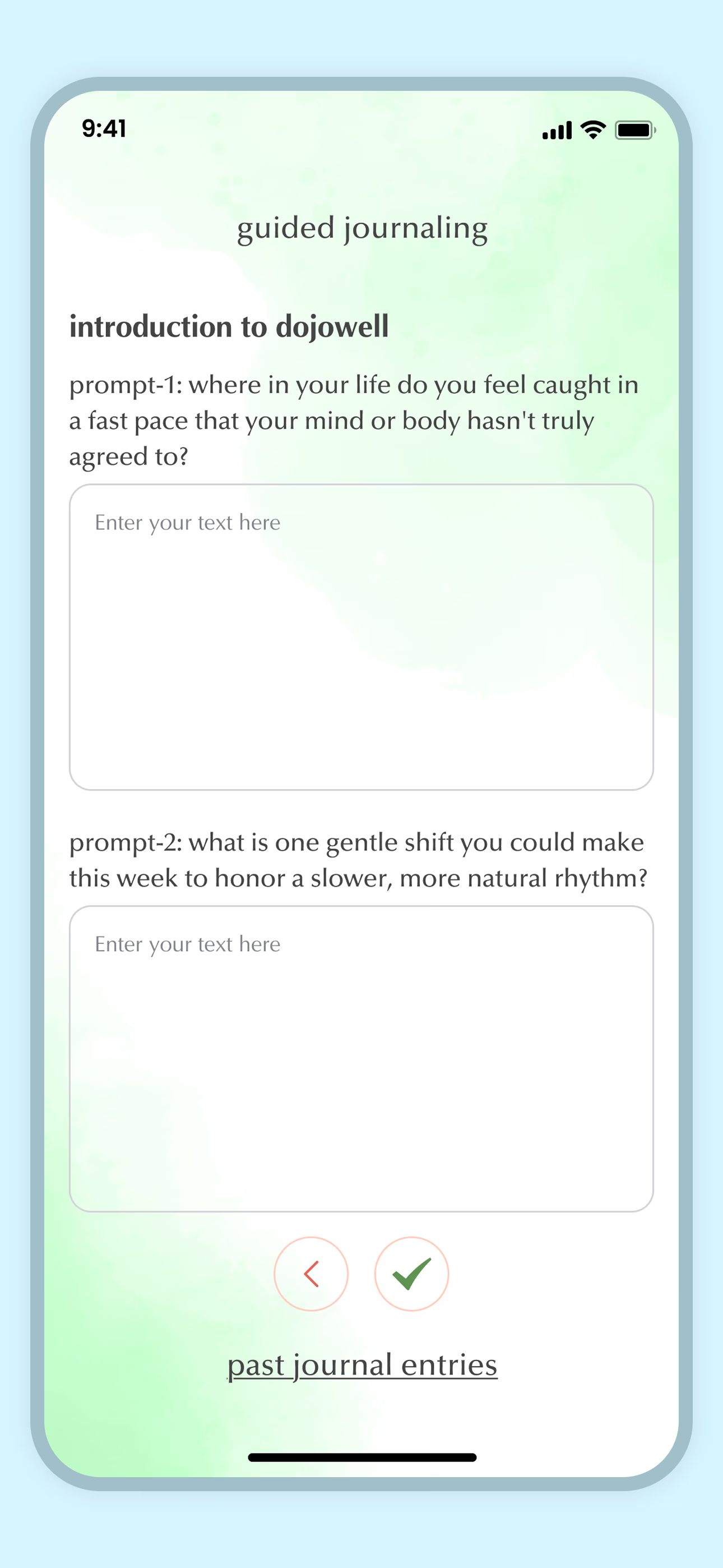
From Science to Art.
Understanding explains what is happening. Art allows you to feel it—without fixing, judging, or naming. Pause here. Let the images work quietly. Sometimes meaning settles before words do.
One Quiet Window, one insight, one reflection — every Sunday