Breathing Apps: Quick Relief or Temporary Fix?
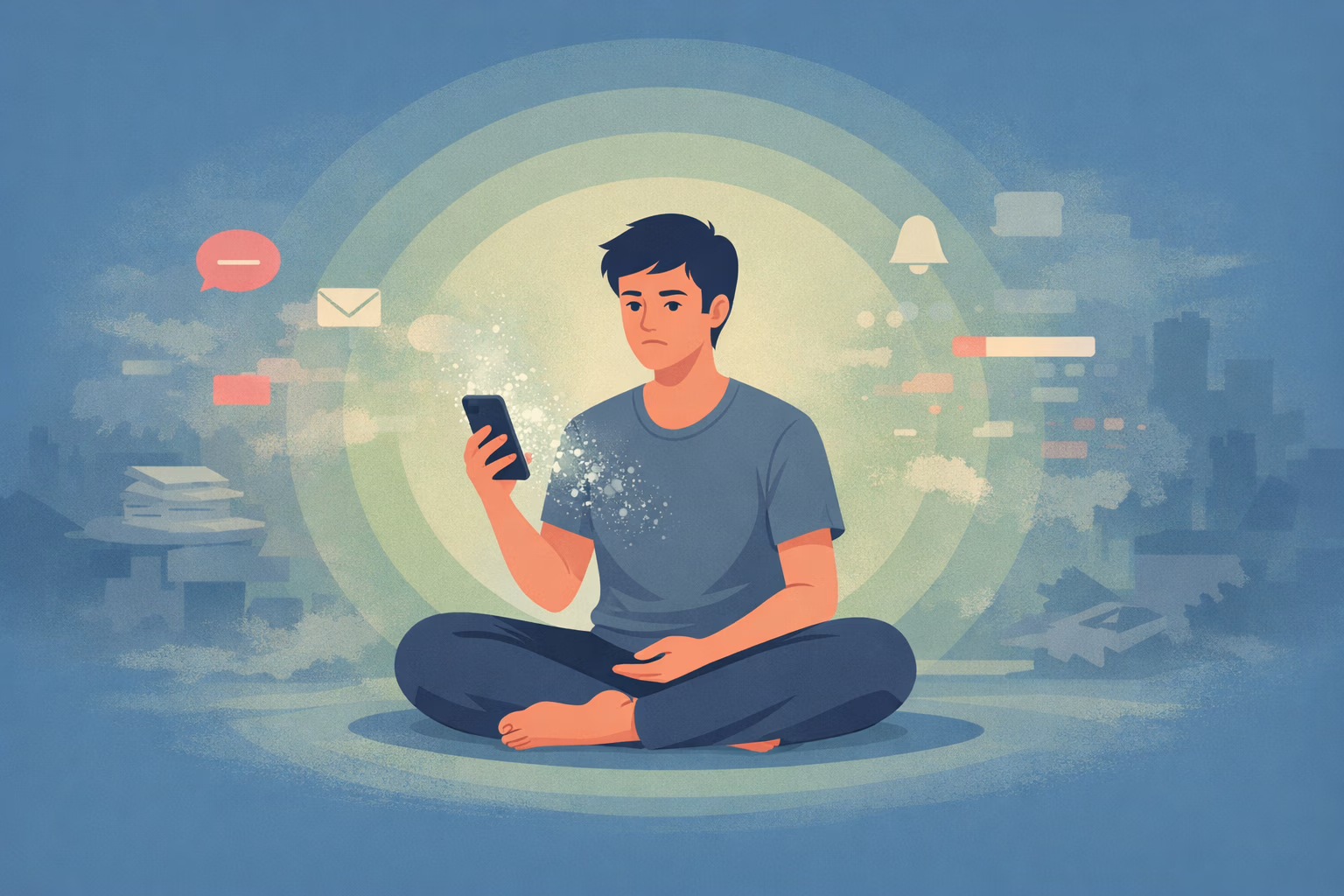
In short: Meditation apps can be genuinely soothing. For many people, a short guided session lowers stress, softens mental noise, and brings a sense of steadiness back online. That matters—especially in a world that rarely offers clean pauses.
Meditation apps can be genuinely soothing. For many people, a short guided session lowers stress, softens mental noise, and brings a sense of steadiness back online. That matters—especially in a world that rarely offers clean pauses.
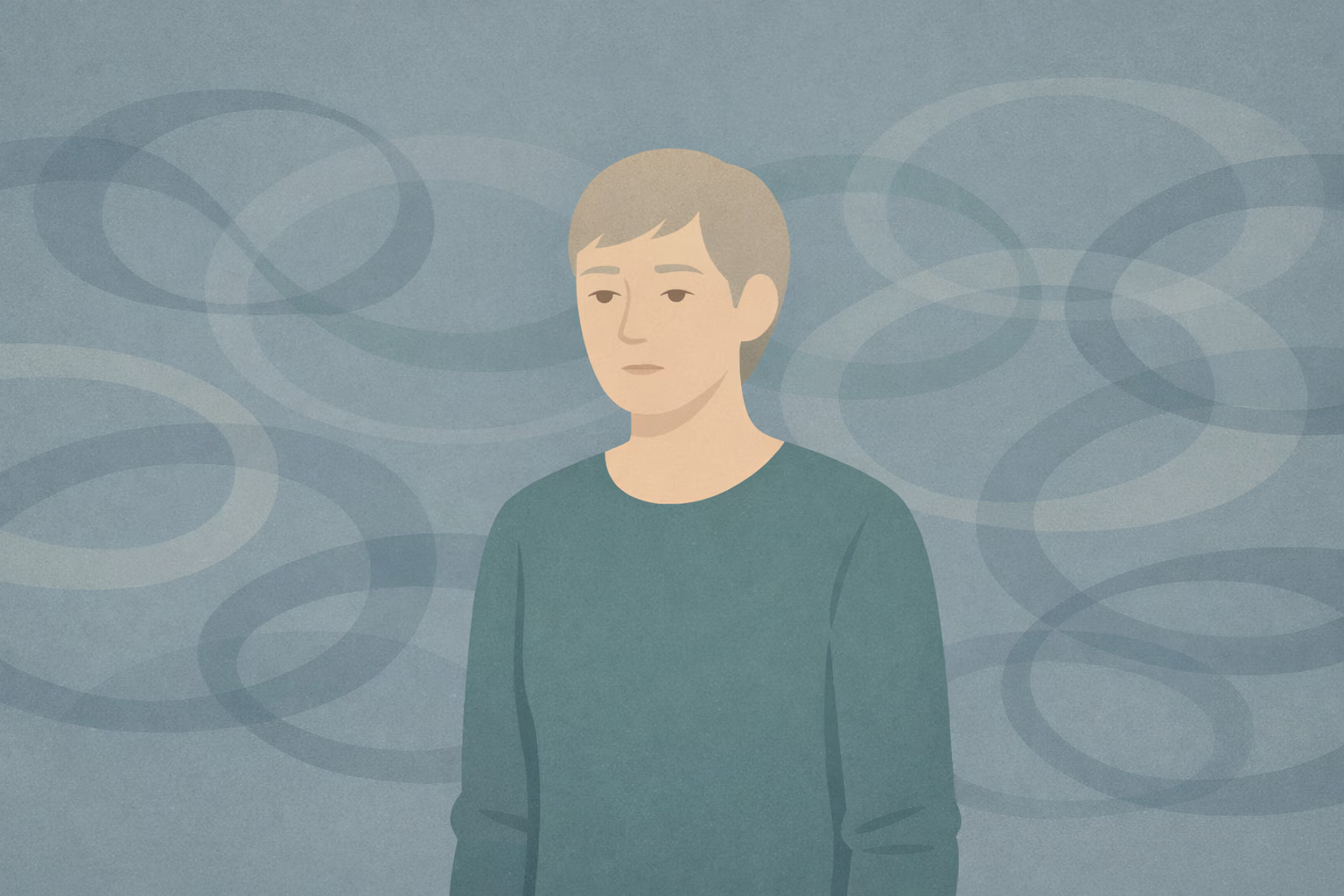
And still, a common experience follows: you close the app and your life reappears exactly as it was. The same pressures, the same looping thoughts, the same vague sense that something important isn’t landing. That can feel confusing—like, “If this works, why am I still stuck?”
What if the problem isn’t that you’re doing it wrong—but that calm and lasting change are different biological events?
Many people know the sequence: a session ends, your shoulders drop, your breath settles, and your mind feels more spacious. Then a meeting, a message, or a familiar worry hits—and it’s like nothing “stuck.”
This isn’t a personal flaw. It’s a predictable nervous-system pattern: short-term downshifts can reduce load, but unfinished loops in daily life keep pulling for completion. When the conditions that created the strain are still active, the system returns to its prior settings because that’s what it has learned to do under those conditions.
Research reviews generally find small to moderate benefits from app-based mindfulness for stress and well-being, with limited scope for deeper, durable change across contexts. [Ref-1]
App meditations are often very good at state change: they cue slower breathing, direct attention, and offer soothing language. These inputs can shift autonomic arousal and reduce immediate distress.
But identity-level stability usually requires something different than state change. It requires completion—experiences that reach a “done” signal and integrate into how you live, choose, and relate. Without completion, the nervous system may accept the calm as a brief shelter, then resume scanning for what remains unresolved.
Systematic reviews of mindfulness apps in nonclinical populations commonly report modest effects and high attrition—suggesting that while many people can feel better in the moment, sustained reorganization is harder to achieve through an app alone. [Ref-2]
Human regulation isn’t only about feeling less activated. It’s also about becoming oriented: “What matters here? Who am I in this situation? What am I responsible for? What can stand down now?”
That orientation is meaning-based and narrative-based. It’s how the brain and body reduce uncertainty over time—by linking experiences to values, roles, and a livable story. Calm can make space for that process, but calm itself doesn’t automatically build it.
Meta-analytic work supports that app-guided mindfulness can reduce negative emotions and stress, but the question of how these shifts translate into broader life reorganization remains complex. [Ref-3]
It’s worth saying clearly: meditation apps can help. For many people, a consistent brief practice can reduce perceived stress and improve well-being—especially when life is running hot and there are few other supports. [Ref-4]
That benefit is often physiological and attentional: the session creates a protected pocket where inputs slow down, the mind stops chasing as many threats, and the body gets a clearer signal of safety. In Meaning Density terms, this is relief—valuable, human, and sometimes essential.
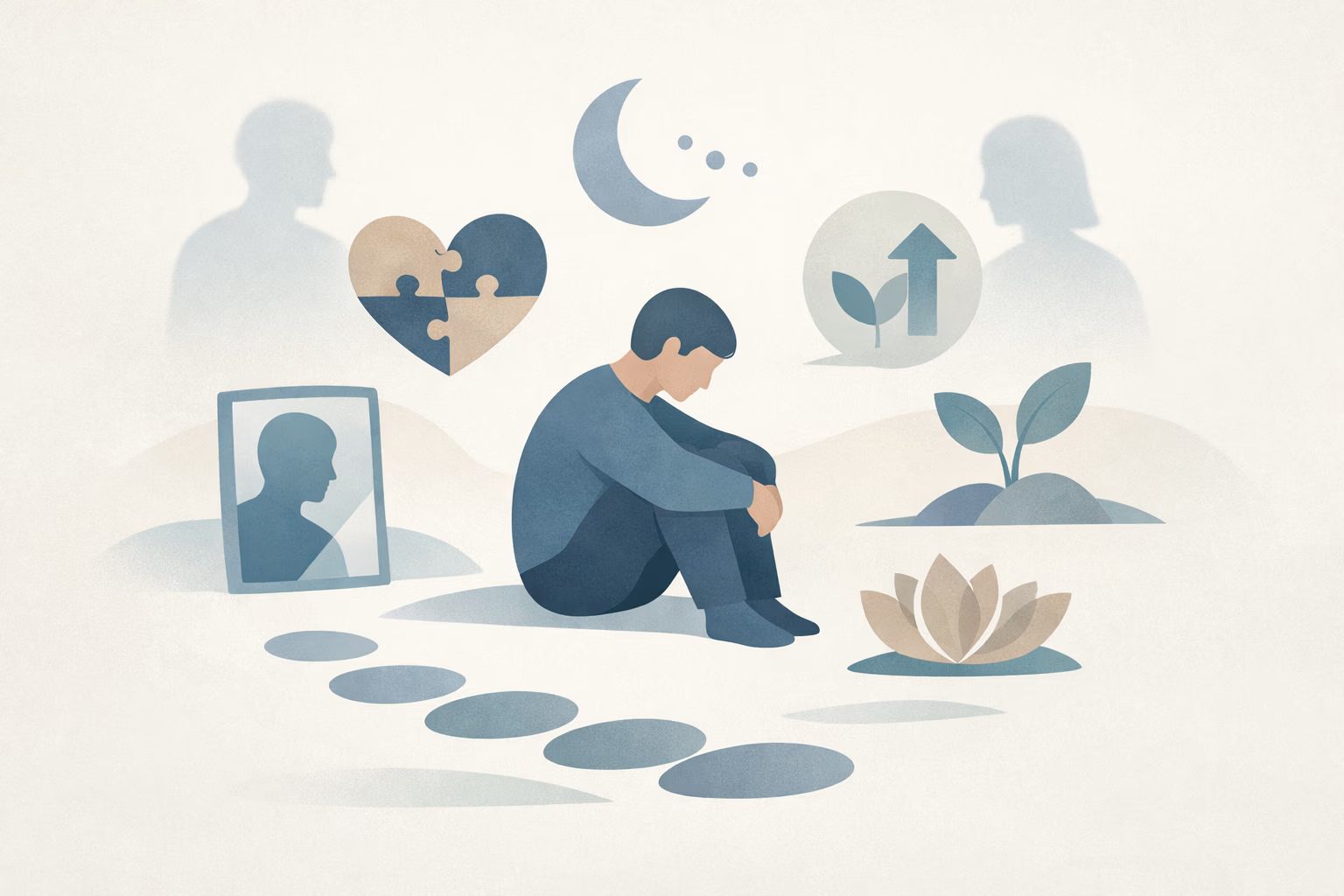
Relief, though, is not the same as integration. Relief is a temporary change in state; integration is a longer-term settling that follows completion.
Calm can feel like progress because it is progress in one domain: your system has moved from high load to lower load. But lasting change often requires that the patterns generating overload become coherent—so the nervous system can stop holding them open.
In app use, the calm is clean and measurable (minutes, streaks, checkmarks). The deeper questions are messier and slower: What keeps reactivating me? What remains unfinished? What part of my life doesn’t have a “done” signal yet?
Some trials show stress reductions early on with weakening effects over time, which fits a pattern where initial novelty and support create relief, but broader life structures remain unchanged. [Ref-5]
“Avoidance” doesn’t have to mean fear or suppression. Structurally, it can simply mean that a tool provides enough relief to postpone completion of what’s unresolved. The loop looks like this: pressure builds → app provides downshift → life resumes without closure → pressure builds again.
This is not a moral failure. It’s a design match: the app offers immediate, reliable regulation in a world that often offers delayed, uncertain resolution. When a system is overloaded, it will prefer fast safety cues.
Evidence reviews of major commercial apps often describe mixed and generally modest effects, alongside concerns about study limitations and conflicts of interest—another reason the “tool” may not translate into deep re-patterning by itself. [Ref-6]
When a practice becomes the place you go to feel okay, it can quietly stop being a place you go to become oriented.
Real-world data suggests many users do experience stress reduction with app-based mindfulness over weeks. [Ref-7] The question is what happens outside the session—when the same triggers, roles, and unfinished demands return.
Some common patterns that fit “relief without closure” include:
These aren’t signs of failure. They’re signs that the practice is operating mainly as state regulation, not as completion.
When a tool reliably lowers arousal, the nervous system learns: “This is how I get through.” That can be helpful in the short term. But if the larger life loop stays incomplete, the system doesn’t receive the deeper stand-down signal that comes from resolution.
Over time, the result can be a strange plateau: you become better at calming down, yet your sense of self doesn’t feel more coherent. Your values may still feel abstract, your decisions still pressured, your relationships still sticky, your work still porous. The practice hasn’t failed; it simply hasn’t had a pathway into identity-level completion.
Clinical summaries often note that mindfulness apps may offer small benefits, while lacking key elements found in fuller programs and supports—elements that help experiences consolidate beyond the session. [Ref-8]
Apps are built to keep attention. Many features aren’t malicious; they’re simply aligned with the attention economy. But they can accidentally replace real closure with simulated closure: streaks, badges, daily reminders, the feeling that you “did your wellness.”
That can create a subtle substitution: the nervous system gets a quick completion cue (a checkmark), while the underlying loop (a conflict, a grief, a misaligned role, a depleted season) remains open. The result is more practice without more integration.
Critical reviews of the meditation app ecosystem highlight how commercial wellness can shape what “mindfulness” becomes—often a productized form of relief rather than a context-rich process that reshapes life. [Ref-9]
Lasting change tends to happen when calm is not treated as the endpoint, but as a doorway into coherence. Not “I feel better,” but “My system can now register what matters, what’s unfinished, and what I’m actually living.”
This bridge is meaning-related, not motivational. It involves values and identity because those are the structures that help the nervous system decide what to protect, what to release, and what can finally complete. Calm supports the capacity to face complexity; coherence is what allows complexity to settle.
Some critiques of mainstream mindfulness argue that “value-neutral” calm can unintentionally detach practice from ethical and meaning frameworks—frameworks that are often necessary for a life to reorganize. [Ref-10]
What changes when the question shifts from “How do I feel right now?” to “What is my life asking to become complete?”
Identity doesn’t form in isolation. Humans stabilize through social learning, mirrored norms, and the feeling that our experiences make sense in a shared world. An app can guide attention, but it can’t fully provide the relational context where new roles and commitments become real.
That’s one reason meditation can feel profound in retreats, groups, mentorship, or community settings: not because the technique is different, but because the meaning environment is thicker. There are more signals of coherence—language, examples, accountability, and lived models of how a practice translates into choices.
Meta-level reviews also raise questions about the scope and depth of effects when mindfulness is decontextualized from culture and concept, hinting at why added context can matter for durable outcomes. [Ref-11]
When calm is linked to meaning and identity, people often describe something quieter than “bliss” and sturdier than “relief.” The system isn’t constantly negotiating whether it’s safe; it has more stable orientation. Signals return more reliably: hunger, tiredness, interest, discomfort, a sense of yes/no.
This is not about optimizing the self. In fact, commercialization can push mindfulness toward constant self-monitoring—another form of pressure that keeps loops open. Critiques of commodified mindfulness often point out how easily a practice can be reframed as personal improvement labor rather than a route to coherence and connection. [Ref-12]
Stability can look ordinary: fewer internal negotiations, fewer emergency fixes, and more moments that simply feel complete.
Meditation can serve many functions. In a high-load world, using it for relief is legitimate. The problem begins when relief becomes the only function—and the practice quietly turns into a detour around unfinished meaning.
When meditation supports orientation, it tends to sit inside a larger life context: values that have names, roles that feel chosen rather than tolerated, commitments that create real closure. Then practice isn’t just soothing—it becomes a place where the nervous system receives clearer signals about what can stand down and what needs completion.
Critiques of corporate and app-based mindfulness often describe how meditation is positioned as symptom management within stressful systems—useful, but limited unless linked to deeper meaning and structural change. [Ref-13]
Meditation apps are often best understood as tools for nervous-system relief: they can downshift arousal, reduce perceived stress, and create a brief pocket of safety. For many people, that’s not trivial—it’s a form of care. [Ref-14]
But identity transformation usually asks for more than a regulated state. It asks for completion: experiences that land, choices that cohere with values, and a life story that feels less fragmented. When those pieces are missing, it’s normal for calm to fade and old patterns to return—not because you failed, but because the larger loop is still open.
Seeing this clearly can reduce shame. It also restores agency: you’re not “bad at meditation.” You’re a human nervous system looking for closure and coherence.
Lasting change rarely arrives as a permanent calm. More often, it arrives as a steadier relationship with your own life—where actions, values, and identity fit together with fewer loose ends.
Meditation can support that process, especially when it’s part of a wider meaning environment that helps experiences complete and settle into who you are. Approaches that explicitly engage meaning and identity point toward why deeper transformation is possible—but also why it can’t be reduced to minutes logged. [Ref-15]
Nothing is wrong with you if an app helps and yet doesn’t change everything. Relief is real. And so is your system’s quiet insistence on something more coherent.
From theory to practice — meaning forms when insight meets action.
Because short-term downshifts can reduce load, but unfinished loops in daily life keep pulling for completion. A session ends, your shoulders drop, your breath settles — then a meeting or a familiar worry hits, and it's like nothing 'stuck.' The conditions that created the strain are still active, so the system returns to its prior settings. That's not failure. App meditations are often very good at state change: they cue slower breathing, direct attention, offer soothing language. But identity-level stability requires something different than state change. It requires completion — experiences that reach a Done Signal and integrate into how you live, choose, and relate. Calm and lasting change are different biological events.
It can mean progress in one domain — your system moved from high load to lower load. But lasting change often requires that the patterns generating overload become coherent, so the nervous system can stop holding them open. In app use, the calm is clean and measurable (minutes, streaks, checkmarks). The deeper questions are messier and slower: what keeps reactivating me, what remains unfinished, what part of my life doesn't have a Done Signal yet? Some trials show stress reductions early on with weakening effects over time, fitting a pattern where initial novelty creates relief but broader life structures stay unchanged. Calm is a doorway. It isn't the destination.
Avoidance doesn't have to mean fear or suppression — structurally, it can simply mean a tool provides enough relief to postpone completion of what's unresolved. The loop runs: pressure builds, app provides downshift, life resumes without closure, pressure builds again. That's not moral failure. It's a design match — the app offers immediate, reliable regulation in a world that offers delayed, uncertain resolution. When a system is overloaded, it prefers fast safety cues. Add streaks, badges, and gamified completion and the nervous system gets a quick checkmark cue while the underlying loop (a conflict, a grief, a misaligned role) stays open. More practice without more integration.
Connecting calm to orientation, not treating it as the endpoint. The bridge is meaning-related, not motivational. Lasting change happens when calm becomes a doorway into coherence — when the system can register what matters, what's unfinished, and what it's actually living. Identity doesn't form in isolation either. Humans stabilize through social learning, mirrored norms, and the feeling that experiences make sense in a shared world. That's why meditation often feels more profound in retreats, groups, or mentorship — not because the technique is different, but because the meaning environment is thicker. Apps offer relief, which is real care. But identity transformation usually requires completion: experiences that land, choices that cohere with values, and a life story that feels less fragmented.
From Science to Art.
Understanding explains what is happening. Art allows you to feel it—without fixing, judging, or naming. Pause here. Let the images work quietly. Sometimes meaning settles before words do.
One Quiet Window, one insight, one reflection — every Sunday