Wellness Apps Overview: What Actually Helps and What Doesn’t
In short: In 2025, mental wellness apps aren’t just “popular.” They’re becoming a default infrastructure for many people trying to stay steady inside fast-moving lives. Meditation timers, mood trackers, AI chat companions, nervous-system education, breath tools, sleep programs—whole ecosystems are rising to meet something widespread and quiet: the sense of being a little overfull, a little behind, and not fully settled.
In 2025, mental wellness apps aren’t just “popular.” They’re becoming a default infrastructure for many people trying to stay steady inside fast-moving lives. Meditation timers, mood trackers, AI chat companions, nervous-system education, breath tools, sleep programs—whole ecosystems are rising to meet something widespread and quiet: the sense of being a little overfull, a little behind, and not fully settled.
This isn’t only about mental health “problems.” A lot of the demand comes from people who can function, work, and care for others—while also carrying ongoing cognitive noise, social evaluation, and a persistent feeling that nothing is quite complete. When life is full of open loops, the nervous system keeps scanning. Tools that promise quick structure and reassurance naturally become attractive.
What if the wellness app boom is less about fixing individuals—and more about a culture that can’t easily give people a “done” signal?
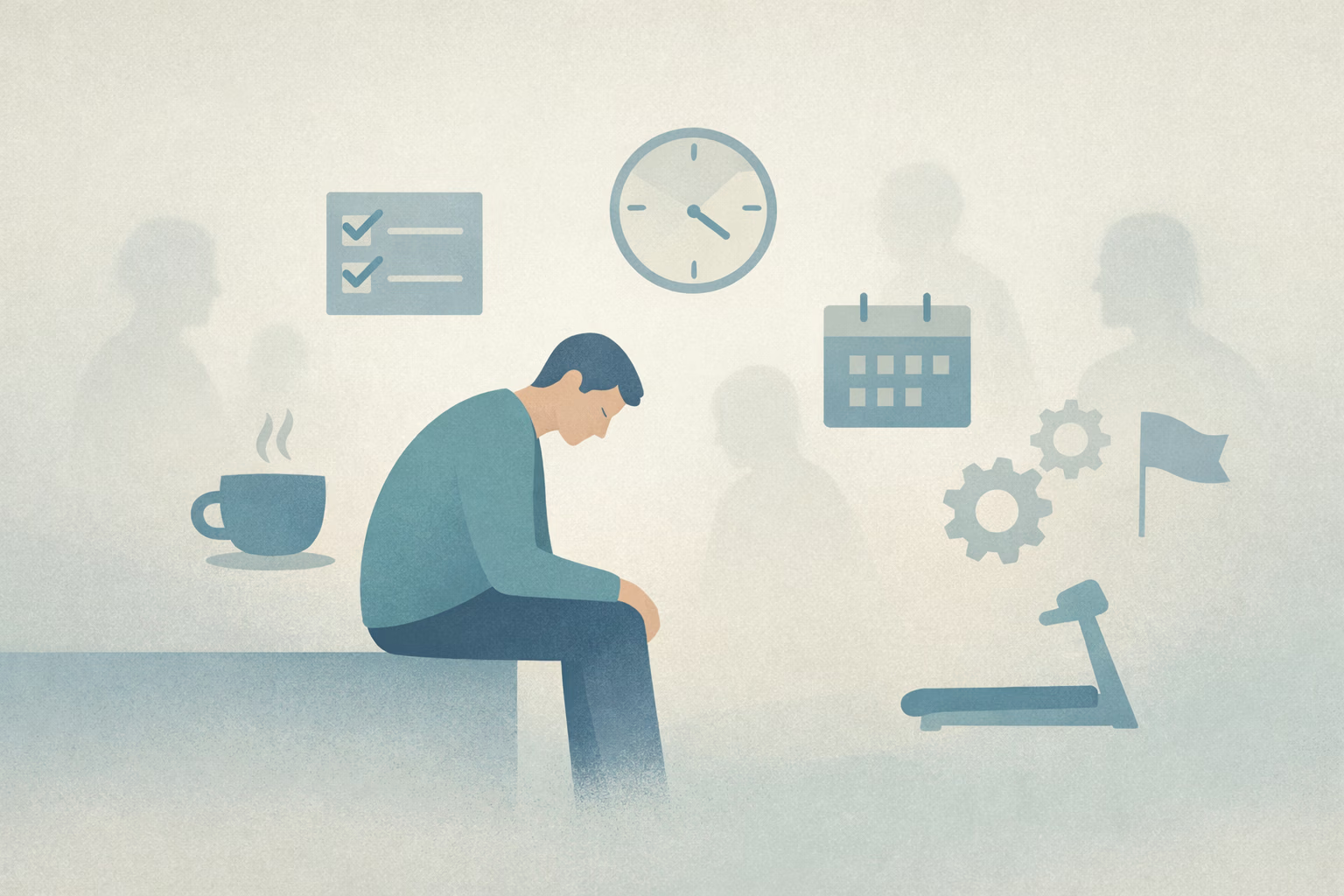
Many people reach for support before anything looks dramatic from the outside. It’s more like quiet exhaustion: too many inputs, too many tabs open, too many micro-decisions, and not enough moments where the system can truly stand down.
In that state, seeking a tool is not evidence of fragility. It’s a predictable response to sustained load—especially when days are filled with interruptions, performance cues, and constant context-switching. The growth of mental health and wellness apps reflects how common this background overwhelm has become. [Ref-1]
Sometimes the hard part isn’t “feeling bad.” It’s never feeling finished.
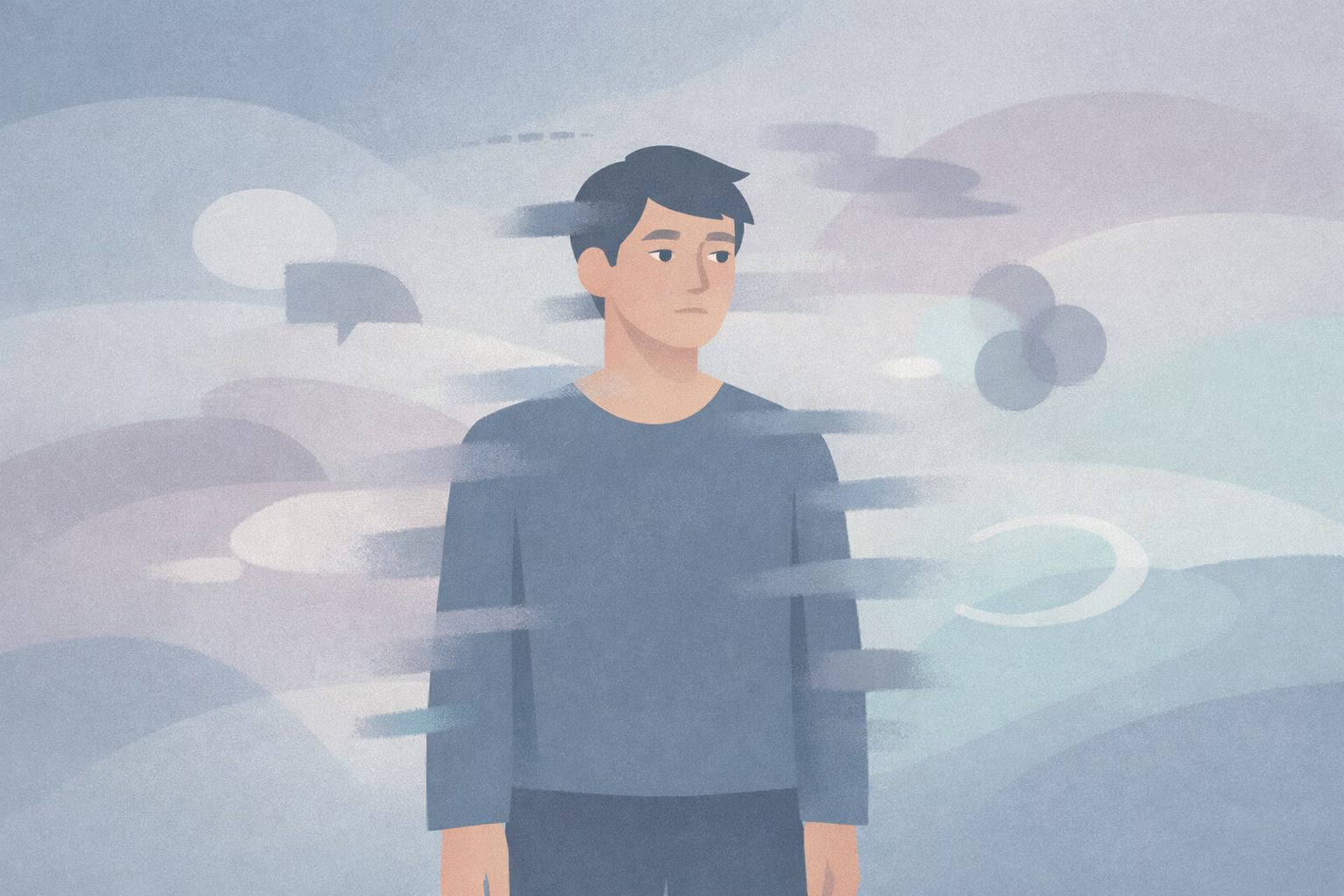
Under persistent stimulation and uncertainty, the nervous system prioritizes regulation and orientation. This can show up as restless checking, difficulty settling, or a drive to control variables that used to feel effortless. Not because a person is broken, but because the system is trying to reduce unpredictability.
Modern life supplies endless signals about what could be improved—health, work, relationships, body, finances, parenting, attention. The result is often a background state of “not yet,” which keeps the brain’s threat-and-reward circuits engaged. Tools that offer structure—tracking, prompts, guided practices—can function like external orientation aids in a world that rarely slows down. [Ref-2]
When everything is moving, what tells your system it’s safe to stop scanning?
At a biological level, people don’t only seek comfort. They seek coherence: a felt sense that experiences add up, that actions connect to values, and that life events land somewhere inside identity rather than floating as unresolved fragments.
When shared narratives weaken—about community, work, adulthood, success, or what a “good life” looks like—many people feel unmoored. In that gap, wellness tools can become substitutes for what culture used to provide: language for inner experience, a map for hard seasons, and a promise that the confusion is legible. The accelerating market reflects this broad appetite for grounding and meaning, not simply for symptom relief. [Ref-3]
Wellness apps often offer something the nervous system craves under strain: clear steps, consistent guidance, and a sense that someone (or something) is tracking the process. Even when the content is simple, the form matters—daily check-ins, reminders, streaks, modules, and curated language can create a temporary sense of containment.
They also provide “named states.” When a person can label an experience—burnout, rumination, overload, dysregulation—it can reduce ambiguity. Not because naming itself completes the experience, but because it can make the moment feel less shapeless and less isolating. It’s unsurprising that the market has expanded quickly as more people look for that kind of steadying interface. [Ref-4]
It’s tempting to interpret rising downloads as evidence that an app can solve what modern life creates. But market growth usually signals demand, not resolution. The surge tells a simpler truth: more people are trying to carry more complexity with fewer reliable closure points.
In many cases, wellness apps are responding to a cultural condition—high stimulation, high evaluation, low completion—rather than fixing it. Market projections continue to show rapid growth, which aligns with how persistent the underlying pressures are. [Ref-5]
When the environment won’t slow down, people look for a handle—anything that lets them hold their own mind more steadily.
A lot of wellness app use isn’t primarily about becoming “better.” It’s about becoming oriented. When inner experience feels noisy or contradictory, people naturally search for a loop that closes: What is happening? What does it mean? What matters here? What kind of person am I in this season?
This is why the category keeps expanding into niches—sleep, anxiety, grief, ADHD, trauma education, neurodiversity coaching, relationship repair, nervous-system regulation, journaling, values clarification. The growth trend suggests people aren’t only chasing relief; they’re looking for frameworks that help life feel more navigable. [Ref-6]
Is the download really about a tool—or about a missing sense of direction?
One reason the app ecosystem keeps multiplying is that many users don’t find a single “home.” Instead, they build a patchwork: one app for sleep, one for calming, one for tracking, one for therapy-like conversation, one for focus. The behavior can look inconsistent from the outside, but structurally it makes sense: people are trying to meet different kinds of unfinished loops with different kinds of scaffolding.
As the market grows, these patterns become more visible and more normalized. [Ref-7]
Many digital tools are excellent at shifting state: calming down, focusing attention, creating a brief sense of steadiness. But state change isn’t the same as completion. Without real closure—where experiences settle into identity and stop demanding attention—the nervous system often returns to scanning once the session ends.
This is one reason highly accessible formats like chat-based wellness support are growing quickly: they provide immediate responsiveness and the feeling of being accompanied. [Ref-8] But if the user’s deeper context remains unchanged—ongoing overload, isolation, value-conflict, chronic uncertainty—then the tool can start to feel like another tab: helpful, yet not resolving the underlying “not done.”
Relief can be real and still not be the same as a finished loop.
Wellness apps spread not only because people privately struggle, but because adoption is now socially reinforced. When a tool appears in app stores, workplace benefit packages, influencer routines, and clinical referrals, it becomes a culturally acceptable way to say: “I’m managing a lot.”
Platforms also make wellness legible and shareable—ratings, testimonials, streak screenshots, “what’s in my routine” videos. That visibility reduces friction for new users and increases the sense that using an app is normal self-maintenance in a demanding world. Broader reporting on digital mental health adoption reflects this mainstreaming effect. [Ref-9]
Underneath the features—breathing, journaling, chat support, tracking—many users are seeking something more fundamental: a coherent way to understand themselves over time. Not a perfect mood, but a reliable inner map. Not constant calm, but fewer abrupt swings between urgency and shutdown.
This desire intensified during and after the pandemic years, when routines dissolved and uncertainty became ambient. Usage patterns shifted upward, reflecting how many people were trying to rebuild inner continuity in a changed world. [Ref-10]
Importantly, clarity is not the same as integration. A person can understand their patterns and still feel internally uncompleted. What people often want—whether they name it or not—is the sensation of experiences landing, resolving, and becoming part of who they are, rather than staying “in progress” indefinitely.
Another quiet driver of the 2025 boom is social structure. Many people have fewer built-in places to process life: extended family nearby, stable neighborhoods, consistent spiritual communities, long-term work teams, or shared rituals that mark transitions. When those containers thin out, the burden of regulation becomes individualized.
Digital tools then fill a gap: not as a replacement for human connection, but as an accessible form of steadiness when shared meaning is harder to find. Research reviews of pandemic-era digital mental health use highlight how chatbots, apps, and online tools scaled during a time of disrupted in-person support. [Ref-11]
When there isn’t a village, an interface can start to look like a lifeline.
In a culture saturated with tools, it’s easy to assume the discomfort means we need one more method. But often, what brings a deeper exhale is realizing why the nervous system is recruiting support in the first place. Not as a mindset shift, but as a respectful acknowledgment of conditions: sustained load, reduced closure, and too few places for experiences to complete.
During rapid digital health expansion, many institutions noted that uptake accelerates when the environment changes faster than people can adapt. [Ref-12] That framing can reduce shame: the demand for support is a signal about the ecosystem, not an indictment of the person.
What if your system isn’t “too sensitive”—what if it’s accurately reporting the weight it’s carrying?
Wellness tools tend to help most when they function less like performance dashboards and more like companions to a lived life—supporting continuity, reflection, and the gradual restoration of coherent self-direction. In that role, a tool isn’t trying to override the nervous system; it’s helping reduce noise so the system can detect real signals again.
User-centered evaluations consistently show that people value qualities like guidance, clarity, and validation—features that help them feel less alone and less internally scrambled. [Ref-13] Over time, that can support a shift from “managing symptoms” to living from steadier values and identity—where choices feel less like constant correction and more like alignment.
Not more control—more coherence.
The explosion of mental wellness apps in 2025 can be read as a cultural message: many people are navigating high-speed lives without enough shared closure, and they are trying to build stability wherever they can. The popularity of major platforms reflects how mainstream that need has become. [Ref-14]
Seen this way, downloading support is not a sign of weakness or hype. It’s a dignified attempt to restore orientation in a fragmented environment—to find language, pacing, and a steadier sense of “where am I, and what matters now?”
Tools proliferate when people are searching. And people search most when life stops offering clear endings, shared rituals, and reliable maps for who they are becoming. In that sense, the 2025 wellness app boom isn’t just about mental health—it’s about the human need for coherence, belonging, and a life that can finally feel lived rather than constantly pending. [Ref-15]
From theory to practice — meaning forms when insight meets action.
Because they're meeting widespread quiet overwhelm — the sense of being a little overfull, a little behind, and not fully settled. The article frames this as not really about 'fixing individuals' but about a culture that can't easily give people a Done Signal. Many users can function, work, and care for others while carrying ongoing cognitive noise, social evaluation, and the persistent feeling that nothing is quite complete. When life is full of open loops, the nervous system keeps scanning. Tools promising quick structure and reassurance naturally become attractive. Sometimes the hard part isn't 'feeling bad' — it's never feeling finished.
Orientation, language, and continuity. The article frames them as offering what nervous systems crave under strain: clear steps, consistent guidance, named states for hard-to-describe experiences. They give a sense that someone or something is tracking the process — daily check-ins, modules, curated language create temporary containment. They also provide guidance when attention is fragmented and consistency when life feels variable. When shared narratives weaken about community, work, adulthood, success, wellness tools become substitutes for what culture used to provide: a map for hard seasons, a promise that the confusion is legible, language for inner experience.
Because state change isn't the same as completion. The article distinguishes carefully: many digital tools are excellent at shifting state — calming down, focusing attention, creating brief steadiness. But without real closure where experiences settle into identity and stop demanding attention, the nervous system returns to scanning once the session ends. Chat-based wellness support grows quickly because it provides immediate responsiveness and the feeling of being accompanied — but if the user's deeper context remains unchanged, the tool can start feeling like another tab. Helpful, yet not resolving the underlying 'not done.' Relief can be real and still not be a finished loop.
Neither — it's a dignified response to a fragmented environment. The article reframes the boom as a collective signal, not a personal verdict: many people navigate high-speed lives without enough shared closure and try to build stability wherever they can. Demand reflects ecosystem load, not individual deficiency. Your system isn't 'too sensitive' — it's accurately reporting the weight it's carrying. When community weakens and there's no village, an interface starts looking like a lifeline. The deeper question often isn't really about a tool but a missing sense of direction. The desire underneath downloads is for coherence, belonging, and a life that can feel lived rather than constantly pending.
From Science to Art.
Understanding explains what is happening. Art allows you to feel it—without fixing, judging, or naming. Pause here. Let the images work quietly. Sometimes meaning settles before words do.
One Quiet Window, one insight, one reflection — every Sunday