
Sugar as a Stress Coping Mechanism
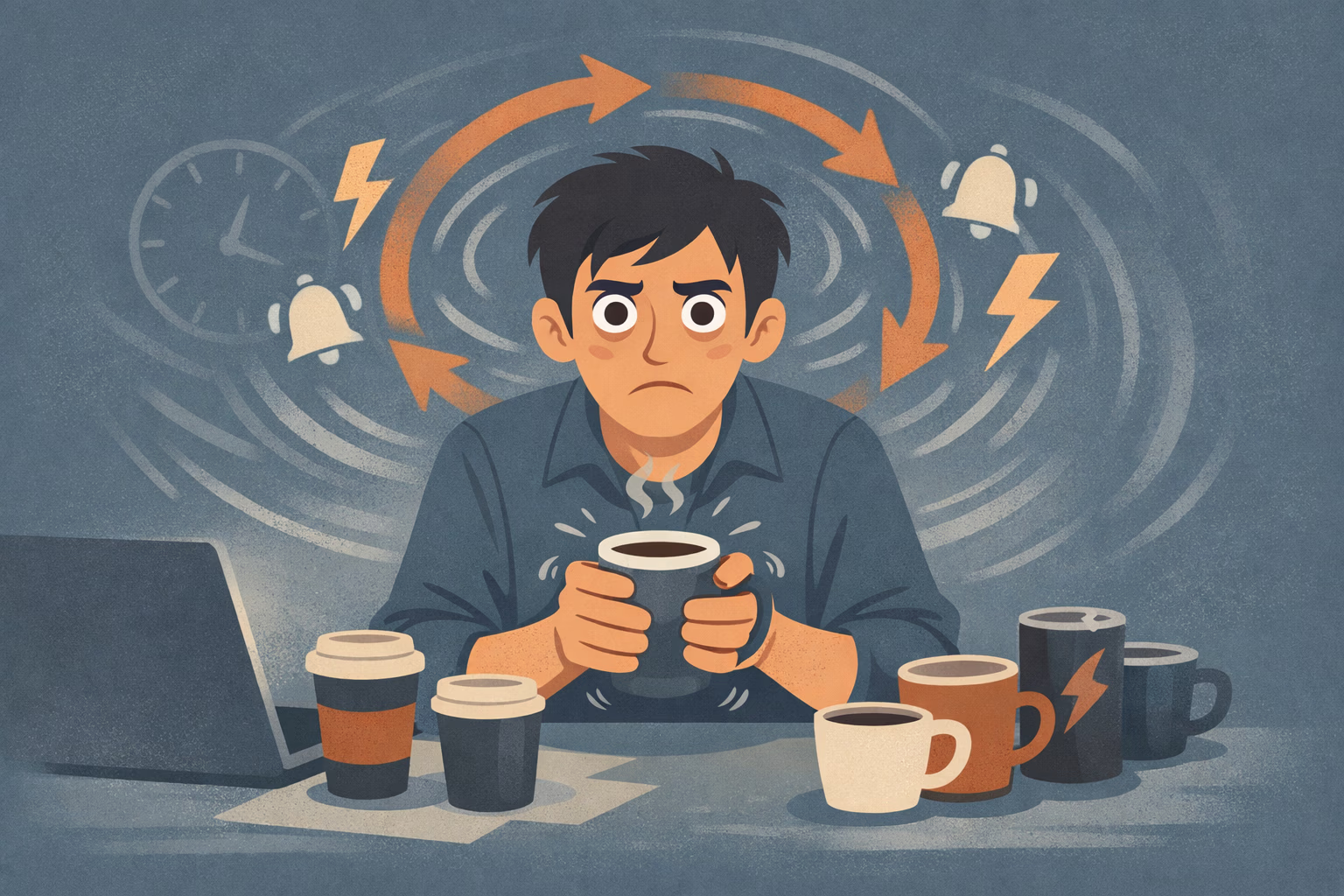
In short: Caffeine dependence cycles usually don’t start as a problem. They start as a bridge: a way to cross the gap between what life demands and what your body can sustainably supply that day.
Caffeine dependence cycles usually don’t start as a problem. They start as a bridge: a way to cross the gap between what life demands and what your body can sustainably supply that day. When that gap becomes chronic, the bridge can turn into a loop—temporary clarity followed by a sharper edge, a faster mind, and a body that can’t fully stand down.
What if the issue isn’t that you “can’t handle caffeine,” but that your system is being asked to run on borrowed alertness?
This is a non-moral, non-personality explanation of the anxiety–stimulation loop: how stimulants can mute fatigue signals, keep unfinished stress activation circulating, and gradually reduce the sense of internal “done.” When the loop is understood structurally, shame tends to drop—and orientation tends to return.
A common hallmark of caffeine dependence is a split experience: you feel more online, more capable, more mentally quick—while your body feels narrower. Breathing can get shallower. Muscles can hold. Thoughts can speed up. Small tasks can feel urgent in a way that’s hard to turn off.
That tension can be confusing because the drink “worked.” You did the meeting. You started the work. You became responsive. And then, later, there’s jitteriness, irritability, or a brittle feeling—like the day is happening slightly too close to your skin. This isn’t a character flaw; it’s a nervous system operating with extra activation on top of existing load. [Ref-1]
Caffeine’s core move is not “making energy.” It changes signaling. It blocks adenosine receptors—adenosine being one of the body’s ways of broadcasting sleep pressure and fatigue. When that signal is muffled, the sensation of tiredness can fade, even if the underlying need for recovery hasn’t been met.
At the same time, caffeine can increase physiological arousal through the stress system, including effects on cortisol across waking hours. That combination—less felt fatigue plus higher arousal—can look like focus or drive. But it can also feel like anxiety: a body prepared for demand without the deeper conditions that create safety and closure. [Ref-2]
Human energy regulation evolved around predictable oscillations: light and dark, effort and rest, hunger and satiety, pursuit and completion. In that context, alertness rises for a reason and falls for a reason—and the nervous system gets repeated “stand-down” signals that help it return to baseline.
Modern life can flatten those boundaries: irregular sleep, late light exposure, social and work vigilance, and constant cognitive switching. Layering artificial alertness on top of that can overwhelm a system that is already carrying unfinished activation. Research links caffeine consumption with sleep disruption and shorter sleep duration for many people, which matters because sleep is a primary route for nervous-system closure. [Ref-3]
Caffeine often provides a specific kind of relief: a clean sense of direction. The mind narrows to the next step. Initiation becomes easier. Friction drops. In a world with many simultaneous demands, that can feel like rescue.
It can also temporarily mask cognitive overload. When attention is fragmented, the brain carries more “open tabs.” Stimulation can create the sensation that you can finally hold them all. But that sensation is not the same as restored regulation—it’s a state change that can postpone the body’s request for recovery, especially when used later in the day. [Ref-4]
Many people describe caffeine as “giving energy,” but physiologically it often functions more like borrowed alertness. It can mobilize the body to perform—useful in the short term—by pushing arousal upward rather than rebuilding capacity underneath.
This matters because the stress system is designed for bursts with completion. When caffeine repeatedly recruits that system for ordinary days, the baseline can shift toward vigilance. Over time, what used to feel like normal wakefulness can start to feel like restlessness or internal pressure. Caffeine’s association with increased cortisol across the day helps explain why the “boost” can come with a cost in tension. [Ref-5]
In Meaning Density terms, an Avoidance Loop isn’t about fear-based psychology. It’s structural: a system repeatedly bypasses a needed boundary (rest, completion, downshift) because the immediate environment rewards continuation. Stimulation becomes a way to move past the body’s resistance signal—fatigue—without resolving what fatigue is pointing to.
Then the loop tightens. More stimulation can increase arousal and disturb sleep. Poorer sleep increases fatigue. Fatigue increases the pressure for stimulation. Dependence here is not an identity; it’s a predictable regulatory response in a context where “stop” signals are expensive and “go” signals are rewarded. Withdrawal effects can also reinforce the loop by making the absence of caffeine feel like immediate impairment. [Ref-6]
The pattern often has a recognizable rhythm, even when it looks different across people and jobs. It can be subtle at first, then increasingly organized around managing arousal rather than living from baseline.
Sleep organizations consistently note that caffeine can meaningfully interfere with sleep quality and timing, which can quietly intensify the next day’s dependence. [Ref-7]
With ongoing reliance, the nervous system can lose confidence in its own pacing. Instead of feeling a natural rise into the day and a natural taper into evening, the day can feel like alternating pushes and collapses. This isn’t weakness; it’s a body receiving mixed messages: “stay alert” layered over “please recover.”
When sleep is repeatedly disrupted, the system has fewer chances to complete stress cycles and consolidate recovery. Over time, this can reduce emotional resilience, shorten the fuse on everyday stressors, and make quiet moments feel strangely uncomfortable—because the body has learned to operate with constant internal noise. Caffeine use and insomnia are commonly linked in population research, underscoring how easily the loop can maintain itself. [Ref-8]
The loop becomes self-sealing because each stage creates conditions for the next. Fatigue increases the felt need for a stimulant. The stimulant increases arousal. Higher arousal can feel like anxiety, agitation, or urgency—especially when layered on deadlines, screens, and constant evaluation. That arousal then interferes with sleep depth or timing, which amplifies next-day fatigue.
When caffeine is reduced or delayed, the body may also produce a rebound: headaches, low mood, difficulty concentrating, or pronounced sleepiness—classic withdrawal features described in clinical summaries. That rebound can make the loop feel “proven”: See, I can’t function without it. Structurally, it’s the nervous system recalibrating signals, not revealing a personal deficiency. [Ref-9]
There is a distinct state many people recognize once regulation returns: alertness without urgency. The mind can focus without sprinting. The body can mobilize without bracing. Decisions feel less like emergency triage and more like a coherent sequence.
This is not just insight or a new story about caffeine. It’s a physiological “stand-down” capacity—the return of internal completion signals. When energy is regulated, attention tends to reattach to values and priorities instead of chasing the fastest lever for momentum. In that state, motivation becomes less necessary because coherence does more of the organizing. Public health guidance often emphasizes that caffeine affects people differently and can contribute to jitteriness or sleep problems, which is another way of naming the same reality: stimulation is not the same as stability. [Ref-10]
When your energy is settled, you don’t have to keep proving you’re awake.
When the nervous system isn’t running on extra activation, social life often becomes less effortful. There’s more patience for pauses. Listening improves because attention isn’t scanning for the next task. Humor returns because the body has room for play signals, not just demand signals.
In work interactions, this can look like fewer misfires: fewer sharp emails, fewer reactive takes, fewer moments of “Why did that feel so intense?” Caffeine can contribute to anxious sensations for some people, and when that layer is present, everyday friction can feel bigger than it is. When baseline arousal is lower, the same situations may register as manageable rather than threatening. [Ref-11]
Over time, many people notice that steadier rhythms return when the system isn’t repeatedly forced into high arousal to cover depletion. Focus becomes less dramatic but more dependable. The day feels less like a series of rescues. Fatigue signals become informative again instead of humiliating or alarming.
It’s also common for the transition away from heavy reliance to include a period of low energy or headaches—withdrawal features described in medical references. Naming that possibility matters because it reduces the interpretive spiral of “something is wrong with me.” In many cases, it’s the body renegotiating baseline signaling after a long period of external amplification. [Ref-12]
What changes when you can trust your tiredness again?
When caffeine is no longer the primary tool for getting through the day, life can reorient around meaning rather than management. Instead of asking, “How do I get enough charge to handle this?”, the question becomes, “What actually deserves my limited energy?” That shift is not about doing more; it’s about restoring choice.
Balanced energy supports completion: finishing conversations without mental spillover, ending work with a clearer boundary, entering rest without negotiating with an overactive mind. Sleep resources emphasize that caffeine timing and amount can affect sleep, and sleep is one of the main ways the nervous system completes its loops. When completion returns, agency tends to follow—not as willpower, but as coherence. [Ref-13]
Caffeine dependence cycles are often a sign that your system has been carrying more load than it can naturally close. In that light, reliance isn’t proof of weakness; it’s evidence that you’ve been meeting real demands with the tools available.
From a regulation standpoint, the most important question isn’t “Why do I keep doing this?” It’s “What conditions made this the most workable option?” When that question is allowed, shame usually loosens, and the situation becomes more navigable—because it’s no longer a referendum on character. Medical guidance tends to frame caffeine as a substance with real physiological effects and meaningful variability across people, which supports this non-moral lens. [Ref-14]
It’s understandable to reach for stimulation in a world that rarely lets the nervous system finish what it starts. But long-term clarity tends to come from regulated energy—an internal rhythm that can rise, focus, and then stand down.
When your body can complete its cycles, alertness feels less like pressure and more like presence. And that kind of steadiness isn’t something you force; it’s something that emerges when the system is no longer pushed past its limits day after day. [Ref-15]
From theory to practice — meaning forms when insight meets action.
Because it's doing two things at once that push the system in opposite directions. Caffeine blocks adenosine receptors, which mutes the body's broadcast of fatigue, while simultaneously raising arousal through the stress system. The result is a clearer-feeling mind layered onto a tighter-feeling body — what the article calls borrowed alertness rather than restored capacity. Mind sharpens; breathing narrows; thoughts speed up; small tasks register as urgent. That's not a personal flaw or weak tolerance; it's the predictable signature of running on extra activation while the underlying recovery debt sits unmet underneath. The Threat & Safety System reads stimulant-driven mobilization as demand without completion.
It's worth taking literally without taking moralistically. Withdrawal effects — headaches, low mood, hard-to-start mornings — are well documented, and they're part of what makes the loop self-sealing: fatigue increases the felt need for stimulation, stimulation increases arousal, arousal interferes with sleep depth or timing, poor sleep amplifies next-day fatigue. The article reframes this not as weak willpower but as a structural Avoidance Loop. The body is bypassing the boundary signal (rest, completion, downshift) because the environment rewards continuation. The honest question isn't 'why can't I quit' but 'what conditions made this the most workable option I had?'
Many people only recognize the difference once it returns. Settled alertness is mobilization without bracing — focus that doesn't sprint, attention that can land, decisions that flow as a sequence rather than emergency triage. It's energy generated through the body's natural cycles (light, sleep, effort, recovery) rather than borrowed by amplifying the stress system. In that state, motivation becomes less necessary because coherence is doing more of the organizing. Closure shows up reliably — work finishes, the mind stands down — and you don't have to keep proving you're awake. That sustainable clarity comes from completion, not constant activation.
The transition often includes a real low-energy window — withdrawal headaches, sleepiness, harder mornings — and the article names this so it doesn't get misread as proof that something is wrong with you. Structurally, that period is the body renegotiating baseline signaling after long external amplification, not evidence that you can't function. Many people then find that focus becomes less dramatic but more dependable, with fewer afternoon crashes, fewer brittle reactions, and sleep that actually restores. Productivity that depends on perpetually overriding fatigue is fragile. Productivity built on regulated rhythms — rise, focus, stand down — tends to hold up better across long horizons.
From Science to Art.
Understanding explains what is happening. Art allows you to feel it—without fixing, judging, or naming. Pause here. Let the images work quietly. Sometimes meaning settles before words do.
One Quiet Window, one insight, one reflection — every Sunday