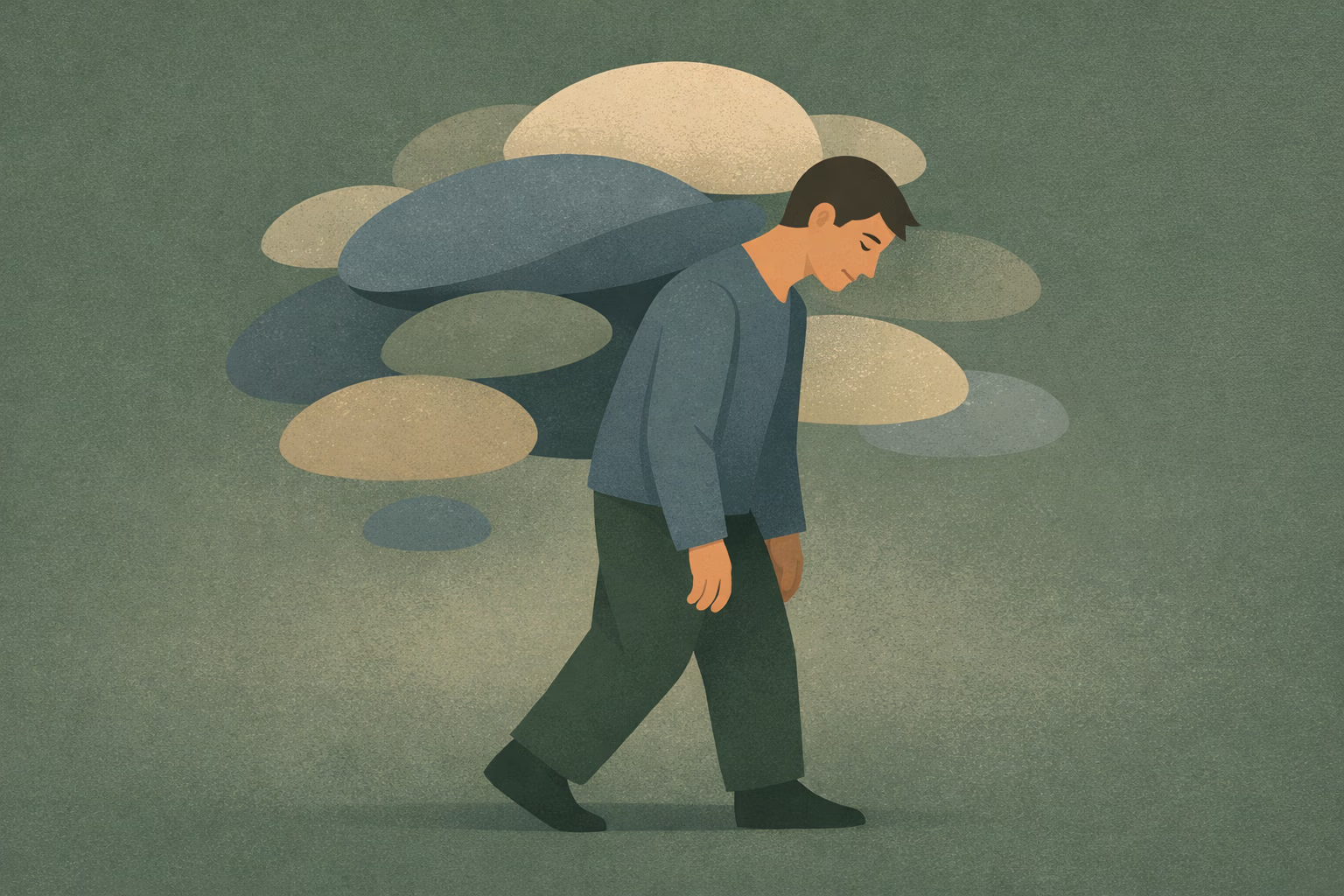


Why You Fantasize More When Life Feels Heavy
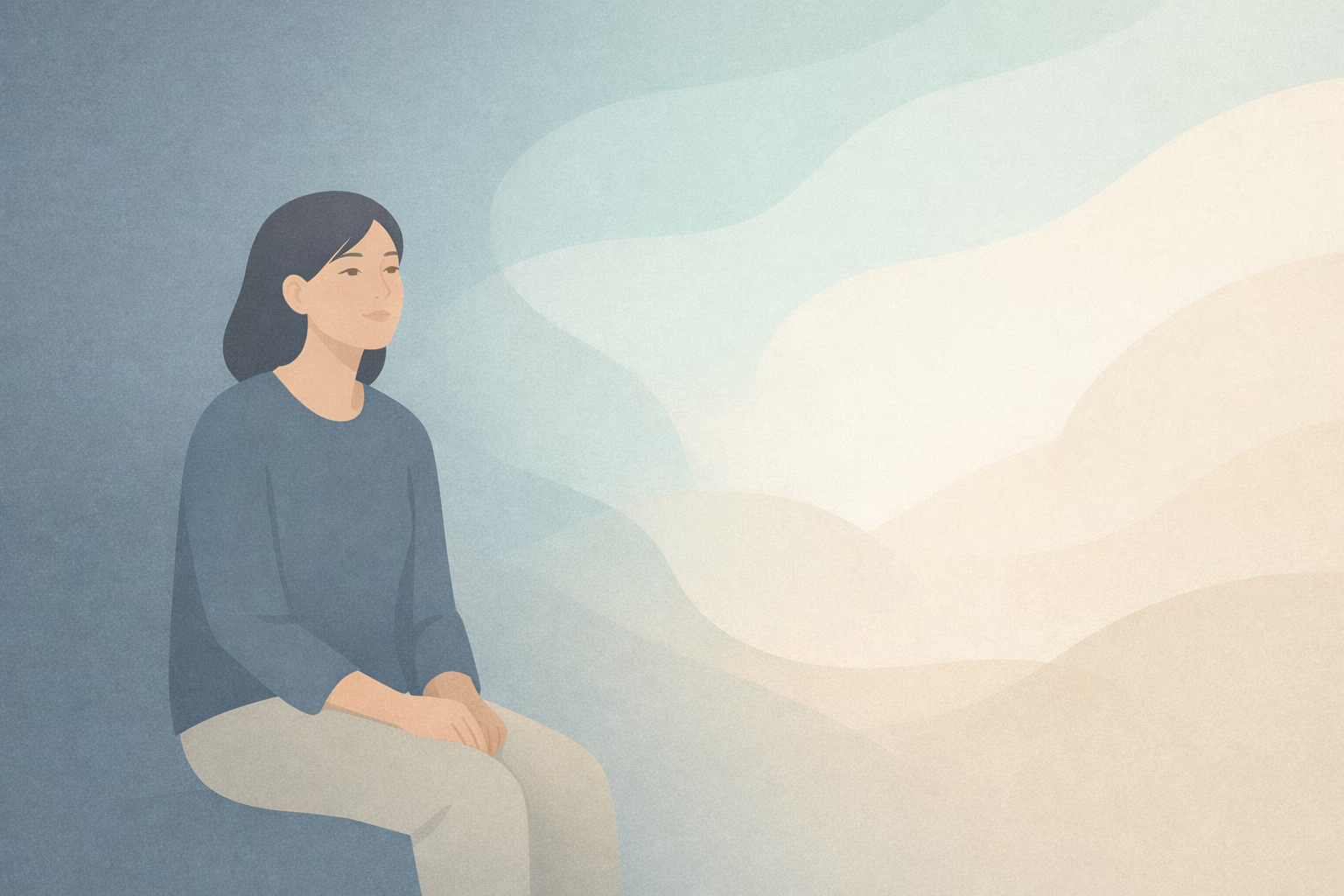
In short: The Lure of Fantasy & Daydreaming: When the Mind Builds a Refuge Most people daydream. The mind wanders, rehearses, imagines, and plays. In many seasons of life, that’s a normal feature of being human—especially in moments of boredom, creativity, or transition.
Most people daydream. The mind wanders, rehearses, imagines, and plays. In many seasons of life, that’s a normal feature of being human—especially in moments of boredom, creativity, or transition.
But sometimes fantasy becomes more than a pleasant drift. It becomes a refuge: a place the nervous system goes when reality feels too loud, too unfinished, or too exposed. This isn’t a character flaw. It’s a regulatory response to load and to a life that doesn’t currently offer enough “done” signals.
What if your daydreaming isn’t proof you’re avoiding life—so much as evidence your system is trying to find safety and coherence?
Fantasy-based escapism often starts innocently: a quick imagined conversation, a better version of a day, a storyline that makes sense when real life doesn’t. The shift can feel soothing—like sliding into a warmer room.
Over time, some people notice a specific pattern: drifting into imagined scenarios for comfort or control, then resurfacing with a sense of detachment, lost time, and difficulty re-engaging with immediate demands. It can feel like waking up mid-task, with reality suddenly heavy and uncooperative. [Ref-1]
Importantly, the mind isn’t “choosing nothing.” It’s selecting a state: reduced friction, reduced unpredictability, reduced consequence. That’s not a moral failure; it’s a nervous-system negotiation.
When the nervous system is carrying too much, it looks for reliable off-ramps. Narrative immersion—being absorbed in a story you generate—can quiet stress signals quickly. The imagined world is responsive, coherent, and paced by you. That alone can reduce internal noise.
For some, the relief is strong enough that it becomes a repeated strategy: daydreaming not just for entertainment, but for stabilization. It can temporarily settle identity as well—“in there, I know who I am.” That stabilization may come with a cost: real-world engagement is postponed, not completed. [Ref-2]
This distinction matters. Relief changes state. Integration happens when experiences reach completion and the body receives a genuine stand-down signal—something fantasy can mimic, but not always deliver.
Humans are built to simulate. We run internal models of the future, rehearse conversations, test identities, and search for meaning in events. In evolutionary terms, this is a feature: a way to prepare, learn, and preserve direction under threat.
When the world is uncertain, the narrative system works harder. It tries to create a storyline that reduces chaos: “Here’s what this means. Here’s what comes next. Here’s how I stay intact.” When external life can’t provide coherence, the mind manufactures coherence internally. [Ref-3]
So the pull toward fantasy isn’t random. It’s a powerful human tool—one that can become over-relied upon when lived experience stays incomplete.
Fantasy can offer three forms of safety at once: predictability (you control the plot), belonging (someone understands you), and competence (you can succeed, repair, or be seen). When those needs are not getting closure in real life, imagination can supply a near-instant substitute.
It can also soothe specific forms of strain: helplessness, unmet longing, chronic evaluation, or environments where your responses don’t change outcomes. In fantasy, outcomes change. The loop completes. The nervous system receives a temporary “resolved” signal—even if nothing outside has actually resolved. [Ref-4]
“In my head, it all makes sense. Out here, it’s scattered.”
Fantasy can feel like fulfillment because it contains the shape of completion: connection achieved, respect earned, conflict resolved, identity confirmed. The body can respond as if something finished, even when the outer conditions didn’t change.
That’s where the mismatch begins. The needs underneath—rest, respect, clarity, belonging, protection, purpose—may remain delayed. The imagined resolution can reduce urgency, which is soothing, but it can also weaken the signals that would normally organize real-world completion.
As a result, life can start to feel oddly split: internally “full,” externally stalled. Not because you lack willpower, but because the system has learned a low-cost way to simulate closure. [Ref-5]
In an avoidance loop, the system finds a reliable regulation strategy that reduces load now, while quietly increasing load later. Fantasy-based escapism can do this by replacing lived engagement with imagined completion.
Nothing is wrong with imagination. The structural issue is substitution: the internal loop closes, but the external loop stays open. Bills still exist, conversations still need having, bodies still need sleep, relationships still need contact. Those open loops keep accumulating, even if the mind has moments of relief. [Ref-6]
Over time, the nervous system may start treating reality itself as the higher-load option—not because reality is “scary,” but because it contains friction, uncertainty, and consequences that fantasy does not.
Fantasy escape isn’t one look. It can be quiet and private, or elaborate and time-consuming. What makes it a pattern is not the content of the daydreams—it’s the way they function in regulation.
Common signs include: [Ref-7]
These are not personality defects. They’re indicators that the system has found a dependable refuge when the external world isn’t giving enough safety cues or completion signals.
When fantasy becomes the primary refuge, it can subtly weaken real-world competence—not because a person is incapable, but because practice, feedback, and completion happen less often. Skills require contact with reality’s timing: small setbacks, repairs, follow-through, and the nervous system learning, “I can stay here and complete this.”
Presence can erode too. The body is physically in the room while attention is elsewhere. Over time, this can reduce the amount of lived experience that “lands” enough to become stable memory and identity.
Research discussions of maladaptive daydreaming describe daily fluctuations and functional impact—how immersion can rise with stress and correlate with impairment in routine demands. [Ref-8]
Relief is a powerful teacher. When a behavior reliably drops activation, the brain tags it as useful. Fantasy can provide immediate reduction in tension, loneliness, or uncertainty—sometimes within seconds.
This creates a feedback loop: real-world demands begin to feel increasingly high-load, because the system compares them to the low-friction alternative of imagination. The more often relief comes from retreat, the less “safe” engagement feels—not as a belief, but as a body-based prediction.
In that sense, the pull isn’t just preference. It’s conditioning around state change: inner worlds reliably soothe; outer worlds reliably cost. [Ref-9]
There’s a version of imagination that supports life rather than displacing it. It shows up when internal safety is higher—when the nervous system isn’t using fantasy as its only downshift.
In that state, daydreaming can function more like orientation than escape: exploring possibilities, rehearsing values, sensing what matters, or giving shape to hopes. The difference isn’t “more insight.” The difference is that the body isn’t urgently using the imagined world to stabilize itself.
What changes when imagination becomes a place you visit—rather than a place you have to live?
People vary in how immersive their inner experience can be, and high absorption or fantasy-proneness exists on a spectrum. The key question is less “Do you daydream?” and more “Does it restore you and return you—or does it replace contact?” [Ref-10]
Fantasy becomes most compelling when meaning is private and unshared—when the inner world is the only place where identity feels coherent. When meaning is carried in relationships, community, or creative expression that reaches other humans, the system gets more external confirmation: “I exist here too.”
That doesn’t mean constant socializing. It means having places where your sense-making is not entirely sealed inside. Shared language, collaborative projects, honest companionship, and art that leaves your body and enters the world can all offer a kind of closure fantasy can’t fully provide: reality responding back.
Discussions of fantasy-prone patterns often note strong absorption and vivid inner experience, but also the importance of context—how traits interact with stress, environment, and reinforcement. [Ref-11]
When coherence begins to restore, it often shows up as a simpler capacity: returning. Attention wanders, but it comes back without a wrestling match. The body can be in a room and actually register the room.
Agency also feels different. Not as “more motivation,” but as fewer competing loops. Fewer internal storylines are running in parallel to manage load. Real life starts generating more completion signals—moments that feel settled, finished, done enough.
In broad discussions of escapism, a central theme is that retreat increases when life feels unlivable or unresponsive, and decreases when reality becomes more workable and meaning-bearing. [Ref-12]
Imagination is not the enemy of reality. At its best, it’s a compass: a way to sense direction before you have proof, to locate values before circumstances cooperate, to hold continuity when life is changing.
Positive, constructive daydreaming is often described as supporting creativity, planning, and problem-solving—especially when it stays connected to lived time and real-world feedback. [Ref-13]
In other words, imagination can help life move forward when it remains porous: influenced by reality, and influencing reality in return. That mutual exchange is where meaning thickens and identity settles.
If fantasy has been pulling you hard, it may be pointing to something important: places where your system isn’t getting enough closure, safety cues, or identity confirmation in daily life. The daydream isn’t “nothing.” It’s information—about what your nervous system has been trying to complete.
Seen this way, the goal isn’t to shame the refuge or declare war on imagination. It’s to understand what the refuge has been providing: coherence, relief, belonging, competence, repair. Those are legitimate human needs.
As research discussions on daydreaming note, the mind’s wandering can be constructive when it supports meaning-making and direction rather than disconnection. [Ref-14]
Imagination is a uniquely human resource—one that can protect you when life is too fragmented to hold. And it can also guide you when life is ready to be lived more directly.
Fantasy becomes less of a trap when it no longer has to carry your entire sense of completion. When it points toward what matters and then lets the system return, it’s doing what it was built to do: helping life move forward without needing to replace it. [Ref-15]
From theory to practice — meaning forms when insight meets action.
No — the article reframes it as regulatory information. Daydreaming itself is a normal human feature. What can become a pattern isn't the content but the function: when fantasy reliably stabilizes a system that can't find safety or completion in real life. Imagined worlds can offer three forms of safety at once — predictability (you control the plot), belonging (someone understands you), and competence (you can succeed or be seen). When those needs aren't getting closure outside, imagination supplies a near-instant substitute. The daydream isn't proof you're avoiding life; it's evidence your system is trying to find coherence the way it can.
Because it contains the shape of completion. The article explains the mismatch: fantasy delivers connection achieved, respect earned, conflict resolved, identity confirmed. The body can respond as if something finished, even when outer conditions didn't change. The needs underneath — rest, respect, clarity, belonging, protection, purpose — may remain delayed, but the imagined resolution reduces urgency, which is soothing. The catch is that this temporary 'resolved' signal also weakens the cues that would normally organize real-world completion. Life can start feeling oddly split: internally full, externally stalled. Not lack of willpower — a low-cost way to simulate closure.
Because relief is a powerful teacher. The article describes the conditioning directly: when a behavior reliably drops activation, the brain tags it as useful. Fantasy can reduce tension, loneliness, or uncertainty within seconds. So real-world demands begin feeling increasingly high-load, because the system compares them to the low-friction imagination alternative. The more often relief comes from retreat, the less safe engagement feels — not as a belief, but as a body-based prediction. The Avoidance Loop here is structural substitution: the internal loop closes, but the external loop stays open. Bills, conversations, sleep, contact still need attention.
Yes — when internal safety returns, fantasy can shift from escape to compass. The article makes the distinction clearly: the question isn't 'do you daydream' but 'does it restore you and return you, or does it replace contact?' When the body isn't urgently using the imagined world to stabilize itself, daydreaming functions like orientation rather than refuge — exploring possibilities, rehearsing values, sensing what matters. Imagination becomes porous: influenced by reality and influencing it back. That mutual exchange is where meaning thickens. Fantasy stops being a trap when it no longer has to carry your entire sense of completion.
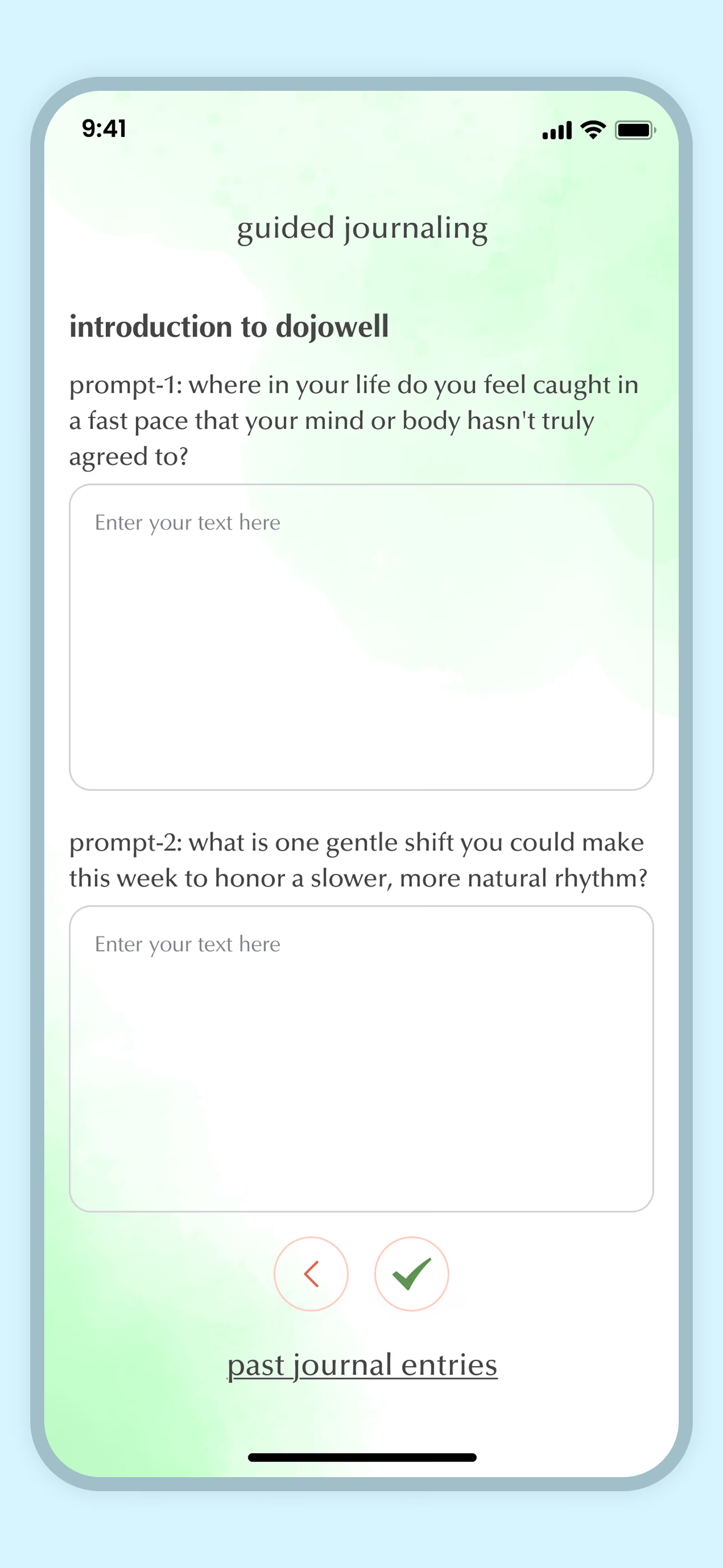
From Science to Art.
Understanding explains what is happening. Art allows you to feel it—without fixing, judging, or naming. Pause here. Let the images work quietly. Sometimes meaning settles before words do.
One Quiet Window, one insight, one reflection — every Sunday