


Ghosting as Avoidance: The New Emotional Freeze Response
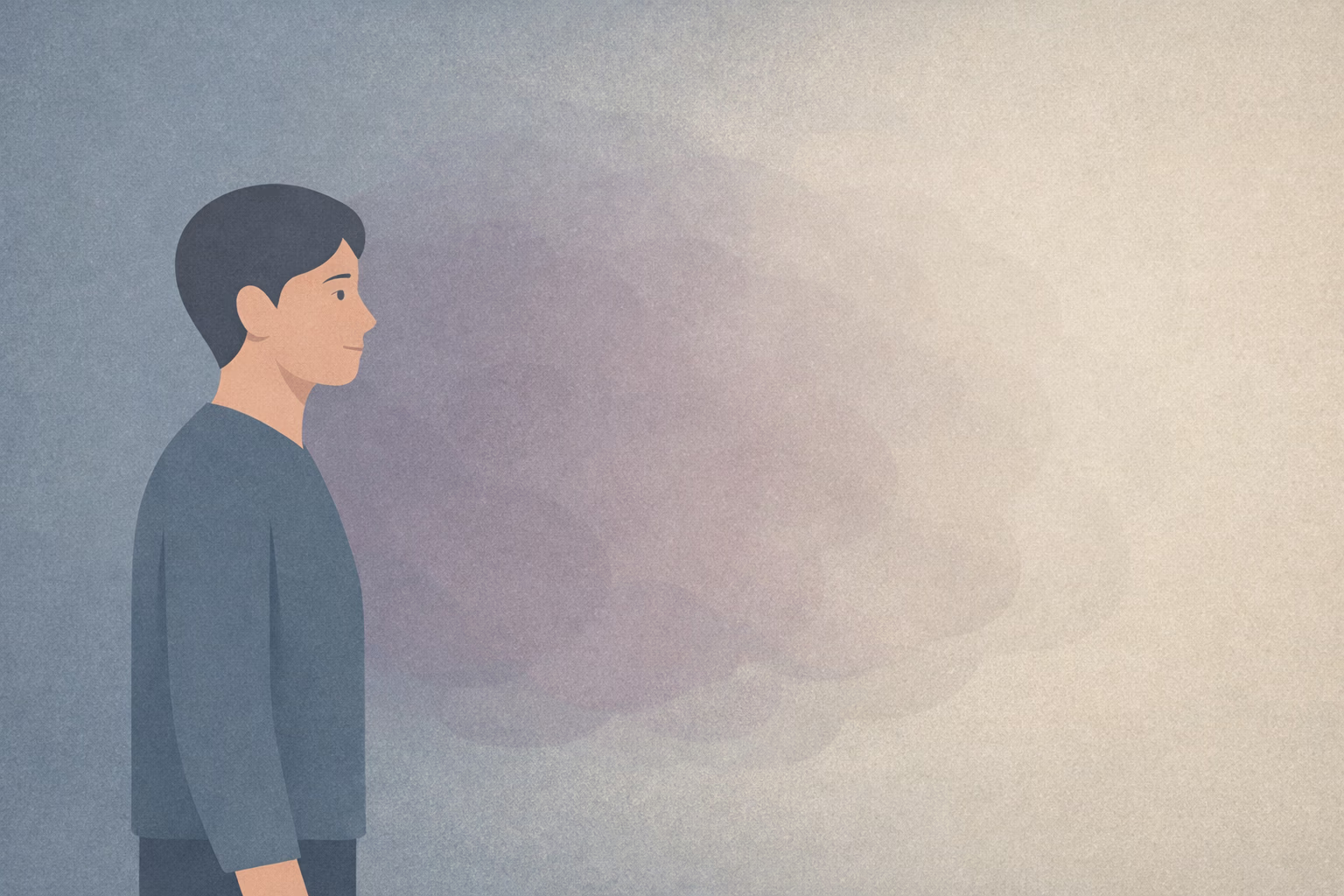
In short: Some people don’t avoid difficult conversations because they “don’t care.” They avoid because their system reads emotional conflict as a high-cost event: a possible loss of closeness, respect, safety, or standing. In that context, postponing the conversation can function like an automatic stabilizer—one that keeps the outside calm when the inside is already carrying too much load.
Some people don’t avoid difficult conversations because they “don’t care.” They avoid because their system reads emotional conflict as a high-cost event: a possible loss of closeness, respect, safety, or standing. In that context, postponing the conversation can function like an automatic stabilizer—one that keeps the outside calm when the inside is already carrying too much load.
In modern life, avoidance can look sophisticated: being reasonable, staying polite, waiting for the “right time,” or turning a potentially messy truth into a smooth performance. It can even be socially rewarded. But the body still keeps track of what wasn’t completed, and relationships often feel the residue as distance, tension, or a vague sense that something is unfinished.
What if the fear isn’t weakness—what if it’s your system protecting connection in the only way it currently knows?
When a hard conversation approaches, many people don’t experience a dramatic panic. Instead, they notice a small internal stall: words go missing, their mind turns blank, their tone gets overly agreeable, or they suddenly feel the urge to smooth everything over. In the moment, it can feel like choosing peace. Later, it can feel like self-betrayal.
A common pattern is a split between outer behavior and inner tracking. Outwardly: calm, kind, flexible. Inwardly: tight chest, clenched jaw, buzzing nerves, or a quiet pressure building behind the ribs. The system is negotiating threat while trying to keep connection intact, which often produces that familiar aftertaste of regret, resentment, or “I should have said something.” [Ref-1]
Difficult conversations aren’t only intellectual tasks; they are bodily events. A raised eyebrow, a long pause, a change in tone, or the possibility of disappointing someone can register as a threat cue—especially when the relationship matters. When threat circuits activate, the body reallocates resources toward protection, not nuance.
In that state, language can narrow. Listening can become selective. The system may move toward freezing, appeasing, or exiting—not because a person is incapable of honesty, but because the moment is being processed as “high stakes.” Avoidance can be the most available pathway to immediate stabilization when the nervous system is bracing for relational cost. [Ref-2]
Sometimes “I’ll talk about it later” is less a decision than a reflexive move toward safety.
Human beings evolved inside interdependence. For most of our history, belonging wasn’t a bonus; it was survival. Conflict with the wrong person—or the wrong tone at the wrong time—could risk status loss, reduced protection, or social separation. That means modern interpersonal friction can land in an ancient part of the system that treats rupture as dangerous.
From that perspective, conflict avoidance isn’t mysterious. It’s a strategy that once helped people stay inside the circle. Even today, a difficult conversation can implicitly ask, “Will I still be welcome after this?” When the system can’t reliably predict the answer, it often chooses the path that reduces immediate relational volatility. [Ref-3]
Avoiding emotional dialogue often creates a short-term win: fewer sparks, fewer difficult looks, fewer opportunities to be misunderstood. The body reads the absence of friction as relief—especially if the person has a strong sensitivity to signs of rejection or disapproval. [Ref-4]
But relief is not the same as completion. Relief is a downshift in activation. Completion is when an experience reaches a clear end-state—when the system receives a “done” signal and can stand down without having to keep guarding the edge. Silence can lower immediate arousal while still leaving the underlying loop open.
When “keeping the peace” works quickly, why would the nervous system choose anything else?
The illusion of peace is persuasive because it’s tangible: the room stays calm, the relationship continues, the day moves on. But what is postponed doesn’t disappear—it becomes unprocessed data in the relational system. Over time, that can look like small misunderstandings that never get corrected, patterns that keep repeating, and an increasing sense of emotional “not quite.” [Ref-5]
When conversations don’t happen, people often start relating to a version of each other that is slightly edited. They manage impressions instead of sharing reality. This isn’t because anyone is deceptive; it’s because the nervous system is trying to prevent destabilization. Yet the result can be a slow drift: more guessing, more caution, less felt closeness.
In an avoidance loop, the system learns that not speaking is safer than speaking. Not because speaking is inherently harmful, but because the person’s internal cost model predicts high consequence: losing face, being “too much,” being seen as wrong, needy, dramatic, or difficult. Identity protection becomes the priority, and silence becomes the tool that keeps identity intact.
This can create a strange bind: the person values honesty and connection, yet their system defaults to delay, softness, or withdrawal when the moment arrives. The loop isn’t sustained by a lack of insight. It’s sustained because avoidance provides immediate stabilization—while the unspoken experience remains incomplete and continues to tax the system in the background. [Ref-6]
It’s hard to be “your real self” when your body is busy making sure you stay safe.
Conversational avoidance isn’t one behavior; it’s a set of regulatory moves. Some are social (tone, timing, pleasing). Some are cognitive (overthinking, drafting speeches internally). Some are physical (tight shoulders, shallow breath, fatigue after a talk that never happened). In many people, the body shows the truth first.
When threat is high, the system may shift into freeze-like states: reduced speech, reduced access to words, or a sudden “I don’t know.” This isn’t a character problem; it’s a state shift where mobilization and shutdown can blend—appearing calm while internally braced. [Ref-7]
Trust is not only about loyalty. It’s also about predictability and contact: the sense that reality can be spoken here, and that repair is possible. When difficult conversations are consistently bypassed, trust can weaken in subtle ways. People may stop bringing their full selves, not as punishment, but because the relational environment stops offering completion.
Intimacy relies on accurate updates. Without them, partners, friends, family members, or coworkers start building narratives to fill the gaps. The relationship becomes more vulnerable to misreading and quiet disappointment. In some nervous systems, chronic non-discussion can also contribute to shutdown states—less engagement, less aliveness, more distance—because the system stops expecting resolution. [Ref-8]
When nothing gets resolved, what does the body learn to expect?
Avoidance is reinforced by a simple learning process: after you postpone the conversation, your body feels better. That relief becomes evidence—“See, danger averted.” The system then tags the avoided moment as something that must have been risky, because relief followed the exit.
Over time, this pairing can make future conversations feel more threatening before they even begin. The threat response can start earlier: at the thought of bringing it up, when you see the person’s name, or when you imagine their reaction. In polyvagal terms, the system toggles toward protective states when it can’t find enough safety cues to stay socially engaged. [Ref-9]
Relief can be calming, but it can also be training data.
It helps to separate two different questions: “Is this conversation important?” and “Does my system have enough safety to stay present while it happens?” People often treat the second as a moral issue—assuming they should be able to handle it if they care enough. But capacity is not devotion. Capacity is bandwidth.
When internal safety is higher, emotional truth becomes less expensive. Words return more easily. Listening becomes more accurate. The body is less compelled to protect identity through silence. This isn’t the same as simply understanding the pattern; it’s a state-level shift where the system can remain in contact without needing to exit to recover stability. In relationships, that shift often becomes visible as a different texture of conversation: slower, clearer, less defended. [Ref-10]
What changes when your body no longer expects relational danger as the default?
Difficult conversations become less destabilizing when the relationship has evidence that truth is survivable. Not because people never react, but because the relational system can find its way back—through acknowledgement, clarification, and repair. That “we can come back together” signal reduces the need for avoidance.
Attunement is often ordinary: a willingness to stay with the conversation, to check understanding, to allow complexity without turning it into punishment. When both sides can hold shared reality—even imperfectly—the nervous system receives cues that honesty won’t automatically lead to exile. Over time, that creates a steadier platform for directness and vulnerability to coexist. [Ref-11]
Safety isn’t silence. Safety is the sense that rupture doesn’t have to become loss.
When avoidance loosens, the first sign is often not bravery—it’s steadiness. The body is less hijacked by urgency or shutdown. There’s more ability to track what’s happening in real time: what you mean, what the other person said, what the relationship is actually asking for. The conversation may still be uncomfortable, but it’s no longer disorganizing.
With less background load from unfinished loops, people often notice a quieter mind after speaking. Less rumination. Less rehearsing. Less emotional hangover. Not because everything went perfectly, but because something reached a clearer end-state: said, heard, updated, and no longer requiring constant internal management. This is one way completion shows up—as a reduction in ongoing activation. [Ref-12]
As the fear of difficult conversations decreases, something structural shifts: attention moves from protecting the self-image to protecting the relationship’s reality. People become more oriented toward repair than avoidance, toward clarity than guessing, toward contact rather than performance.
This doesn’t mean conflict becomes pleasant or frequent. It means the system no longer treats every hard conversation as a potential catastrophe. With more internal and relational safety, truth can function as a stabilizer instead of a threat—because the relationship has more pathways to completion. In that environment, deeper connection is less about intensity and more about coherence: what’s lived matches what’s said, and what’s said can be integrated into how the relationship actually works. [Ref-13]
If difficult conversations feel threatening, it often means belonging matters to you. The fear can be the nervous system’s way of guarding attachment: “Don’t risk the bond.” Seen through that lens, avoidance isn’t a lack of character—it’s an attempt to preserve connection with the tools that are currently most available. [Ref-14]
At the same time, relationships don’t only need harmony; they need accurate contact. When truth is repeatedly postponed, the system keeps carrying unfinished relational loops—questions without answers, needs without names, repairs that never fully happen. Meaning and agency tend to return when life feels more coherent: when reality can be spoken, updated, and brought to an end-state that lets the body stand down.
Real closeness usually isn’t built by never disturbing the surface. It’s built when people learn—over time—that honesty doesn’t have to equal abandonment, and that discomfort can move through without becoming damage.
When safety and truth are held together, the nervous system doesn’t need to choose between being accepted and being real. The relationship becomes a place where completion is possible, and where both people can feel more known—not through pressure, but through coherence. [Ref-15]
From theory to practice — meaning forms when insight meets action.
Because difficult conversations aren't only intellectual tasks — they're bodily events. A raised eyebrow, a long pause, the possibility of disappointing someone registers as a threat cue, especially when the relationship matters. The Threat & Safety System reallocates resources toward protection, not nuance. In that state, language narrows, listening becomes selective, the system moves toward freezing or appeasing — not because you're incapable of honesty but because the moment is being processed as high stakes. The split between outer calm and inner tension is regulation in action: your body is negotiating threat while trying to keep connection intact.
Because in ancient terms, it might be. For most of human history, conflict with the wrong person at the wrong time could mean status loss, reduced protection, or social separation. Modern interpersonal friction lands in the part of the system that treats rupture as dangerous. A difficult conversation implicitly asks 'will I still be welcome after this?' When the system can't reliably predict the answer, it chooses the path that reduces immediate volatility. This is the Attachment & Belonging System guarding the bond with the tools it has — silence often. It isn't a lack of character; it's an ancient strategy for staying inside the circle.
Because what is postponed doesn't disappear — it becomes unprocessed data in the relational system. Small misunderstandings never get corrected, patterns repeat, and people start relating to slightly edited versions of each other. Intimacy relies on accurate updates; without them, partners build narratives to fill the gaps. The relationship becomes vulnerable to misreading and quiet disappointment. The Avoidance Loop tightens because relief after postponing teaches the body that the topic must be dangerous — relief becomes training data. Over time, the system can shift toward shutdown states: less engagement, less aliveness, more distance — because it stops expecting resolution.
The first sign isn't bravery — it's steadiness. The body is less hijacked by urgency or shutdown. There's more capacity to track what's happening in real time: what you mean, what the other person said, what the relationship is actually asking. With less background load from unfinished loops, the mind quiets after speaking — less rumination, less rehearsing, less emotional hangover. Not because everything went perfectly, but because something reached a clear end-state. Co-regulation matters here: when the relational environment offers repair signals — 'we can come back together' — the nervous system stops needing avoidance to protect connection.
From Science to Art.
Understanding explains what is happening. Art allows you to feel it—without fixing, judging, or naming. Pause here. Let the images work quietly. Sometimes meaning settles before words do.
One Quiet Window, one insight, one reflection — every Sunday