Wellness Programs: Structure, Accountability, and Long-Term Change

In short: Breathwork, therapy language, supplements, journaling prompts, nervous system hacks, apps, podcasts—each one plausible, none clearly next. When life is already demanding, “more options” can quietly become more load.
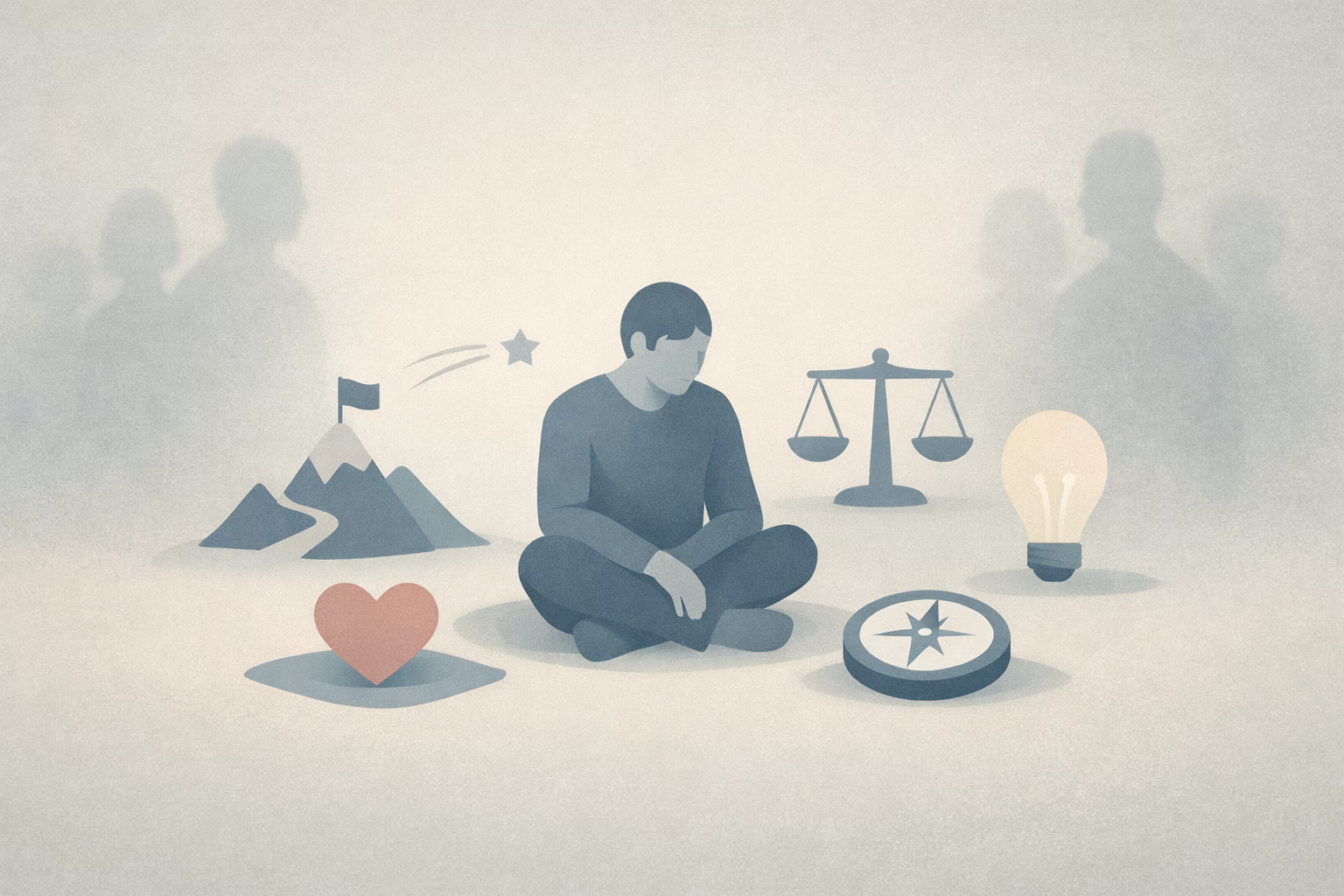
Modern mental wellness can feel like standing in front of an endless shelf: breathwork, therapy language, supplements, journaling prompts, nervous system hacks, apps, podcasts—each one plausible, none clearly next. When life is already demanding, “more options” can quietly become more load.
What if the problem isn’t you—it’s the amount of unfinished input your system is asked to hold?
Mental wellness guides are one response to that reality. At their best, they’re curated, step-based pathways that reduce decision pressure and help experiences complete in sequence. The goal isn’t motivation or self-improvement theater; it’s restoring conditions where the mind can organize, the body can stand down, and meaning can settle into lived identity.
Many people aren’t lacking insight—they’re surrounded by competing frameworks. One source says to track thoughts, another says to stop analyzing. One says to feel your feelings, another says to focus on behaviors. None of this is “wrong,” but it can be incoherent when you’re trying to live a regular day.
In that state, paralysis often looks like procrastination, scrolling, or abandoning plans halfway through. Structurally, it’s what happens when the executive system can’t select a sequence that feels safe to commit to. The result is not a character flaw; it’s an attention-and-closure problem under high input.
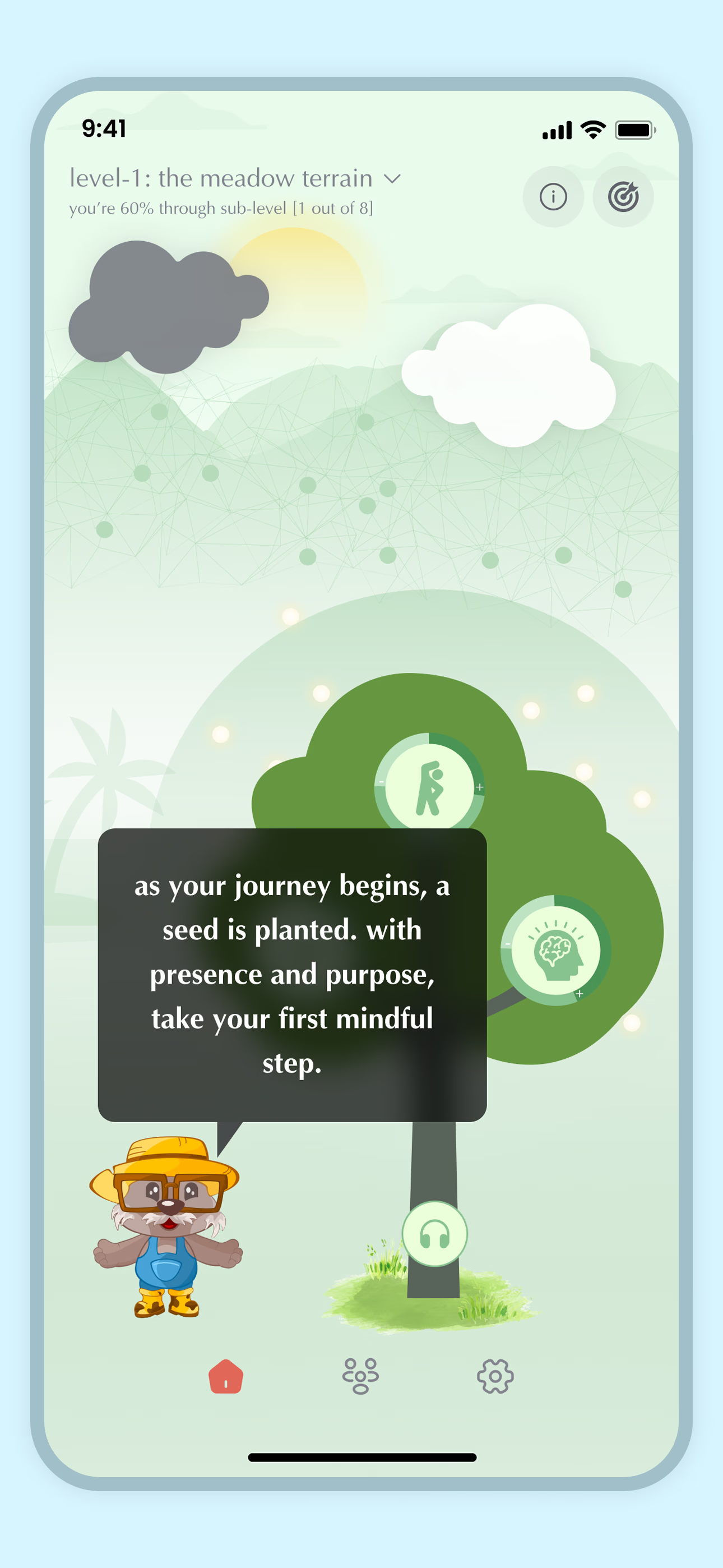
Step-based digital programs were partly designed for this exact gap: a defined path when the mind can’t keep building one from scratch. [Ref-1]
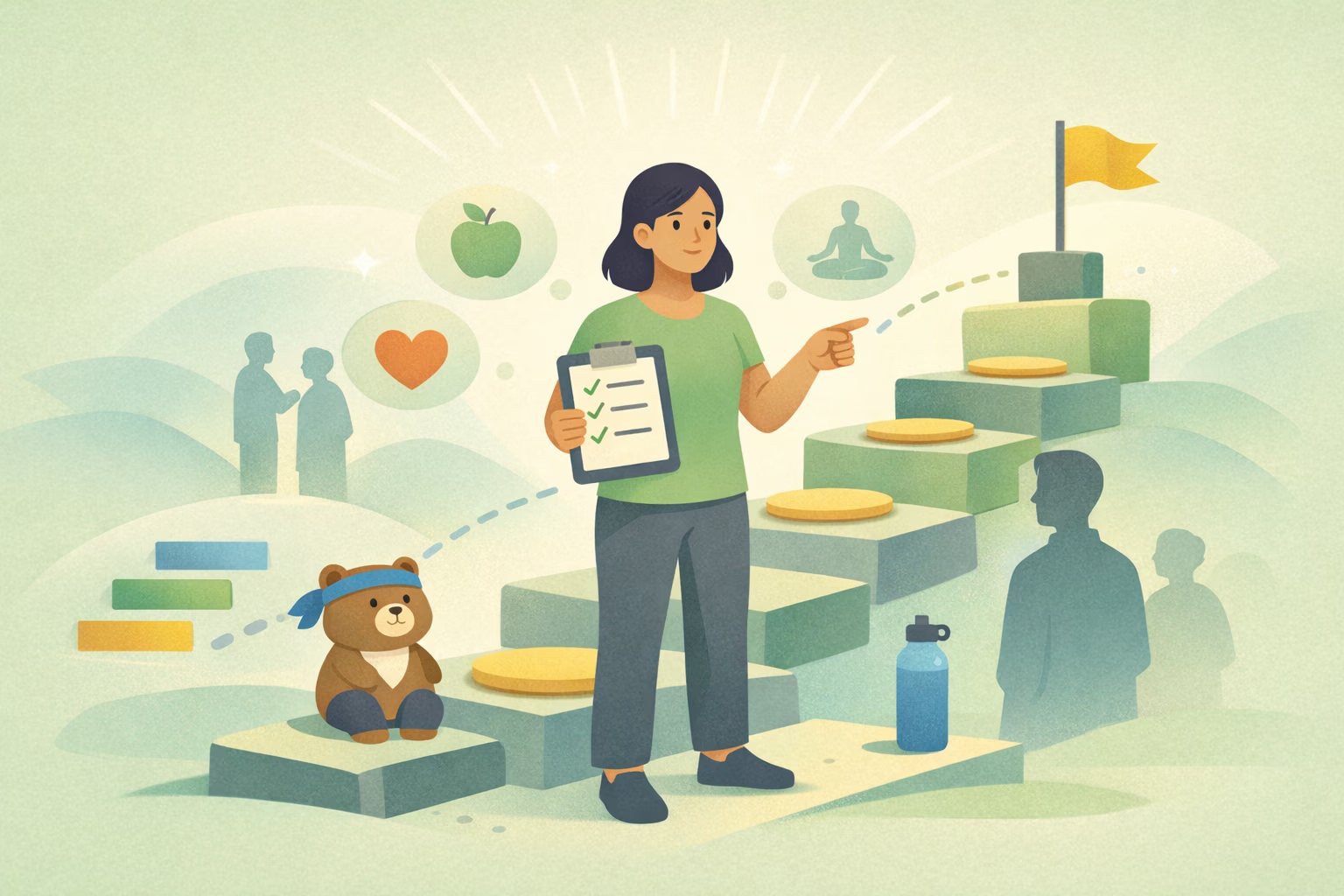
A well-designed guide doesn’t just provide information—it carries some of the organizing labor. Instead of asking you to invent a plan while stressed, it offers a sequence: one prompt, one practice, one reflection point, then a clear continuation.
This is less about “action steps” as motivation tools and more about cognitive ergonomics. When the next move is pre-decided, the nervous system gets fewer ambiguity signals. That reduction in uncertainty can free capacity for follow-through and completion.
Research on step-by-step digital interventions shows that structured, sequential formats can be feasible and helpful even when they’re largely self-guided—though adherence remains a known challenge, which is why structure and design matter. [Ref-2]
The executive system is built to prioritize in environments where choices are constrained and consequences are tangible. In modern digital life, choices are abundant, fast, and low-consequence in the short term—so selection becomes effortful and often unsatisfying.
When there are too many viable options, the mind can’t easily rank them. That can look like “I can’t start,” “I don’t know what will help,” or “I did three different things and none stuck.” This is a predictable result of choice overload, not a lack of willpower. [Ref-10]
Clinical-grade guided digital programs are typically defined by structured modules and coherent progression—because sequence is part of what makes them workable for real human attention.
When a guide clarifies the next step, many people notice a subtle shift: less scanning, less second-guessing, fewer internal debates about whether they’re “doing it right.” That shift is not magic; it’s what happens when ambiguity drops and the system can allocate attention to one lane.
Even before deeper change, structure can create a sense of control—not as dominance over life, but as a reduction in chaos. A defined session-based pathway can provide that stabilizing container, especially when someone is juggling multiple stressors. [Ref-4]
“I don’t need a perfect plan. I need a plan that doesn’t keep changing while I’m trying to live.”
It’s easy to assume that the right tip will flip a switch. But information usually changes state, not stability. A new idea can spark hope or urgency—and then fade—because the underlying loops of daily life remain unfinished.
What tends to create steadier change is not novelty, but progression: repeating a coherent sequence long enough for it to become integrated into how life is lived. That’s one reason guided, stepwise online care often shows stronger outcomes than unguided “here are some tools” approaches. [Ref-5]
In other words, the difference isn’t that guided approaches are more “motivating.” The difference is that they are more likely to lead to completion—small closures that accumulate into a larger sense of being oriented.
Under the Meaning Density lens, stability emerges when actions lead to closure and that closure can be recognized by the body and by identity: “This is something I do. This is how I live.” A guide can function like scaffolding for that process—holding the sequence steady long enough for the nervous system to stop re-evaluating at every step.
Importantly, insight is not the same as integration. You can understand yourself clearly and still feel unstable if life keeps producing unfinished loops. Guides support a different mechanism: they reduce the burden of choosing, help experiences complete in order, and allow the system to register “done.”
Completion rates in self-guided digital programs are often low, which doesn’t mean people are lazy; it highlights how much structure, pacing, and support influence whether loops actually reach closure. [Ref-6]
What changes when your wellness effort is a sequence you can finish, instead of a pile of ideas you have to manage?
When someone completes steps in a coherent order, the payoff is often quieter than a dramatic breakthrough. It can look like reduced mental clutter and fewer daily negotiations with oneself. Over time, the system learns what “progress” feels like because progress becomes recognizable and repeatable.
Across digital mental health research, engagement improves when content is usable, structured, and supported by design that respects human attention. [Ref-7]
These are not personality upgrades. They’re signs that load is lower and closure is occurring more often.
In many self-help environments, the common pattern is partial engagement: start strong, skip the middle, abandon when life gets busy, then return later with a new tool. This doesn’t happen because people “don’t want it badly enough.” It happens because fragmented sequences don’t deliver enough closure to justify the effort of continuing.
Without closure, the system stays in evaluation mode. That can create a loop of restarting—each restart briefly reducing uncertainty, each dropout reintroducing it. Over time, the mind may associate wellness content itself with pressure and incompletion.
User-centered design critiques of digital self-help often point to retention problems and the need to build programs that fit real lives, not idealized ones. [Ref-8]
Sequenced programs often include progress indicators, calendars, or reminders. These features can be helpful when they serve one function: keeping the sequence easy to re-enter so the system doesn’t have to rebuild context from zero each time.
When cognitive load is high, even small re-entry barriers matter. If a person has to remember where they left off, decide what’s next, and re-motivate all at once, they’re asking the executive system to do the hardest part upfront. Clear sequences and gentle continuity cues lower that threshold. [Ref-9]
The stabilizing effect comes from reduced re-decision—not from being monitored or pushed.
When people repeat a coherent sequence, two things often happen in parallel. First, executive attention gets practiced in a simpler environment: fewer choices, clearer boundaries, more predictable endpoints. Second, the nervous system receives more frequent “completion signals,” which can reduce background activation.
This is a meaning bridge because it’s not merely about doing tasks—it’s about what the repetition communicates to identity over time: “I can start, continue, and finish.” That message is stabilizing in a way that a single inspiring insight usually isn’t.
Choice overload research consistently suggests that too many options can impair decisions and reduce satisfaction, so a narrowed pathway can support follow-through and steadier engagement. [Ref-10]
Structure isn’t control. It’s a way to make completion more available.
Guides work differently when they’re held in a social context—peer groups, accountability partners, coaching, or clinician support. The mechanism isn’t moral pressure; it’s a reduction in ambiguity. When another person shares the frame, the mind spends less energy renegotiating whether this is worth doing today.
Support also helps regulate risk perception: if a step feels unfamiliar or activating, a trusted context can make it feel less like a lone experiment and more like a known path. That can reduce avoidance patterns that are actually load-management responses. [Ref-11]
In practice, “support” often functions as continuity: someone else remembers the sequence with you, so you don’t have to hold it alone.
Paralysis is often treated as a motivation problem. But in many modern lives, it’s a coherence problem: too many inputs, too many standards, too many micro-decisions, and not enough completion.
When a guide provides a clear path, the system can stop scanning for the perfect option and start moving within a workable one. This is how clarity can replace scattered effort—not by forcing productivity, but by reducing the number of competing demands placed on attention. [Ref-12]
The subjective experience is often simple: less internal noise about what to do, and more capacity to return to one thread.
Over time, the most meaningful shift is not dependence on a guide—it’s that the organizing function starts to live inside the person. The sequence becomes familiar enough that re-entry is easier. The steps feel less like external rules and more like a known route through challenge.
At that point, reflection can become less effortful because life is producing more completed loops. And identity can become more coherent because the person has repeated evidence of follow-through: not constant, not perfect, but real.
Studies of e-mental health adherence suggest that monitored or supported settings can improve completion—again pointing to the role of structure and context in helping people stay with a program long enough for it to land. [Ref-13]
What if “being better at mental health” is partly just having more experiences reach a clean ending?
Mental wellness guides can be understood as scaffolds for self-directed learning: a way to borrow structure when life is fragmented and attention is overtaxed. They’re not proof that you can’t do it on your own, and they’re not a replacement for care when someone needs clinical support.
In a digital world, the question is often not whether tools exist, but whether they’re delivered in a way that reduces load and supports safe completion. Digital mental health resources increasingly emphasize thoughtful design, appropriate support, and realistic pathways—not just more content. [Ref-14]
When a guide helps you move through a sequence with less re-decision, it can restore something quietly powerful: the sense that your mind is not a problem to solve, but a system that responds to coherence.
A healthier mind is rarely built from a single breakthrough. More often, it emerges from repeated, coherent experiences that reach closure—until the nervous system trusts the pattern and identity recognizes it as real.
Structured guides can support that process by holding the pathway steady long enough for it to settle. And as digital mental health research continues to evolve, the most promising directions tend to focus on what helps people stay engaged long enough for change to become lived—not just understood. [Ref-15]
From theory to practice — meaning forms when insight meets action.
It's usually not a motivation problem; it's a coherence problem. When breathwork, therapy language, supplements, journaling prompts, and nervous system hacks all arrive as plausible options with no clear ordering, the executive system can't select a sequence that feels safe to commit to. That looks like procrastination or scrolling, but structurally it's an attention-and-closure problem under high input. Choice overload is a predictable response to abundant, fast, low-consequence options — not a personal weakness. A structured guide reduces this by deciding the next move in advance, so the nervous system gets fewer ambiguity signals and more capacity returns to follow-through.
Because they carry the organizing labor instead of asking you to invent a plan while stressed. A guide offers one prompt, one practice, one reflection point, and a clear continuation. That's cognitive ergonomics, not motivation theater. Less choice friction at the start. Fewer switches between conflicting frameworks. More reliable Done Signals after each module. Information changes state; completion creates stability. Guided digital programs tend to outperform unguided ones not because they inspire more, but because they're more likely to lead to closure — small completions that accumulate into a larger sense of being oriented.
A Meaning Loop is the structural arc where action leads to closure, and that closure is recognized by the body and by identity: this is something I do, this is how I live. A guide can function like scaffolding for that arc — holding the sequence steady long enough for the nervous system to stop re-evaluating at every step. Insight isn't the same as integration. You can understand yourself clearly and still feel unstable if life keeps producing unfinished loops. Structured pathways help experiences complete in order so the system can register done — building Meaning Density one closed cycle at a time.
Less drama than people expect, and more durability. Completing a coherent sequence usually produces reduced mental clutter, fewer daily negotiations with yourself, and a clearer sense of what matters today versus what can wait. Decision fatigue drops because the path is narrower. Follow-through becomes more reliable because re-entry is easier. Over time, the organizing function moves from external scaffold to internal pattern — the steps stop feeling like rules and start feeling like a known route through challenge. These aren't personality upgrades. They're signs that load is lower and closure is happening more often.
From Science to Art.
Understanding explains what is happening. Art allows you to feel it—without fixing, judging, or naming. Pause here. Let the images work quietly. Sometimes meaning settles before words do.
One Quiet Window, one insight, one reflection — every Sunday