Fitness Tracker Obsession: When Data Replaces Intuition
In short: Sleep tracking is often sold as reassurance: a way to “see” what happened overnight and feel less uncertain. For some people, that’s exactly what it provides—an organizing frame, a sense of progress, and language to describe patterns.
Sleep tracking is often sold as reassurance: a way to “see” what happened overnight and feel less uncertain. For some people, that’s exactly what it provides—an organizing frame, a sense of progress, and language to describe patterns.
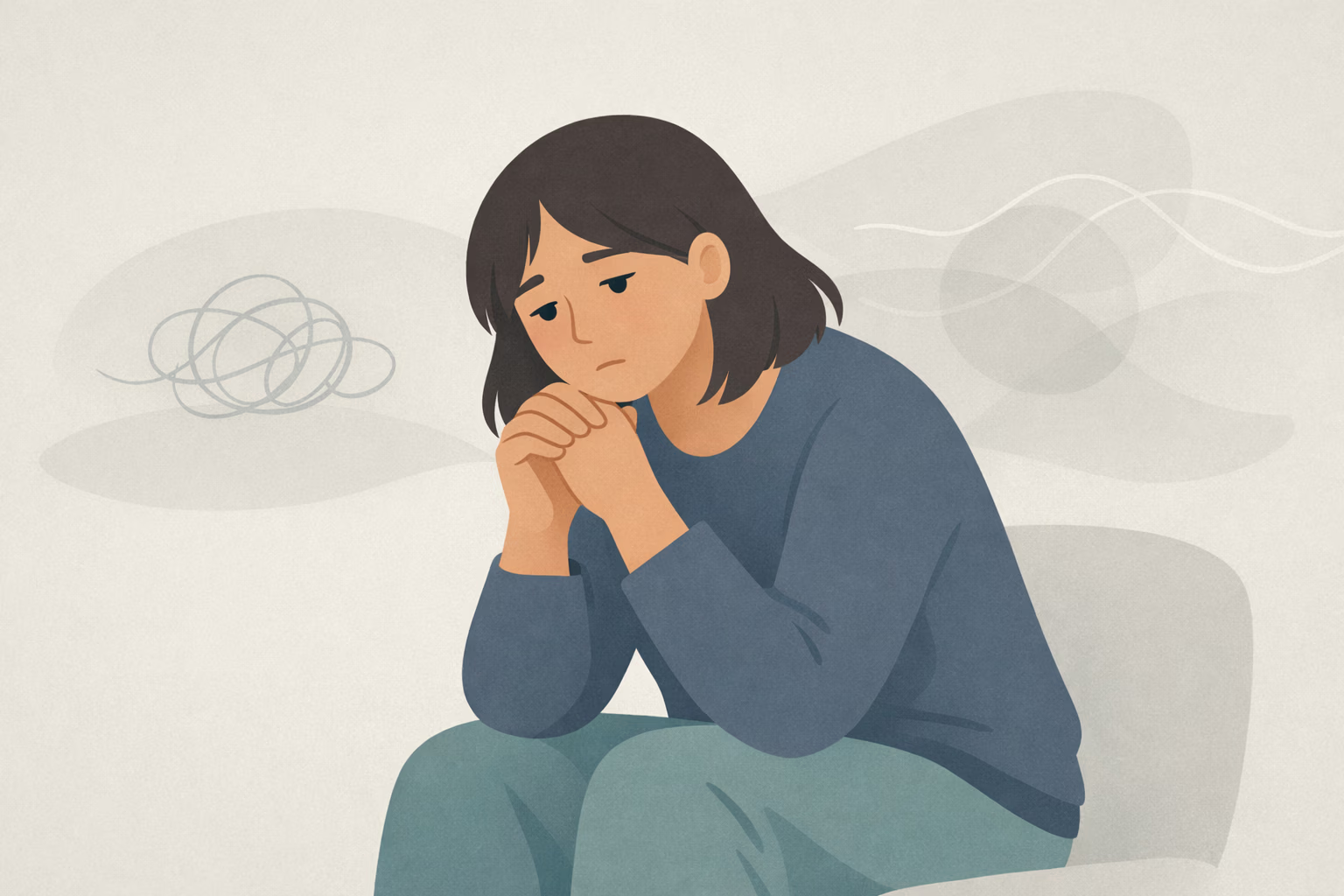
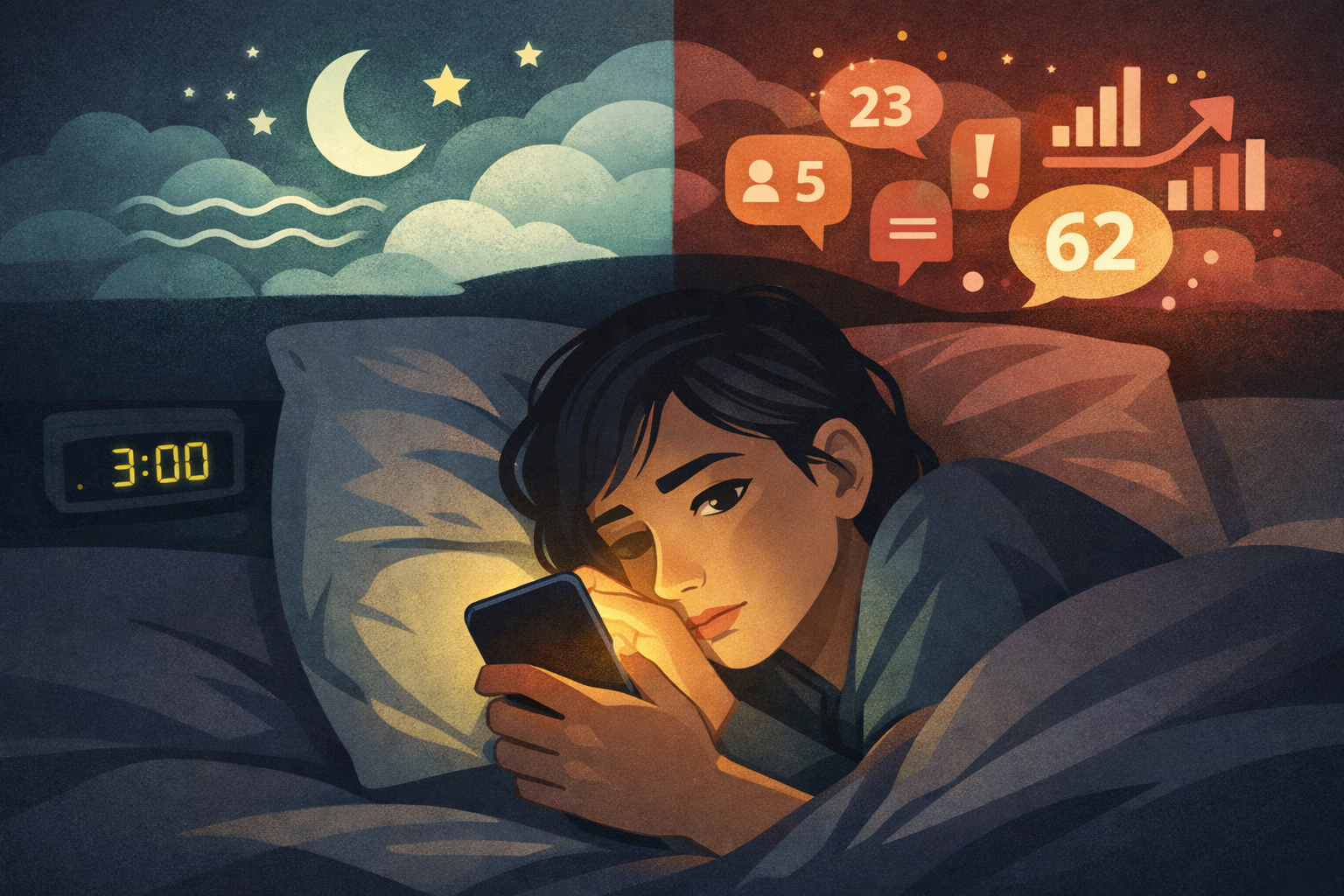
But for others, tracking becomes a new kind of wakefulness. The night turns into a performance, the morning into a verdict. Even after hours in bed, the body can feel strangely unconvinced it’s allowed to stand down.
What if the problem isn’t your sleep—but the way sleep is being asked to prove itself?
It can start innocently: you go to bed hoping for a “better” night, then check your score in the morning like a weather report for your body. Sometimes the score matches how you feel. Other times it doesn’t—and that mismatch can be unsettling.
People describe feeling disappointed or worried even when they remember drifting off, or even when they function reasonably well the next day. A low score can land like a message: something is wrong. Over time, the day can begin with evaluation instead of orientation, which keeps the system subtly activated. Clinicians have described this pattern as tracker-driven sleep disruption, sometimes called orthosomnia. [Ref-1]
“I slept, but I don’t feel finished sleeping—like my body didn’t get the memo.”
Sleep is not a skill you do harder. It’s a state shift that relies on reduced cognitive load and a felt sense that nothing needs immediate management. Sleep trackers, however, can pull the mind into executive attention: monitoring, comparing, interpreting, and predicting.
That kind of attention is inherently activating. When sleep becomes a project to evaluate, the brain stays engaged with outcomes. Even if the intention is calm—“I’m just gathering information”—the nervous system can treat repeated evaluation as a cue that conditions are uncertain and must be managed. Case reports describe how this cycle can escalate: the more someone checks, the more arousal and preoccupation can build around sleep. [Ref-2]
When the night is framed as something to measure, can the body fully receive the signal that it’s safe to power down?
Human nervous systems evolved to scan for safety cues. In many environments, monitoring mattered: changes in light, sound, temperature, social signals, and threat. Vigilance helped our ancestors stay alive.
Sleep requires a different condition: enough safety and predictability for vigilance to release. A tracker can unintentionally reintroduce “night watch” into the bedroom—not because you’re fearful, but because the system learns that nights are followed by analysis. Instead of closure (“the night is done”), the loop stays slightly open (“the night will be reviewed”). Obsession with tracking and sleep outcomes is now widely recognized as a modern contributor to sleep anxiety. [Ref-3]
When sleep feels unpredictable, uncertainty itself becomes load. Data can look like a bridge across that uncertainty: numbers that promise clarity, graphs that promise patterns, and labels that promise explanation.
For many people, this is genuinely regulating—at first. A tracker can provide a sense of structure and control, especially after long stretches of “I don’t know why this is happening.” It can also provide a language to share with clinicians or loved ones.
And yet, this same reassurance can narrow into rigidity. If the nervous system is already strained, the app can become a substitute for bodily trust: the device becomes the authority, and your lived sense becomes secondary. Popular reporting has highlighted how quickly this can tip into fixation and worsened sleep for some users. [Ref-4]
In many areas of life, measurement improves outcomes. Sleep is different because the best nights often happen when the mind is least involved. The promise of tracking is improvement through insight; the reality is that too much monitoring can keep the system in “problem-solving mode.”
Overtracking can turn natural variation into perceived failure. A normal night becomes a “bad” night because it deviated from a target. And once sleep is framed as a performance, the pressure to “get it right” can become its own source of activation.
Some writers describe this as sleep perfectionism: the belief that the night must meet a standard to count. In that frame, rest is no longer restorative by default; it has to earn its status through metrics. [Ref-5]
Many sleep-tracking spirals follow a recognizable structure: uncertainty shows up (a tired day, a restless night), then measurement steps in to reduce uncertainty. But measurement can also postpone closure by keeping the question open: Was it good enough?
In an Avoidance Loop, the system tries to bypass discomfort without completing the underlying need for resolution. Monitoring becomes a stand-in for settling. Instead of the body learning “sleep can happen and end,” it learns “sleep must be verified.” This can gradually replace trust in rhythms—hunger, fatigue, sleepiness, restoration—with external confirmation.
Many overtracking experiences include ignoring bodily signals in favor of the app’s interpretation, especially when the numbers disagree with felt experience. [Ref-6]
When tracking starts to create anxiety, it often doesn’t feel dramatic. It can look like “being responsible.” But the nervous system experiences repeated evaluation as pressure and uncertainty, and behavior starts organizing around the score.
This cluster has been described in discussions of orthosomnia—an overfocus on achieving “perfect” tracked sleep that can paradoxically worsen sleep. [Ref-7]
Sleep confidence is not optimism; it’s a nervous-system memory that the night resolves. When nights are followed by judgment, the system learns that sleep is high-stakes and not fully complete until reviewed.
Over time, this can erode the sense of safety around bedtime. The body approaches night with more monitoring capacity online—more scanning, more internal accounting, more anticipatory readiness. This can intensify insomnia and nighttime anxiety, not because anyone is “doing it wrong,” but because the conditions signal that something must be managed. Experts have increasingly discussed this feedback loop between tracking, worry, and poorer sleep. [Ref-8]
“I’m not just trying to sleep. I’m trying to avoid a bad score.”
Most sleep apps are not neutral diaries. They are designed for engagement: trends, streaks, badges, alerts, and improvement goals. These features can be motivating in many contexts, but with sleep they can reframe restoration as achievement.
Once sleep is placed into a scoreboard logic, the brain naturally reaches for comparison: last night vs. this night, you vs. averages, “improving” vs. “slipping.” The checking becomes reinforced not only by curiosity, but by the promise of certainty and the relief of having an answer—even if the answer increases pressure.
Scholars have noted how self-tracking technologies can shift sleep from a private biological rhythm into a domain of optimization and performance. [Ref-9]
For many people, anxiety around sleep tracking eases when the evaluation layer thins out. Not because they forced themselves to “care less,” but because the nervous system finally receives a clearer closure signal: the night ends without a tribunal.
When measurement is reduced, the parasympathetic system—the branch associated with restoration—has fewer reasons to stay in readiness. The body can re-learn a simple sequence: drowsiness → sleep → waking → day. Not sleep → data → interpretation → worry → retroactive effort.
Some sleep-health educators explicitly mention that pausing or loosening tracking can help when a tracker is worsening insomnia, precisely because it lowers cognitive arousal and performance pressure. [Ref-10]
Data becomes less destabilizing when it’s treated as a rough sketch rather than a ruling. Sleep tracking is an estimate, built from sensors and algorithms that can misread stillness, movement, wakefulness, or stages. Even accurate data can be incomplete if it’s interpreted without context: illness, stress load, travel, hormones, grief, new schedules, or simply normal variation.
Some people find that education and reassurance help them hold the numbers more lightly—seeing them as optional information rather than identity evidence. Others find that the most respectful relationship with sleep involves stepping away from measurement altogether, especially during high-load seasons.
Guidance from sleep-focused platforms often emphasizes that trackers can be useful for broad patterns but can backfire when they feed perfectionism or over-reliance. [Ref-11]
As performance pressure decreases, many people report a noticeable shift: bedtime feels less like an exam, and more like a transition. The mind is less recruited into managing the night, so the body can follow its own sequencing with fewer interruptions.
This is not about “feeling more” or generating the right mindset. It’s more physiological: fewer internal alarms, fewer unfinished loops, more capacity for the system to return to baseline after stress. Sleep becomes something that happens, not something that must be validated.
Descriptions of orthosomnia and sleep anxiety often highlight how moving away from strict metrics can soften the feedback loop and restore a calmer relationship with sleep. [Ref-12]
Sleep improves when it is allowed to be a rhythm rather than a target. Rhythms include variation. Some nights are lighter, some deeper, and the system often compensates across time. When the goal shifts from control to cadence, the body is more likely to complete its own restorative loop without added evaluation.
Research on sleep apps suggests that benefits, when they appear, often come with context and support—not simply from raw tracking or constant checking. In other words, the helpful ingredient may be orientation and education, not nightly scoring. [Ref-13]
What changes when “a good night” means “my system got what it could,” rather than “the chart looks perfect”?
A sleep score can be informative, but it can’t replace the body’s own signals of completion: steadier energy, clearer attention, a sense of being adequately restored for the day you’re in. Those signals are often quieter than apps, but they are more directly connected to lived reality.
When tracking becomes anxious, it often reflects a deeper cultural condition: life is fast, evaluated, and rarely “done.” Sleep then gets pulled into the same logic—measured, compared, improved. The alternative isn’t neglect; it’s remembering that restoration is not a performance domain. Broader conversations about the quantified-self movement often note that tracking can support awareness for some people while increasing anxiety for others. [Ref-14]
Sleep tends to arrive when the night doesn’t have to prove anything.
Your nervous system is not a productivity device. It’s a living organism that looks for safety cues and closure. When the bedroom becomes a place of checking and evaluation—especially with screens in the night—sleep can become harder not because you lack discipline, but because the environment keeps signaling “stay online.” [Ref-15]
When rest is treated with dignity—allowed to be imperfect, cyclical, and complete—many systems settle. And in that settling, sleep often returns to what it has always been: a biological homecoming, not a number you have to earn.
From theory to practice — meaning forms when insight meets action.
Yes, for some people, in a documented pattern called orthosomnia — when overfocus on achieving 'perfect' tracked sleep paradoxically worsens it. The article describes how tracking can pull the mind into executive attention: monitoring, comparing, interpreting, predicting. That kind of attention is inherently activating. Sleep is not a skill you do harder — it's a state shift that relies on reduced cognitive load and a felt sense that nothing needs immediate management. When the night becomes a project to evaluate, the brain stays engaged with outcomes, and the body never quite receives the signal that it's safe to power down.
Because the day starts with evaluation rather than orientation, which keeps the system subtly activated. The article describes the pattern: a low score lands as 'something is wrong' even when you remember sleeping fine and function reasonably well. Sleep gets framed as performance — the night becomes a test, the morning a verdict. People start replaying the night to explain the graph, changing bedtime behavior to please the app even if it doesn't match their body's cues, using data to argue with themselves: 'I shouldn't be tired' or 'I must be broken.' The nervous system experiences repeated evaluation as ongoing pressure.
Through a structural twist. Uncertainty shows up (a tired day, a restless night), measurement steps in to reduce it — but measurement also postpones closure by keeping the question open: was it good enough? The article frames this as monitoring becoming a stand-in for settling. Instead of the body learning 'sleep can happen and end,' it learns 'sleep must be verified.' Trust in natural rhythms — hunger, fatigue, sleepiness, restoration — gets gradually replaced with external confirmation. The device becomes the authority and lived sense becomes secondary, even when the numbers and the felt experience disagree.
The evaluation layer thins out and the nervous system finally receives a clearer closure signal: the night ends without a tribunal. The article frames this as parasympathetic permission — when measurement is reduced, the restoration branch has fewer reasons to stay in readiness. The body re-learns a simple sequence: drowsiness, sleep, waking, day. Bedtime feels less like an exam, more like a transition. Sleep becomes something that happens rather than something that must be validated. The deeper shift is from control to cadence: rhythms include variation, some nights are lighter, the system compensates across time when allowed to be imperfect, cyclical, and complete.
From Science to Art.
Understanding explains what is happening. Art allows you to feel it—without fixing, judging, or naming. Pause here. Let the images work quietly. Sometimes meaning settles before words do.
One Quiet Window, one insight, one reflection — every Sunday