Status Anxiety in the Age of Social Media

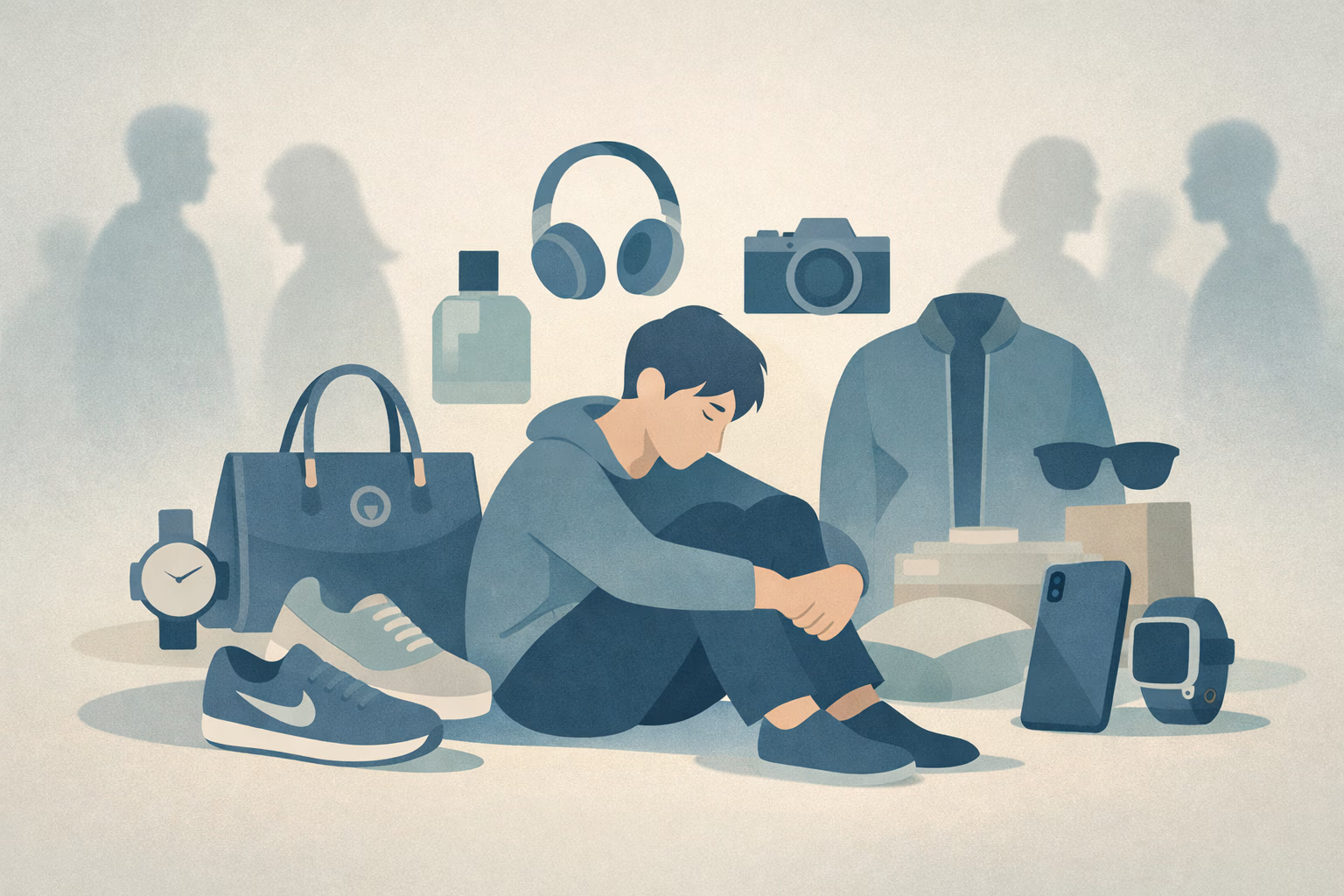
In short: Status-signaling through possessions isn’t only about taste or vanity. In many modern environments, objects become shorthand for stability: “I’m doing okay,” “I’m respected,” “I won’t be left behind.” When life is fast, evaluated, and publicly comparable, visible symbols can feel like the most reliable language available.
Status-signaling through possessions isn’t only about taste or vanity. In many modern environments, objects become shorthand for stability: “I’m doing okay,” “I’m respected,” “I won’t be left behind.” When life is fast, evaluated, and publicly comparable, visible symbols can feel like the most reliable language available.
What if “showing success” is less about wanting more, and more about trying to reach a sense of done?
From a nervous-system view, this pattern often appears when internal cues of security and completion are hard to access—so external cues (brands, upgrades, proof) start doing the regulating. The result isn’t a character flaw. It’s a coherent response to an incoherent world.
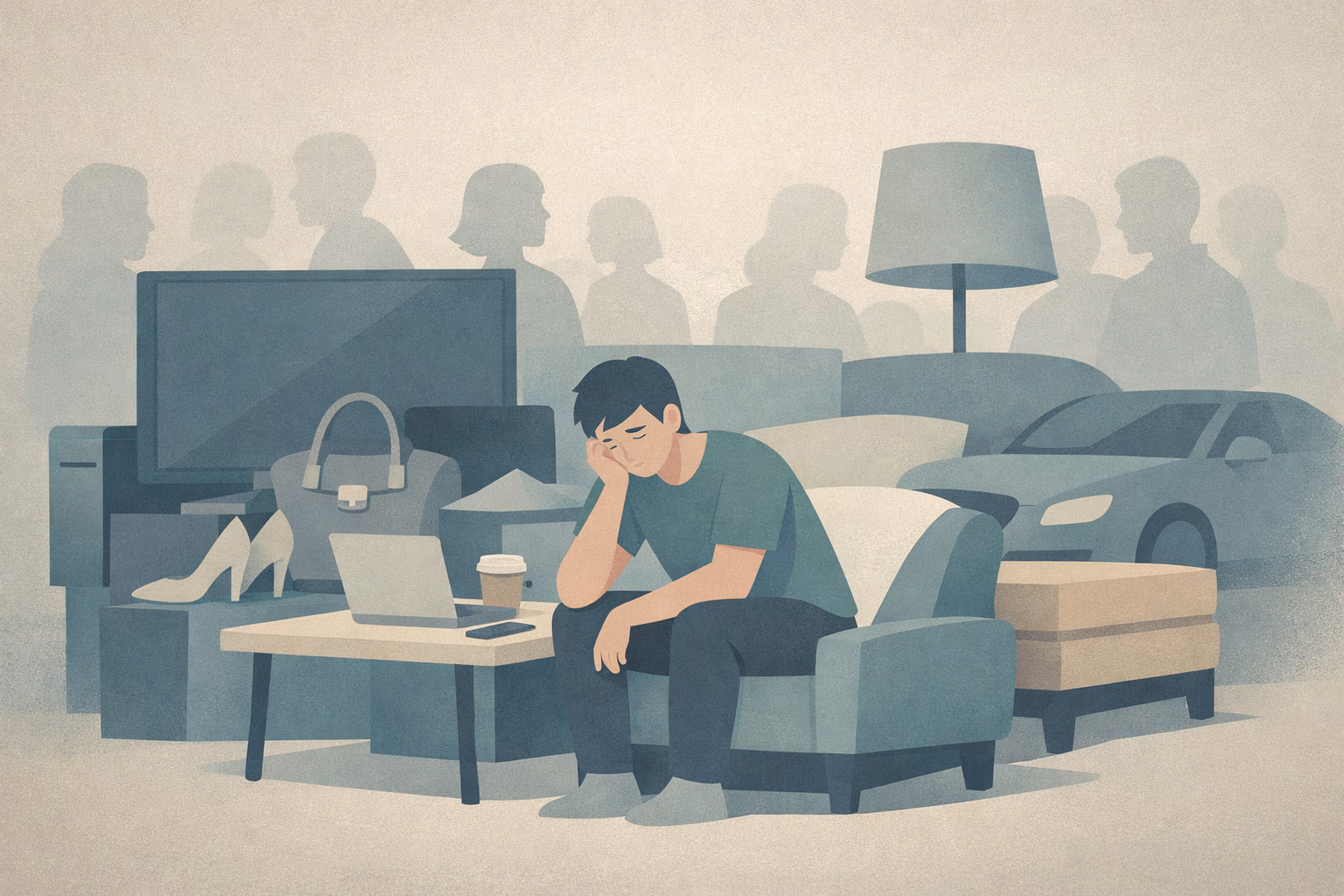
Status consumption tends to grow in climates where “enough” is unclear. You can have achievements, income, or a full calendar and still experience a quiet insufficiency—because the environment keeps moving the reference point. A newer car passes you. A larger home appears on your feed. A friend’s promotion becomes the new baseline. [Ref-1]
This is one reason “keeping up” can feel compulsory even when it’s exhausting. The goalpost is not internal; it’s social and shifting. The system stays alert because the signal of arrival—of completion—never quite lands.
When worth is measured in public, the nervous system treats visibility like survival information.
Social comparison isn’t just a thought process; it can register as a body-level cue about rank, access, and safety. In unequal or competitive settings, status markers can function like shortcuts for “where you stand,” which can activate both reward circuits (wanting, pursuit) and threat circuits (risk, exclusion). [Ref-2]
That’s why a purchase can bring a brief settling—followed by a return of urgency. The nervous system didn’t only want the object; it wanted the downshift that came from feeling momentarily secure in the social field.
When does a “nice thing” turn into a safety behavior?
Humans evolved in groups where visible advantage often mattered. Signals of resources, competence, and alliance could affect protection, mating prospects, and access to support. In that context, being perceived as capable wasn’t superficial; it reduced risk.
Modern status display borrows that ancient logic, even when the stakes are different. A logo, a lifestyle shot, or an “upgrade” can act like a quick, legible signal in a crowded social world—especially online, where nuance is scarce. [Ref-3]
The important point is not that people are “primitive,” but that nervous systems still respond to social rank cues as meaningful information.
Acquiring a status symbol can create an immediate internal effect: posture changes, self-doubt softens, uncertainty quiets. The object functions as a portable credential—something you can hold, show, or point to when your internal sense of legitimacy is under strain. [Ref-4]
This is not irrational. It’s a regulatory move: when internal safety cues are faint, external cues become louder and more reliable. For a short window, the system receives a message: “I have proof.”
But proof is different from closure. Proof can be displayed; closure has to settle.
Possessions can elevate how others perceive you, and they can temporarily change how you perceive yourself. Yet the relief often fades faster than expected, especially in cultures with constant comparison and rapid trend turnover. [Ref-5]
Why? Because the underlying task—feeling secure, belonging, and complete—was never fully resolved. The environment keeps producing new “insufficiency inputs,” so the system returns to scanning: What do I need next to stay credible?
Over time, the same purchase that once felt satisfying can start feeling like maintenance. Not enjoyment—upkeep.
Status-driven consumption often forms a “power loop”: an attempt to secure control and recognition using symbols that are instantly legible. Objects become tools for managing uncertainty—especially social uncertainty—because they can be acquired, curated, and displayed on demand. [Ref-6]
The loop tends to run like this: a cue of comparison appears, the body tightens, a desire for an external signal rises, a purchase (or upgrade) provides temporary stand-down, and then the social field shifts again. The cycle continues, not because someone is shallow, but because the system never receives a durable “done” signal.
What if the real target isn’t the item, but the momentary drop in pressure?
When this loop is active, behavior often organizes around legibility: being seen as stable, impressive, unmessy, ahead. Research links self-uncertainty with conspicuous consumption—suggesting that buying can serve as a way to stabilize identity signals when inner certainty is low. [Ref-7]
These patterns can look like:
Notice the structure here: the object is carrying identity work.
When objects are used as regulators, the costs aren’t only financial. The deeper cost is that worth becomes externally audited. Your system starts tracking how you appear rather than how you live. Over time, that can narrow identity into a performance channel: “I am what I can show.”
Studies on luxury reward consumption and well-being suggest the lift can be fragile—especially when consumption is compensating for powerlessness or strain. [Ref-8] The short-term boost doesn’t necessarily translate into a stable sense of satisfaction.
Another subtle cost is reduced internal freedom: choices begin to route around perception management. Life becomes less about lived alignment and more about maintaining a social signal.
Intermittent reinforcement is powerful: sometimes the post gets attention, sometimes it doesn’t; sometimes the purchase gets compliments, sometimes it’s ignored. That unpredictability can keep the system scanning and repeating—because “maybe next time” stays open.
Social networking environments can intensify this by constantly presenting high-status cues and encouraging visibility-based comparison, which is associated with increased conspicuous consumption. [Ref-9]
In nervous-system terms, the loop becomes self-fueling: comparison increases activation, activation seeks an external downshift, the downshift is brief, and the next comparison arrives before completion can settle.
There’s a difference between feeling better and being finished. A purchase can change state—relief, excitement, confidence. But the deeper stabilization people are often reaching for is a quieter condition: not needing to prove safety in every room.
When internal safety cues strengthen, the social field still exists, but it stops being the only mirror. The system can register worth as something already held, not something constantly negotiated. This is where status symbols lose their urgency—not because you “stop caring,” but because their regulatory job becomes less necessary. [Ref-10]
When the body believes you belong, the need to broadcast belonging softens.
Performative success is brittle because it depends on being read correctly. Values-based belonging is sturdier because it rests on mutual orientation: shared priorities, shared care, shared contribution. When connection is organized around who you are with people—not what you display—identity has a place to land.
Research linking social comparison, materialism, and life satisfaction suggests that comparison-heavy environments can reduce well-being, while values and connection can buffer the sense that you must constantly measure up. [Ref-11]
This isn’t about rejecting nice things. It’s about reducing the requirement that objects do the work of relationship and legitimacy.
As meaning coherence returns, sensitivity to comparison often decreases—not through forced indifference, but because the system is carrying less unresolved tension. The nervous system has more capacity to return to baseline after a social cue, rather than staying in prolonged scanning.
People often describe this shift as:
Materialism has been associated with lower well-being in multiple studies, particularly when it substitutes for deeper needs for autonomy, connection, and competence. [Ref-12]
A stable sense of worth usually doesn’t come from louder signals. It comes from lived meaning that completes: actions that match values, relationships that confirm belonging, and roles that feel real in the body—not just impressive on paper.
When worth shifts from display to contribution, identity becomes less dependent on audience reactions. This aligns with research connecting self-esteem and materialistic values, suggesting that when the self is steadier, material symbols carry less emotional weight. [Ref-13]
The “success” that lasts is often quieter: you can still enjoy beauty, quality, and comfort—without needing them to translate you into someone acceptable.
Status-seeking through possessions is often a sincere attempt to secure recognition, safety, and a stable place in the social world. In that light, the impulse isn’t embarrassing—it’s protective. It’s a strategy that makes sense in a culture that grades people quickly and publicly.
Some reporting and research suggest lower self-esteem can be linked with increased luxury purchasing, reinforcing the idea that buying may be recruited as a stabilizer when inner worth feels less available. [Ref-14] That doesn’t mean anyone is broken. It means the environment and the nervous system are negotiating for reassurance using whatever tools feel most immediate.
Meaning and agency tend to return when life offers more moments of completion: when identity can be lived rather than displayed, and when worth is experienced as something that holds even when no one is watching.
There is a kind of success that reads as calm: fewer loops, fewer proofs, less pressure to translate your life into a convincing image. It’s not the absence of desire; it’s the presence of enough—felt as a settled signal.
Research often finds materialism correlates with lower life satisfaction, suggesting that “more” doesn’t reliably produce “better” at the level people most need. [Ref-15] What tends to last is what integrates: the sense that your life makes sense from the inside, and that your worth is not waiting on the next purchase to become real.
From theory to practice — meaning forms when insight meets action.
Because the relief is state change, not closure. The article frames it carefully: a purchase brings an immediate internal effect — posture changes, self-doubt softens, uncertainty quiets, the body receives a brief 'I have proof' signal. But proof is different from closure. Proof can be displayed; closure has to settle. The underlying task — feeling secure, belonging, complete — was never fully resolved, so the environment keeps producing new insufficiency inputs and the system returns to scanning. Over time, the same purchase that once felt satisfying starts feeling like maintenance. Not enjoyment — upkeep.
The article reframes it sharply: not character flaw, not vanity, but a coherent response to an incoherent world. When internal cues of security and completion are hard to access, external cues do the regulating. Objects become shorthand for stability — 'I'm doing okay,' 'I'm respected,' 'I won't be left behind' — because in a fast, evaluated, publicly comparable culture, visible symbols feel like the most reliable language available. The Power Loop here is sincere, even protective: when worth is measured in public, the nervous system treats visibility like survival information. The impulse isn't embarrassing; it's the body trying to secure recognition and safety using available tools.
Because it isn't just a thought — it registers as a body-level cue about rank, access, and safety. In competitive settings, status markers function like shortcuts for 'where you stand,' which activates both reward circuits (wanting, pursuit) and threat circuits (risk, exclusion). The article describes how social media intensifies this with intermittent reinforcement: sometimes the post gets attention, sometimes the purchase gets compliments, sometimes not. Unpredictability keeps the system scanning because 'maybe next time' stays open. Comparison increases activation, activation seeks an external downshift, the downshift is brief, and the next comparison arrives before completion can settle.
Through internal safety strengthening enough that the social field stops being the only mirror. The article frames it as the difference between feeling better and being finished. When the body believes you belong, the need to broadcast belonging softens. People notice less urgency to upgrade to feel okay, more stable self-trust across different rooms, purchases feeling optional rather than identity-critical, a clearer sense of 'this fits my life' versus 'this proves my life.' This isn't rejecting nice things — it's reducing the requirement that objects do the work of relationship and legitimacy. Worth shifts from display to contribution, and identity stops depending on audience reactions.
From Science to Art.
Understanding explains what is happening. Art allows you to feel it—without fixing, judging, or naming. Pause here. Let the images work quietly. Sometimes meaning settles before words do.
One Quiet Window, one insight, one reflection — every Sunday