Stress Deactivation: Techniques to Exit Fight-or-Flight Fast
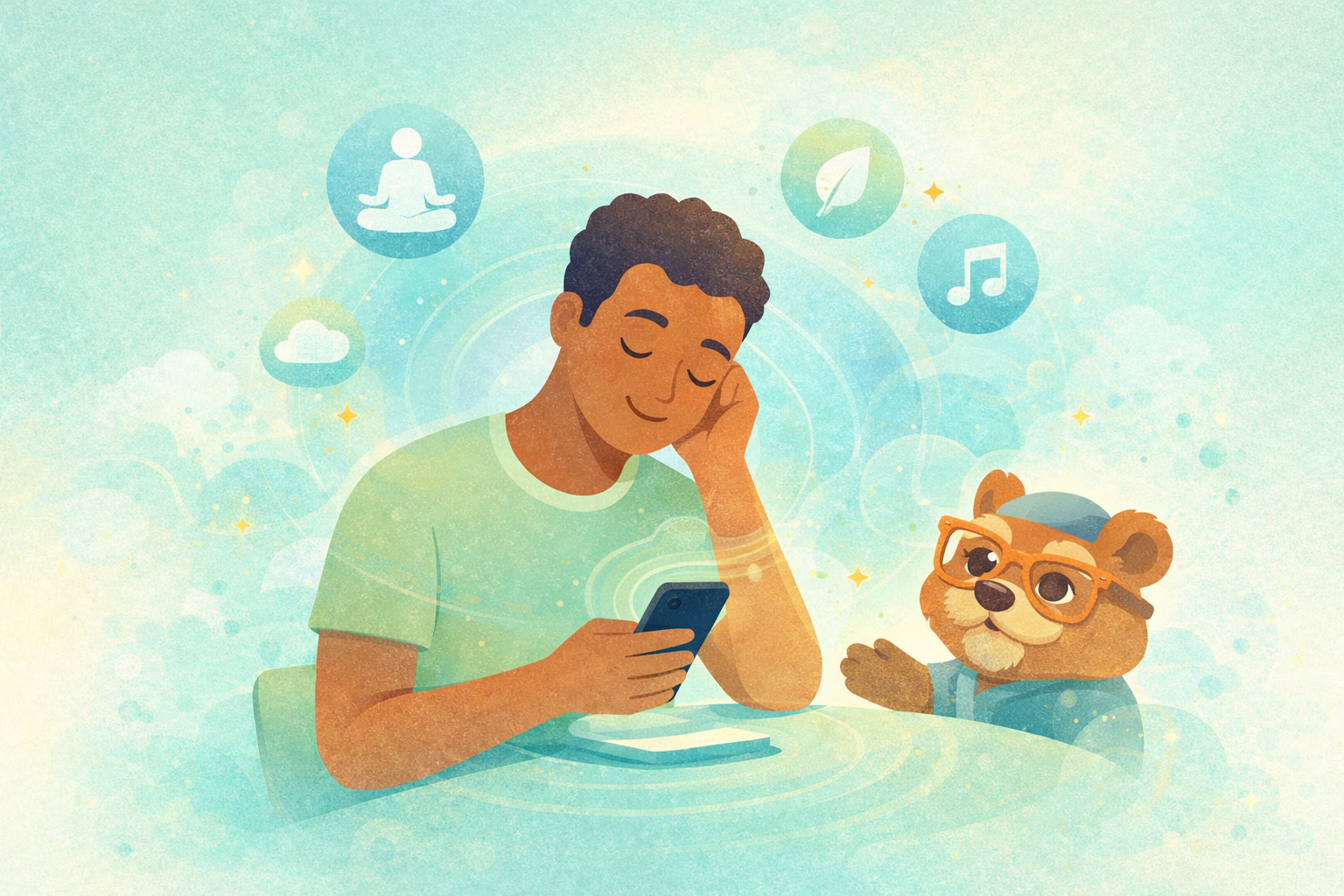
In short: Stress relief apps can be genuinely supportive. They can also be strangely disappointing: you finish a session and still feel keyed up, scattered, or as if your body never got the message that it’s safe to stand down.
Stress relief apps can be genuinely supportive. They can also be strangely disappointing: you finish a session and still feel keyed up, scattered, or as if your body never got the message that it’s safe to stand down.
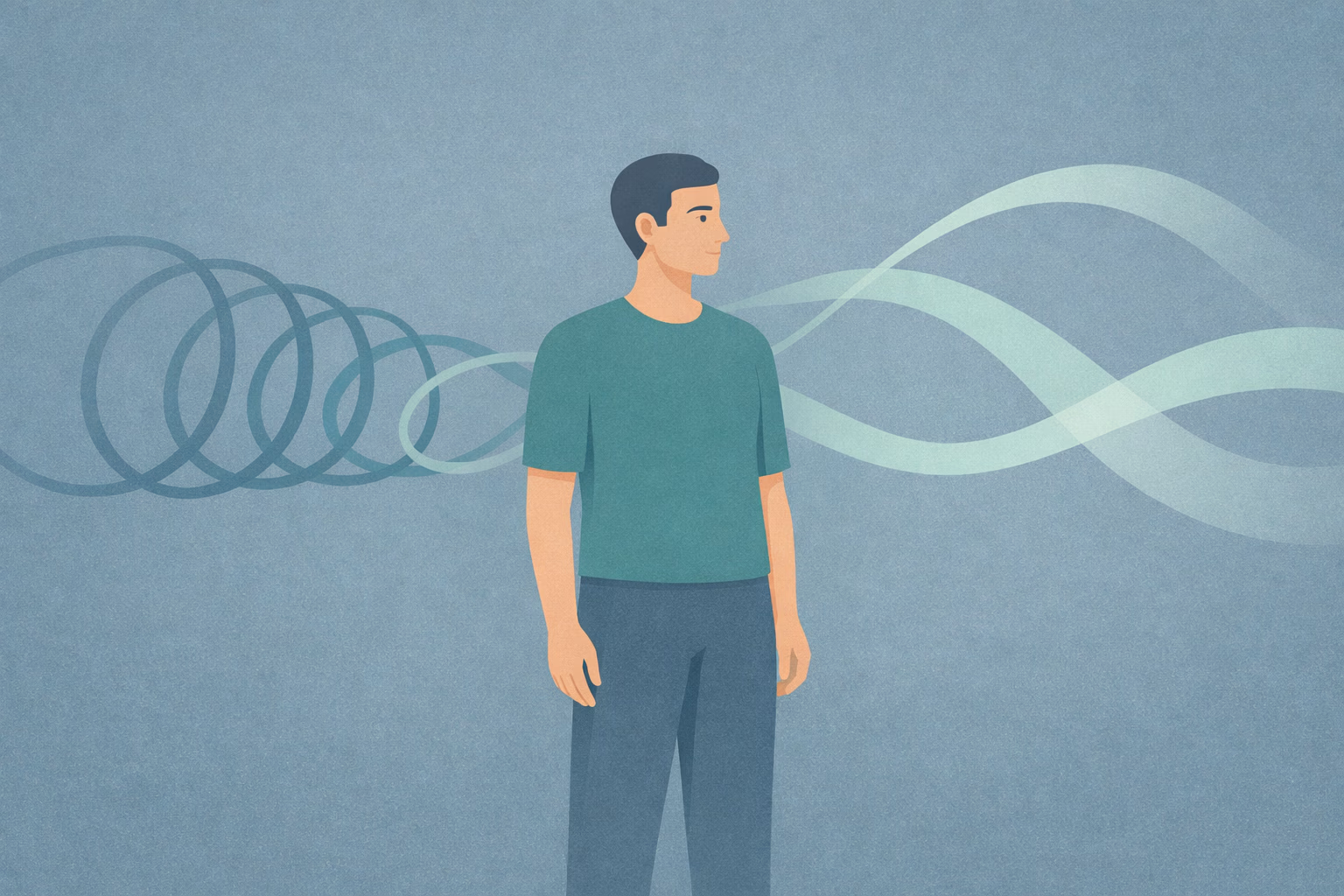
That contrast doesn’t mean you “did it wrong.” It usually means the app offered a state change (a short dip in intensity) without offering closure (a settling that lets your system complete what it started and return to baseline).
What if “calm” isn’t a mood you summon—but a biological signal that enough has completed for your system to rest?
A lot of stress relief apps do provide a real effect: the voice is soothing, the music is gentle, the visuals are soft, the pace is slower. For many people, stress ratings drop after use. [Ref-1]
And yet, it’s common to notice something else underneath: the body remains braced, the mind keeps checking, or the next notification snaps you right back into urgency. This isn’t personal inconsistency. It’s a predictable result of using a calming layer on top of a system that hasn’t received a “done” signal.
When there’s no closure, the nervous system can treat calm as temporary cover—nice, but not decisive. So you exit the app calmer in the moment, but not convincingly safe.
Effective calming experiences tend to recruit more than one channel of regulation at a time. Breathing pace, exhale length, body position, micro-movement, and attentional anchoring can cooperate to reduce sympathetic activation and support parasympathetic return. [Ref-2]
That “working together” is the key. When attention steadies while the body shifts out of bracing, the system receives redundant evidence of safety—multiple signals pointing in the same direction.
Some apps do this well by guiding the user through an organized sequence: not just “relax,” but a structured progression that gives the body a chance to downshift and then stay downshifted long enough to register completion.
Humans are built to detect change quickly. That sensitivity isn’t a flaw; it’s an inheritance. The problem is scale and frequency: modern environments deliver continuous micro-threats—uncertainty, evaluation, time pressure, social comparison, and rapid context switching.
When threat circuits are repeatedly activated, the mind may interpret ordinary sensations as “something’s still pending,” and the body stays prepared. App-based mindfulness programs can reduce perceived stress for many people, which supports the idea that attention training and pacing matter. [Ref-3]
But the deeper point is structural: when activation is frequent and unresolved, the system prioritizes readiness over rest. Calming tools help most when they acknowledge that reality rather than implying the user should be calm on command.
Many apps can reliably create immediate shifts: slower heart rate, softer muscle tone, a little more space between thoughts. Guided breathing patterns, for example, can improve stress and emotion regulation markers in the short term. [Ref-4]
That short-term change matters. It’s not “fake calm.” It’s the nervous system sampling an alternate state—an interruption of escalation.
Still, sampling isn’t the same as integration. Relief changes state; closure changes baseline. If the session ends while the system still expects further demands, the calm can evaporate quickly.
Some stress apps are essentially well-designed distractions: pleasant audio, games, scrolling “comfort,” quick hits of soothing content. These can reduce distress briefly—sometimes as much as brief breathing modules do. [Ref-5]
The difference shows up afterward. Distraction often lowers intensity without resolving the underlying “unfinished” signal. The nervous system quiets because attention moved, not because the loop completed.
So a person may feel better for a few minutes and then feel oddly compelled to re-open the app, re-check, or keep layering stimulation—because the body never received the stand-down message that would allow a stable return.
In real life, calm isn’t only a physical state. It’s also an orientation: a sense that your actions can connect to your values without constant internal friction. That’s why the most effective calming tools quietly create a loop—physiology settles, attention organizes, and the next moment becomes more navigable.
This is where “meaning” becomes practical rather than inspirational. When the nervous system is less loaded, the mind can make fewer emergency decisions. That makes it easier for choices to feel coherent—less like reaction, more like alignment. Research on mindfulness apps suggests benefits, but also variability, which fits the idea that context and fit strongly shape outcomes. [Ref-6]
In other words: regulation isn’t just about feeling better. It’s about restoring enough internal capacity for life to make sense again.
People often judge an app by what happens during the session: Did I relax? Did my thoughts slow? But the stronger signal is what happens afterward—how the system recovers when life resumes.
Some patterns that suggest a tool is supporting deeper regulation (not just momentary comfort) include:
Newer modalities like extended reality tools are being studied for how immersive environments can support regulation and presence, which hints at how multi-sensory safety cues may strengthen carryover. [Ref-7]
There’s a subtle trap in some stress relief design: the app becomes a quick exit from discomfort. Not because the person is “avoiding feelings,” but because the environment rewards immediate state shifts and minimizes the cost of leaving a moment unfinished.
Over time, that can reinforce a pattern where the system expects an external reset rather than completing internal cycles. The result can be persistent background tension—quiet, but present—because the body still carries unfinished activation.
Public health reviews of mHealth note benefits alongside limitations like engagement drop-off and inconsistent real-world effectiveness, which aligns with this problem: soothing is easier than completion. [Ref-8]
Sometimes the app helps me feel better. But it doesn’t always help me feel finished.
Well-designed apps don’t only deliver calming content; they create predictable structure. Timers, reminders, short guided sequences, and consistent framing can help a nervous system learn what “downshifting” feels like and recognize the pathway back.
That matters because regulation is partly habituation: repeated, low-stakes returns to baseline can train the system to treat calm as familiar rather than fragile. Apps that use structured exercises and consistent pacing can support that learning, though outcomes vary across individuals and products. [Ref-9]
In this way, cues are not just nudges. They are signals that help the body and attention meet the same pattern again—until it becomes easier to access without novelty.
The most important shift is not “I understand stress better” or “I can name what’s happening.” Insight is useful, but it isn’t integration. Integration looks more like: the body stands down when it’s appropriate, and attention returns without being dragged by urgency.
When an app supports durable regulation, users often report a broader change: steadier attentional control, fewer spirals, and a more reliable sense of internal footing. Reviews of mindfulness apps commonly find small-to-moderate benefits for stress and related outcomes, which supports the idea that some tools can genuinely strengthen regulation rather than only distracting. [Ref-10]
Not “How do I calm down fast?” but “What helps my system complete and return?”
Some people do better with a human voice, scheduled sessions, or shared practice—not because they lack willpower, but because nervous systems stabilize more reliably with relational and contextual safety cues.
Accountability features, coaching elements, group challenges, or clinician-supported apps can add a layer of containment: the practice is held inside a predictable relationship or structure, which can reduce decision fatigue and make completion more likely.
Large reviews suggest evidence-based apps can improve outcomes on average, while also showing high variability—often influenced by engagement and context. [Ref-11]
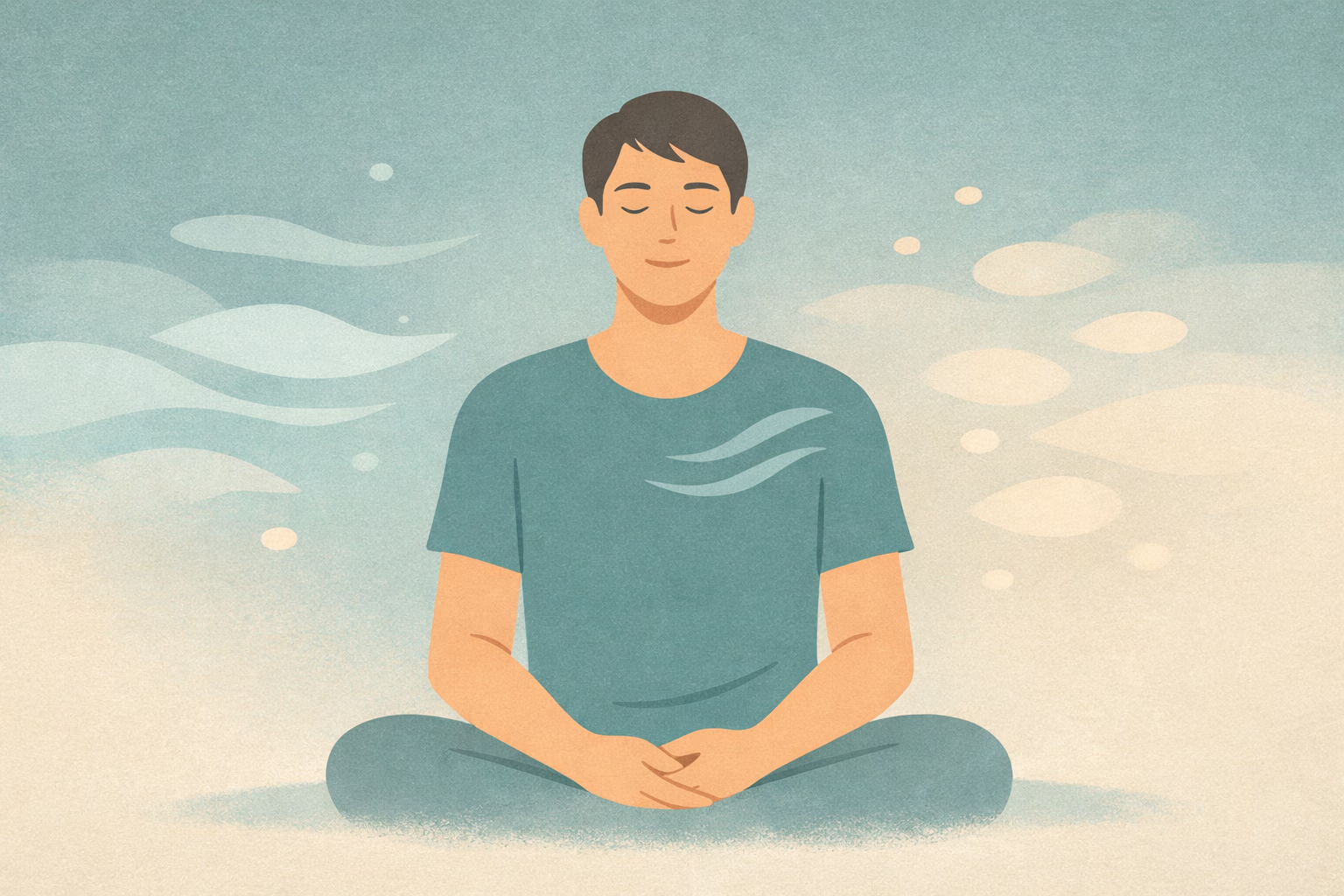
Lasting calm isn’t constant serenity. It’s flexibility: the capacity to mobilize for real demands and then return—without getting stuck in overdrive or collapse.
When physiological pacing and attentional training are paired, people often notice practical changes: clearer prioritization, fewer compulsive checks, more tolerance for unfinished tasks without panicking, and smoother transitions between roles. Systematic reviews find mental health apps can reduce stress and anxiety, but also emphasize that long-term effectiveness and adherence are limited—suggesting that durability depends on how well the practice becomes part of lived life, not just downloaded. [Ref-12]
In Meaning Density terms, coherence increases when the system can complete cycles and the person can re-enter their day with a more unified internal signal.
It can be surprisingly reassuring when an app becomes less essential. That doesn’t mean it “stopped working.” It can mean the body learned the sequence well enough that the external scaffold is no longer required as often.
Meta-analytic findings suggest self-guided mindfulness interventions can reduce stress in the short term, including app-delivered formats, which supports the idea that people can internalize these skills over time. [Ref-13]
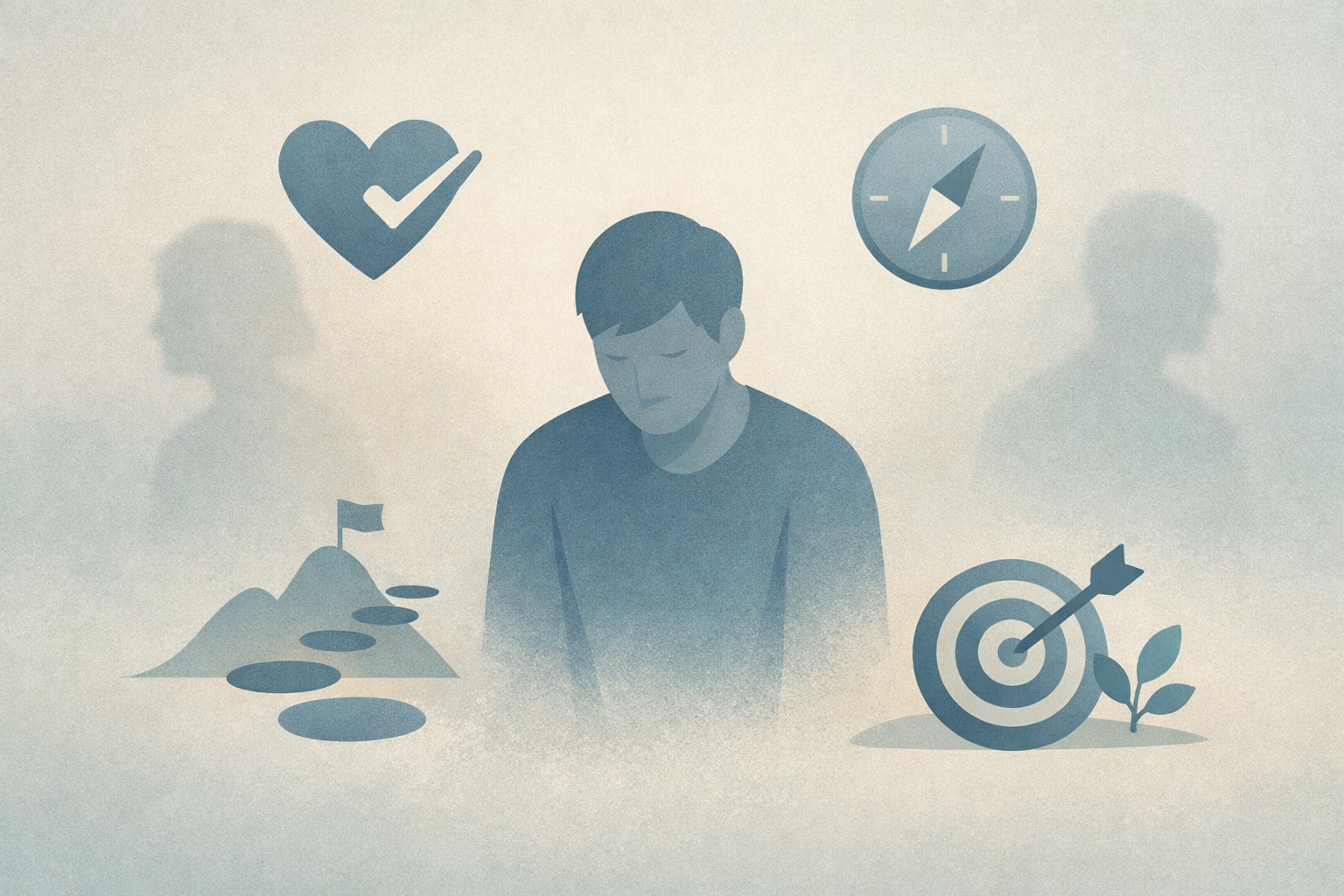
The deeper shift is identity-level: calm becomes something your system recognizes as belonging to you—not a special state you rent from a screen. And when regulation links to purpose (what matters, what you’re protecting, what you’re building), the nervous system has a clearer reason to settle.
Stress relief apps are best understood as scaffolds: temporary structures that help your nervous system relearn safety cues and completion. They can offer a reliable entry point into downshifting—especially when they use multi-sensory calm, like nature-based virtual environments, which can measurably support autonomic settling. [Ref-14]
What matters is not whether an app makes you feel soothed in the moment, but whether it helps your system close loops—so you can return to your life with more capacity, clearer attention, and less internal static.
Agency doesn’t come from pushing harder. It comes from coherence: when your body, attention, and values point in the same direction.
Real calm is rarely dramatic. It’s often quiet: fewer internal alarms, less urge to self-interrupt, more stable access to your own next step.
Apps can support that when they coordinate physiology and attention in a way the body can trust—long enough for the system to register “safe now” and “done for now.” Breathing-based mindful attention tasks are a simple example of this combined pathway. [Ref-15]
Nothing about needing support is a defect. It’s a nervous system doing what it was designed to do—seeking conditions where it can finally stand down.
From theory to practice — meaning forms when insight meets action.
Because most stress relief apps offer a state change — a short dip in intensity — without offering closure, the settling that lets your system complete what it started and return to baseline. The voice is soothing, the music is gentle, stress ratings drop in the moment. But underneath, the body remains braced, the mind keeps checking, and the next notification snaps you right back. When there's no closure, the nervous system treats calm as temporary cover — nice, but not decisive. You exit the app calmer in the moment but not convincingly safe. Sometimes the app helps you feel better; it doesn't always help you feel finished.
Effective calming experiences recruit more than one channel of regulation at a time — breathing pace, exhale length, body position, micro-movement, and attentional anchoring cooperating to reduce sympathetic activation and support parasympathetic return. The 'working together' is the key. When attention steadies while the body shifts out of bracing, the system receives redundant evidence of safety — multiple signals pointing in the same direction. A structured progression that gives the body a chance to downshift and stay downshifted long enough to register completion does more than 'just relax' commands. Calm isn't a mood you summon; it's a biological signal that enough has completed for your system to rest.
The stronger signal isn't what happens during the session — it's what happens afterward. Patterns suggesting deeper regulation (not just momentary comfort) include calm that lingers as a steadier baseline rather than a post-session glow, less snap-reactivity to ordinary triggers, faster return to baseline after stress spikes, more consistent attention with less scattering, and a clearer sense of what's next without forcing it. Distraction often lowers intensity without resolving the underlying 'unfinished' signal — the system quiets because attention moved, not because the loop completed. That's why people end up compelled to re-open the app: the body never received the stand-down message.
Yes — and that's reassuring rather than a sign the app stopped working. It can mean the body learned the sequence well enough that the external scaffold isn't required as often. Apps work best as scaffolds: temporary structures that help the nervous system relearn safety cues and completion. The deeper shift is identity-level: calm becomes something your system recognizes as belonging to you, not a special state you rent from a screen. When regulation links to purpose — what matters, what you're protecting — the nervous system has a clearer reason to settle. A calmer app isn't the point; a calmer system is. What truly calms is completion, not constant relief.
From Science to Art.
Understanding explains what is happening. Art allows you to feel it—without fixing, judging, or naming. Pause here. Let the images work quietly. Sometimes meaning settles before words do.
One Quiet Window, one insight, one reflection — every Sunday