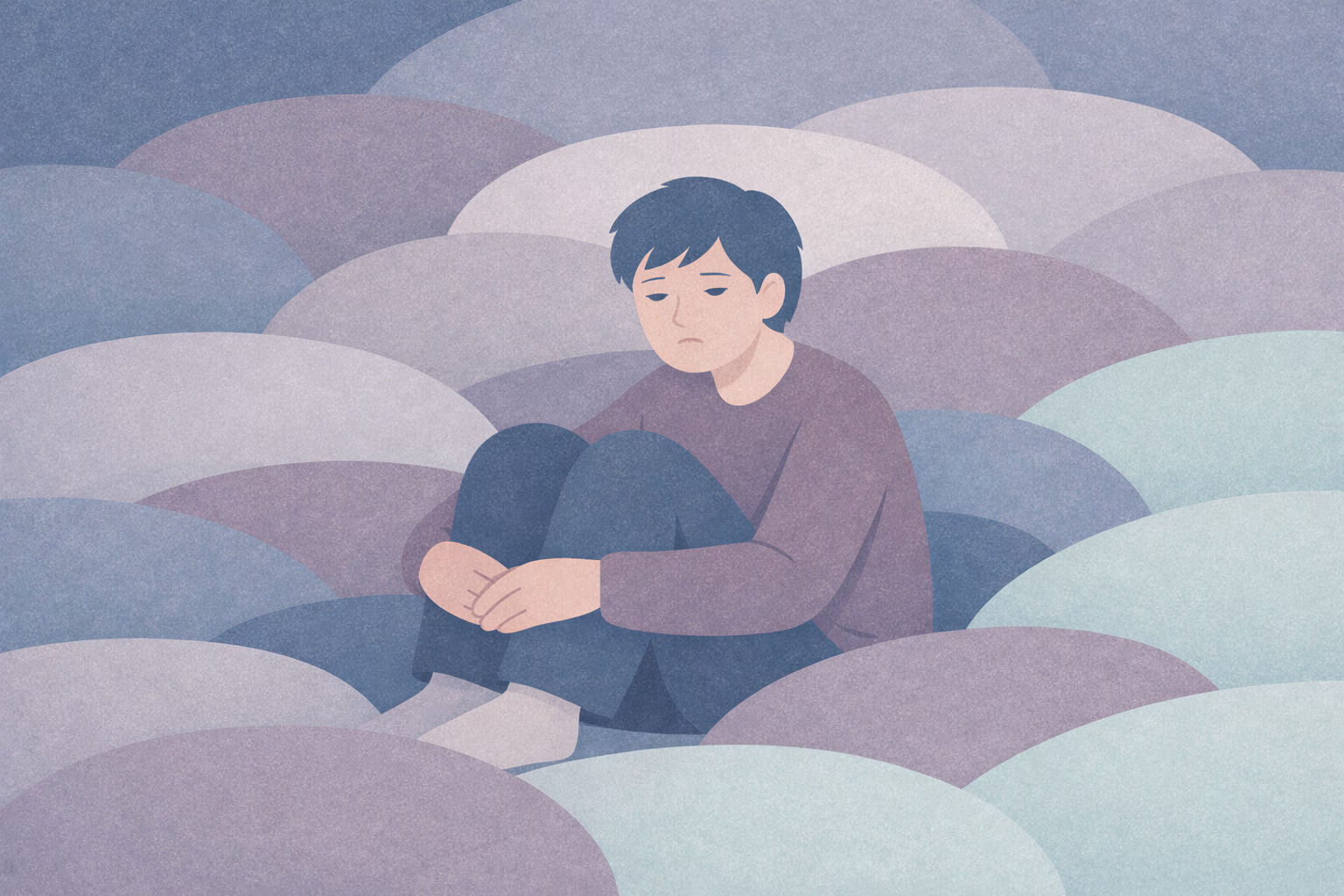
Content Binging: When Consuming Becomes Escaping
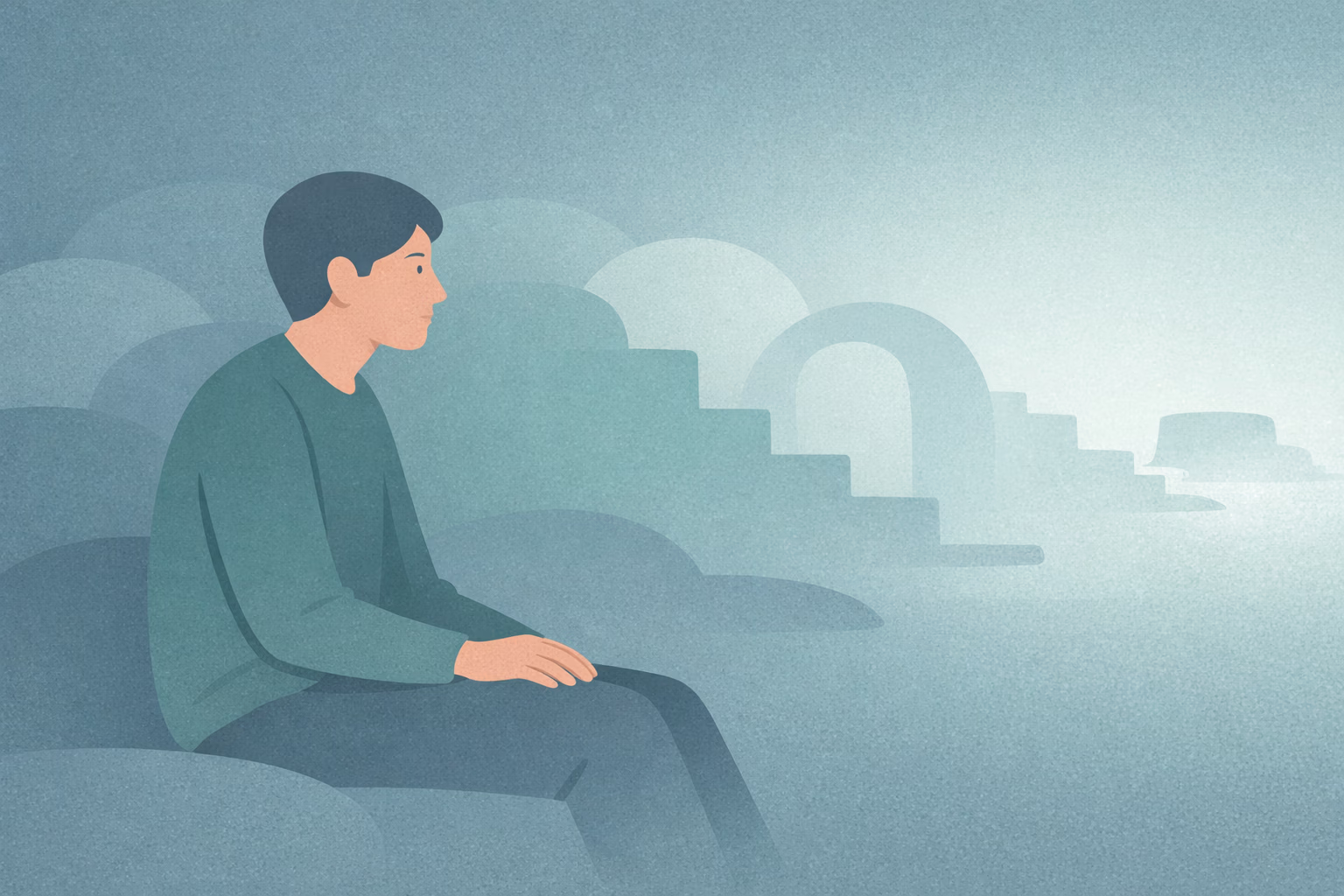
In short: “One more episode” is rarely a character flaw. It’s often a nervous-system event: anticipation ramps up, time cues soften, and the brain treats the next chapter like an unfinished signal that needs resolving.
“One more episode” is rarely a character flaw. It’s often a nervous-system event: anticipation ramps up, time cues soften, and the brain treats the next chapter like an unfinished signal that needs resolving.
Modern streaming doesn’t just offer stories—it offers engineered continuity. When an episode ends with tension still open, the body can stay in a “not yet complete” state, where continuing feels like the shortest path to relief.
What if the pull to continue isn’t weak willpower—so much as a brain that hasn’t received a clear “done” signal yet?
A common binge-watching moment is surprisingly physical: heavy eyelids, a sense of “I should stop,” and yet the hand still moves toward the next episode. That mismatch can feel confusing, especially when you’re aware of time or tomorrow’s demands.
From a regulation standpoint, this is what overload can look like: the system is depleted in one channel (sleepiness) while activated in another (anticipation). Streaming platforms are especially good at keeping activation online even as capacity drops. [Ref-1]
It’s not that you “don’t care” about rest. It’s that the stop-signal arrives quieter than the next-signal.
Cliffhangers are powerful because they highlight incompletion. They don’t just make you curious; they keep the brain in a predictive mode—scanning for the missing piece, rehearsing what might happen, staying oriented toward what’s next.
Dopamine is often discussed as “pleasure chemistry,” but in many contexts it functions more like pursuit chemistry—energizing attention and approach toward an expected reward. The spike is frequently stronger in the build-up than in the resolution, which is why the end of an episode can feel like a new beginning instead of a landing. [Ref-2]
Why does the next episode feel more compelling than the one you just finished?
Because the episode you finished may have delivered stimulation, but not closure. Anticipation can stay “open,” and open loops tend to keep calling for completion.
Humans evolved in environments where unfinished signals mattered. A rustle in the bushes, a half-solved problem, an incomplete plan—these weren’t abstract concerns. They were cues that something in the environment still required orientation.
That same architecture can get recruited by modern narrative design. When a storyline is left unresolved, the brain can treat it like a pending pattern: incomplete information that keeps attention tethered until it’s updated and settled. In this light, binge susceptibility is not a defect; it’s a system doing what it was built to do—stay with what isn’t finished. [Ref-3]
And because stories are safer than survival threats, the brain can “afford” to keep chasing resolution longer than it would in a truly resource-limited setting.
It makes sense that continuing a story can feel soothing. Narratives offer structure: a sequence, a world, a set of rules. After a fragmented day, a show can temporarily provide coherence—one thread to follow instead of many.
There’s also a genuine payoff in staying with characters and arcs. The nervous system often likes predictable emotional rhythms: tension, release, reunion, resolution. It’s not “silly” to want that kind of contained experience, especially when real life feels open-ended.
Where it gets tricky is when the design keeps tension alive without letting resolution fully settle. Then what felt like relief can start functioning more like ongoing activation. [Ref-4]
Binge-watching often carries an illusion of completion: “If I finish this arc, I’ll feel satisfied.” Sometimes that’s true in the moment. But the body may only register the cost later—when the lights are off, when sleep won’t come easily, or when the next day feels oddly thin.
This is one reason the cycle can feel confusing. The mind registers a near-term reward (continuity, novelty, resolution cues), while the body accumulates delayed consequences (fatigue, reduced capacity, disrupted recovery). The gap between those timelines can keep the loop running.
So the issue isn’t lack of discipline. It’s that the platform delivers immediate “keep going” signals, while the depletion signals arrive after the fact. [Ref-5]
Many people expect that finishing an episode should naturally reduce the urge to continue. But streaming often sets up the opposite: each “finish” is engineered to be a handoff into the next anticipation wave.
In simple terms, the loop can look like this:
When this happens at night, it can also keep pre-sleep arousal active—meaning the body is physically closer to “alert” than “stand down,” even if you feel cozy on the couch. [Ref-6]
People often describe bingeing as if they were “possessed,” but what’s more accurate is that the usual boundary signals get outcompeted. Stopping cues aren’t moral decisions; they’re sensory and contextual markers—lights, routines, natural breaks, social timing, bodily shifts.
Streaming reduces those markers. Autoplay compresses transition time. Episodes end with forward momentum. Time becomes ambiguous. The body doesn’t receive clear closure signals that normally help behavior settle.
Common patterns include:
Research linking binge viewing with pre-sleep arousal and sleep disruption fits this pattern: it’s not just psychological interest; it’s activation that doesn’t fully downshift at bedtime. [Ref-7]
When anticipation spikes happen repeatedly—especially late at night—the nervous system can start running on a narrower range: higher stimulation to feel engaged, and lower responsiveness to quieter satisfactions. It’s not that you’ve “ruined dopamine.” It’s that your baseline cues for reward and completion can get harder to detect under chronic load.
Over time, this can show up as:
Studies have associated binge-watching patterns with insomnia and sleep problems, suggesting the competition isn’t just about time—it’s also about arousal and recovery disruption. [Ref-8]
In Meaning Density terms, stimulation changes state. But only completion creates the settled “done” signal that restores capacity.
Streaming environments aren’t neutral containers. They are pacing systems: episode lengths, season drops, recap structures, and autoplay are built to minimize friction between “end” and “next.” That means your brain practices fewer endings.
Algorithmic recommendations also keep the field of possibility open. Even after a season ends, the platform immediately offers a new narrative thread. The result is not just more content—it’s fewer moments where attention can close, integrate, and stand down.
Over time, the system can learn a simple association: ending = new beginning. That trained expectation makes it harder for the body to treat an ending as completion, because the environment keeps re-opening the loop. [Ref-9]
In the middle of “one more episode,” many people interpret the urge as evidence: “This is what I want,” or “I’m doing it again.” Both interpretations add pressure, and pressure tends to increase fragmentation.
A different frame is available: the urge can be read as a physiological anticipation cue—an activation signal that the system is still oriented toward an unresolved thread. That doesn’t make the urge “true desire,” and it doesn’t make it “bad.” It makes it information about what’s still open.
The pull to continue is often the brain requesting closure, not the soul requesting more.
When this is understood, the situation becomes less about forcing yourself and more about how endings are (or aren’t) being delivered in a high-velocity environment. [Ref-10]
Isolation is a powerful accelerant for loops. When you watch alone, the only boundary is internal—and internal boundaries are quieter when you’re tired, stressed, or emotionally loaded.
Social viewing introduces external closure cues: someone gets up, the conversation shifts, the shared plan has a natural endpoint. Even light social coordination can provide a “done” signal that doesn’t rely on internal willpower.
This is one reason people often binge more intensely when watching solo, late at night, or as a private decompression ritual. The pattern isn’t about weakness; it’s about fewer environmental brakes and fewer shared transitions. [Ref-11]
When anticipation loops run repeatedly, the body’s subtler signals can get harder to access—not because they disappear, but because they’re competing with louder inputs: bright screens, story tension, novelty, and constant “next.”
A meaningful shift often looks less like “gaining control” and more like signal return: fatigue becomes easier to notice, time becomes more legible, satisfaction becomes more distinct from stimulation. The nervous system starts to regain its natural ability to detect completion versus continuation.
What changes when the body can actually register “enough” again?
You may still like the show. But the ending of an episode can begin to feel like an ending—an event that the system can close around—rather than a mere obstacle before the next hit of anticipation. [Ref-12]
In a culture that rewards constant access and constant continuation, choosing to stop can feel oddly significant. Not as a moral win, but as a restoration of biological sequencing: activation → completion → downshift.
Completion is not the same as “understanding what’s happening.” Completion is when the nervous system receives enough closure that it can stand down without needing one more update. That settling often shows up as simpler sleepiness, cleaner attention the next day, and less internal noise around endings.
Many communities even create their own closure rituals—watch parties, agreed stopping points, shared reactions—because humans naturally organize around endings that land. Even informal social norms can help restore the sense that a story can be held, remembered, and left for later without falling apart. [Ref-13]
If you’ve ever clicked “next” while already drained, it can help to name what’s happening without shame: anticipation chemistry is doing its job, and the platform is designed to keep anticipation alive. That’s a structural match, not a personal failure.
And when sleep gets displaced, it’s not just about minutes lost. Sleep is one of the body’s primary completion mechanisms—where activation resolves and capacity returns. When binge-watching competes with that process, the nervous system can stay in an unfinished state longer than you intended. [Ref-14]
Agency often begins where self-blame ends: when the experience is understood as a loop seeking closure, not a person lacking character.
There’s a distinct feeling when an evening actually completes: not dramatic, not optimized—just settled. The story can remain unfinished, and yet your system doesn’t keep reaching for the next piece.
Research connecting binge-watching with insomnia underscores how closely these loops interact with recovery: when anticipation stays high, sleep and restoration can get pushed aside. [Ref-15]
In that light, stopping isn’t a punishment or deprivation. It’s one way the body receives the message it’s been waiting for: we’re done for now.
From theory to practice — meaning forms when insight meets action.
Because the stop-signal arrives quieter than the next-signal. Streaming platforms are engineered to keep activation online even as capacity drops, so you can be physically depleted (heavy eyelids, awareness of tomorrow) and still anticipating the next chapter. Cliffhangers run on anticipation more than payoff — they highlight incompletion and keep the brain in predictive mode, scanning for the missing piece. Dopamine functions here as pursuit chemistry, often stronger in the build-up than in the resolution. The episode you finished delivered stimulation but not closure. Open loops keep calling for completion, and the next episode feels more compelling than the one you just watched.
It's a self-renewing sequence: anticipation (a question gets opened — who did it, what's the secret), consumption (you watch to resolve), cliffhanger (resolution is partial, a new question is opened), renewed pull (the system stays oriented toward the next update). Each finish is engineered as a handoff into the next anticipation wave. At night, this also keeps pre-sleep arousal active — the body is closer to alert than stand-down, even on the couch. The Pleasure Loop here doesn't need willpower failure to run. It needs only an environment that delivers immediate keep-going signals while depletion signals arrive after the fact.
Because the usual stopping cues get outcompeted. Stopping cues aren't moral decisions — they're sensory and contextual markers: lights, routines, natural breaks, social timing, bodily shifts. Streaming reduces those markers. Autoplay compresses transition time. Episodes end with forward momentum. The body doesn't receive clear closure signals that normally help behavior settle. You experience time distortion (minutes feel like seconds), repeated bargaining (after this one keeps moving), muted fatigue signals until you finally stop, and a stuck in continue feeling rather than active choosing. People describe feeling possessed, but more accurately the boundary signals are quieter than the platform's continuation cues.
Not necessarily. The urge can be read as a physiological anticipation cue — an activation signal that the system is still oriented toward an unresolved thread. That doesn't make it true desire, and it doesn't make it bad. It's information about what's still open. The pull to continue is often the brain requesting closure, not the soul requesting more. Reframing it this way reduces self-blame and shifts attention toward the structural mismatch: a high-velocity environment that doesn't deliver clean endings. When the body can register enough rest is enough again, an episode ending starts to feel like an event the system can close around — not just an obstacle before the next hit of anticipation.
From Science to Art.
Understanding explains what is happening. Art allows you to feel it—without fixing, judging, or naming. Pause here. Let the images work quietly. Sometimes meaning settles before words do.
One Quiet Window, one insight, one reflection — every Sunday