The Fear of Silence: Why Stillness Feels Uncomfortable
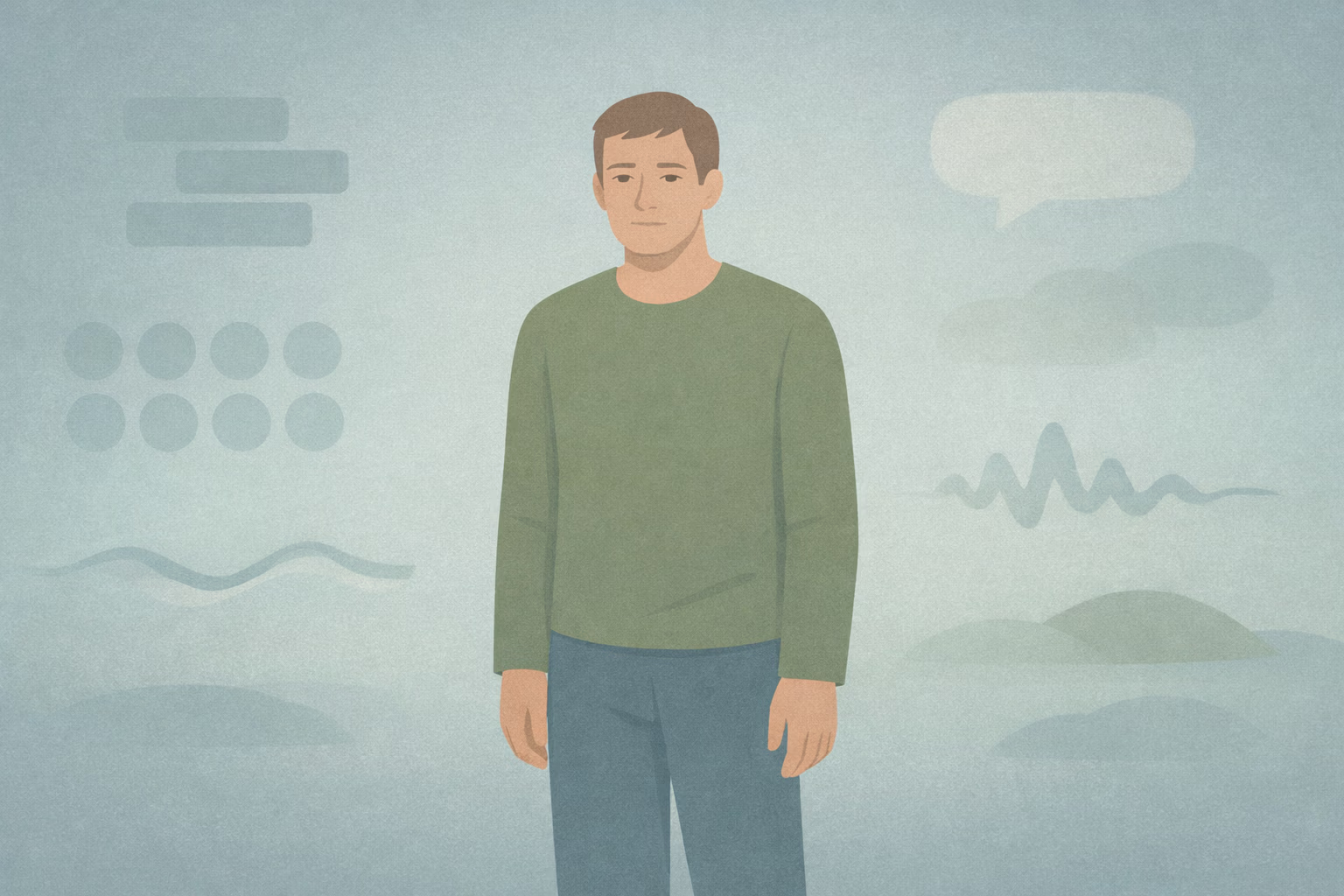
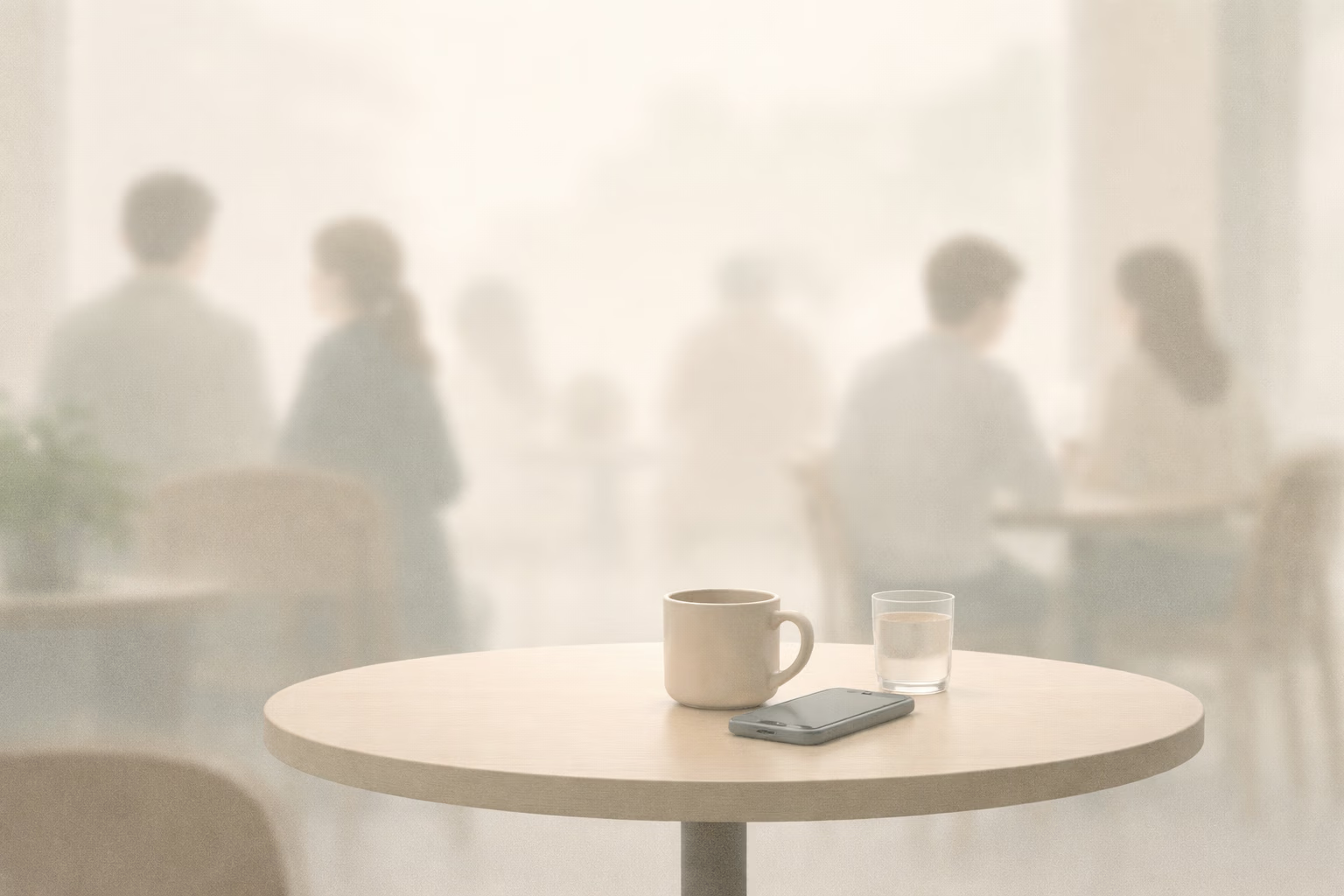
In short: For many people, the hardest part of “rest” isn’t the resting. It’s the moment the sound stops—when the podcast ends, the TV goes dark, the scrolling pauses, and the room suddenly feels too wide.
For many people, the hardest part of “rest” isn’t the resting. It’s the moment the sound stops—when the podcast ends, the TV goes dark, the scrolling pauses, and the room suddenly feels too wide.
Why can silence feel like a problem when it’s supposed to be calming?
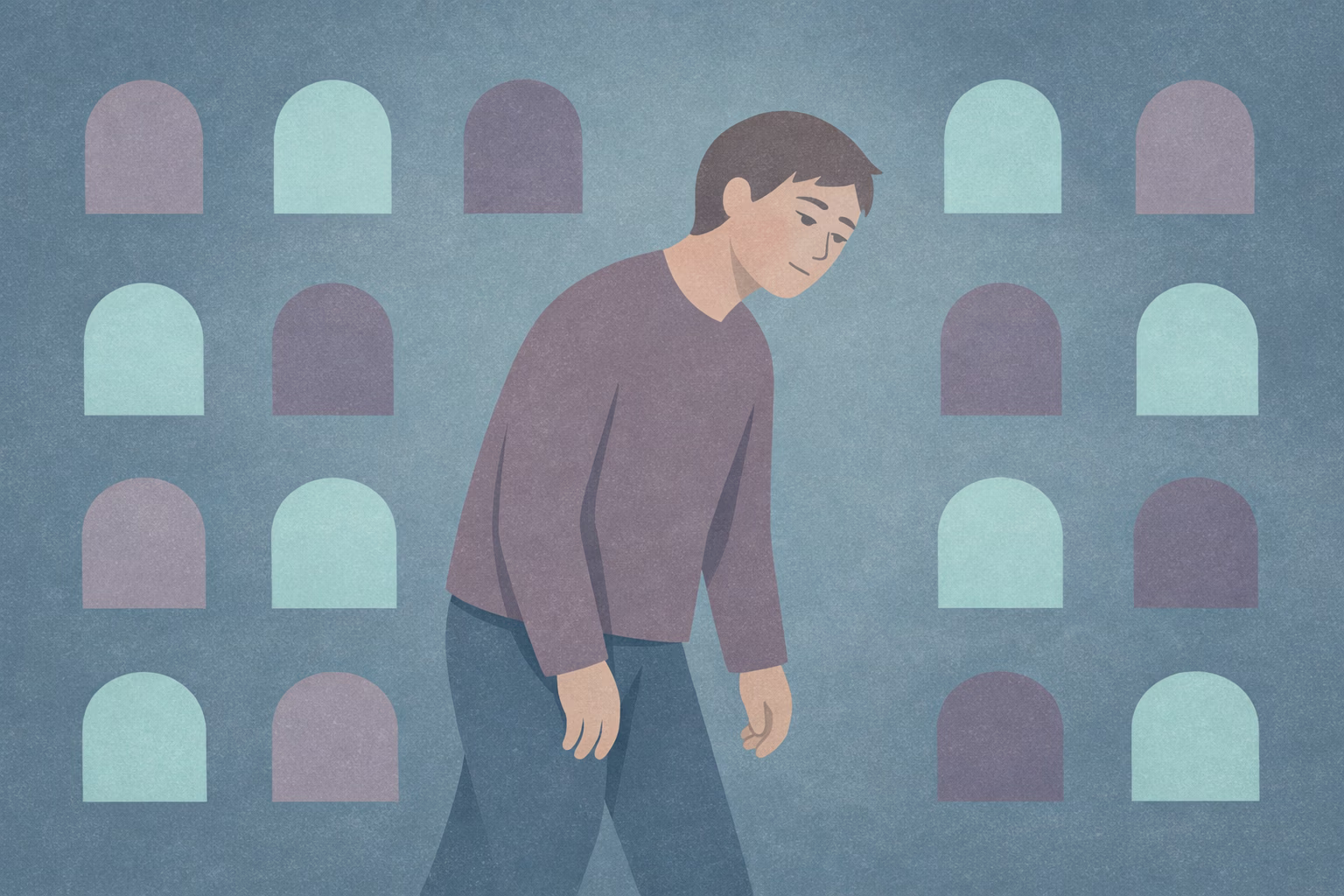
Often, it’s not a personal flaw or a sign you’re “bad at being alone.” Silence can act like a spotlight on a system that has been held together by constant input. When the input drops, the body doesn’t immediately settle—it checks for what it might have missed.
When quiet hits and it feels unbearable, the experience is usually physical before it’s philosophical. The nervous system may register the sudden drop in stimulation as uncertainty—something to manage, not something to enjoy. [Ref-1]
You might notice:
This isn’t your character revealing itself in the quiet. It’s a regulation pattern: when the environment stops supplying structure, the body tries to create it.
Continuous background sound can act like a soft anesthetic. Not in a dramatic way—more like a steady dampening of internal signals. When there’s always something to track, the system doesn’t need to fully process what’s happening inside. [Ref-2]
So when silence arrives, it can feel like exposure. Not “emotional exposure” as a concept, but a sudden increase in signal clarity: sensations, unfinished stress responses, and mental loops become audible again. The discomfort isn’t created by silence; silence simply removes the masking layer.
Sometimes quiet doesn’t introduce new problems—it removes the cover that was keeping old ones from being felt as signals.
From an evolutionary angle, silence has not always meant safety. In many contexts, sudden quiet could signal a shift in the environment: predators, social tension, separation from the group, or an absence of cues that usually confirm “all is well.” [Ref-3]
That ancient logic still lives in modern nervous systems. When external cues drop away, the body may move into vigilance—not because you’re “afraid of silence,” but because quiet reduces information. Less information can feel like less control, and the system compensates by scanning internally and externally for certainty.
So if quiet makes you tense, it may be your system attempting to restore orientation.
Noise works quickly because it provides immediate structure: rhythm, language, novelty, and a task for attention. It can interrupt spirals, soften bodily discomfort, and give the mind something to hold. [Ref-4]
This is why “just put something on” can feel like a rescue. The nervous system gets a cue: We’re occupied. We’re not exposed. We’re not waiting. And for a moment, the internal pressure drops.
The key detail is that this relief is often state-change, not completion. The system quiets down because it’s been redirected—yet the underlying loop may remain unfinished, still waiting for closure later.
When sound is the primary way you downshift, it can start to look like regulation itself. But in many cases, it’s closer to postponement: the body gets temporary cover, while the “done” signal never fully arrives. [Ref-5]
Recovery—real stand-down—usually requires enough continuity and low demand for the system to complete stress cycles: digestion returns, breathing steadies, muscles release, attention widens. Constant stimulation can keep the system in a light version of readiness, even if it feels comforting.
So the problem isn’t that noise is “bad.” It’s that noise can become the only door out of discomfort, which narrows the system’s options over time.
Silence intolerance often follows a simple structural loop:
This is not “avoidance” as a personality trait. It’s an understandable learning process: what brings immediate relief gets repeated. Over time, the nervous system associates silence with rising load and associates stimulation with safety—because stimulation reliably changes the state. [Ref-6]
The cost is that the system loses practice at returning to baseline without external input, so quiet increasingly feels like a withdrawal state rather than rest.
Many modern tools function like portable atmosphere. They bring a sense of company, continuity, and predictability—especially when life feels fragmented or evaluated. The sound isn’t just entertainment; it’s scaffolding.
Common forms include:
These patterns can intensify at night, when fatigue lowers capacity and the system becomes more sensitive to internal noise. Screen-based stimulation can further interfere with sleep readiness by maintaining alerting inputs and timing signals. [Ref-7]
Quiet time isn’t valuable because it’s virtuous. It’s valuable because it allows completion. When stimulation is constant, the system may not receive enough uninterrupted space to integrate the day into a finished narrative—physiologically and cognitively. [Ref-8]
Without that closure, the mind keeps running “open tabs”: half-processed conversations, unresolved decisions, background stress responses, and lingering sensory load. Rest can start to feel unhelpful because the body hasn’t been given the conditions to truly stand down.
In that sense, silence isn’t a luxury. It’s one of the environments where baseline calm can become accessible again—because there’s finally room for the system to finish what it started.
The nervous system adapts to what it repeatedly experiences. If your days are packed with sound, speed, and switching, the baseline expectation becomes “high input.” Then low input can feel like deprivation—like something essential is missing.
Over time, this can create a subtle reversal:
This is why silence can start to feel threatening, not soothing. It’s not that you’re getting worse. It’s that your system has been conditioned to rely on external structure, and quiet removes that structure all at once. [Ref-9]
One helpful reframe is to treat silence not as an empty space you must tolerate, but as a transition zone—an interval where the nervous system can finally deliver its “done” signals.
That doesn’t mean silence automatically feels good. Often, it first feels like contrast: the body noticing how much it has been carrying. In that moment, the urge to add sound is less about preference and more about protecting stability.
Over time, many people find that low-stimulus states can be reintroduced without forcing—through small exposures that allow the system to learn, somatically, that quiet does not equal danger. [Ref-10]
Humans regulate in connection. A calm other person—nearby, predictable, not demanding—can provide safety cues that make quiet less stark. In shared silence, the system receives a social signal: Nothing is required right now, and you’re not alone in it.
This matters because overstimulation isn’t only about volume; it’s about load. When load is high, internal signals can feel urgent, and silence can feel like too much exposure at once. Supportive presence can lower the sense of threat enough for quiet to become tolerable again. [Ref-11]
Silence with someone safe can teach the body what silence alone couldn’t: this gap is survivable, and it passes.
As the system re-learns safety in low stimulation, the shift is often subtle. It’s not necessarily a dramatic sense of peace. More often, it looks like capacity returning: the ability to be in a quieter moment without immediately needing to escape it.
Markers of this change can include:
In nervous-system terms, this is a widening window of tolerance—where the body can remain oriented and safe even with fewer external cues. [Ref-12]
When silence stops feeling like a threat, it can become a kind of orientation field. Not a place where you “figure everything out,” but a space where signals can return to their normal proportions.
In that space, meaning tends to reorganize on its own. You may notice what matters, what’s unfinished, what has been asking for closure—without having to chase it. Silence becomes less like deprivation and more like environmental safety: fewer demands, fewer interruptions, fewer false alarms. [Ref-13]
Quiet isn’t where you perform wellness. It’s where the system remembers how to complete.
If silence feels unbearable after constant noise, it can help to view that reaction with dignity. Your system learned to lean on sound for stability because it worked—quickly and reliably—under real conditions of load.
And at the same time, the longing for quiet often points to something intelligent: a need for closure, for fewer open tabs, for a baseline that doesn’t require constant input to maintain. When quiet becomes possible again, it’s not just “calm.” It’s the return of agency—because you have more than one way to feel safe.
In that sense, silence isn’t an absence. It’s a meaningful container where recovery can finally register as real. [Ref-14]
Overstimulation trains the nervous system to expect intensity, and then interprets stillness as a problem. That pattern is common, human, and reversible—especially when life offers enough steadiness for the body to complete its stress cycles. [Ref-15]
When silence stops reading as threat, it doesn’t have to become your favorite state. It simply becomes possible. And in that possibility, something gentle tends to return: continuity, clearer priorities, and a sense that your life is not only moving—but also landing.
From theory to practice — meaning forms when insight meets action.
Silence often feels unbearable because constant sound has been doing the regulating for you. Continuous background input acts like a soft anesthetic — a steady dampening of internal signals — so when it drops, sensations and unfinished stress responses become audible all at once. The discomfort isn't created by quiet; quiet simply removes the masking layer. Your Threat & Safety System reads sudden low-input states as a possible shift in the environment and moves into vigilance to compensate. This isn't a flaw in you. It's a regulation pattern: when the environment stops supplying structure, the body tries to create it internally.
It's better understood as an Avoidance Loop than a personal defect. The structure is simple: quiet appears, internal signals rise, sound or screens get added, relief arrives quickly, tolerance for quiet shrinks a little more. This is an understandable learning process — what brings immediate relief gets repeated. The cost is that the system loses practice at returning to baseline without external input, so silence increasingly registers as a withdrawal state rather than rest. The pattern is reversible. It usually requires small exposures to low-stimulus states so the body can learn, somatically, that quiet does not equal danger.
Modern audio functions like portable atmosphere. It brings continuity, predictability, and the sense of company — especially when life feels fragmented. The sound isn't just entertainment; it's scaffolding for a system carrying high load. This is why filling micro-gaps in elevators, waiting rooms, and pauses in conversation can feel almost involuntary. The challenge is that this kind of stimulation provides state-change, not closure. The Done Signal — the cue that lets the nervous system complete its stress cycle — never quite arrives, so recovery gets postponed even when relief feels real.
Tolerance returns when the body collects enough evidence that silence is survivable. That usually doesn't happen through forcing extended quiet; it happens through small exposures and, often, shared silence with safe company. A calm other person — nearby, predictable, not demanding — supplies safety cues that make low-stimulus states less stark. Over time, restored quiet doesn't feel blissful so much as capacious: less urgency to fill every pause, thoughts slowing without being forced, sleepiness arriving naturally when tired. The window of tolerance widens, and silence becomes a container for completion rather than a threat to escape.
From Science to Art.
Understanding explains what is happening. Art allows you to feel it—without fixing, judging, or naming. Pause here. Let the images work quietly. Sometimes meaning settles before words do.
One Quiet Window, one insight, one reflection — every Sunday