Stories FAQ
Story 1 — Before Humans Had to Ask Why
What does “the night was a verdict” mean in this story?
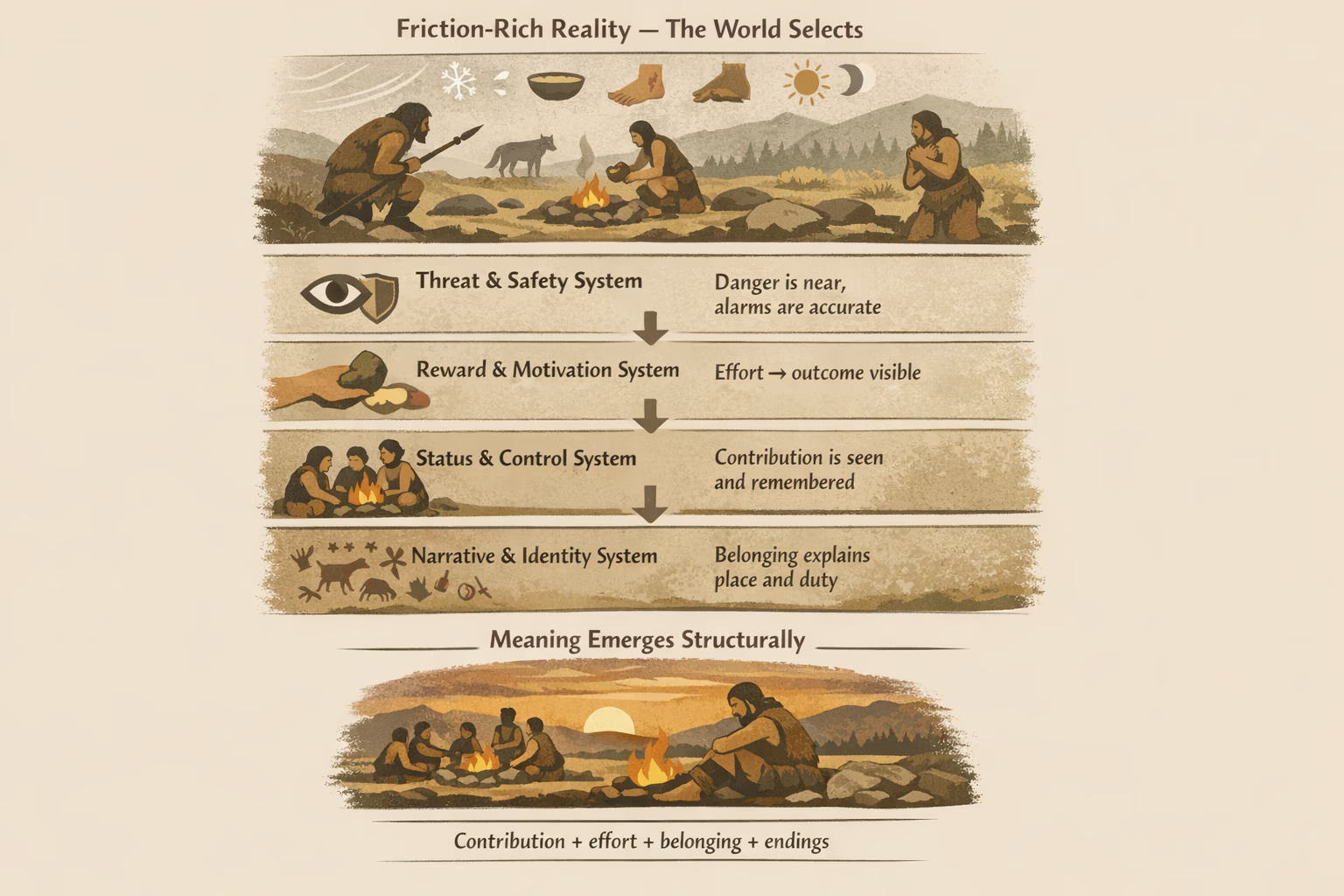
In Story 1, “the night was a verdict” means the environment used to decide outcomes with brutal clarity. Darkness wasn’t just a time of day—it was a test: cold, predators, exposure, and uncertainty. Before fire became stable, the nervous system had fewer reliable signals that safety was possible. Fire didn’t remove danger; it created a small island of reduced danger, which is enough to change physiology. That’s the point: early meaning wasn’t a belief. It was structural. The world had edges, consequences, and endings—and the body learned how to stand down when cycles truly concluded.
Why is “closure” described as physiological, not symbolic?
Because early life forced endings that the body could trust. Exhaustion ended the day. Darkness ended movement. Seasons ended strategies. A hunt ended—successful or not. These endings weren’t interpretations; they were constraints. When an ending is non-optional, Threat & Safety can stand down, Reward can conclude, attention can release, and rest can arrive without negotiation. That’s “physiological closure”: the nervous system receives a clean message that a chapter is over. In the story’s logic, closure is a foundational regulator. It doesn’t require motivation or insight. It requires a world that actually closes loops.
How did friction “teach” the nervous system?
Friction is reality pushing back. Stone resists, wood snaps, weather argues, bodies fatigue. When effort meets resistance, the nervous system gets clear feedback: this works, this fails, this costs. That feedback makes learning clean. It also makes reward meaningful, because reward tends to follow cost and carries a traceable story: I did → the world replied. In modern life, effort and outcome often separate, but here they touch. That contact is stabilizing. It reduces confusion, reduces endless scanning, and helps the body tolerate effort without panic—because effort has an end point and an eventual verdict.
What are the “four inner systems,” and why do they matter here?
The story frames human behavior as guided by four systems: Threat & Safety (alarm and protection), Reward & Motivation (learning and pursuit), Status & Control (coordination and hierarchy), and Narrative & Identity (meaning-making and role). In early life, these systems calibrated inside a world with clear consequences and boundaries. Threat was often near and resolvable. Reward usually followed effort. Status stayed bounded within small groups where contribution was visible. Narrative was shared scaffolding, not a personal branding project. The key is cooperation: the systems formed a council because the environment forced conversation—and because cycles could end.
Isn’t early life being romanticized here?
No. The story names brutality clearly: children died, injury infected, winter took people. The claim isn’t “it was better.” The claim is “it was coherent.” Coherence means signals had somewhere to go: danger appeared and passed, work could be “done,” grief had communal containers, and the day had unavoidable limits. That structure trained the nervous system in resolution. Modern readers often equate ease with wellness, but the story separates them: life can be harsh and still coherent, and life can be comfortable and still unfinished. Story 1 explains the origin of calibration—before the world softened.
Story 2 — When the World Stopped Pushing Back
Why does storage change the psychology of hunger?
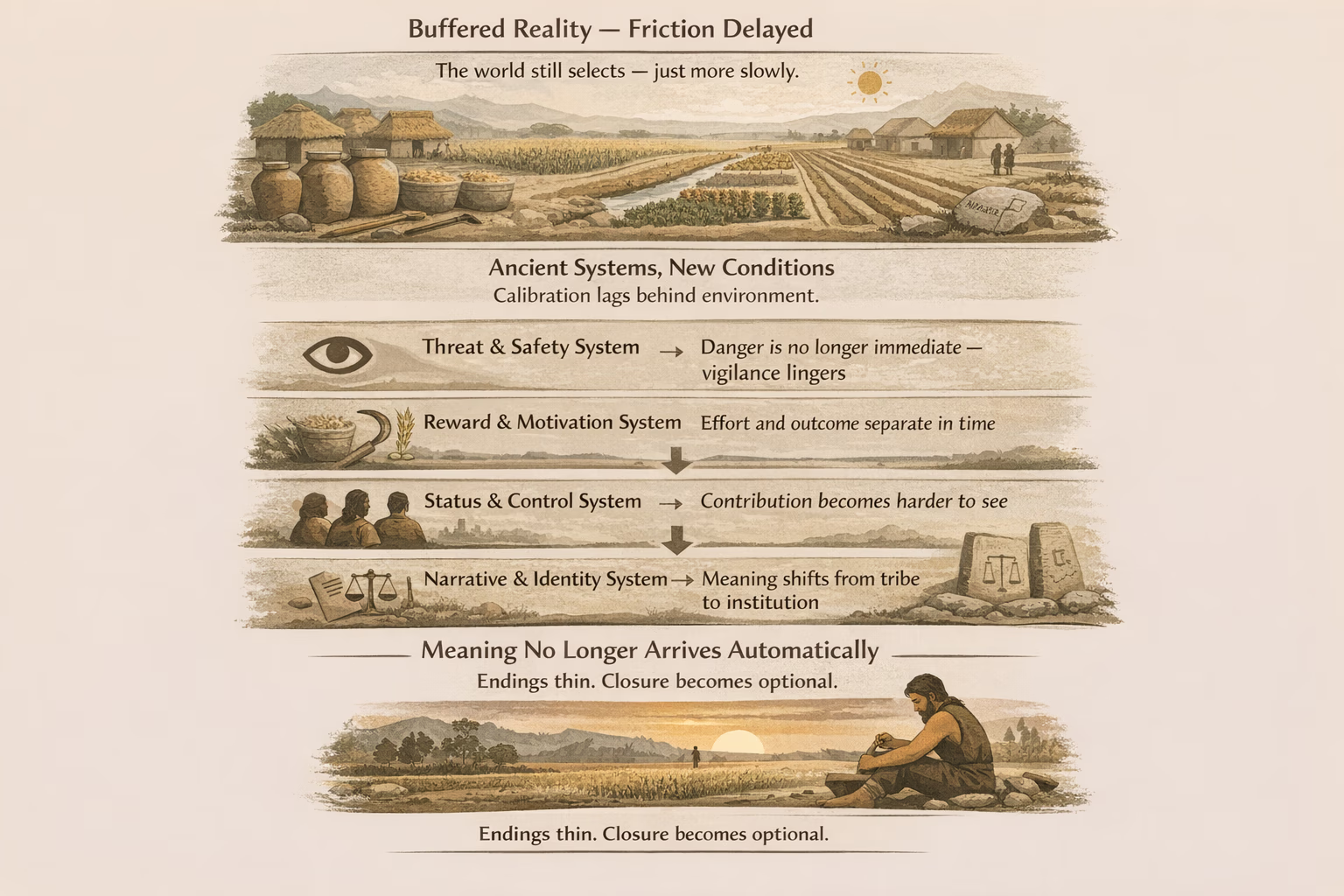
Storage delays hunger’s consequences. That’s a mercy—fewer emergencies, fewer desperate cycles. But it also changes instruction. Immediate hunger trains attention with sharp clarity: the body learns priorities fast. When hunger becomes buffered, signals soften and arrive later, sometimes with less “teeth.” The nervous system receives fewer clean lessons about what to do right now, and it starts searching for other signals to trust. That’s not weakness—it’s adaptation to a new environment. Story 2 uses storage as the first “buffer” that creates a gap between need and consequence, which slowly alters how motivation, planning, and satisfaction are felt in the body.
How does settlement create “mismatch” even if agriculture still has patience?
Agriculture still has cost-before-reward in many ways: planting, waiting, tending. But settlement adds layered systems—roles, trade, rules, obligations, routines—that buffer direct contact with consequence. Life becomes repeatable without starting over daily, which increases stability and scale. Yet scale reduces legibility: you no longer feel the full arc between effort and outcome. The nervous system evolved for readable loops—do → world replies → conclude. Settlement stretches the rope between those points. Mismatch begins when the environment changes faster than biology can recalibrate, especially when the world becomes engineered and buffered in ways that weaken natural endings and immediate feedback.
Why does specialization reduce the felt sense of meaning?
Specialization splits the “sentence of survival” across many people. You can work all day and not see how your work becomes life for someone else—or how life reaches you through strangers. In small groups, contribution is visible: you carry water, people drink; you watch the edge, people sleep. In larger systems, the arc becomes opaque. The work might matter, but it doesn’t always feel like it matters because the body can’t trace the pathway. This is a legibility problem, not a virtue problem. Story 2 suggests meaning thins when effort doesn’t “land” in a way the nervous system can register as completion and contribution.
What does “engineered time” do to closure?
Engineered time replaces non-negotiable endings with negotiated endings. Darkness and exhaustion used to force closure. Schedules and shifts can coordinate large groups, but they don’t reliably deliver the same physiological “stop” signal—especially when demands expand. When stopping points become movable, the nervous system carries unfinished stress forward. Yesterday leaks into today. The day feels like a door that never fully clicks shut. This is the seed of “always-on” posture: not caused by screens yet, but by cultural structures that weaken natural boundaries. Story 2 treats time engineering as a subtle but massive change: life becomes extendable, and therefore less finishable.
Why does threat become more abstract in this era?
In earlier life, threat was often immediate and concrete: predators, storms, injury, rival groups. It either happened or didn’t. In scaled societies, threat migrates into “maybe”: reputation risk, future uncertainty, exclusion, falling behind, blame, exposure. “Maybe” can last indefinitely, and Threat & Safety is designed to prevent disaster—so it monitors uncertain danger continuously. That looks like chronic vigilance. The story doesn’t frame this as personal anxiety or pathology; it frames it as an ancient alarm system doing its job with new inputs. When danger loses edges, the body loses permission to stand down.
Story 3 — What Humans Reached for When Meaning Thinned
What is the “unfinished life feeling,” and why is it so central?
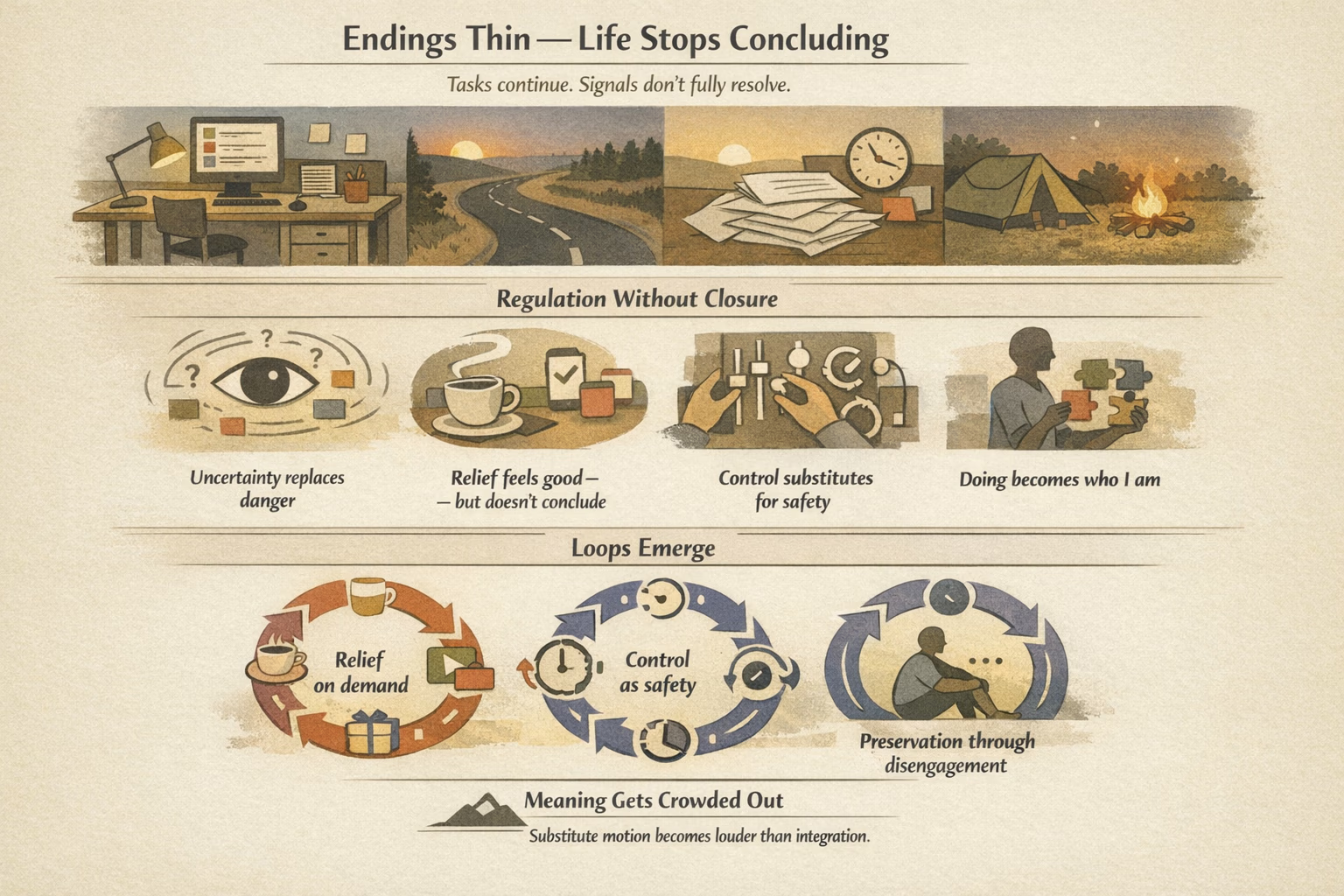
It’s the sensation of motion without arrival: busy but not directed, stimulated but not fed, full calendar with an empty center. The story says this isn’t a personal defect; it’s what happens when closures thin—when work, obligations, and identity demands no longer conclude cleanly. The nervous system needs endings to reset. Without endings, even good things become exhausting, because the body never receives the signal “this chapter is complete.” The unfinished feeling often gets mislabeled as laziness, boredom, or failure, but in this narrative it’s a biological need for completion. When that need isn’t met structurally, the system starts reaching for substitutes.
Why do pleasure loops form if pleasure isn’t “bad”?
Pleasure isn’t framed as evil; it’s framed as a fast regulator. When discomfort rises—fatigue, uncertainty, loneliness—the brain reaches for quick relief. If relief arrives immediately, the Reward & Motivation system learns the shortcut: discomfort → reach → relief → repeat. The problem is that pleasure signals decay quickly by design; reward isn’t meant to be a home. So the system escalates: more novelty, more stacking, more “just one more.” Over time, the relief becomes the trigger: the more you rely on it, the flatter ordinary life feels, which makes discomfort rise faster. That’s the loop. It’s not moral failure. It’s a learning system repeating what works fast when real closure has gone quiet.
How does the Power Loop turn “responsibility” into a trap?
The Power Loop begins as a reasonable attempt to create safety through competence: plan, optimize, tighten, improve. In a world of uncertain, abstract threat, control feels like shelter. But control has no natural finish line—there is always a better plan, a safer strategy, a higher standard, a new risk. So the system escalates: more proof, more output, more optimization rituals. The loop forms when tightening increases threat sensitivity (“what could go wrong”), which demands more tightening. The story emphasizes that many forms of discipline are honorable. The trap is not striving itself; it’s control replacing closure. When certainty becomes the reward, the reward rarely arrives.
Why is avoidance described as “conservation,” not laziness?
Because withdrawal often starts as nervous system triage. When capacity is low and demands feel endless, distance reduces load. Procrastination, numbness, drifting into small tasks, avoiding decisions—these can be protective responses, not moral failures. The story adds a painful truth: avoidance often targets what matters most, because meaning has weight, and weight feels unaffordable when you’re already overloaded. The loop forms when staying out makes re-entry feel heavier, which increases staying out. Protection becomes a prison made of postponed days. The point isn’t to shame avoidance; it’s to recognize it as a faithful system trying to preserve what’s left when closure and capacity are missing.
What does it mean that meaning is “crowded out,” not destroyed?
Meaning is portrayed as a quiet integrator: it helps signals conclude, allows discomfort to be endured when it leads somewhere, and turns effort into coherent direction. But meaning is slow and doesn’t spike like reward or control. In a world without endings, fast regulators outcompete it. Pleasure interrupts discomfort quickly. Power manufactures certainty quickly. Avoidance reduces load quickly. So meaning isn’t gone—it’s displaced. People can look functional and still feel disoriented because the loops keep life moving while withholding conclusion. The story’s key move is non-pathologizing: loops are not identities; they’re regulation patterns that became necessary. When environments keep cycles open, quiet meaning doesn’t lose because it’s weak—it loses because it’s slow.
Story 4 — When Loops Went Global
What does “the loops went global” actually mean?
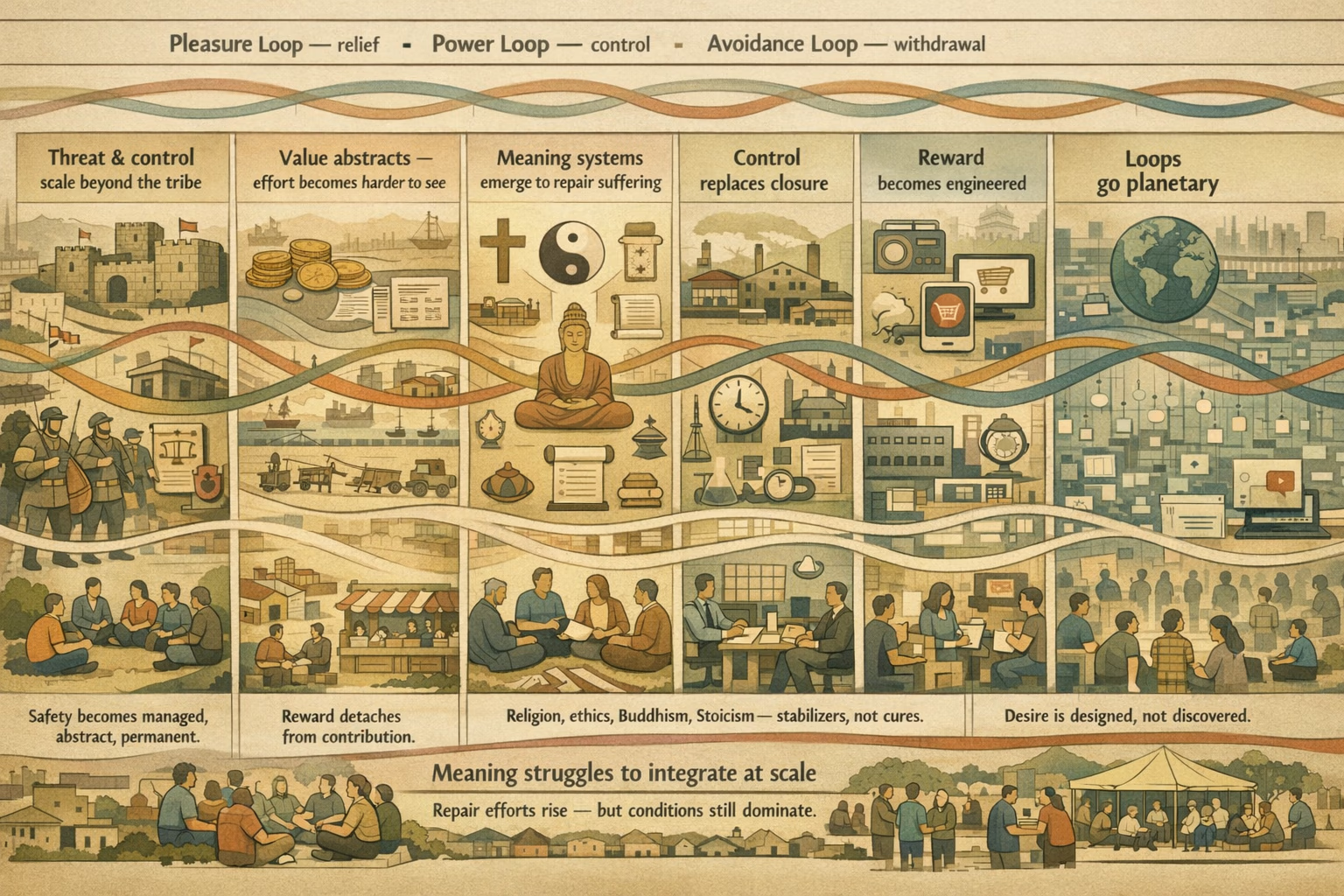
It means coping patterns scaled into infrastructure. Historically, a person’s over-reaching, over-controlling, or withdrawing stayed local—corrected by seasons, community feedback, and natural endings. Modernity removed the walls. Institutions, markets, media, and technology began carrying the same regulation moves outside the person. Pleasure became an industry of on-demand reinforcement. Power became a culture of metrics, dashboards, rankings, and permanent competition. Avoidance became structural overwhelm—endless tasks, endless messages, endless crisis cycles. Once loops become “how the world runs,” they stop looking like symptoms and start looking like normal life. The story isn’t blaming individuals; it’s describing an environment where ancient nervous systems are trained continuously by scalable reinforcement and abstract, unending inputs.
Why do large states and empires “keep threat warm”?
Because shared threat synchronizes attention and cohesion. In large groups, coordination often relies on a simple nervous-system grammar: us versus them. Borders, law, taxation, armies—these can create organized safety, but they also normalize monitoring and vigilance. When threat becomes a governance tool, Threat & Safety shifts from occasional alarm to background posture. This doesn’t require leaders to be villains; it’s a structural pattern: fear is efficient at alignment. The story’s deeper point is about edges: when threat is constant or abstract, it rarely resolves cleanly. And when it doesn’t resolve, the nervous system doesn’t stand down. Societies can feel “ordered” while bodies remain chronically braced.
How do money and markets change the felt relationship between effort and reward?
Money compresses labor into portable symbols. That makes trade and scale possible—but it also makes outcomes harder to feel. When value becomes abstract, effort and relief can separate: reward can arrive without a readable story, and harm can arrive without a visible cause. The nervous system learns best from timing and traceability; opacity makes learning noisy. Add widening inequality and comparison, and reward becomes not only “comfort,” but “relative position.” Status anxiety intensifies because the social field grows beyond face-to-face belonging. The story’s phrase “the world starts to feel like an interface” captures this: life becomes mediated by symbols, layers, and systems you can’t directly touch—so closure becomes harder to register.
Why does the story include religion, philosophy, and contemplative traditions here?
Because they’re framed as load-bearing scaffolding, not decorations. When daily life stops providing shared rhythms, shared endings, and inherited roles, humans build meaning frameworks large enough to hold the complexity. Religion and ethics provide shared obligations, explanations for suffering and death, and communal containers for limits and endings. Contemplative traditions (like Buddhism, Taoist return, yogic discipline) aim at restoring inner closure when outer life becomes stimulating and unclosed—training attention and reshaping desire. Western philosophical projects often aim at coherence and virtue under complexity. The story isn’t ranking them; it’s explaining why they arise: when the world engineers itself faster than biology adapts, humans invent cultural technologies to rebuild integration.
What changes with the internet, feeds, and AI in this model?
The core shift is reinforcement becoming architecture. Feeds deliver variable rewards, constant novelty, continuous evaluation, and nonstop comparison—without forced rest. Smartphones remove natural boundaries; notifications function like alarms. Algorithms optimize capture and retention, not completion. AI adds personalization at scale: content adapts to your triggers and tests what keeps you engaged. This amplifies all three loops: pleasure through endless reward cues, power through metrics and visibility economies, and avoidance through overwhelm and anesthesia scrolling. The story’s key warning is subtle: even repair can be packaged as content—wisdom becomes scrollable, depth becomes branding. So the question becomes design, not morality: how do we rebuild edges, closure, and integration inside systems built to keep everything open?
Story 5 — How Some Lives Still Hold Together
Who are “the quiet ones,” and what makes them different?
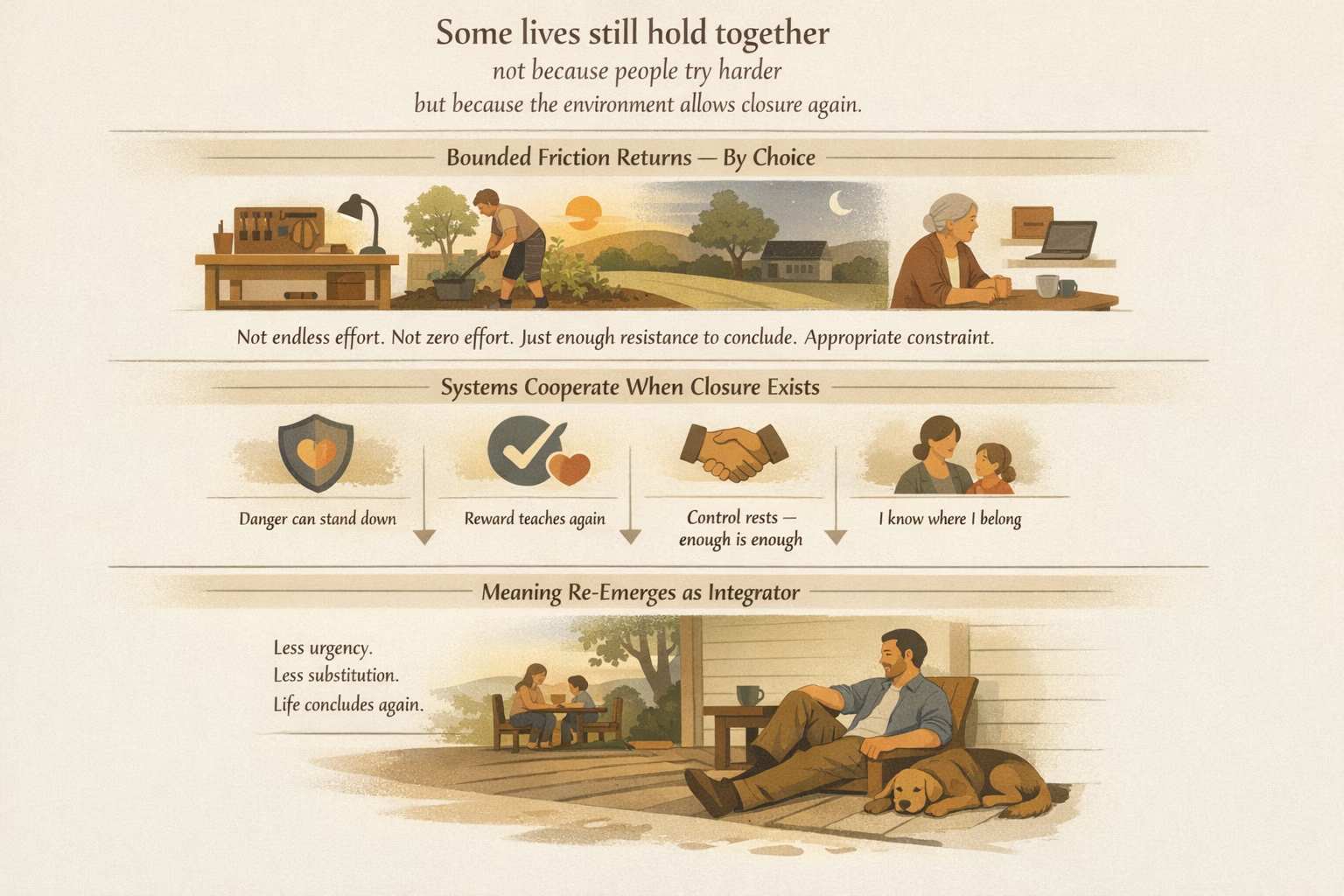
They’re not necessarily the least traumatized, the most cheerful, or the most privileged. They’re the people whose inner systems remain coherent despite modern endlessness. The story argues this isn’t personality magic; it’s conditions. They don’t rely on constant spikes—motivation, hype, urgency—to stay afloat. Instead, they cultivate a steadier integrator: meaning as a capacity that organizes signals so they can conclude. Their quietness isn’t passivity; it’s reduced auditioning. They don’t have to prove themselves every day to feel real. They still experience fear, craving, and stress—but those signals don’t hijack the entire life story. They’ve rebuilt edges: endings, boundaries, and contributions that land.
What does it mean that “meaning isn’t motivation”?
Motivation is a spike: it helps you start or sprint, then collapses. Meaning is load-bearing context: it helps inner systems cooperate over time. In the story, meaning doesn’t erase discomfort; it gives discomfort a coherent place so the nervous system doesn’t treat every sensation like a verdict. Meaning translates signals: fear becomes specific, craving becomes information, planning becomes tool rather than home, identity becomes inhabitable rather than performative. This is why meaning “finishes” things. It supplies closure signals modern life withholds—so you can end a day, end a task, end a loop of rumination. The shift is from mood-chasing to coherence-building: a stable life doesn’t depend on feeling inspired; it depends on signals concluding.
What does “systems become a council, not a courtroom” mean?
In a courtroom, every feeling is evidence and every mistake is a sentence—so the nervous system escalates and argues with itself. In a council, each system has a role. Threat & Safety warns but can stand down. Reward & Motivation enjoys pleasure as feedback, not anesthesia. Status & Control supports competence without becoming a prison of optimization. Narrative & Identity tells an honest story without needing constant performance. Meaning is the mediator: it prevents one system from impersonating the others. When that happens, the inner world becomes less adversarial and more coordinated. You still have emotions and impulses, but they stop hijacking interpretation. The practical outcome is calmer action, clearer limits, and fewer spirals—because signals complete instead of escalating.
What are “small humane edges,” and why do they work?
They’re designed closures in a world that doesn’t provide closure by default. Examples: a task you finish fully (not forever, just today), sleep protected as a boundary, a conversation done without multitasking, a workout that ends with real fatigue, a meal cooked start-to-finish, a promise kept. These aren’t productivity hacks—they’re physiological stop signals. They tell the nervous system: this chapter is complete. Chosen friction matters because it has edges: difficulty with a clear beginning and end, not endless strain. When the body experiences completion repeatedly, it stops needing loud substitutes. Pleasure becomes optional again, control becomes a tool again, avoidance becomes rest rather than disappearance. Alignment becomes maintainable because closure becomes regular.
How does DojoWell fit into this story without becoming another “loop”?
The story positions DojoWell as conditions, not correction. It doesn’t treat loops as personal defects; it makes them visible as regulation patterns that become necessary under pressure. The goal isn’t to “win” against yourself; it’s to rebuild closure and contribution so loops aren’t required as substitutes. DojoWell supports that by helping you notice when pleasure, power, or avoidance is doing the job meaning used to do—and by guiding you toward bounded friction, protected endings, and real-world actions that “land.” The safeguard against becoming another loop is orientation: meaning is not content consumption or identity performance. It’s design: fewer open loops, more finishable days, and a story you can live inside without auditioning.