

Three Loops Around Presence
Pleasure, Power, and Avoidance loops orbit the Presence center. Tap a loop to read the section below.
Document Status & Dates
- First documented: 14 September 2023
- First published: 26 January 2026
- Current version: Public conceptual release
Notes on This Public Version
This document presents the conceptual architecture only of the Matrix of Loops™.
All diagnostic tools, measurements, scoring systems, behavioral algorithms, instruments, therapeutic methods, and software implementations related to this framework are proprietary to DojoWell and are not disclosed publicly.
Matrix of Loops™, and related terminology are part of DojoWell’s original intellectual property.
This document is not a clinical diagnostic system and does not replace professional psychological, psychiatric, or medical care.
Executive Overview
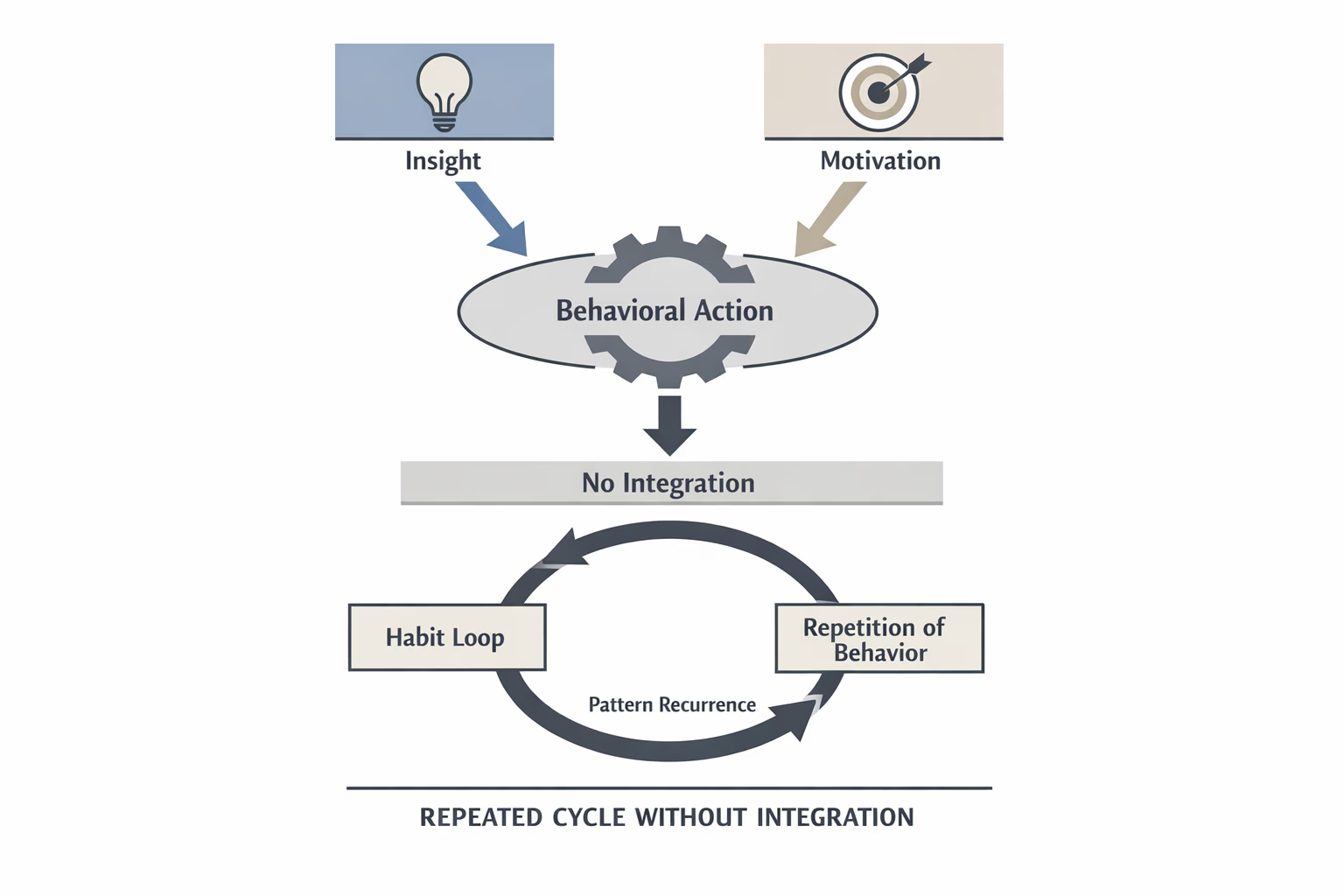
The Matrix of Loops™ is a systems-level conceptual framework that explains why behavioral patterns persist, repeat, and intensify in modern life — even when motivation is present and understanding is clear.
The framework is grounded in the interaction of three core evolutionary operating systems that govern survival and social functioning. These systems evolved long before modern society and are shared broadly with other animals. They are adaptive by design, automatic in operation, and oriented toward immediate outcomes rather than long-term reflective coherence.
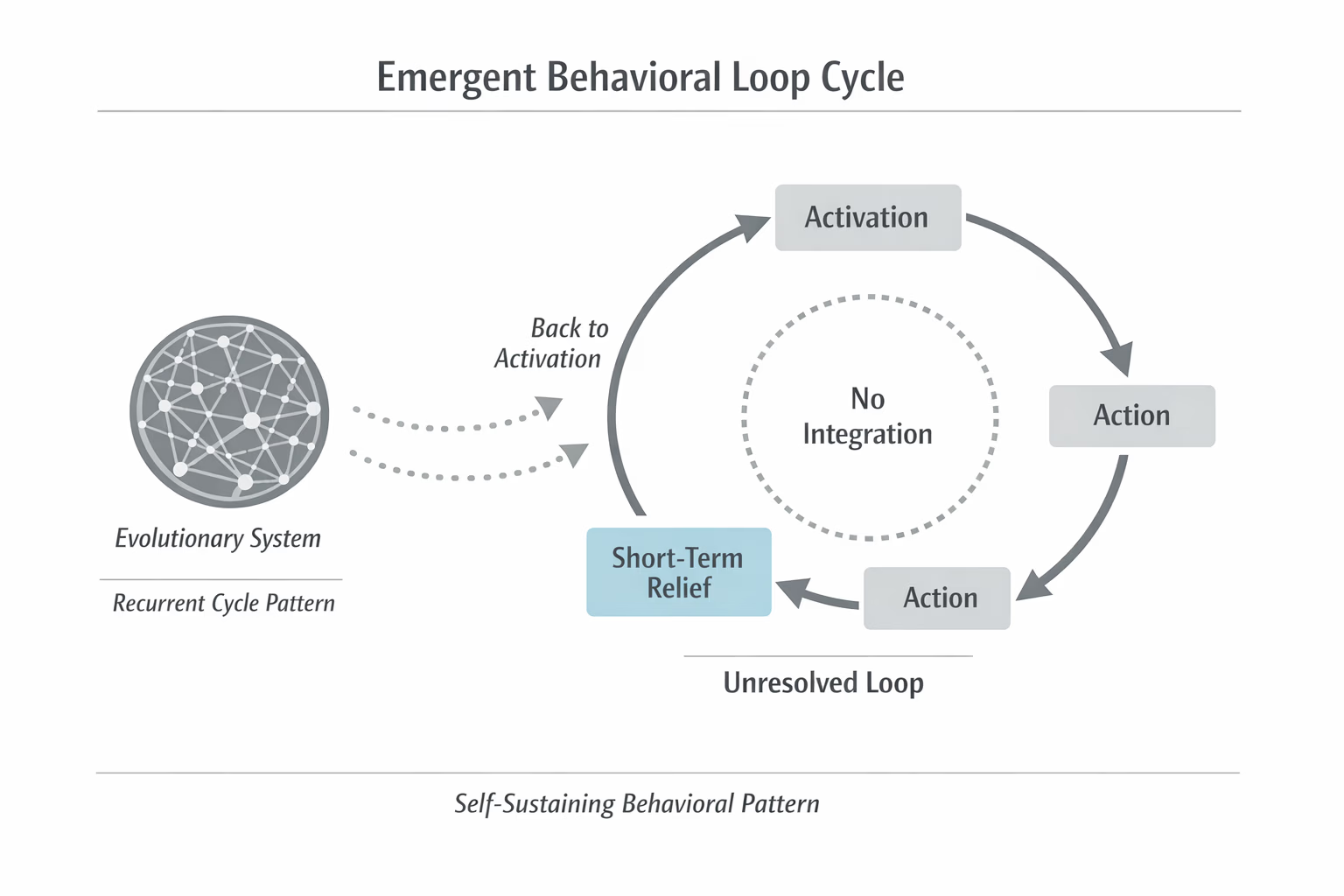
In contemporary environments — where stimulation is constant, social evaluation is continuous, and threats are often symbolic rather than physical — these systems are repeatedly activated without reaching true completion. When this happens, they give rise to self-reinforcing behavioral loops.
The Matrix of Loops™ maps the three evolutionary systems, the loop traps that emerge from each under modern conditions, and the structural reason these loops persist.
The Three Evolutionary Systems (Shared Across Animals)
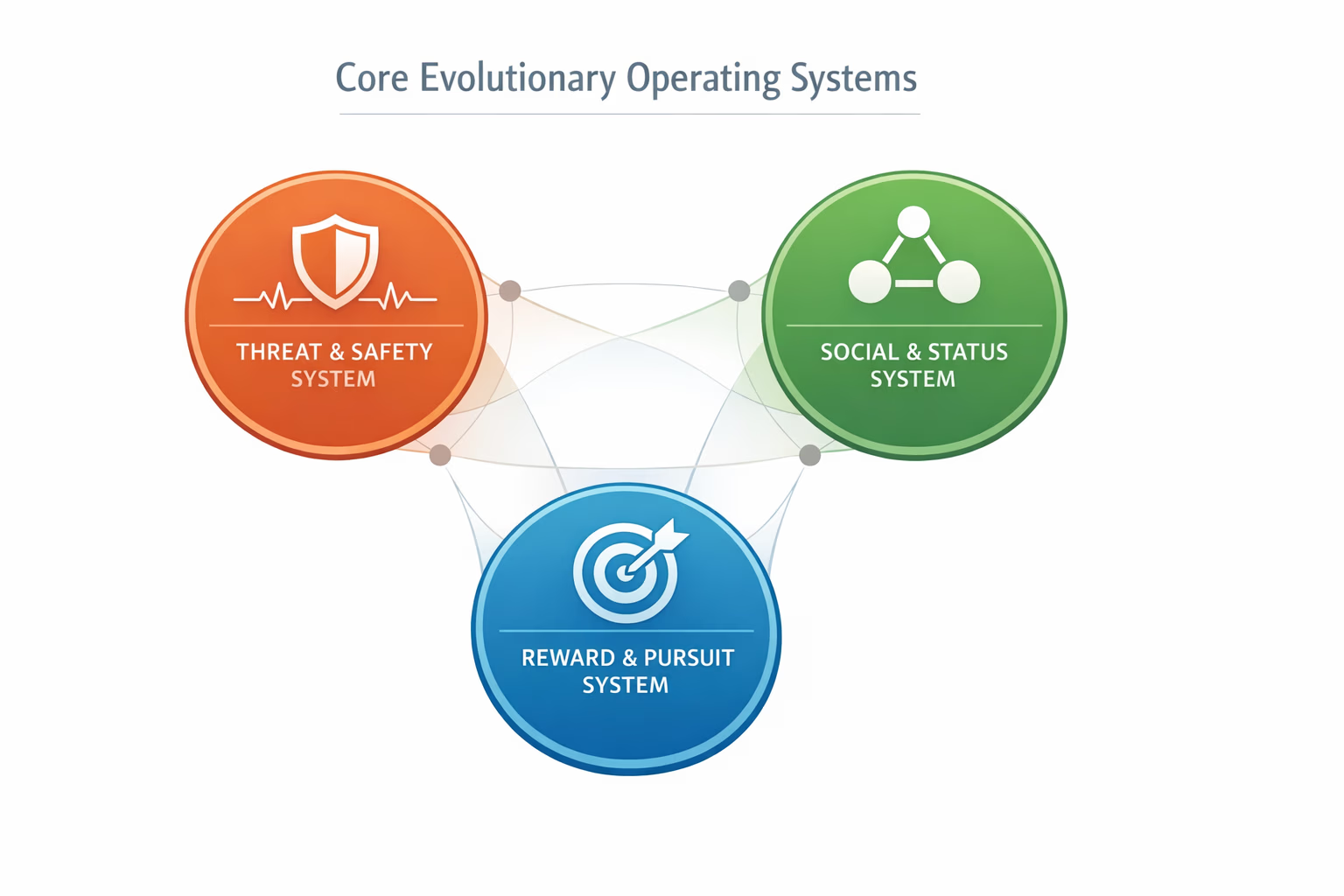
1. Threat & Safety System
The Threat & Safety System evolved to detect danger, reduce uncertainty, and preserve safety. It prioritizes vigilance, rapid threat interpretation, and protective responses.
This system is designed to minimize risk and prevent harm — not to evaluate long-term fulfillment or identity coherence. When activated, it favors immediate relief over delayed resolution.
2. Social & Status System (Status & Control)
The Social & Status System evolved to manage belonging, hierarchy, and relative position within a group. It continuously monitors social cues related to acceptance, rank, comparison, and control.
In ancestral environments, stable social positioning was directly tied to safety and resource access. The system therefore prioritizes predictability, positioning, and “enoughness” within social structures.
3. Reward & Pursuit System
The Reward & Pursuit System evolved to reinforce behaviors that increased survival through exploration, acquisition, learning, and opportunity pursuit.
It prioritizes novelty, reward prediction, and repetition of behaviors that deliver stimulation or relief. This system is highly sensitive to reinforcement signals and adapts rapidly to changing reward landscapes.
Emerging Loop Traps (Results of Each System)
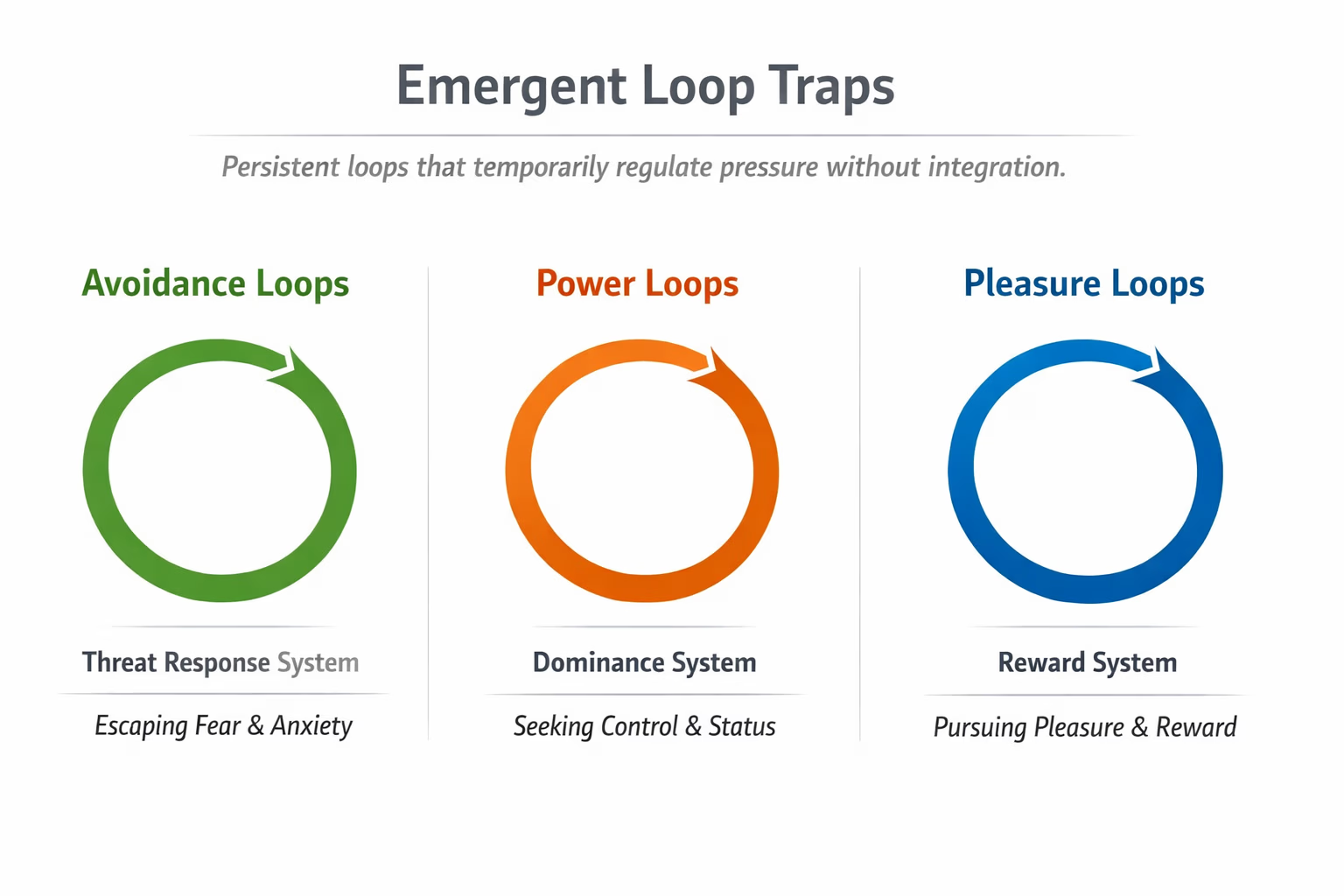
In the Matrix of Loops™, loops are not systems. They are emergent trap patterns that form when an evolutionary system repeatedly closes a behavioral cycle without full completion or integration.
A. Avoidance Loops
Emergent from the Threat & Safety System
When threat detection remains active in environments where danger is chronic, abstract, or ambiguous, protective responses are reinforced by short-term relief.
This produces Avoidance Loops — recurring patterns of withdrawal, delay, numbing, disengagement, and “freeze.” These loops persist because each cycle temporarily reduces perceived threat, even though the underlying condition never settles.
B. Power Loops
Emergent from the Social & Status System (Status & Control)
When social evaluation and comparison become continuous, behaviors that increase perceived control or status are repeatedly selected.
This produces Power Loops — cycles of optimization, performance pressure, dominance posturing, validation seeking, image management, and compulsive self-monitoring. These loops persist because they temporarily stabilize social safety without ever reaching a true sense of “enough.”
C. Pleasure Loops
Emergent from the Reward & Pursuit System
When reward signals are abundant and engineered for engagement, short-term gratification becomes repeatedly reinforced.
This produces Pleasure Loops — cycles of stimulation, consumption, escalation, distraction, and craving. These loops persist because they deliver immediate reward or relief while undermining longer-term satisfaction.
The Matrix — Why Loops Interact and Persist
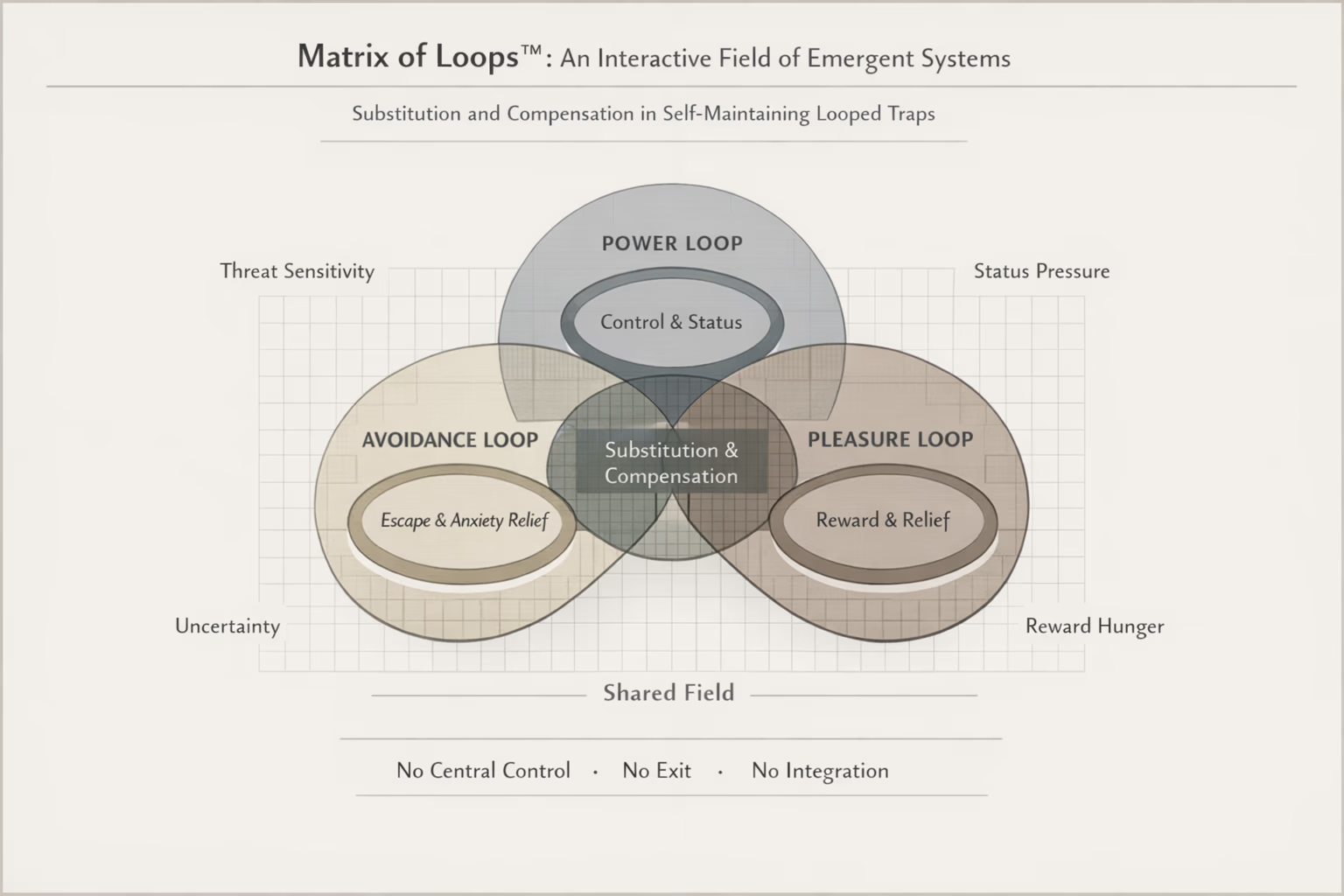
The term Matrix refers to the interactive field created when the three systems operate simultaneously. Rather than producing isolated patterns, the systems substitute for one another under pressure, compensate when one strategy fails, and unintentionally reinforce each other.
As a result: pleasure is used to escape threat; control is used to manage uncertainty; avoidance increases reward hunger; status pressure amplifies threat sensitivity.
The Matrix of Loops™ describes this self-maintaining network of repetition, where each loop closes behaviorally but never integrates experientially — causing the cycle to restart.
Conceptual Boundary — Meaning as a Distinct Human Layer
The three systems described above are evolutionary, pre-narrative systems shared across animals. They operate automatically and do not evaluate life through story, identity, or coherence.
Humans, however, possess a distinct capacity: the ability to integrate experience across time, update identity narratively, and evaluate life through meaning. That higher-order, uniquely human layer is addressed separately by the Meaning Density Model™.
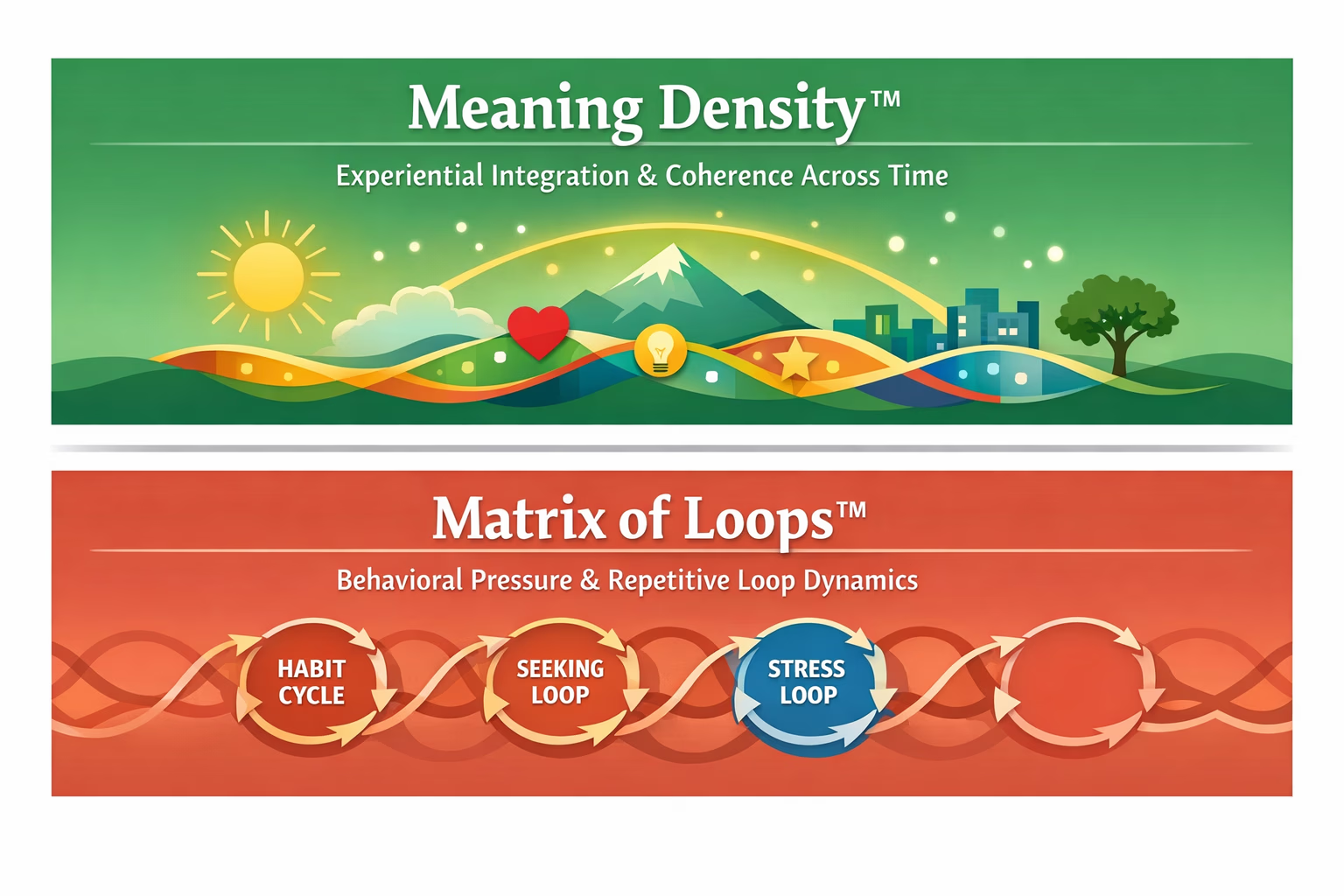
Within DojoWell’s architecture:
- Matrix of Loops™ explains behavioral pressure and repetition
- Meaning Density Model™ explains experiential integration and coherence outcomes
The Matrix of Loops™ is therefore not a theory of meaning, but a structural map of how survival systems become trapped in modern conditions.
Scope and Boundaries
This public document describes the conceptual framework only.
It does not publish or disclose:
- diagnostic criteria
- scoring methods or thresholds
- measurement instruments
- therapeutic protocols
- behavioral algorithms
- software logic or implementation details
These elements remain private, proprietary, and implementation-specific within DojoWell systems. The Matrix of Loops™ is intended as a structural lens, not a clinical tool.
Authorship and Origin
The Matrix of Loops™ was developed by DojoWell as part of its original research into evolutionary behavior systems, loop formation and reinforcement, modern environmental pressure structures, and the persistence of repetitive behavioral patterns.
The term Matrix of Loops™ originates from DojoWell’s conceptual work and is associated with its broader meaning-centered framework.
Canonical Reference
The canonical public reference for this framework is:
https://dojowell.com/science/matrix-of-loops
How to Cite
When referencing this framework, please cite it as:
DojoWell. “Matrix of Loops™ (Public Conceptual Framework).” dojowell.com. First published 26 January 2026.
For the separate (human-layer) integration framework, see:
The Meaning Density Model™
Work with the Matrix of Loops daily
DojoWell turns the Matrix of Loops into a working diagnostic — see which loop is running, then close it with the smallest viable practice.
Explore DojoWell