
Content Binging: When Consuming Becomes Escaping
In short: Weak willpower, poor discipline, “bad habits.” But for many people, extended viewing is less about entertainment and more about regulation—an efficient way to quiet the day’s internal noise when life has been loud, uncertain, or unfinished. In the Meaning Density view, this isn’t about blaming screens or blaming yourself.
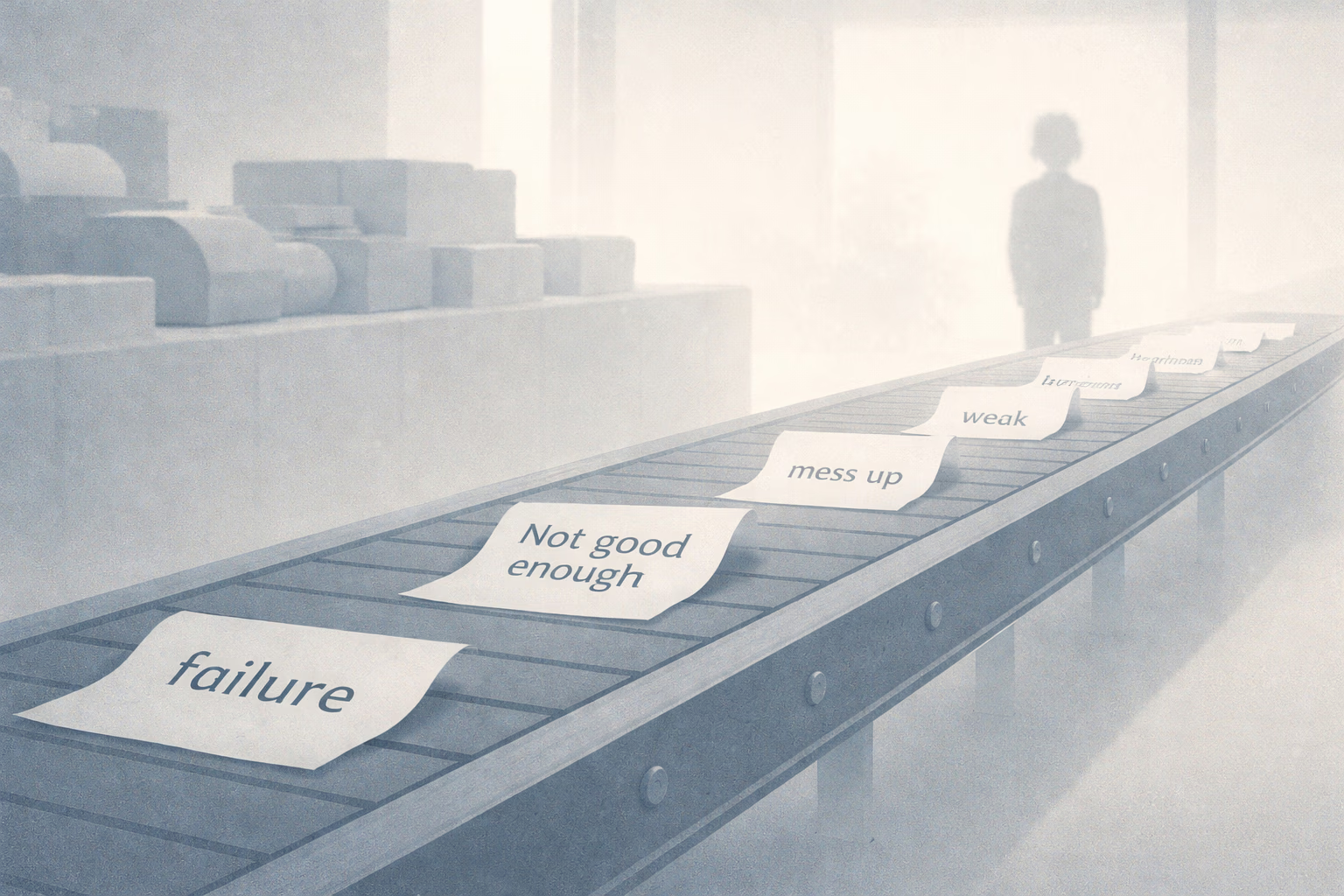
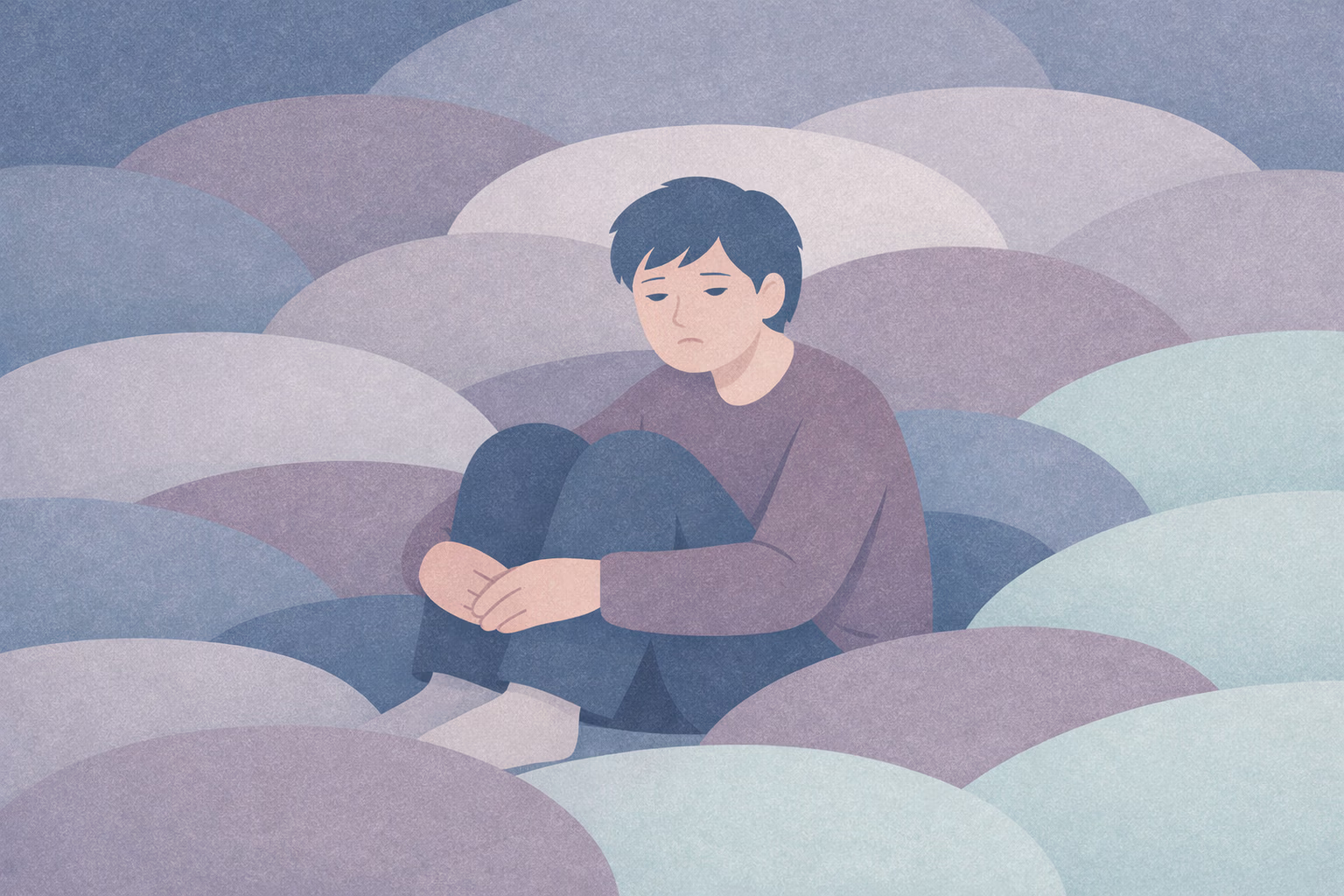
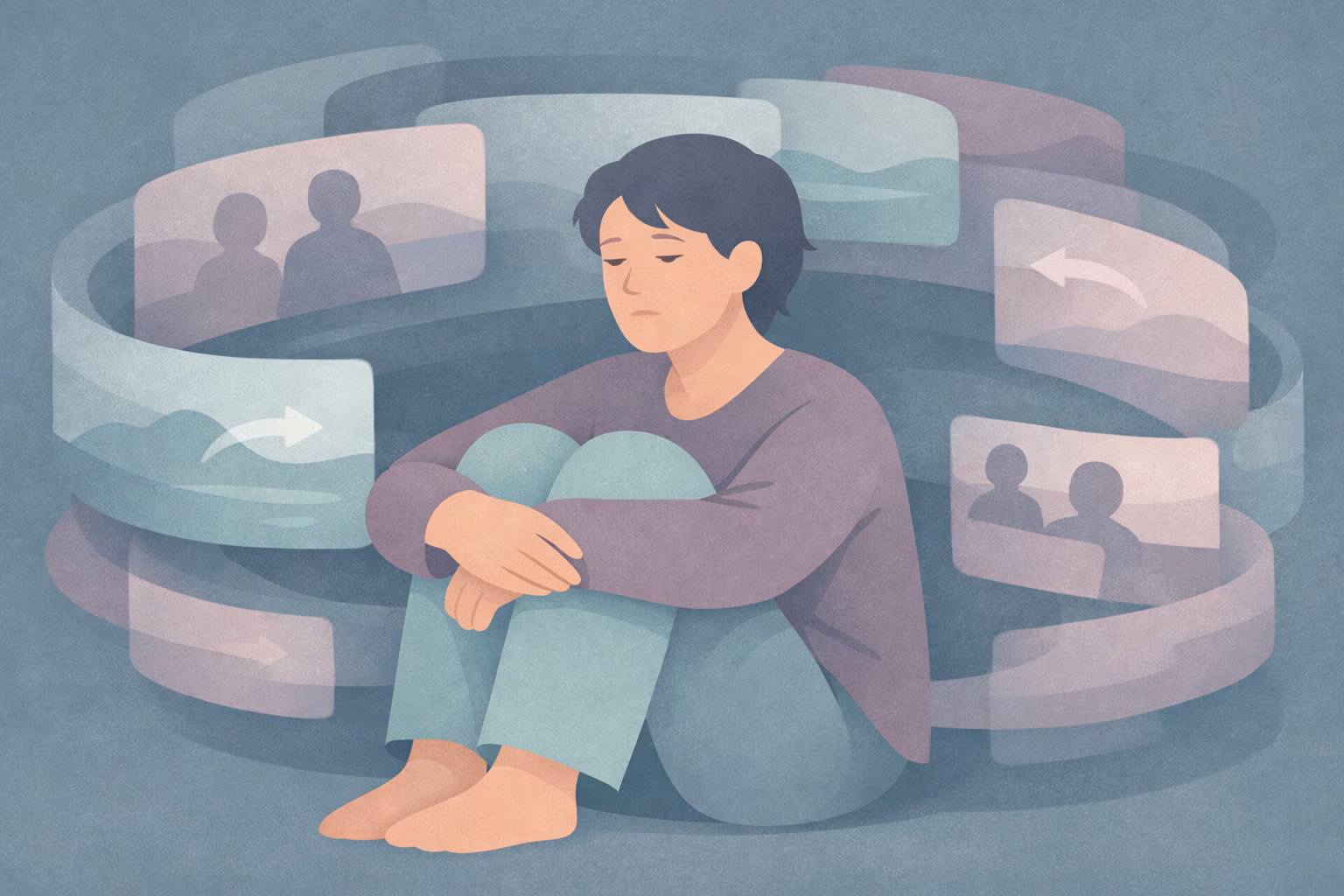
Binge-watching is often talked about like a personal flaw: weak willpower, poor discipline, “bad habits.” But for many people, extended viewing is less about entertainment and more about regulation—an efficient way to quiet the day’s internal noise when life has been loud, uncertain, or unfinished.
In the Meaning Density view, this isn’t about blaming screens or blaming yourself. It’s about recognizing a structural mismatch: modern environments keep loops open (work, relationships, identity pressure, constant input), and the nervous system reaches for something that offers immediate closure-like relief, even if it doesn’t truly complete what’s pending.
What if binge-watching isn’t a character issue, but a predictable response to overload and incomplete “done” signals?
Many people describe binge-watching with the same sequence: a plan to watch a little, a subtle slide into “one more,” and then a late-night endpoint that arrives with fog, time-loss, and sometimes regret. This pattern can happen even when the body is tired and the next day matters.
That’s a clue that what’s running the show isn’t preference alone. It’s the nervous system’s stop-signal getting outcompeted. When internal load is high, the brain favors the most reliable path to immediate settling—especially if the alternative is returning to unanswered demands, unresolved conversations, or a sense of “I’m behind.” Research on problematic binge-watching links it with difficulties in regulation and impulsivity-related patterns, which fits this idea of weakened disengagement under strain. [Ref-1]
Sometimes it’s not that you want more entertainment. It’s that stopping would hand you back to everything that still feels unfinished.
Narrative immersion is powerful because it does multiple jobs at once. It captures attention, provides a clear arc, and narrows the number of choices you have to make. Compared with the complexity of real life, a show offers a guided track: the next scene arrives without negotiation.
This matters physiologically. When decision load drops, certain stress signals can quiet. When attention locks onto a storyline, the mind has fewer spare cycles to run unresolved threads. Many people also experience identification with characters and a sense of social “being with,” which can be especially regulating during loneliness or disconnection. Studies on binge-watching describe escapism and character identification as common mechanisms of relief. [Ref-2]
Not because your feelings are “too much”—but because your system is trying to reduce competing signals.
Humans evolved to learn through stories: watching others, tracking social dynamics, predicting what happens next, and remembering emotionally charged sequences. Narrative is not a trivial pleasure; it’s a deep channel for attention and meaning-making.
The modern shift is availability. Where stories once had natural endpoints (a gathering ends, a tale concludes, the fire goes out), streaming removes friction. Autoplay, cliffhangers, and entire seasons on demand keep the learning-and-anticipation machinery running without the environmental “stop” that used to create closure.
Research has connected problematic binge-watching with loneliness, emotion regulation strain, and disrupted sleep—suggesting that the very systems that once supported social learning can become overstimulated in today’s delivery formats. [Ref-3]
When the day contains uncertainty, evaluation, or inner demand, continuous viewing can create a specific kind of relief: not solving the problem, but reducing contact with it. The show supplies a steady stream of external structure, which can temporarily override internal signals that feel messy, ambiguous, or unresolved.
This is one reason binge-watching often clusters around evenings. Night is when external obligations quiet down—and when the nervous system finally has space to register what didn’t complete. If those open loops feel too activating, stimulation can become a form of anesthesia: enough input to blunt the return of pending material.
Sleep research on binge viewing notes the role of pre-sleep arousal and how viewing can keep activation patterns running into the night. [Ref-4]
Binge-watching often begins as an attempt to recover. And in the moment, it can feel like a break: you’re not producing, responding, deciding, or performing. That relief is real.
But the body can interpret prolonged stimulation differently than restoration. Instead of providing a “done” signal, extended viewing can delay basic needs (sleep, hydration, movement, relational contact) and keep the system in a low-grade activated state. Studies have found associations between binge-watching and poorer sleep, mood effects, and lower quality-of-life indicators, which fits the pattern of relief without true completion. [Ref-5]
So the mismatch isn’t “you rested wrong.” It’s that the nervous system received state-change (distraction), not closure (completion).
In an avoidance loop, the system is not choosing “nothing.” It’s choosing a substitute regulator. Stimulation steps in where completion would normally happen: a conversation that reaches an endpoint, a task that genuinely finishes, a day that includes settling rather than sprinting into tomorrow.
When stimulation replaces those endpoints, emotions and needs don’t necessarily disappear; they pause. The show becomes a temporary holding tank for unsorted signals. Research on binge-watching behavior links it to sleep disruption and quality-of-life impacts, aligning with the idea that the loop remains open beneath the relief. [Ref-6]
Relief changes the channel. Completion changes the system.
Escape loops are often less dramatic than people expect. They tend to look like small bypasses repeated until they become a default. The tell isn’t the show itself—it’s the loss of natural stopping cues.
These are not moral failures. They’re signs that friction has been removed and that the nervous system has learned: this pathway reliably reduces inner complexity fast. Work on escapism and consequences in binge-watching contexts highlights how stress and self-control demands interact with this pattern. [Ref-7]
Over time, repeated numbing can flatten the day’s natural rhythm. If the evening becomes primarily a shutdown lane, the system gets fewer chances to return to baseline in a clean way. Sleep may become lighter or later, mornings can start with residual fog, and the inner sense of readiness can shrink.
There’s also a subtler cost: relational and self-signals become harder to read. When stimulation is the main evening organizer, needs that require low-stimulus contact—conversation, quiet companionship, even simple reflection—can lose their “access” to attention.
A systematic review links binge-watching with mental health concerns and sleep-related issues, supporting the idea that repeated high-immersion viewing can erode capacity over time. [Ref-8]
This isn’t about becoming more emotional. It’s about regaining signal return after load reduces.
The reinforcement loop is straightforward: watching quiets discomfort; quieting discomfort makes watching feel necessary; necessity makes stopping feel sharp. Over time, disengagement can start to carry a rebound—an abrupt return of internal noise when the show ends.
In other words, the discomfort is not proof that you “need more TV.” It may be the nervous system re-encountering everything that was held at bay: uncertainty, unfinished tasks, lonely edges, or the sheer exposure of quiet. The relief was real, but it didn’t metabolize what was pending.
Popular neuroscience writing describes how anticipation and reward dynamics can reinforce binge cycles, making disengagement feel increasingly uncomfortable. [Ref-9]
There’s an important distinction between insight and integration. Many people understand their binge-watching pattern perfectly—and still find themselves in it. That’s not hypocrisy; it’s physiology. When the system is overloaded, understanding doesn’t create the “safe enough to stop” signal.
What changes the pattern is not self-critique or better explanations, but a gradual return of internal steadiness—when the body can tolerate lower stimulation without spiking. In that state, signals can reappear in smaller, more workable increments, and the urge for immediate escape often loses some urgency.
This is why conversations about binge-watching often miss the point when they focus on motivation. The deeper issue is whether the nervous system has enough capacity and closure to let an evening land. Discussions of brain and mental health impacts often point toward this load-based framing. [Ref-10]
One reason binge-watching works so well as a regulator is that it simulates social presence: voices, faces, conflict, resolution. For a socially wired nervous system, that can be stabilizing—especially when real connection feels effortful or unavailable.
But solitary immersion can also become a substitute that keeps relational needs in a waiting room. Shared presence—being in a room with someone, small talk, a brief exchange, a sense of mutual reality—can provide a different kind of settling because it offers real-world safety cues instead of continuous stimulation.
Writing on binge-watching as an emotional habit discusses how suspense and engagement can become repetitive regulators, hinting at why lower-stimulus connection can feel surprisingly grounding by comparison. [Ref-11]
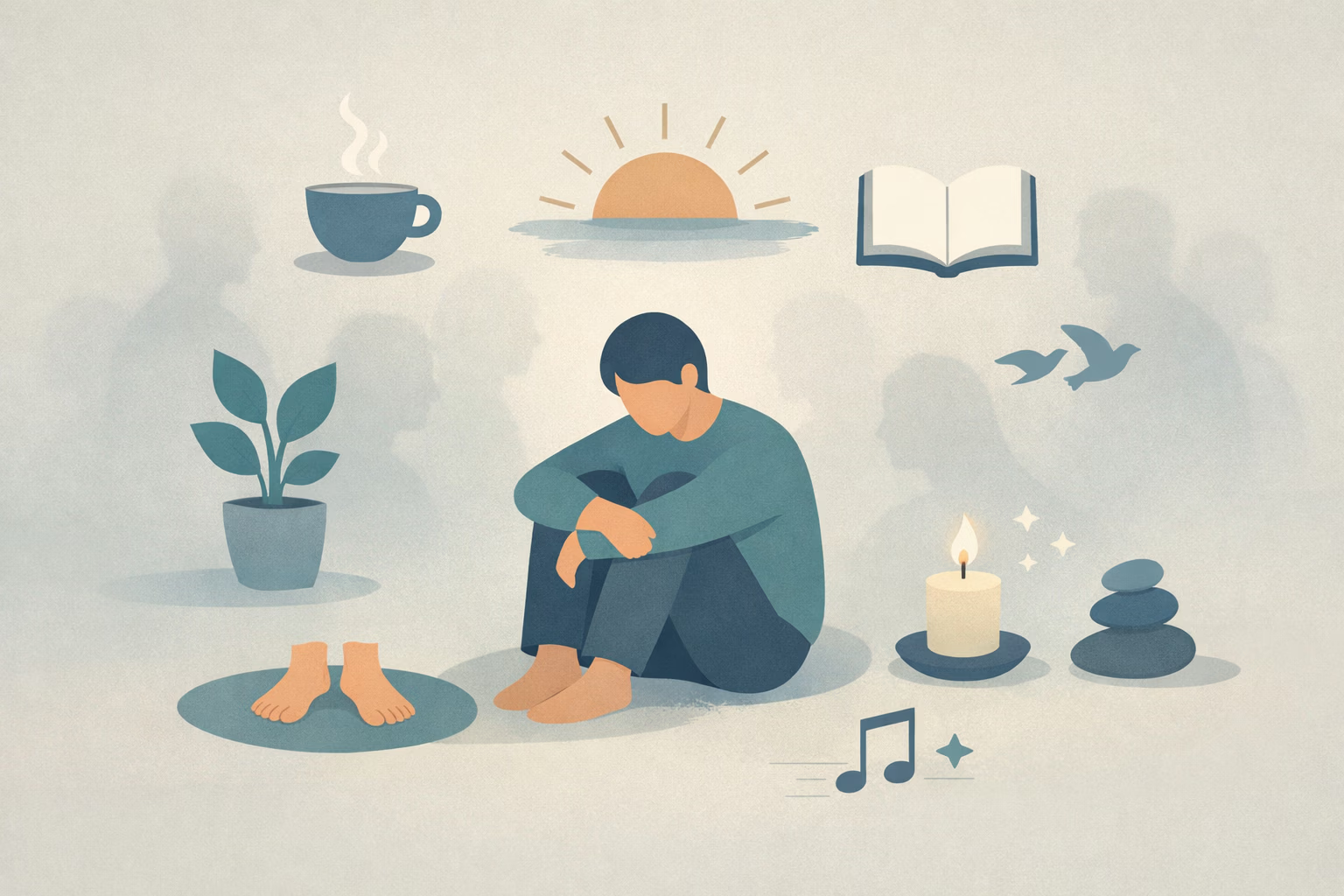
When the system is less loaded, stopping cues tend to come back online. Not as rules, but as felt sense: “that’s enough,” “I’m done,” “I want to sleep,” “I want quiet.” This is a different experience than forcing yourself to stop while everything inside is still braced.
With stopping cues restored, entertainment becomes more choice-shaped. You can watch a show and still feel the edges of your own night: hunger, fatigue, tomorrow, desire for contact, desire for space. The mind is no longer required to stay flooded to stay stable.
Even non-academic explanations of binge triggers often point to autoplay, cliffhangers, and reduced friction as reasons people lose track of endpoints—highlighting how much the environment can interfere with natural stopping. [Ref-12]
The deeper consequence of escape loops isn’t only lost time. It’s the gradual narrowing of identity: evenings become something that “happens to you,” rather than a lived space where your values can land in small, ordinary ways.
As coherence returns, evenings can hold more than avoidance. Not constant self-improvement—just a wider menu of reality: restoration, simple connection, a sense of completion, or the quiet dignity of choosing what fits. In research on binge-watching as coping and escapism, loneliness and stress often sit in the background, shaping the pull toward immersion. [Ref-13]
Meaning isn’t forced into existence. It shows up when life has room to complete.
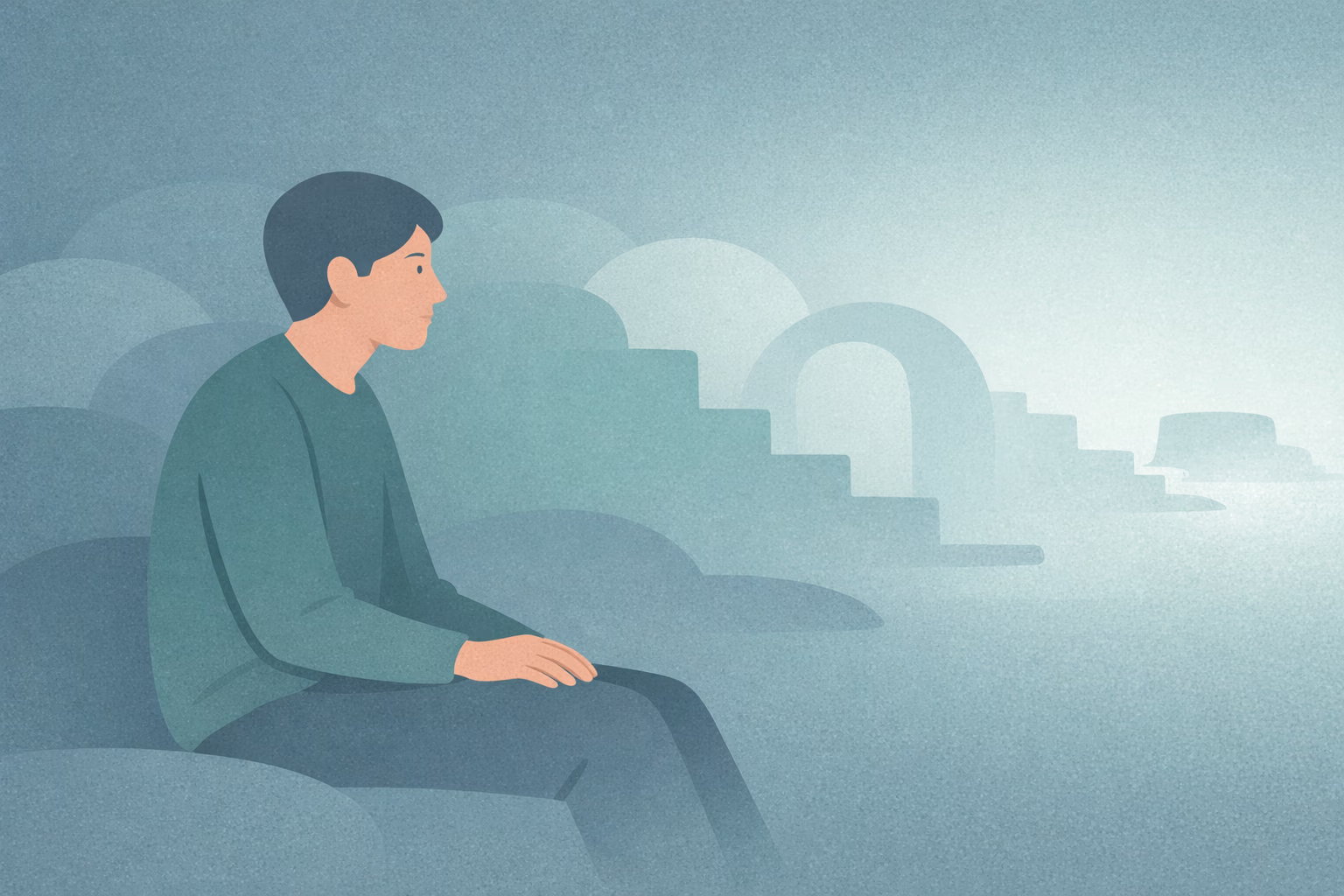
If binge-watching has become an escape loop, it may be pointing to something simple and human: your system is carrying more open loops than it can comfortably hold. The screen becomes a fast route to quiet—especially in a culture that offers constant evaluation and very few true endpoints.
Seen this way, the pattern isn’t an identity. It’s information: about load, about unmet needs for closure, and about the nervous system’s preference for reliable relief when the day hasn’t provided enough settling. Sleep research links binge viewing with poorer sleep quality, reinforcing the idea that the body recognizes the difference between stimulation and restoration. [Ref-14]
Agency often returns not through pressure, but through coherence—when your time, your recovery, and your sense of self start lining up again.
Stories can be beautiful regulators: shared culture, laughter, suspense, comfort, inspiration. The goal isn’t to make entertainment smaller. It’s to understand when it’s functioning as a substitute for closure—and when it’s simply part of a life that already has enough completion built in.
As the nervous system finds more chances to stand down, “one more episode” often loses its edge. Not because you tried harder, but because you no longer need the same level of stimulation to feel okay. Entertainment tends to feel better when it sits inside meaning—rather than when it’s carrying meaning’s entire workload. [Ref-15]
From theory to practice — meaning forms when insight meets action.
Because the body distinguishes between distraction and restoration, and binge-watching often delivers the first while skipping the second. In the moment, prolonged viewing reduces decision load, narrows attention, and quiets internal noise — that relief is real. But extended stimulation can postpone basic needs (sleep, movement, contact, processing) and keep the nervous system in low-grade activation rather than letting it stand down. The mismatch isn't that you rested wrong; it's that the system received state-change instead of completion. Relief changes the channel; completion changes the system. That's why a long evening on the couch can land as depletion rather than recovery.
Often both, depending on the function it's serving in the moment. The article frames extended viewing as a substitute regulator inside an Avoidance Loop: stimulation steps in where natural completion would normally happen — a conversation that ends, a task that finishes, a day that genuinely closes. When stimulation replaces those endpoints, emotions and unmet needs don't disappear; they pause in a holding tank. That's not a moral verdict on TV. It's information: when stopping the show feels sharp or unsettling, that rebound is usually the open loops re-emerging, which is a clue about load rather than a sign you need more screen time.
The natural stopping cues have been engineered out. Autoplay, cliffhangers, and on-demand seasons remove the environmental 'stop' that older storytelling formats had built in — the gathering ended, the fire went out, the tale concluded. Combine that with a nervous system already running an Avoidance Loop, and the pathway of least resistance is to keep watching. The tell isn't usually the show itself; it's the loss of natural endpoints — episodes rolling forward before you've registered the last one ended, choosing a familiar series because it requires no orientation, irritation when the screen finally goes dark. Friction has been removed and the loop has learned this works.
Capacity. When the system is less loaded, stopping cues come back online as felt sense rather than rules: 'that's enough,' 'I want sleep,' 'I want quiet.' The article calls this the return of internal steadiness — the body can tolerate lower stimulation without spiking, so the urge for immediate escape loses urgency. Practically, that often means building more true endpoints into the day (work that finishes, conversations that complete, evenings that contain something other than shutdown), and noticing that real co-regulation with another person can settle the nervous system in ways simulated social presence on screen can't quite match. Entertainment then sits inside meaning rather than carrying its full workload.
From Science to Art.
Understanding explains what is happening. Art allows you to feel it—without fixing, judging, or naming. Pause here. Let the images work quietly. Sometimes meaning settles before words do.
One Quiet Window, one insight, one reflection — every Sunday