Influencer Envy: The Comparison Loop You Don’t Notice
In short: A tightness in the chest, a restless urge to upgrade, a sudden dissatisfaction with a life that looked perfectly workable an hour ago. This isn’t a character flaw.
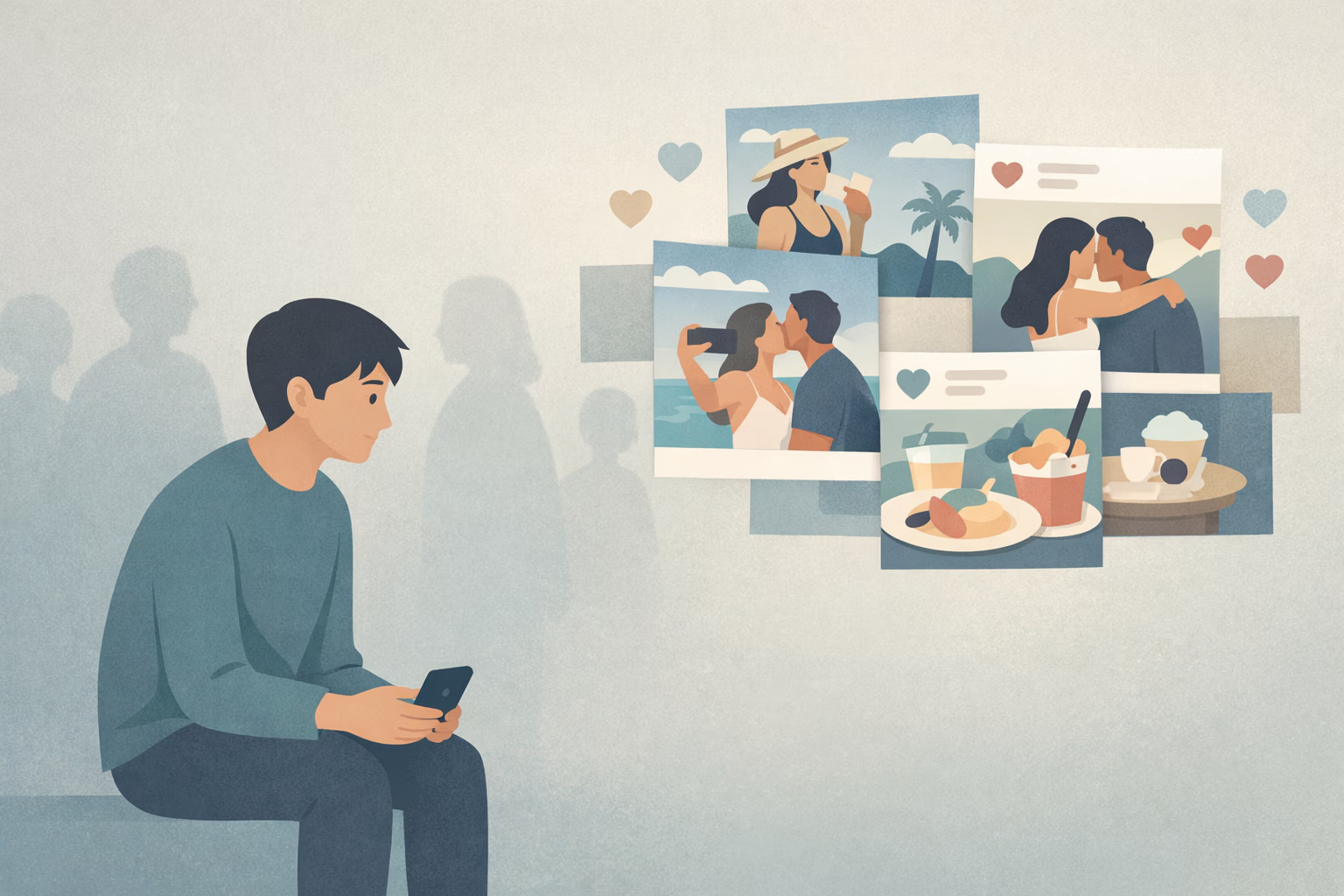
Influencer lifestyle comparison can feel strangely physical: a tightness in the chest, a restless urge to upgrade, a sudden dissatisfaction with a life that looked perfectly workable an hour ago. This isn’t a character flaw. It’s what happens when a human nervous system—built for real-world social cues and real-world closure—gets flooded with high-intensity status signals that don’t resolve into anything “done.”
What if the ache isn’t “wanting more,” but your system struggling to locate where you belong?
In modern feeds, other people’s highlights arrive as if they’re local and urgent. The result is often a feeling of being behind in your own story—pulled toward a life that looks like direction, even if it doesn’t match your values, body, relationships, or actual constraints.
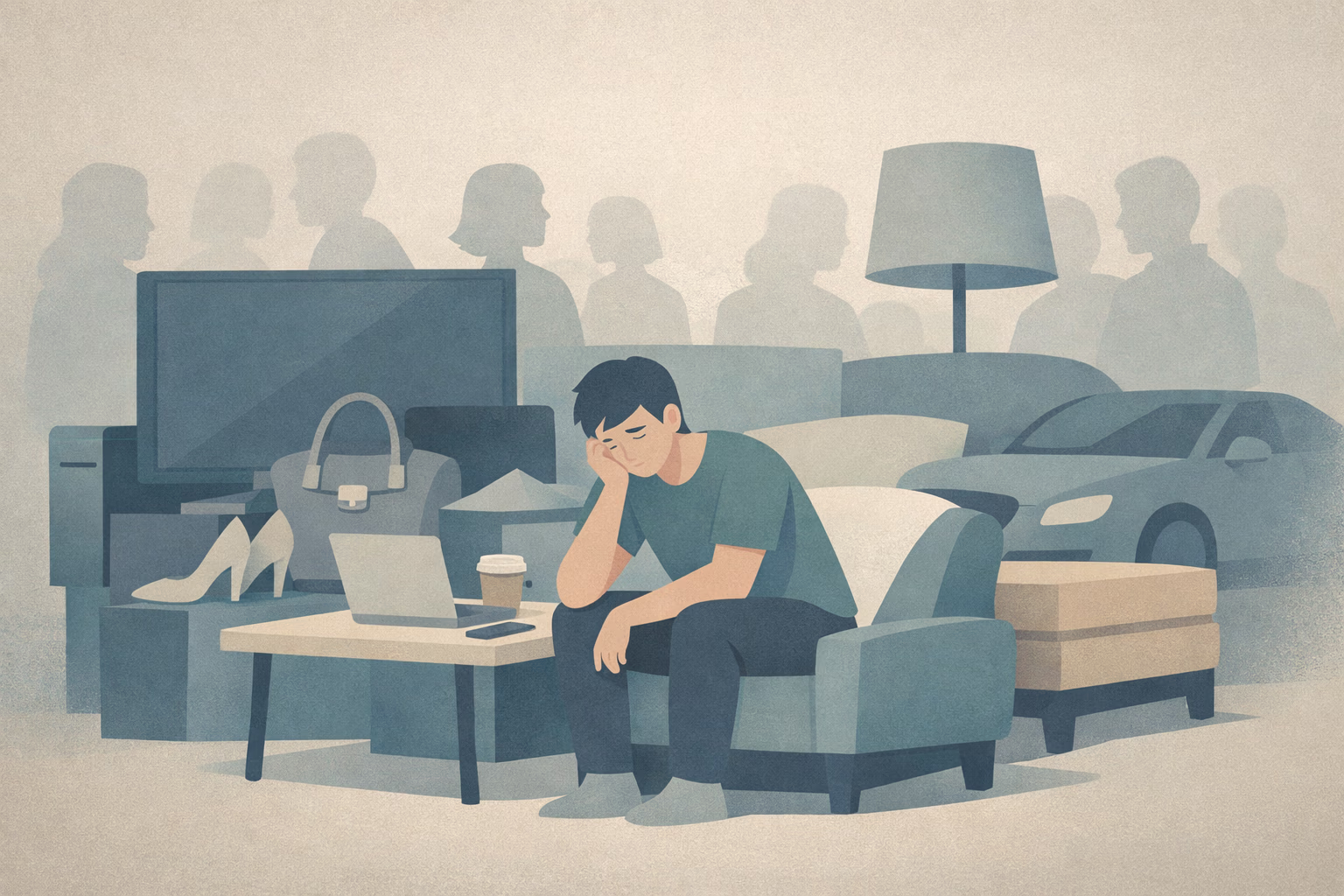
After watching curated routines, perfect apartments, vacations, and “effortless” confidence, many people report a predictable shift: a drop in satisfaction, a spike in urgency, and a sense that their current life is somehow insufficient. The mind starts drafting plans to become someone else—not because you’re shallow, but because comparison cues can load the system with unfinished evaluation.
This can show up as a pressure to “catch up” fast: new habits, a new look, a new purchase, a new identity. The nervous system reads the images as evidence of a higher rung on a ladder, and it tries to close the gap. When the gap is abstract and constantly refreshed, closure never arrives—only more activation. [Ref-1]
Highly visual platforms deliver quick, condensed signals: beauty, wealth, ease, popularity, prestige. These cues can activate reward and attention systems designed to prioritize socially relevant information. In that state, the brain becomes a fast evaluator—scanning for “Where am I relative to them?” and “What would I need to change?” [Ref-2]
The important detail is speed. The feed doesn’t just show you an image; it also creates a mini-surge of possibility, then a mini-drop of absence. The cycle can feel like motivation, but it often functions like a physiological upshift followed by a lack of completion—leaving a residue of dissatisfaction that isn’t solved by more thinking.
Humans evolved in small groups where noticing high-status individuals had practical value: learning what was respected, who had resources, who was safe to align with, and what behaviors improved belonging. That system isn’t vanity—it’s an orientation tool for survival and social stability.
In a village, “upward comparison” came with context: you knew the person, their tradeoffs, their relationships, their limits, their ordinary days. Online, the comparison target can be thousands of people, presented without context, and refreshed endlessly. The hierarchy system keeps updating, but the environment doesn’t provide the information that would allow the nervous system to settle. [Ref-3]
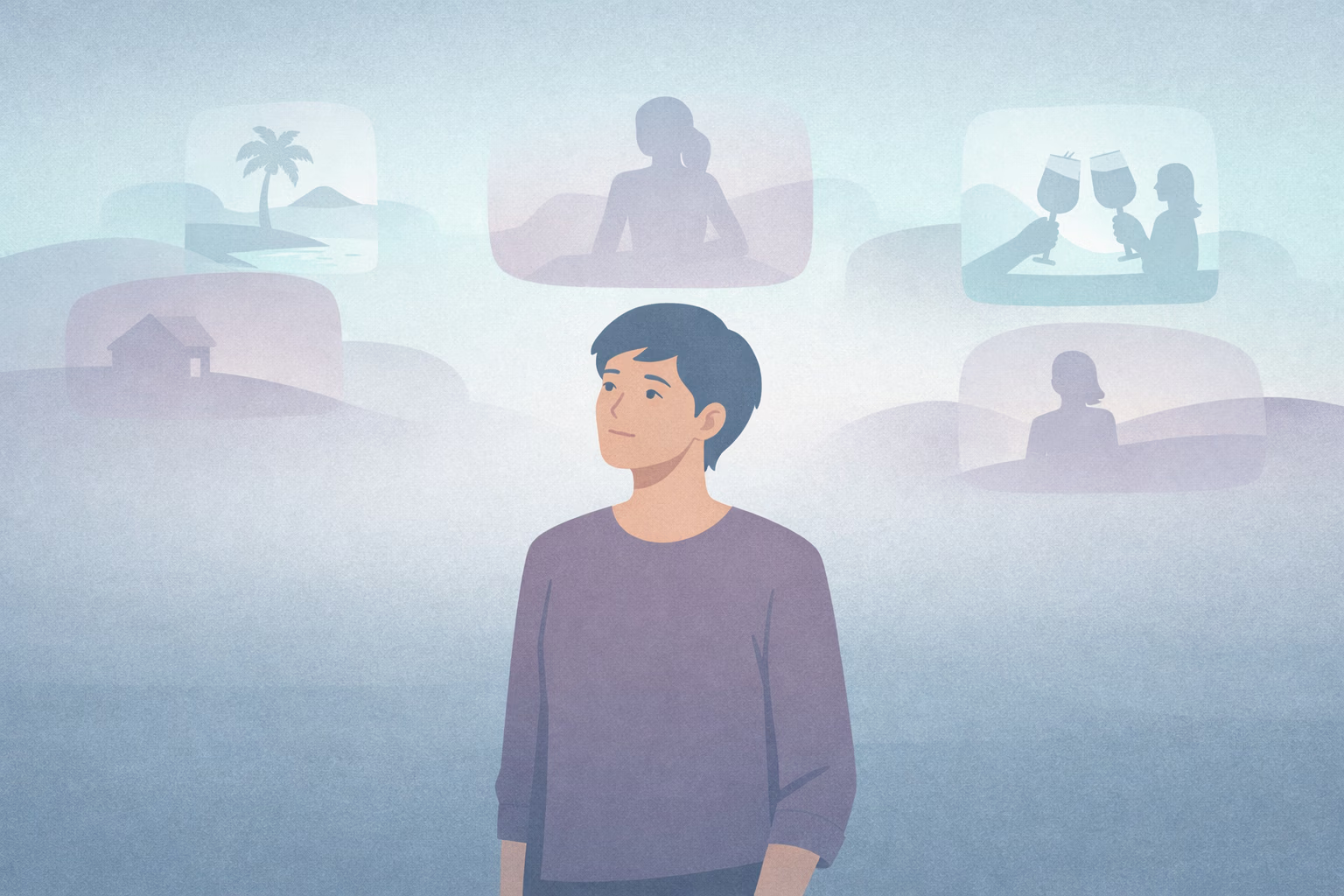
A polished lifestyle reel can momentarily organize your attention. It offers a clean storyline: “If I looked like that / lived there / traveled like that, I’d finally feel good.” That storyline can function like a temporary compass—especially when life feels scattered, pressured, or dull.
But fantasy is not completion. The nervous system may interpret the content as a possible route out of discomfort, creating a brief sense of clarity. When the clip ends, the underlying life remains unchanged, and the system is left with an activated “not yet.” Over time, this pattern is associated with increased anxiety and depressed mood through social comparison pressure. [Ref-4]
The feed can feel like a map, but it often doesn’t include the terrain you’re actually walking.
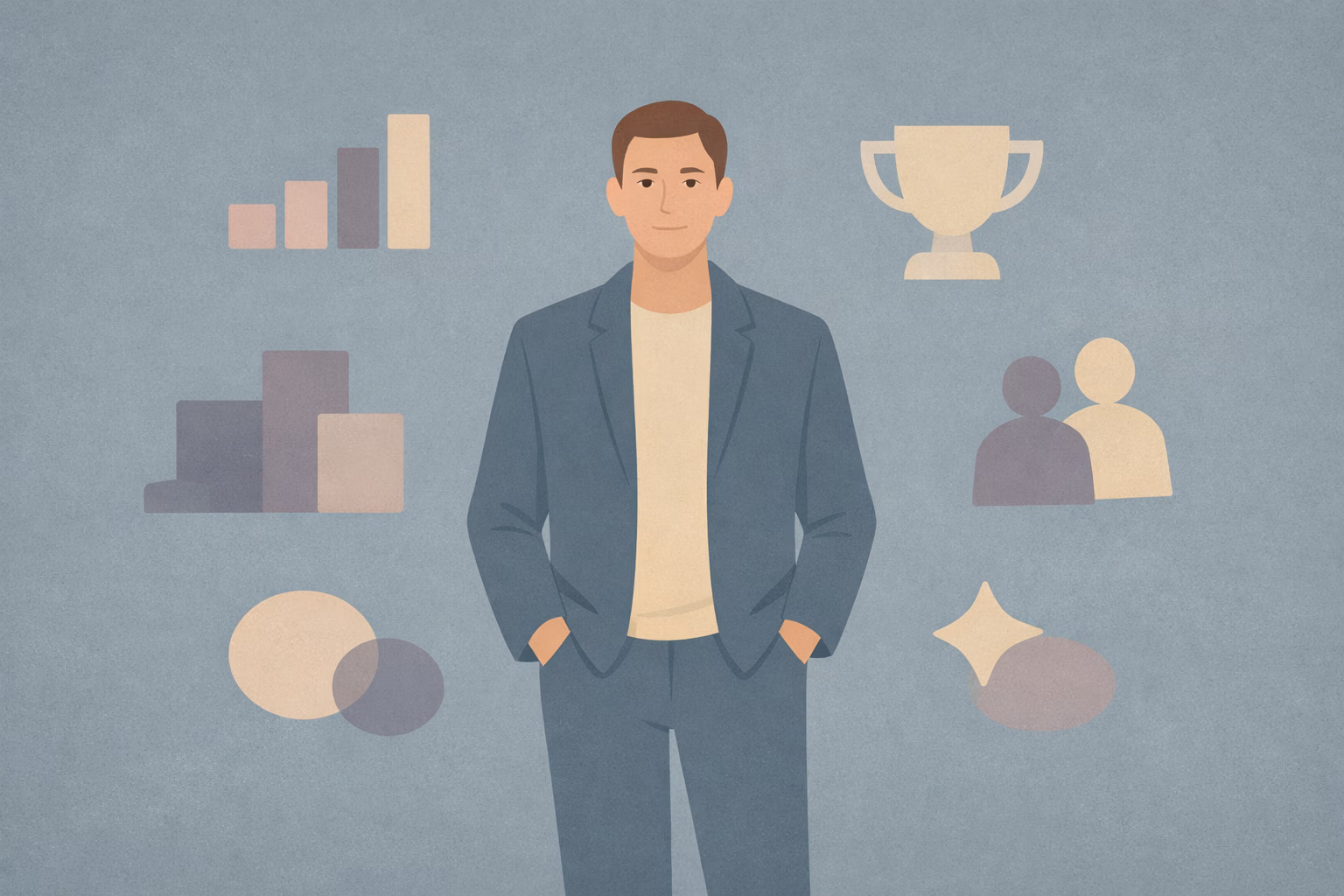
It’s easy to believe that adopting someone else’s lifestyle will bring relief. The images look like a complete solution: organized home, disciplined body, aesthetic meals, perfect partnership, constant travel. Yet even when people move toward those symbols, the satisfaction often doesn’t stabilize—because the symbols are not the same as a coherent self.
When desire is pulled outward by constant comparison, identity can get noisy: you start wanting incompatible things, chasing mismatched signals, or measuring your life against a template that was never built for you. The result isn’t simply “insecurity.” It’s chronic comparison stress—your system repeatedly prompted to revise who you are without ever receiving a finished, lived sense of “this is me.” [Ref-5]
In the power loop, the system learns to locate worth outside the body and outside lived experience—tracking it instead through status markers: looks, lifestyle, followers, aesthetics, luxury, access. The problem isn’t wanting a good life. The problem is outsourcing the measurement of a good life to a stream of curated signals that can’t provide closure.
Curated content is optimized for attention, not for your nervous system’s need to complete experiences. So the loop keeps running: exposure → evaluation → urgency → brief surge → no completion → more exposure. Over time, identity becomes externally anchored, and the self can feel like a project that is never allowed to be “done.” [Ref-6]
What if the exhaustion isn’t from failing to improve, but from never receiving a stand-down signal?
When comparison becomes a frequent regulatory strategy, patterns emerge. They’re not moral failings; they’re predictable consequences of repeated activation without closure.
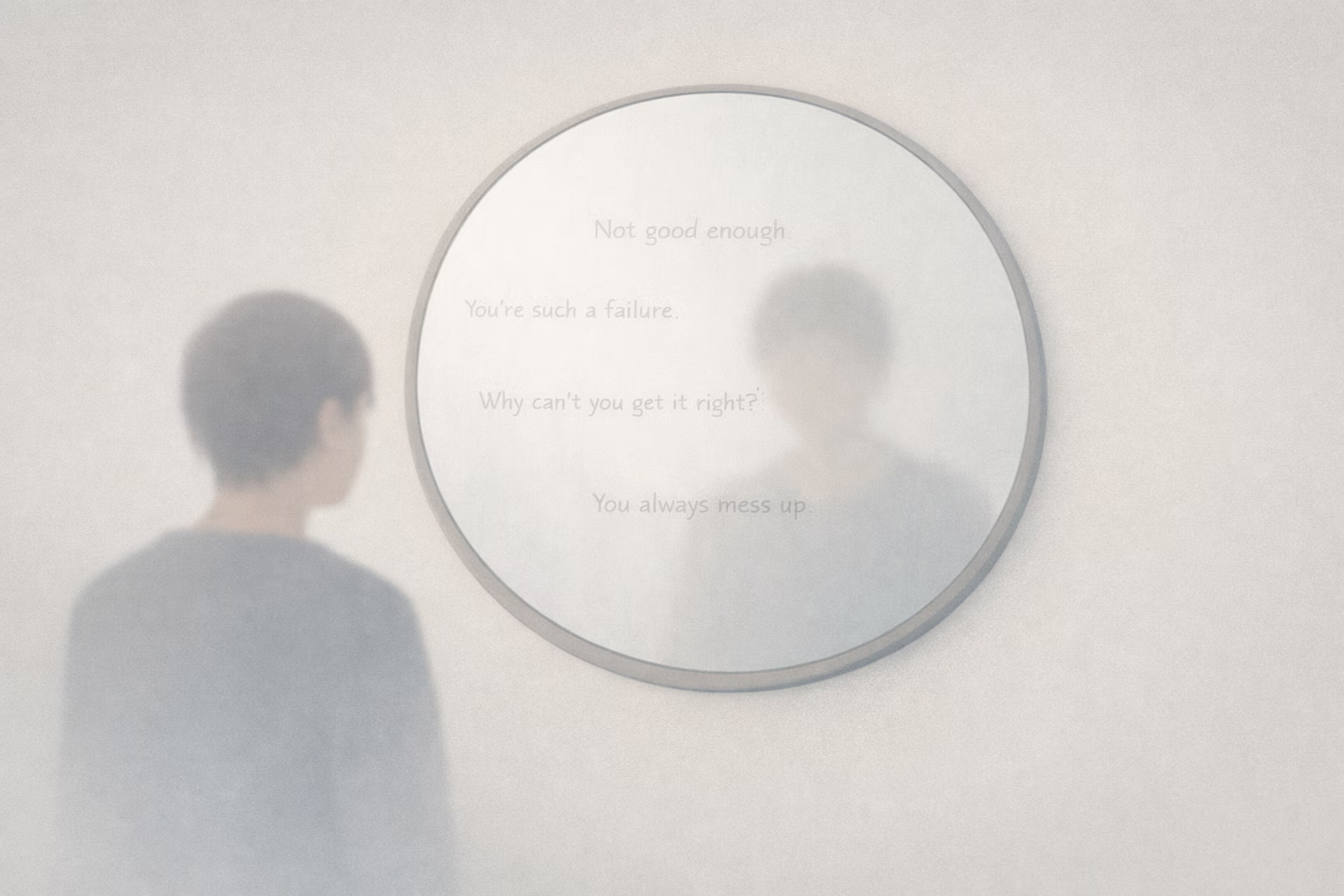
These patterns are widely recognized in discussions of the comparison trap: the feed becomes a mirror that exaggerates lack and shrinks what’s already real. [Ref-7]
Self-trust isn’t built by positive thoughts. It’s built when your signals—preferences, limits, values, capacity—are allowed to guide your choices and then settle into lived experience. Persistent comparison disrupts that process by constantly reassigning what “should” matter.
Over time, desire can become less about genuine fit and more about repairing status discomfort. Your inner signals start to feel unreliable: you don’t know if you want the thing because it’s meaningful, or because it would quiet the comparison noise. Emotional stability can wobble, not due to “fragility,” but because the system is repeatedly yanked between external benchmarks. [Ref-8]
Aspirational content can produce a brief lift—an image of possibility, a temporary sense of momentum. But novelty is designed to be replaced. The next post updates the standard again, and yesterday’s inspiration can quickly become today’s evidence of inadequacy.
This creates a structural problem: the system is continually offered partial loops—teasers of a better self, a better body, a better home—without the real-world completion that would allow the nervous system to stand down. So the natural next move is more scrolling, more searching, more comparing. The identity signal gets thinner while the evaluation signal gets louder. [Ref-9]
When the finish line keeps moving, urgency becomes the only familiar feeling.
There’s a difference between knowing who you are and being settled enough to live as yourself. The latter is not a mental insight; it’s a whole-system coherence that shows up as reduced reactivity to external ranking cues. When internal grounding is present, influencer content can register as information or entertainment rather than a verdict.
Research and commentary on influencing and identity consistently point to the way social media can shape self-concept—especially when identity is under construction or under strain. In those conditions, comparison cues attach more easily, because the system is already scanning for direction. [Ref-10]
Restored grounding looks less like “not caring” and more like having a stable internal reference point—a felt sense of what counts as a good day, a good relationship, a good use of time, a good kind of tired.
Influencer culture often rewards performance: looking well, living well, being seen well. Real connection does something different. It provides reciprocity, nuance, and belonging that isn’t contingent on presentation. In that space, people can be ordinary and still be valued—which offers the nervous system a powerful safety cue.
Shared values are especially stabilizing because they reduce the need for constant ranking. When you’re embedded in relationships where what matters is care, reliability, humor, creativity, service, or shared meaning, the status ladder loses some of its grip. Even influencers themselves describe mental health strain under constant visibility and evaluation, which underscores how heavy performative systems can be. [Ref-11]
As load reduces and more experiences reach completion, many people notice a quiet shift: content that once triggered urgency now lands with less impact. This isn’t a forced detachment. It’s a sign that the system is no longer using the feed as a primary orientation device.
Self-acceptance here isn’t a mood. It’s a baseline steadiness—an ability to return to your own signals after exposure to someone else’s highlight reel. You may still admire, desire, and learn, but without the collapse into “I should be someone else.” Discussions of popularity and online influence repeatedly show how visibility intensifies evaluation pressure; stepping out of that pressure often brings a measurable sense of stability. [Ref-12]
When comparison loosens, attention often reorients from copying surfaces to recognizing fit. Instead of chasing a borrowed life, you start noticing what actually integrates: the relationships you can sustain, the pace your body tolerates, the kind of home that supports your nervous system, the work that feels honest, the pleasure that doesn’t leave a crash.
This shift is less about rejecting influencers and more about restoring authorship. Influencer content can still exist in your world, but it no longer defines your direction. As research on digital influencers and youth mental health suggests, the impact is not only about the content itself—it’s about how identity and belonging are negotiated in its presence. [Ref-13]
Coherence feels like this: your life makes sense from the inside.
Envy in this context often isn’t pettiness. It can be a form of longing—your system registering a desire for beauty, ease, recognition, security, or community. Influencer marketing can intensify that longing by attaching it to products and aesthetics, turning belonging into something that looks purchasable. [Ref-14]
But longing becomes more stabilizing when it’s allowed to point inward: toward the values and conditions that would make your own life feel coherent. Not someone else’s life, resized to you—but a life that can be completed in your actual days, with your actual constraints, until your system receives the quiet message: “This is real, and it holds.”
Curated lives are designed to be compelling. If you’ve been pulled into comparison, it doesn’t mean you’re broken; it means your social brain is working in an environment that rarely offers closure. The most durable relief is not a higher rung on someone else’s ladder, but a life that becomes internally legible—values expressed, relationships real, and enough completion for the nervous system to stand down.
When direction comes from within lived identity rather than constant external ranking, the urge to become someone else tends to soften. And what remains is often simpler and sturdier: a sense of being at home in your own story. [Ref-15]
From theory to practice — meaning forms when insight meets action.
After watching curated routines, perfect apartments, and effortless confidence, many people experience a predictable drop in satisfaction and spike in urgency. The mind starts drafting plans to become someone else. This isn't because you're shallow — it's because comparison cues load the system with unfinished evaluation. The nervous system reads the images as evidence of a higher rung on a ladder and tries to close the gap. When the gap is abstract and constantly refreshed, closure never arrives — only more activation. The ache isn't wanting more; it's your system struggling to locate where you belong amid signals that don't resolve into anything done.
Humans evolved in small groups where noticing high-status individuals had practical value: learning what was respected, who had resources, who was safe to align with. That system isn't vanity — it's an orientation tool for survival and social stability. In a village, upward comparison came with context: you knew the person, their tradeoffs, their ordinary days. Online, the comparison target can be thousands of people, presented without context, refreshed endlessly. This is Evolutionary Mismatch in action — the hierarchy system keeps updating, but the environment doesn't provide the information that would allow the nervous system to settle.
In the Power Loop, the system learns to locate worth outside the body and outside lived experience — tracking it through status markers: looks, lifestyle, followers, aesthetics, luxury. The problem isn't wanting a good life; it's outsourcing the measurement of a good life to a stream of curated signals that can't provide closure. Curated content is optimized for attention, not for your nervous system's need to complete experiences. The loop runs: exposure, evaluation, urgency, brief surge, no completion, more exposure. Identity becomes externally anchored, and the self can feel like a project never allowed to be done. The exhaustion isn't from failing to improve — it's from never receiving a stand-down signal.
Internal grounding makes comparison cues less sticky. Restored grounding looks less like not caring and more like having a stable internal reference point — a felt sense of what counts as a good day, a good relationship, a good kind of tired. Real connection counters performative pressure: relationships built on care, reliability, humour, shared meaning rather than presentation give the nervous system safety cues that aren't contingent. As Loop Sovereignty grows, attention reorients from copying surfaces to recognizing fit — relationships you can sustain, the pace your body tolerates, the work that feels honest. Coherence feels like this: your life makes sense from the inside.
From Science to Art.
Understanding explains what is happening. Art allows you to feel it—without fixing, judging, or naming. Pause here. Let the images work quietly. Sometimes meaning settles before words do.
One Quiet Window, one insight, one reflection — every Sunday