Decision Fatigue: Why Your Brain Shuts Down by Evening

In short: Overbooking doesn’t usually start as a problem. It often starts as a sensible response to a life with real demands: work, family, friendships, health, logistics. But for many people, “busy” slowly becomes more than a season—it becomes a stabilizer.
Overbooking doesn’t usually start as a problem. It often starts as a sensible response to a life with real demands: work, family, friendships, health, logistics. But for many people, “busy” slowly becomes more than a season—it becomes a stabilizer.
In that shift, a packed schedule can begin to function like a protective layer. The calendar stays full, the pace stays high, and there’s less opportunity for the system to register what’s been accumulating. It can look like ambition from the outside while operating like regulation from the inside.
What if the urge to stay booked isn’t a personality trait—but a nervous system strategy?
A constantly full calendar can create a specific kind of pressure: not only the pressure of tasks, but the pressure of no gaps. When an opening appears—an evening with no plans, a weekend with nothing scheduled—some people don’t feel relief. They feel a spike of restlessness, unease, or urgency to “fill it.” [Ref-1]
This isn’t necessarily about liking work or disliking rest. It’s often about how the nervous system interprets unstructured time. When external demands drop, internal signals become more audible: unfinished conversations, unresolved decisions, unclear priorities, body fatigue, relational strain, or the simple uncertainty of “What now?”
So the drive to keep moving can be less about productivity and more about maintaining a steady channel of input—because stillness can create a sudden, unfamiliar kind of exposure.
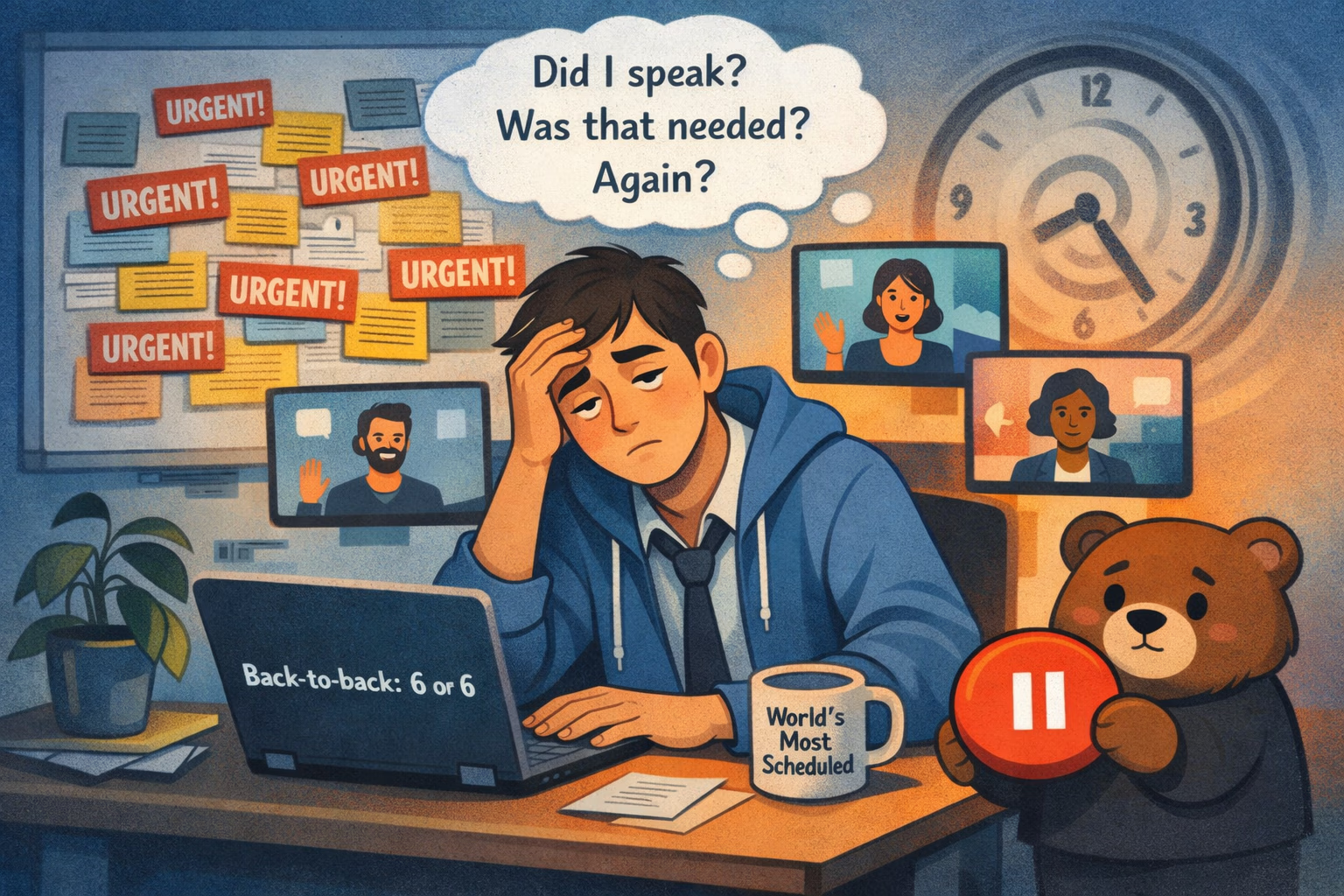
Back-to-back commitments keep the brain in a state of continuous orientation: tracking time, anticipating transitions, preparing language, monitoring performance, remembering details, managing expectations. Even when the events are “good” ones, the system stays online. [Ref-2]
In that state, the body tends to prioritize mobilization—get through, keep up, don’t drop the thread. The result can look like “functioning,” but it often comes with a muted capacity to register subtler signals: satiety, weariness, social saturation, or the need to complete an internal loop.
Over time, the calendar becomes a mechanism that keeps arousal high enough that certain kinds of internal settling never arrive. Not because a person is avoiding on purpose, but because the structure of constant demand makes stand-down biologically unlikely.
Human nervous systems evolved in environments where uncertainty had real consequences. In those contexts, sustained vigilance and continuous action weren’t “overdoing it”—they were often the difference between safety and harm. A system that stayed ready had an advantage.
That survival logic still runs in modern bodies. When life feels unpredictable—socially, financially, medically, relationally—the threat-and-safety system may treat motion as protection: keep scanning, keep responding, keep the day full so nothing catches you off guard. [Ref-3]
From this angle, overbooking isn’t irrational. It’s a coherent strategy built for an older world, applied to a new one—where the threats are often diffuse, chronic, and hard to complete.
A packed schedule can deliver a potent combination: a sense of control (“I have a plan”), a sense of significance (“I’m needed”), and a sense of insulation (“There’s no time to feel the impact”). [Ref-4]
Importantly, none of this requires conscious intent. A person may simply notice that they feel more stable when the calendar is full—less ambiguity, fewer open questions, less room for the mind to roam into unresolved territory.
When the day is tightly structured, it can feel like there’s less space for life to surprise you.
In this way, the schedule isn’t just a list of obligations. It becomes a boundary that holds the nervous system together—until the cost of maintaining it starts to show.
Busyness can feel like momentum: messages answered, meetings attended, errands completed, people cared for. The day fills up, and the sense of movement can be genuinely rewarding.
But constant motion can also accumulate a backlog—less visible than laundry or email, but just as real. There may be a backlog of physical recovery, relational repair, decision completion, grief processing, creative digestion, or simple “done-ness.” [Ref-5]
When the calendar is always ahead of the body, agency shrinks. Time stops feeling like something you inhabit and starts feeling like something that happens to you. The irony is that the more tightly time is managed, the less it may feel like it belongs to you.
Overbooking often functions as an avoidance loop—not because someone is cowardly or incapable, but because motion can temporarily substitute for regulation. The system learns: movement reduces discomfort quickly; stopping increases internal noise. [Ref-6]
In an avoidance loop, the short-term payoff matters more than the long-term cost. The payoff might be relief, numbness, identity stability, or a clean sense of purpose. The cost arrives later: exhaustion, irritability, disconnection, or a growing fear of empty time.
Stillness can start to feel “unnecessary” or even unsafe—not as a belief, but as a bodily interpretation. The schedule becomes the regulator, and the person becomes the one being regulated by it.
Overbooking doesn’t always look dramatic. Often it looks socially acceptable—sometimes even praised. But the pattern has recognizable structural features. [Ref-7]
What does your system do when an hour opens up unexpectedly?
In many cases, the response isn’t a preference—it’s a reflex shaped by load, expectation, and the absence of closure.
When the nervous system stays in continuous output, certain capacities tend to thin out—not because a person loses character, but because the conditions don’t allow replenishment or completion. [Ref-8]
Over time, people often report changes like:
This erosion can be confusing because the calendar is full of “important” things. Yet importance alone doesn’t create closure. Without closure, the system keeps running—while the person feels increasingly less like themselves.
The busyness loop strengthens through relief. When you add a commitment, you may feel a quick settling: direction replaces ambiguity; urgency replaces uncertainty. That immediate shift teaches the nervous system that staying occupied works. [Ref-9]
Meanwhile, any attempt at open time can feel abruptly uncomfortable—not because open time is harmful, but because the system has learned to associate gaps with exposure: unfinished thoughts, unprocessed experiences, unanswered questions about identity or priorities.
So the person books more. The relief arrives again. And the fear of empty time grows—not as a dramatic fear, but as an escalating sensitivity to the absence of structure. In this way, busyness becomes less of a choice and more of a dependency on momentum.
It can help to separate two things: relief and integration. Relief is a state change—often fast, often externally driven. Integration is slower and shows up as a deeper “stand-down,” where parts of life feel finished enough to stop demanding attention.
Overbooking tends to produce relief without completion. It keeps the system moving so it doesn’t have to land. But when internal safety increases—through completion, restored boundaries, and fewer unresolved loops—pauses can become more tolerable without threatening identity. [Ref-10]
Space isn’t the goal. Space is the evidence that your system expects things to be okay without constant output.
This is not about becoming less driven. It’s about life feeling more coherent—so effort stops having to double as protection.
Busyness is rarely purely individual. Many people live inside systems that reward constant availability: workplaces, family roles, social expectations, financial pressure, caregiving, and chronic comparison. In those systems, slowing down alone can feel like social risk. [Ref-11]
That’s why relational cues matter. When there is attunement—someone who doesn’t escalate urgency, environments that allow realistic pacing, communities that don’t equate worth with output—the nervous system receives a different message: you can be connected and safe without constant proving.
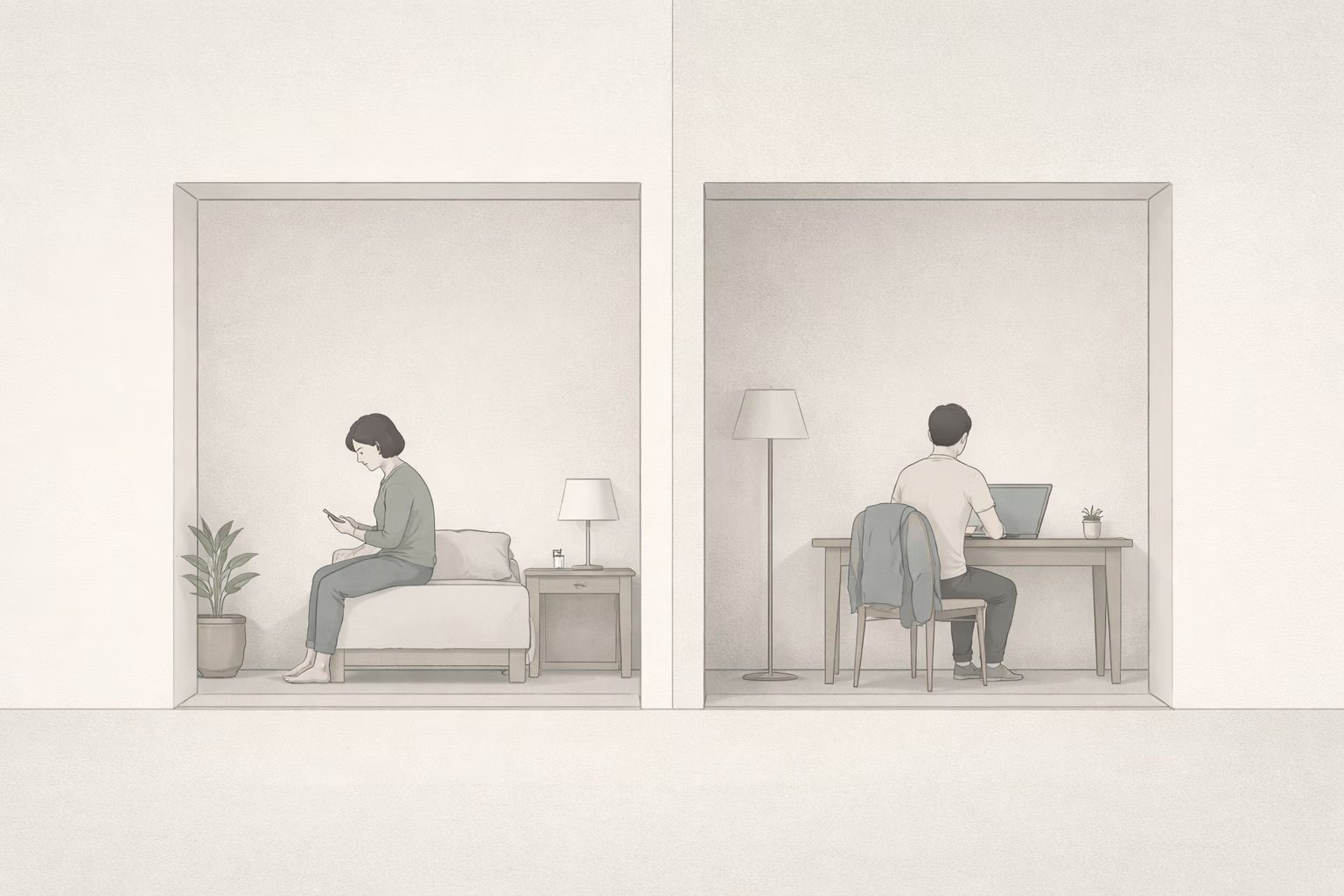
Shared slowing can function like a safety cue. Not as advice, but as a structural truth: regulation is often easier in conditions of permission, predictability, and human contact than in isolation.
When load decreases and more experiences reach completion, many people describe a subtle but important shift: time starts to feel less like a threat. Not because life is perfect, but because the system isn’t constantly bracing.
Spaciousness doesn’t necessarily mean “more free time.” It can look like an increased ability to transition, to finish one thing before starting the next, to notice signals earlier, and to make commitments without the sensation of being chased.
In that state, calm is less of a mood and more of a baseline capability—the ability for the nervous system to return to neutral after activation, rather than staying stuck in perpetual mobilization. [Ref-12]
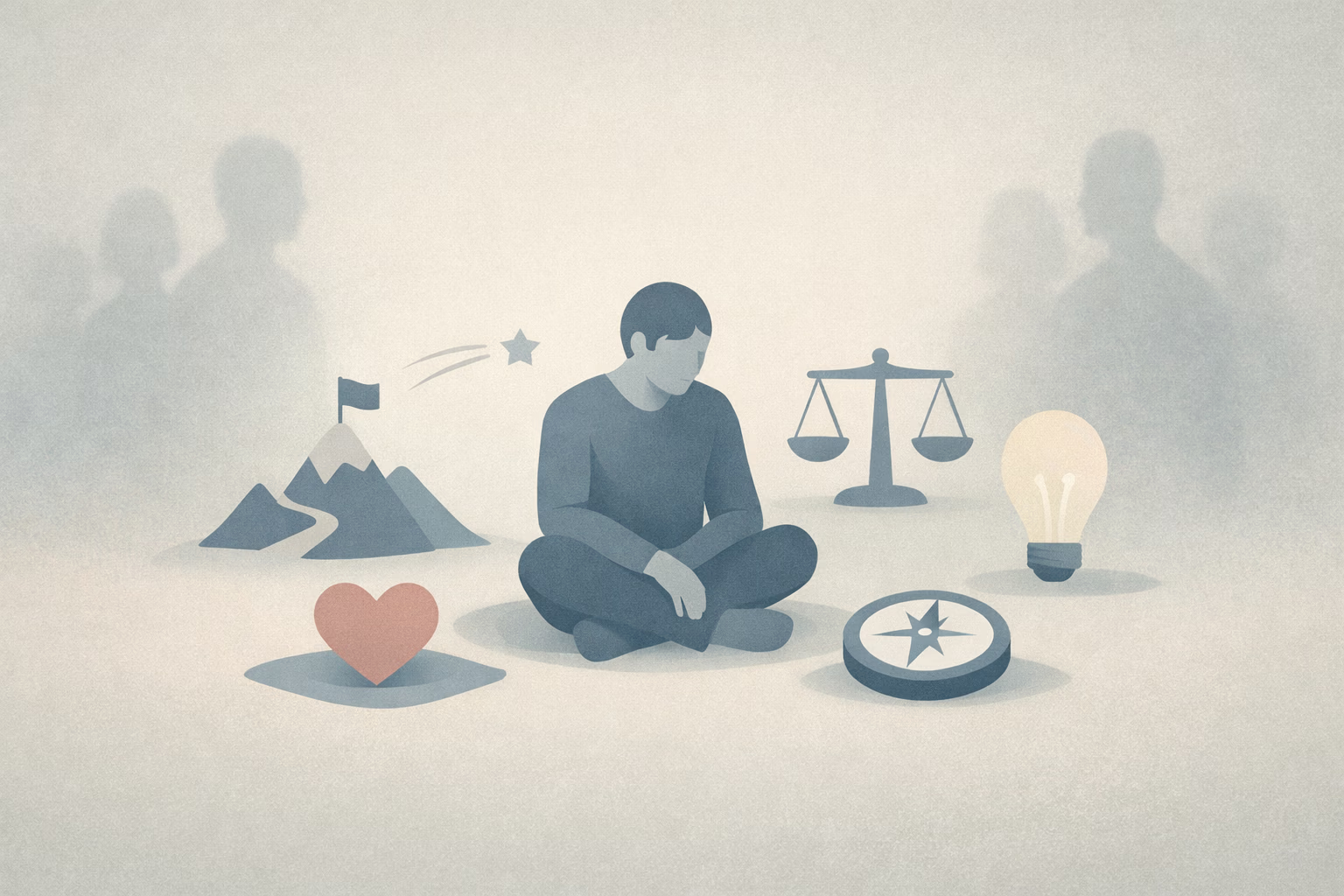
A full schedule can hide a quiet question: What is all this for? When there’s little room to register life, values can blur. Identity can narrow to roles and outputs. Meaning can flatten into “staying on top of things.”
Reclaimed space changes that—not by forcing insight, but by allowing life to complete in the body. When experiences are digested enough to feel finished, attention becomes available for what matters: relationships, craft, rest, devotion, play, service, learning, repair.
In other words, space can become a place where values are not merely stated, but lived long enough to settle into identity. This is where coherence grows: when time aligns with what you recognize as yours, not merely what keeps you moving. [Ref-13]
Overbooking is often a sign of unmet safety needs, chronic load, and too many open loops—not a sign that you’re broken or incapable of rest. In many families and cultures, constant doing is how people stay afloat, stay connected, and stay respectable. Seeing the pattern with dignity matters.
When busyness is understood as regulation, the conversation changes. It becomes less about “why can’t I stop?” and more about “what conditions keep my system from feeling done?” That question carries agency without blame.
Meaning tends to return when life contains enough completion to allow stand-down—when your time can hold both responsibility and room to be a person, not only a performer of roles. [Ref-14]
A packed calendar can be a powerful way to get through demanding seasons. And sometimes it quietly becomes a way to avoid the destabilizing sensation of open space.
But life regains depth when time is not only filled—it is inhabited. When commitments come from coherence rather than urgency, the nervous system doesn’t have to outsource safety to constant motion.
Not more effort. Not a better mindset. Just a different relationship with “enough,” where space is allowed to exist without needing to be justified. [Ref-15]
From theory to practice — meaning forms when insight meets action.
Because for many people the calendar isn't just a list of obligations — it's a stabilizer. When external demands drop, internal signals get louder: unfinished conversations, unresolved decisions, body fatigue, the simple uncertainty of what now. The Threat & Safety System reads that gap as exposure rather than rest. The drive to fill it isn't laziness about resting; it's a nervous system reaching for steady input because stillness feels structurally unsafe. Overbooking can look like ambition from the outside while operating like regulation from the inside. The question stops being why can't I rest and becomes what is rest revealing.
Often yes — but not in the cowardly sense. The article frames overbooking as an Avoidance Loop where motion temporarily substitutes for regulation. The system learns: movement reduces discomfort quickly; stopping increases internal noise. The short-term payoff (relief, identity stability, clean purpose) wins over the long-term cost (exhaustion, disconnection, growing fear of empty time). Stillness starts to feel unsafe at the body level, not the belief level. The schedule becomes the regulator, and the person becomes the one being regulated by it. That's the structural reframe — not a moral failing, an intelligent if unsustainable strategy.
Because the busyness loop strengthens through real, immediate relief. Adding a commitment delivers a quick settling — direction replaces ambiguity, urgency replaces uncertainty. The nervous system gets taught that staying occupied works. Meanwhile, any attempt at open time feels abruptly uncomfortable, since the system has learned to associate gaps with unfinished thoughts and unprocessed experiences. So you book more, relief arrives again, and sensitivity to the absence of structure escalates. This is the Power Loop dressed as productivity: vigilance and motion stand in for control. Importance alone doesn't create closure, which is why a calendar full of important things still leaves the system depleted.
Subtle, not dramatic. Time stops feeling like a threat — not because life is perfect, but because the system isn't constantly bracing. Spaciousness doesn't necessarily mean more free time; it shows up as the ability to transition cleanly, to finish one thing before starting the next, to notice signals earlier, to make commitments without the sensation of being chased. Calm becomes a baseline capability rather than a mood — the nervous system can return to neutral after activation instead of staying stuck in mobilization. Space is the evidence that your system expects things to be okay without constant output. Meaning Density returns when time is inhabited, not just filled.
From Science to Art.
Understanding explains what is happening. Art allows you to feel it—without fixing, judging, or naming. Pause here. Let the images work quietly. Sometimes meaning settles before words do.
One Quiet Window, one insight, one reflection — every Sunday