The Psychology of Comfort Zones: Why Leaving Feels Impossible
In short: It’s a strangely common experience: you can want change sincerely, even urgently—and still find yourself delaying, detouring, or “forgetting” the very steps that would move you forward. Not because you don’t care.
It’s a strangely common experience: you can want change sincerely, even urgently—and still find yourself delaying, detouring, or “forgetting” the very steps that would move you forward. Not because you don’t care. Not because you lack character. But because growth is not just an idea; it’s a shift in what your system has learned to recognize as stable.
What if the part of you that resists growth is trying to keep your life coherent?
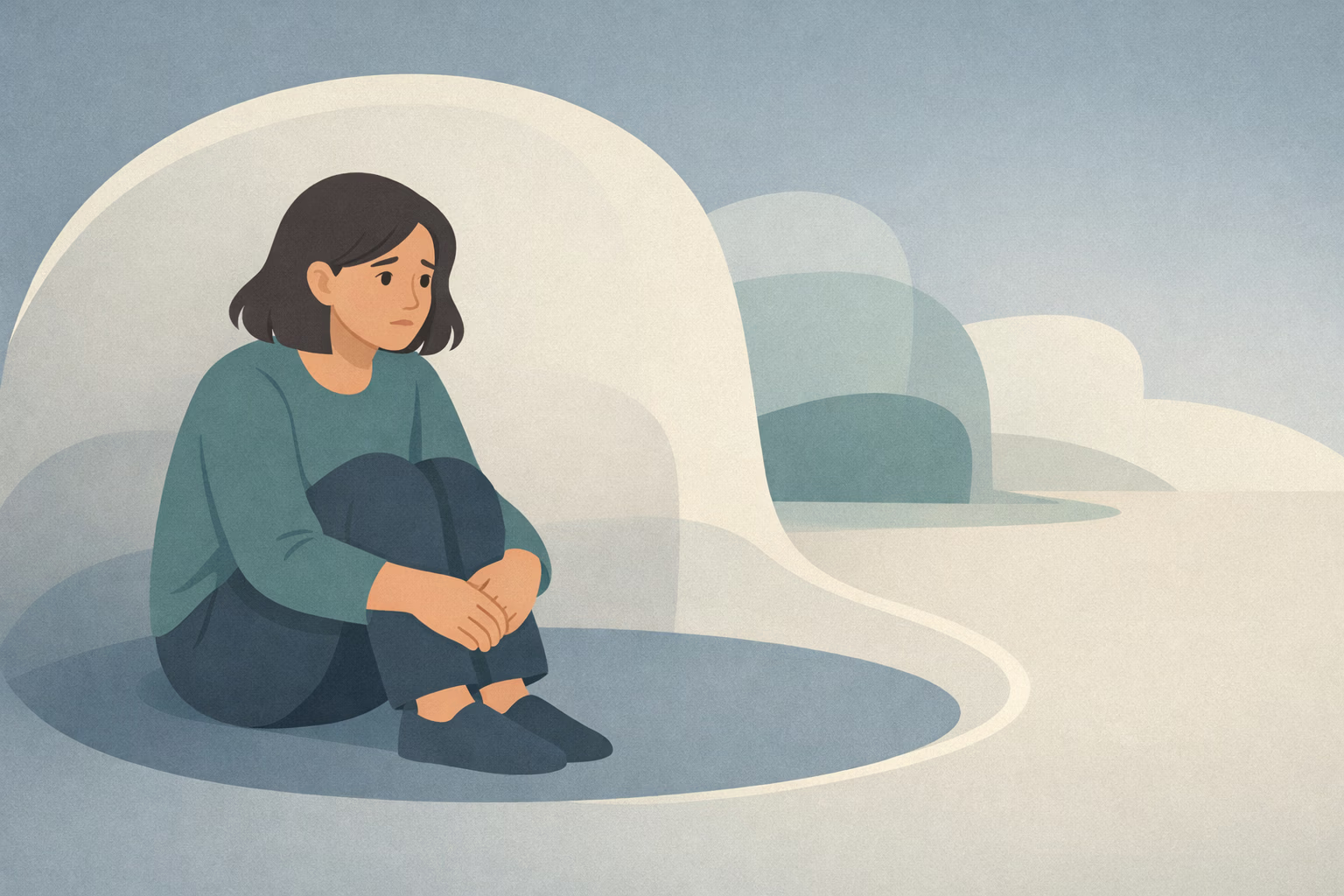
In a high-pressure world, the nervous system often prioritizes predictability over possibility. When change threatens identity continuity, social belonging, or the ability to anticipate outcomes, avoidance can function like an internal safety protocol. Understanding that structure—without turning it into a personal flaw—can restore dignity and orientation.
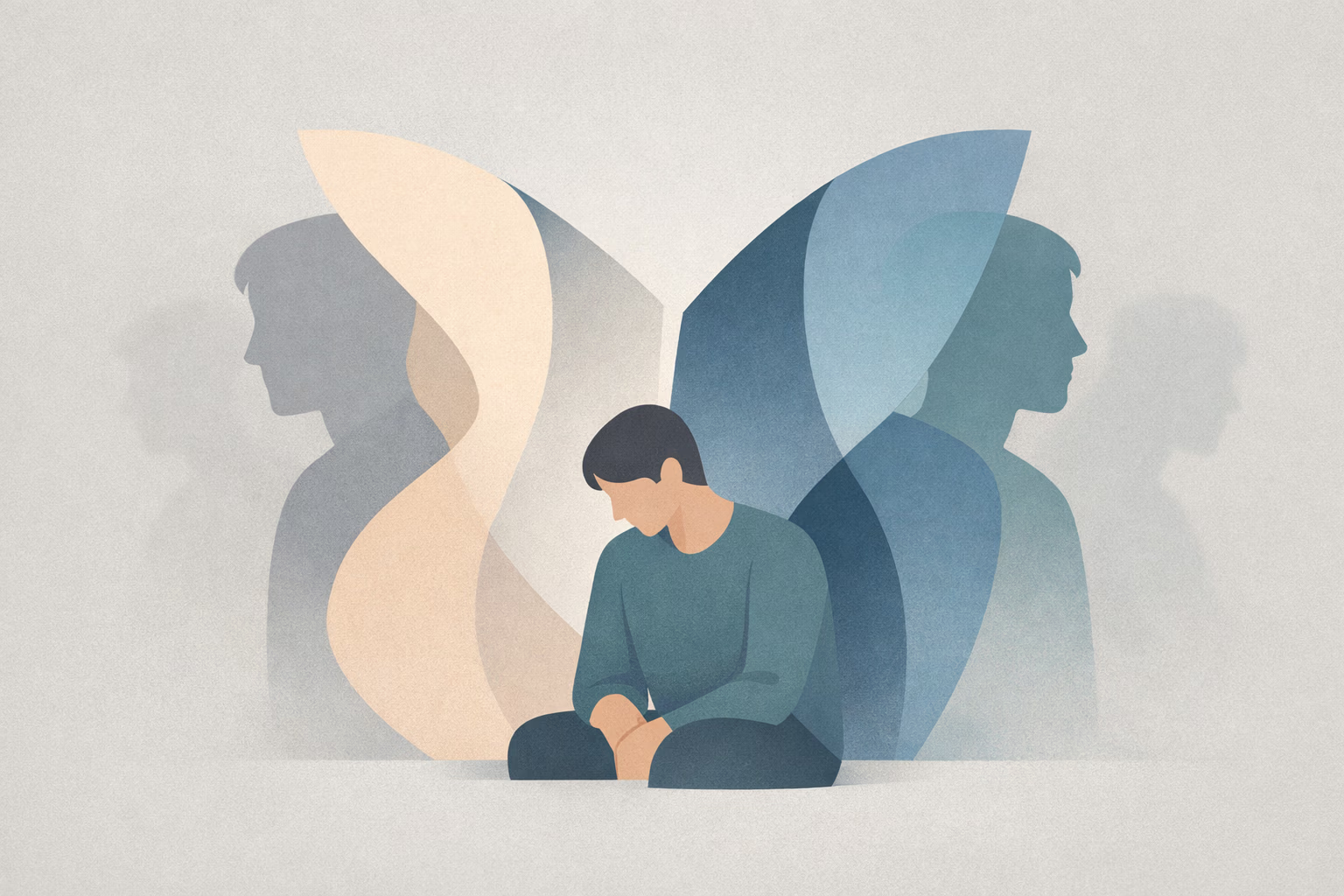
Growth avoidance often shows up as a divided experience: one part of you is pulled toward a new job, a healthier relationship with money, a creative project, or a different way of living—while another part repeatedly disrupts momentum. This can create confusion because the desire is genuine, and the resistance feels automatic.
When people label this as “self-sabotage,” shame tends to rush in. But many of these patterns make more sense as regulation under strain: your system is managing competing signals—change as promise, change as destabilization. In that context, backing away can be a way to reduce internal noise and preserve a workable baseline. [Ref-1]
Sometimes the problem isn’t a lack of motivation. It’s that the next step doesn’t yet feel like a place you can safely stand.
Humans don’t evaluate change only with logic. The brain and body also scan for uncertainty: unfamiliar social consequences, unpredictable workload, possible failure, possible success, and the loss of known roles. When the uncertainty load climbs, the nervous system may shift into protection—narrowing attention, prioritizing short-term relief, and treating “new” as a risk category. [Ref-2]
In this state, avoidance is less about an emotion like fear and more about a survival-style calculation: reduce exposure, reduce variability, regain predictability. Even if the conscious mind wants change, the body may be operating under a different mandate—stabilize first.
For most of human history, stability wasn’t a luxury—it was a protective advantage. Known routines, familiar skills, and clear social roles reduced the chance of costly mistakes. Change often meant uncertainty about food, shelter, belonging, and status—things survival depended on.
So it’s not surprising that modern growth can register as a threat even when it’s objectively beneficial. The same systems that once helped people stay alive can still bias us toward the familiar, especially when resources are tight or stress is high. Resistance, in this light, is not irrational—it’s an old preference for what can be predicted. [Ref-3]
Identity is not just a story you tell; it’s a stability signal. “This is who I am” organizes choices, relationships, and expectations. When growth requires a new identity—someone who speaks up, earns more, takes up space, sets boundaries, or risks being seen—it can threaten that continuity.
Even positive change can disrupt the internal economy: if your identity has been built around being low-maintenance, responsible, agreeable, or independent, growth may introduce contradictions your system can’t yet resolve. In that moment, staying the same reduces friction. Familiar identity can function like a handrail. [Ref-4]
What if the resistance is protecting an identity that has kept you safe so far?
On the surface, avoiding growth can feel like choosing calm. But over time, the cost often shows up as a quiet mismatch: you can maintain external predictability while internally carrying regret, stagnation, or a persistent sense that your life is not matching your values.
This is a particular kind of strain because it creates two competing realities: the stability of the familiar and the dissonance of the unfinished. The system is spared the uncertainty of change, but it doesn’t receive the closure that comes from completion. In that way, “no change” can become its own form of chronic activation—subtle, ongoing, and hard to name. [Ref-5]
Many people imagine avoidance is caused by a lack of desire. More often, it’s shaped by relief. When a growth step increases uncertainty load—an application, a difficult conversation, a first draft, a new routine—your system may generate tension, agitation, or mental noise. If you back away, that tension drops.
That drop matters. The nervous system learns quickly: “Not doing it makes the pressure go down.” Over time, the loop strengthens even if the long-term costs are high. This is why someone can want change and still repeatedly “end up” in the same place: the immediate reduction in load is experienced as safety. [Ref-6]
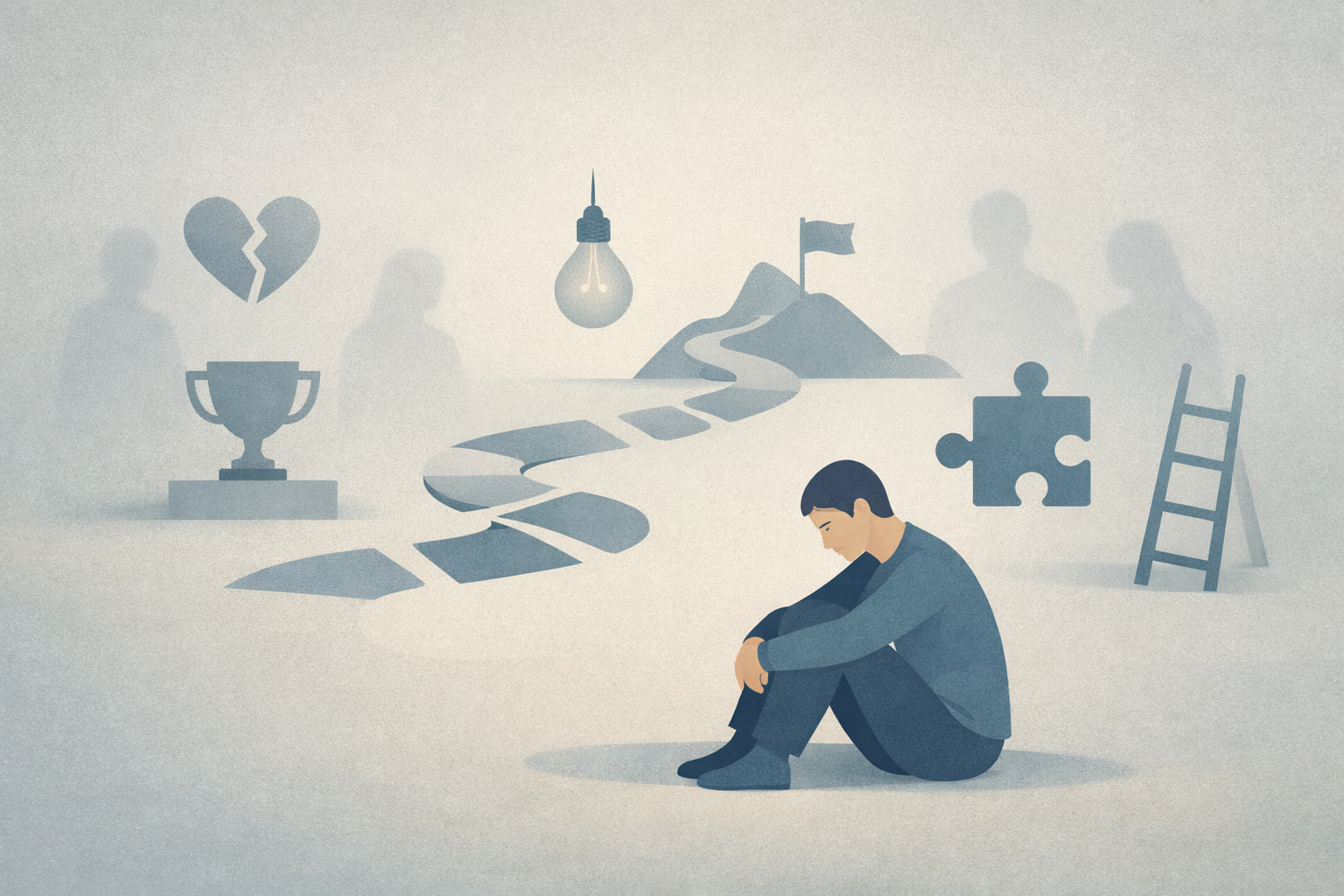
Avoidance doesn’t always look like doing nothing. Often it’s busyness without completion—movement that preserves the familiar without crossing the threshold that would change identity. People can appear highly capable while still circling the same decisions for months or years.
Common patterns include:
These aren’t moral failures. They’re coherence strategies—ways the system keeps life predictable when the next step would reorganize status, relationships, or self-definition. [Ref-7]
When avoidance repeats, something subtle often happens: the person stops trusting their own signals. Not because they’re “undisciplined,” but because their inner commitments don’t reliably become lived reality. The mind can generate vision while the body protects the familiar, and the gap between the two becomes exhausting.
Over time, this can reduce vitality—less aliveness, less initiative, less confidence in one’s capacity to follow through. The issue is not a missing trait; it’s a system that hasn’t been able to complete enough loops to generate a stable “done” signal. Without completion, identity can’t settle into the new shape, and the old pattern remains the most efficient form of regulation. [Ref-8]
When growth keeps restarting, the hardest part isn’t the delay. It’s the feeling of being unreliable to yourself.
Relief is persuasive. Each time a difficult step is postponed, the nervous system receives evidence that avoidance works. The immediate environment becomes quieter, the internal pressure lowers, and the body returns toward baseline. That short-term settling can be so compelling that future growth edges begin to feel even more intense—because the system expects a spike in load. [Ref-9]
This is how avoidance can escalate without anyone “choosing” it. The more consistently relief follows withdrawal, the more the system treats withdrawal as the correct solution. Over time, even small growth steps can carry the felt weight of something dangerous—not because they are, but because the system has learned to associate them with destabilization.
Growth is often described as a mindset problem. But many people don’t need more positive thinking; they need an internal environment where change does not automatically equal overload. When safety cues increase—predictability, supportive context, adequate recovery, reduced evaluation pressure—the system can stay online long enough for new behavior to complete.
And completion is the point where change becomes real. Not as insight, not as intention, not as a new narrative—but as a settled physiological pattern that no longer requires constant effort to maintain. When a new action reaches completion repeatedly, it starts to belong to identity. In that state, growth isn’t a threat to self; it becomes part of what the self is. [Ref-10]
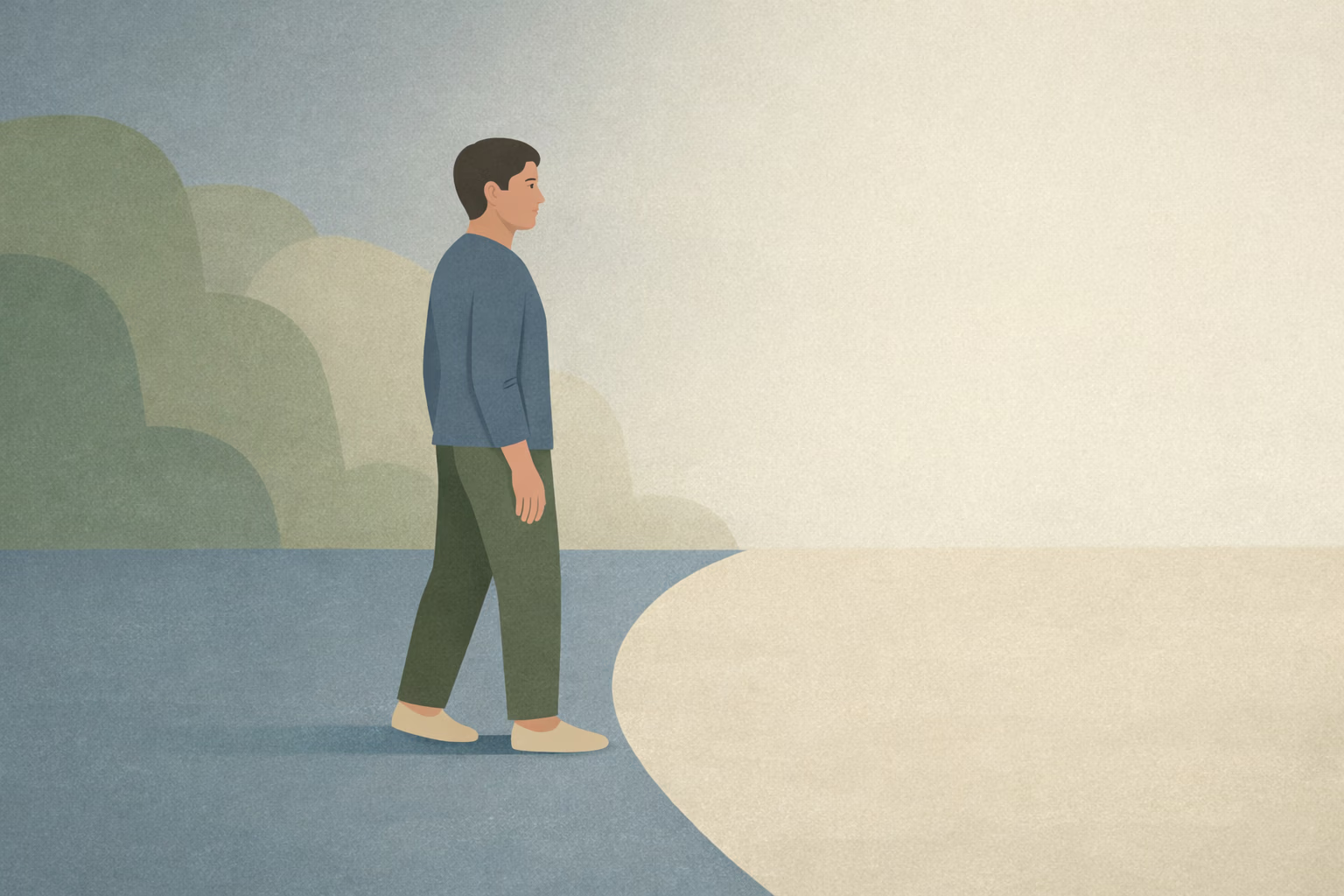
What changes when the next step feels like a stable surface instead of a cliff edge?
Humans regulate in connection. Supportive relationships can reduce uncertainty load in a very practical way: they provide clearer expectations, reduced isolation, and a sense that identity shifts won’t cost belonging. When change is witnessed and normalized, it becomes less of a solitary risk.
This is not about being “fixed by others.” It’s about the way social environments influence threat and safety signals. If your growth implies a new role—more visible, more boundaried, more ambitious—having relational contexts that can hold that shift reduces the need for protective retreat. [Ref-11]
When load decreases and closure increases, people often describe a different internal texture: less frantic scanning, less need to escape, and more room for curiosity. Uncertainty may still be present, but it’s less likely to trigger immediate withdrawal.
In practical terms, this can look like a greater ability to stay with an uncomfortable step long enough for it to resolve—so the nervous system can register completion rather than constant start-over. The result isn’t constant confidence; it’s more capacity for signal return. When the system isn’t maxed out, it can take in feedback, adjust, and continue without treating every wobble as a reason to retreat. [Ref-12]
Not every hard moment needs an exit. Sometimes it just needs enough capacity to pass through.
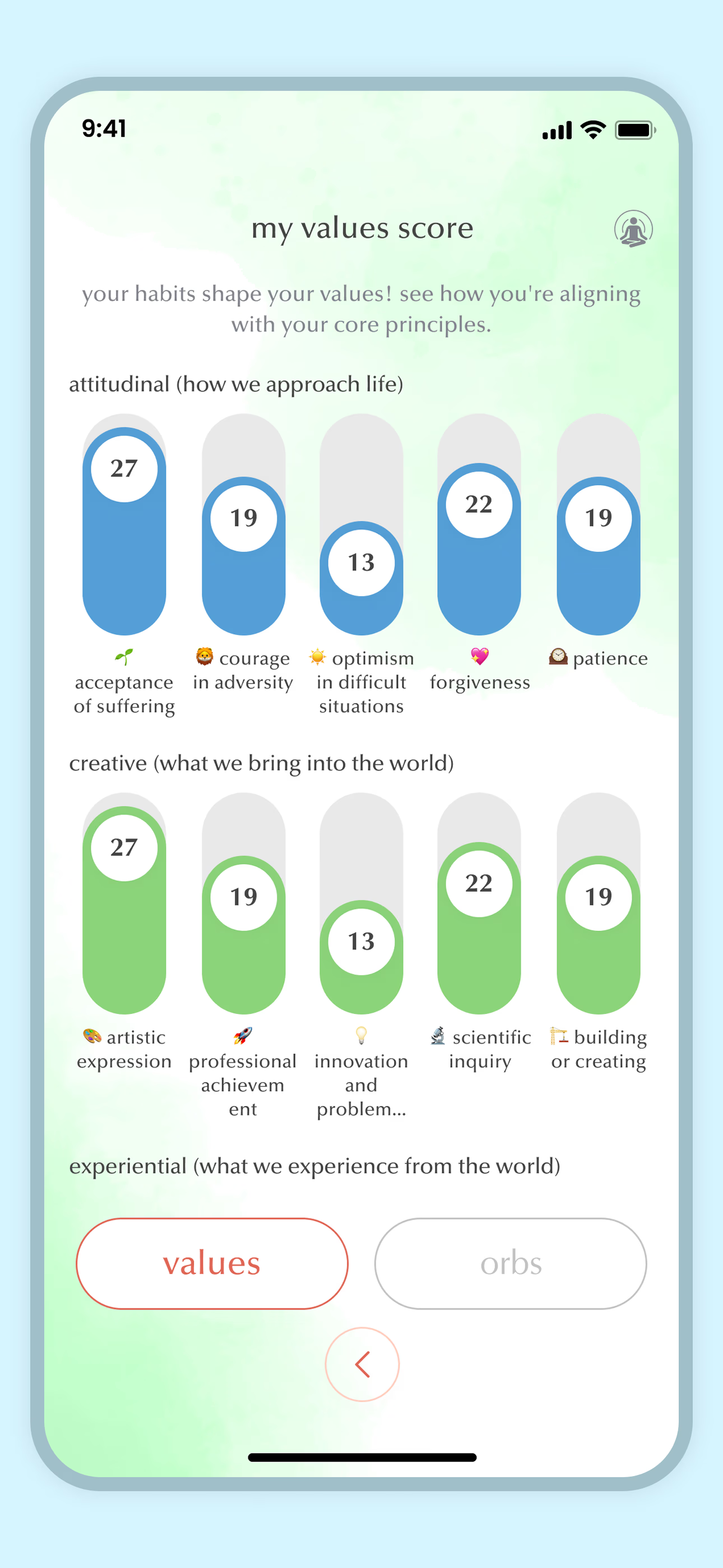
Under threat, behavior organizes around loss prevention: keep what you have, avoid exposure, reduce uncertainty. When safety stabilizes, a different organizer becomes available—values. Values don’t eliminate discomfort, but they can provide a coherent reason to stay engaged long enough for a new identity to form.
This is where growth stops being a performance and becomes a direction: a way of living that matches what matters, even when outcomes can’t be guaranteed. Over time, values-aligned completion creates a durable sense of agency—not forced, not hyped, but lived. The system learns, “I can move forward and remain myself—maybe even more myself.” [Ref-13]
If you avoid growth while wanting change, it may help to see the pattern as protection rather than defect. The approach–avoidance tug-of-war is a sign of competing needs: the need to evolve and the need to remain coherent, safe, and socially intact. [Ref-14]
When that conflict is named without shame, something important shifts: you’re no longer fighting yourself as an enemy. You’re recognizing a system that has been doing its best to manage uncertainty with the tools it has. From there, growth can become less about forcing a new life and more about allowing a new life to become real through completion and stability.
The brain is built to detect conflict and to resolve it in the direction of safety. That doesn’t make you broken; it makes you human. [Ref-15]
When safety cues strengthen and experiences can actually complete, growth stops feeling like a threat to your identity. It becomes a form of continuity—an honest extension of who you are, shaped by meaning rather than by emergency.
From theory to practice — meaning forms when insight meets action.
Because growth isn't just an idea; it's a shift in what your system has learned to recognize as stable. The nervous system often prioritizes predictability over possibility. When change threatens identity continuity, social belonging, or the ability to anticipate outcomes, avoidance functions like an internal safety protocol. The I want this/I can't conflict isn't self-sabotage — it's competing needs: the need to evolve and the need to remain coherent and socially intact. Sometimes the problem isn't a lack of motivation. It's that the next step doesn't yet feel like a place you can safely stand. Resistance is an old preference for what can be predicted.
Because relief is the reinforcer, not desire. When a growth step increases uncertainty load — an application, a difficult conversation, a first draft — the system generates tension and mental noise. If you back away, the tension drops. The nervous system learns quickly: not doing it makes the pressure go down. That drop matters. The Avoidance Loop strengthens even when long-term costs are high, because immediate reduction in load is experienced as safety. This is how someone can want change and still repeatedly end up in the same place. The system repeats what restores predictability fastest, regardless of how aligned that path is with your values.
Through repeated incomplete loops. When avoidance repeats, you stop trusting your own signals — not because you're undisciplined, but because inner commitments don't reliably become lived reality. The mind generates vision while the body protects the familiar, and the gap between them becomes exhausting. Over time, vitality drops. The issue isn't a missing trait; it's a system that hasn't been able to complete enough loops to generate a stable Done Signal. Without completion, identity can't settle into the new shape, so the old pattern remains the most efficient form of regulation. When growth keeps restarting, the hardest part isn't the delay. It's feeling unreliable to yourself.
An internal environment where change does not automatically equal overload. When safety cues increase — predictability, supportive context, adequate recovery, reduced evaluation pressure — the system can stay online long enough for new behavior to complete. Completion is the point where change becomes real. Not as insight or intention, but as a settled physiological pattern that no longer requires constant effort to maintain. When a new action reaches completion repeatedly, it starts to belong to identity. Co-regulation matters: supportive relationships reduce uncertainty load and provide a sense that identity shifts won't cost belonging. Growth stops being a threat to self and becomes part of what the self is.
From Science to Art.
Understanding explains what is happening. Art allows you to feel it—without fixing, judging, or naming. Pause here. Let the images work quietly. Sometimes meaning settles before words do.
One Quiet Window, one insight, one reflection — every Sunday