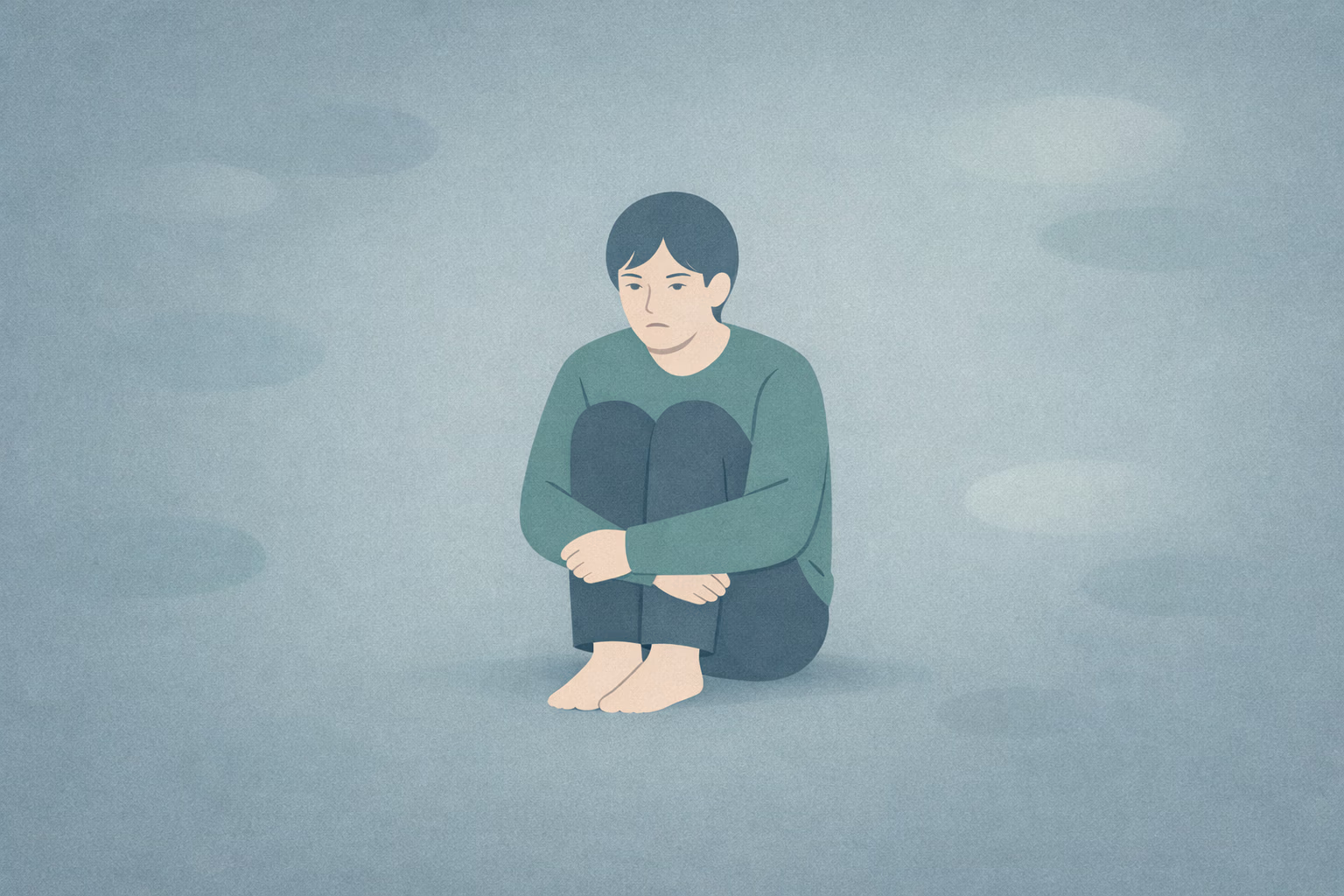
Shutdown Mode & Freeze Response
Learn why shutdown happens and how to gently recover.
In context: This is “Conditional Rest.“ Under Threat Saturation, your rest is “rented,“ not owned. Your Safety system only allows a pause as long as you promise to be ready the second something goes wrong. In the Meaning Density Model™, this “Temporary Safety“ is high-friction and exhausting.

Even rest feels conditional.
The body lies down, but stays alert.
Sleep becomes light.
This does not mean rest is unsafe.
It means safety has not been fully internalized yet.
Naming conditional safety reduces frustration.
You are not bad at resting.
Your system is still evaluating its surroundings.
Name conditional safety gently with DojoWell.
Explore DojowellArticles exploring the psychology behind these patterns.
This is "Conditional Rest." Under Threat Saturation, your rest is "rented," not owned. Your Safety system only allows a pause as long as you promise to be ready the second something goes wrong. In the Meaning Density Model™, this "Temporary Safety" is high-friction and exhausting. Naming the safety as temporary—"I am safe for the next 20 minutes"—makes the condition explicit, which actually reduces the background scanning.
Yes, if you "Own the Condition." Instead of fighting the feeling of being "on call," accept it as your current architecture. "I will rest for 20 minutes, and my system will stay on low-level alert." This "Technical Honesty" removes the Identity Conflict. By not demanding "Perfect Peace," you allow the 20 minutes to provide a "Structural Refresh" that is much better than no rest at all.
One Quiet Window, one insight, one reflection — every Sunday