
Connection Without Closeness: Why Modern Relationships Feel Surface-Level
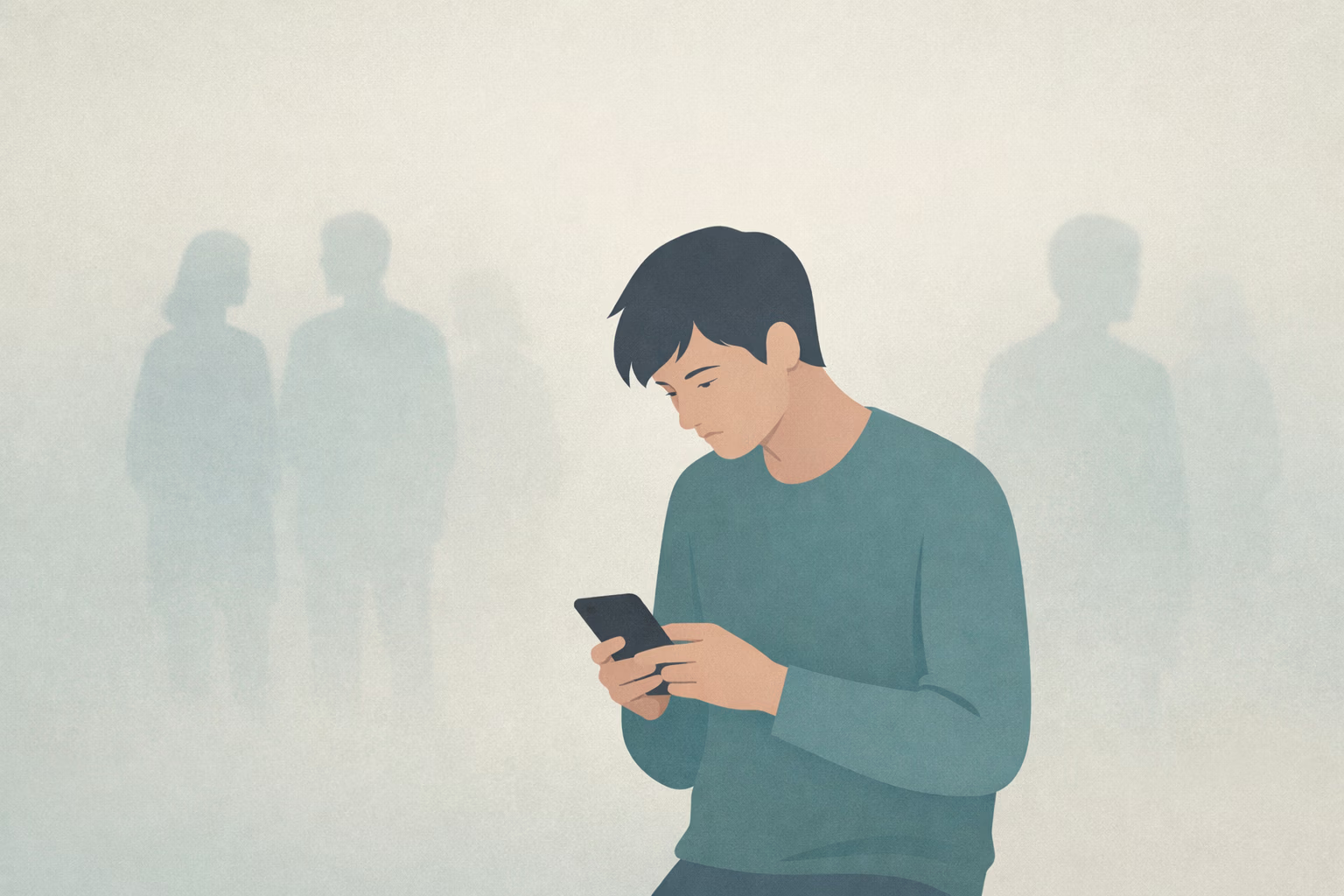
In short: Sometimes the hardest part isn’t a lack of desire for closeness. It’s that real intimacy starts to feel slow, effortful, or strangely flat—while digital intimacy (sexual content, flirting, constant messaging, curated novelty) still “works” instantly.
Sometimes the hardest part isn’t a lack of desire for closeness. It’s that real intimacy starts to feel slow, effortful, or strangely flat—while digital intimacy (sexual content, flirting, constant messaging, curated novelty) still “works” instantly.
What if this isn’t a personal failing—but a predictable shift in how your reward and attachment systems respond under chronic high-intensity input?
“Digital intimacy collapse” describes a pattern where the nervous system learns to lean on fast, reliable stimulation for relief and arousal, while real connection—messier, slower, and built through mutual responsiveness—stops giving the same signal of reward. This can look like distance, numbness, irritability, or a sense that something meaningful is missing even when a relationship is present.
Digital intimacy collapse often begins with a confusing gap: you may care about your partner, value connection, and even miss tenderness—yet your body doesn’t mobilize toward it. Conversations feel thin. Touch can feel neutral. Sex may feel mechanical, or desire may not show up when you expect it to. [Ref-1]
This isn’t best explained as “you don’t want your partner” or “you’re afraid of intimacy.” More often, it’s a state issue: the nervous system is running on high load (stimulation, stress, evaluation, comparison), and the signals that normally support connection—curiosity, warmth, responsiveness—aren’t returning on schedule.
It can feel like being present in the room, but not fully reachable from the inside.
Human reward systems adapt. When the brain gets frequent, high-intensity sexual novelty and instant arousal cues, it can recalibrate what counts as “enough signal” to register as rewarding. Over time, ordinary relational cues—eye contact, affectionate touch, gradual build—may land as quieter data.
This isn’t about morality or weakness. It’s basic conditioning and neuroadaptation: what gets repeated becomes easier to evoke, and what is less intense can feel muted by contrast. In dyadic contexts, this can show up as less spontaneous interest, more distraction, or needing more intensity to feel engaged. [Ref-2]
Attachment and bonding systems evolved to reward physical closeness, mutual trust, and the felt safety of being known. These systems are not purely “emotional.” They’re physiological: heart rate, breathing, micro-movements, voice tone, and timing all contribute to the sense of connection.
Supernormal stimuli—high novelty, high intensity, endless choice—can hijack the same pathways that usually reinforce pair-bonding and relational satisfaction. The result can be a mismatch: digital inputs reliably activate arousal and reward, while the slower, reciprocal process of real intimacy can feel underpowered. Research links patterns of pornography use with relationship and sexual satisfaction in nuanced ways, including non-linear effects that depend on context and intensity. [Ref-3]
In other words: the system isn’t “broken.” It’s responding to the environment it’s been trained in.
Digital sexual stimulation often delivers fast certainty: an instant shift in state, a clear payoff, and a predictable end point. That can mimic closure—your system gets a clean “done” signal without negotiation, vulnerability, or coordination.
Real intimacy is different. It requires shared pacing, repair after small ruptures, and tolerance for imperfect moments. When digital stimulation becomes a primary route to relief, real closeness can start to feel like effort with delayed reward. Studies examining pornography acceptance, attachment patterns, and relationship satisfaction suggest that context and attachment dynamics shape outcomes. [Ref-4]
Digital spaces can create a powerful sense of “being engaged”—messaging, scrolling, consuming sexual content, or pursuing novelty can feel interactive. But felt connection depends less on activity and more on responsiveness: being affected by another person and affecting them back in real time.
This is one reason someone can be highly stimulated yet still feel lonely, or sexually activated yet emotionally untouched. Meta-analytic findings on pornography consumption and satisfaction highlight that “satisfaction” is not a single thing; pleasure can increase while relational closeness decreases, depending on patterns of use and meaning in the relationship. [Ref-5]
Avoidance here doesn’t need a story about fear or suppression. Structurally, it’s what happens when a system learns that one route gives quick payoff with low friction, while another route requires sustained coordination and tolerance for uncertainty.
Digital stimulation offers immediate regulation: a fast shift in arousal, mood, or numbness. Real intimacy asks for capacity—time, attention, repair, and presence. When life is already loaded, the nervous system often defaults to the option that promises the most reliable state change with the fewest demands. That’s a loop, not a character flaw. [Ref-6]
The distance can be self-reinforcing: less relational engagement leads to fewer moments of closure with a partner, which leaves the system with fewer “done” signals, which increases the pull toward fast closure elsewhere.
Digital intimacy collapse doesn’t look the same for everyone. Many people still function socially, maintain relationships, and care deeply—while noticing subtle shifts in responsiveness and engagement.
These are regulatory patterns—often emerging when the system has learned to protect capacity by minimizing friction and maximizing immediate payoff. [Ref-7]
Bonding thrives on repeated cycles of approach, contact, and completion. Overstimulation interrupts those cycles by keeping the nervous system in frequent activation without the deeper closure that comes from mutual completion—being met, understood, and settled.
Over time, this can undermine sexual satisfaction (not because pleasure disappears, but because the relational “after-signal” doesn’t land), and it can thin emotional attunement (because attention is trained toward faster, louder cues). Chronic load also reduces tolerance for the normal inconveniences of intimacy: timing, compromise, misattunement, repair. [Ref-8]
Closeness doesn’t just require desire. It requires enough capacity for the nervous system to stay in the room.
When the brain repeatedly receives high-intensity reward, the baseline can shift. Not in a dramatic, one-time way—more like a gradual lowering of response to everyday cues. This is a common feature of “vicious cycle” dynamics: the more the system relies on one powerful regulator, the less effective other regulators feel, which increases reliance again. [Ref-9]
In relationships, this can create a painful contradiction. A person may sincerely value their partner, yet the partner’s real, human signals don’t register as strongly as they used to. This isn’t proof that the relationship is doomed. It’s often evidence of reward circuitry being trained toward intensity over reciprocity.
Many people try to solve this with pressure: more effort, more performance, more self-monitoring. But pressure tends to add load, and load reduces sensitivity. The shift that matters is not “trying harder” to feel connected—it’s allowing the system to regain its natural responsiveness when stimulation and evaluation are no longer dominating the signal environment.
This is sometimes described as recalibration: as extremes reduce, ordinary cues become detectable again. Importantly, insight alone isn’t the same as integration. Integration looks like the body treating closeness as a safe, complete experience—where the nervous system can stand down afterward rather than staying keyed up. Research on problematic pornography use and mental health often points to broader regulation and context, not just content itself. [Ref-10]
Coherence returns when experiences complete. Not when you understand them, but when your system receives the kind of “done” signal that lets intimacy settle into identity as something real and survivable.
Real intimacy is a coordination task. It’s built from small moments of being met: timing, responsiveness, repair after misreads, and shared pacing. When digital stimulation becomes a primary regulator, these skills can feel rusty—not because something is wrong with you, but because the environment hasn’t been asking for them.
In this frame, “communication” isn’t a technique; it’s a safety cue. Being able to name needs, limits, and preferences (and having them received) reduces uncertainty. Reduced uncertainty lowers load. Lower load increases the chance that relational cues will register as rewarding.
Research linking difficulties in regulation with problematic pornography use supports the idea that broader regulation capacity and stress context matter. [Ref-11]
As nervous system load decreases and relational experiences reach more consistent completion, many people notice a quiet but meaningful shift: real-life connection starts to “land” again. Not as a constant high, but as a steadier sense of contact.
In research on digital communication and relationships, patterns of attention and responsiveness are repeatedly implicated in how connected people feel over time. [Ref-12]
The deeper change isn’t just reduced digital pull. It’s a reorientation of meaning: intimacy becomes something your system expects to be nourishing, not draining. You’re not forcing closeness; you’re becoming more available for it because it completes instead of depletes.
When the reward system is no longer dominated by high-intensity, low-friction inputs, real engagement can regain its natural gravity. This can look like wanting fewer substitutes and having more appetite for shared life: conversation that goes somewhere, touch that settles, sex that feels like contact rather than consumption.
Some popular discussions describe this as “dopamine” shifting; while oversimplified online, the basic idea that reward learning can be shaped by repeated high-intensity cues is directionally consistent with how reinforcement works. [Ref-13]
If real connection has started to feel harder, it doesn’t automatically mean you’re incapable of intimacy or destined for distance. It may mean your system has been asked to live in a high-speed environment with too few natural completion points—too much stimulation, too much evaluation, too little settling.
From a meaning lens, the question isn’t “What’s wrong with me?” It’s “What experiences are incomplete, and what contexts keep my system from receiving closure?” When conditions support responsiveness—time, safety cues, mutual pacing—connection becomes less of a performance and more of a lived reality. Research on relationships and digital communication continues to explore how the medium shapes felt closeness and attention over time. [Ref-14]
Human beings are built to bond, and to feel satisfied by being met in real time. When that capacity dims, it’s often because the system has adapted to what’s been most available—not because it has lost what it needs.
As reward and attachment systems regain room to recalibrate, real closeness can become rewarding again in a steadier way—less urgent, less performative, more coherent. Not through force, but through the quiet physiology of completion: contact that happens, lands, and finally feels done. [Ref-15]
From theory to practice — meaning forms when insight meets action.
Because digital sexual stimulation delivers fast certainty: an instant shift in state, a clear payoff, a predictable end point. That can mimic closure — the system gets a clean Done Signal without negotiation, vulnerability, or coordination. Real intimacy is different. It requires shared pacing, repair after small ruptures, and tolerance for imperfect moments. When digital stimulation becomes a primary route to relief, the Reward & Stimulation System recalibrates around intensity and low friction. Real closeness then starts feeling like effort with delayed reward — not because you don't care about your partner, but because the contrast has trained your responsiveness toward what's faster and louder.
Because connection is a state, not a trait, and the state may be loaded. Curiosity, warmth, and responsiveness are signals that come back online when capacity is available. Under chronic high-intensity input — stimulation, evaluation, comparison — the everyday cues that normally support closeness register as quieter data. You can be present in the room without being reachable from the inside. This isn't proof that desire is gone. It's evidence the Attachment & Belonging System needs lower load and more completion before tenderness, attunement, and spontaneous interest can land again.
Not in the fear sense. Structurally, it's what happens when one route gives quick payoff with low friction while another requires sustained coordination and tolerance for uncertainty. Digital stimulation offers immediate regulation. Real intimacy asks for capacity — time, attention, repair, presence. When life is already loaded, the system defaults to the option that promises the most reliable state change with the fewest demands. That's an Avoidance Loop, not a character flaw. Less relational engagement leaves fewer Done Signals with a partner, which increases the pull toward fast closure elsewhere — and the distance becomes self-reinforcing.
Yes, but through recalibration and completion rather than willpower. Pressure tends to add load, and load reduces sensitivity. As reward and attachment systems regain room — when stimulation and evaluation are no longer dominating the signal environment — ordinary cues become detectable again. People often describe more spontaneous warmth, less need for novelty to stay engaged, and sex that feels mutual rather than mechanical. The deeper change isn't reduced digital pull; it's a reorientation of meaning. Intimacy stops feeling like a performance with delayed payoff and starts being something the system expects to be nourishing, not draining.
From Science to Art.
Understanding explains what is happening. Art allows you to feel it—without fixing, judging, or naming. Pause here. Let the images work quietly. Sometimes meaning settles before words do.
One Quiet Window, one insight, one reflection — every Sunday