The Hedonic Treadmill: Why Satisfaction Never Lasts

In short: There’s a particular kind of buzz that arrives with a new purchase, a better version, a smarter tool, a cleaner aesthetic. For a moment, things feel organized and pointed in the right direction—like life just got a little more workable.
There’s a particular kind of buzz that arrives with a new purchase, a better version, a smarter tool, a cleaner aesthetic. For a moment, things feel organized and pointed in the right direction—like life just got a little more workable.
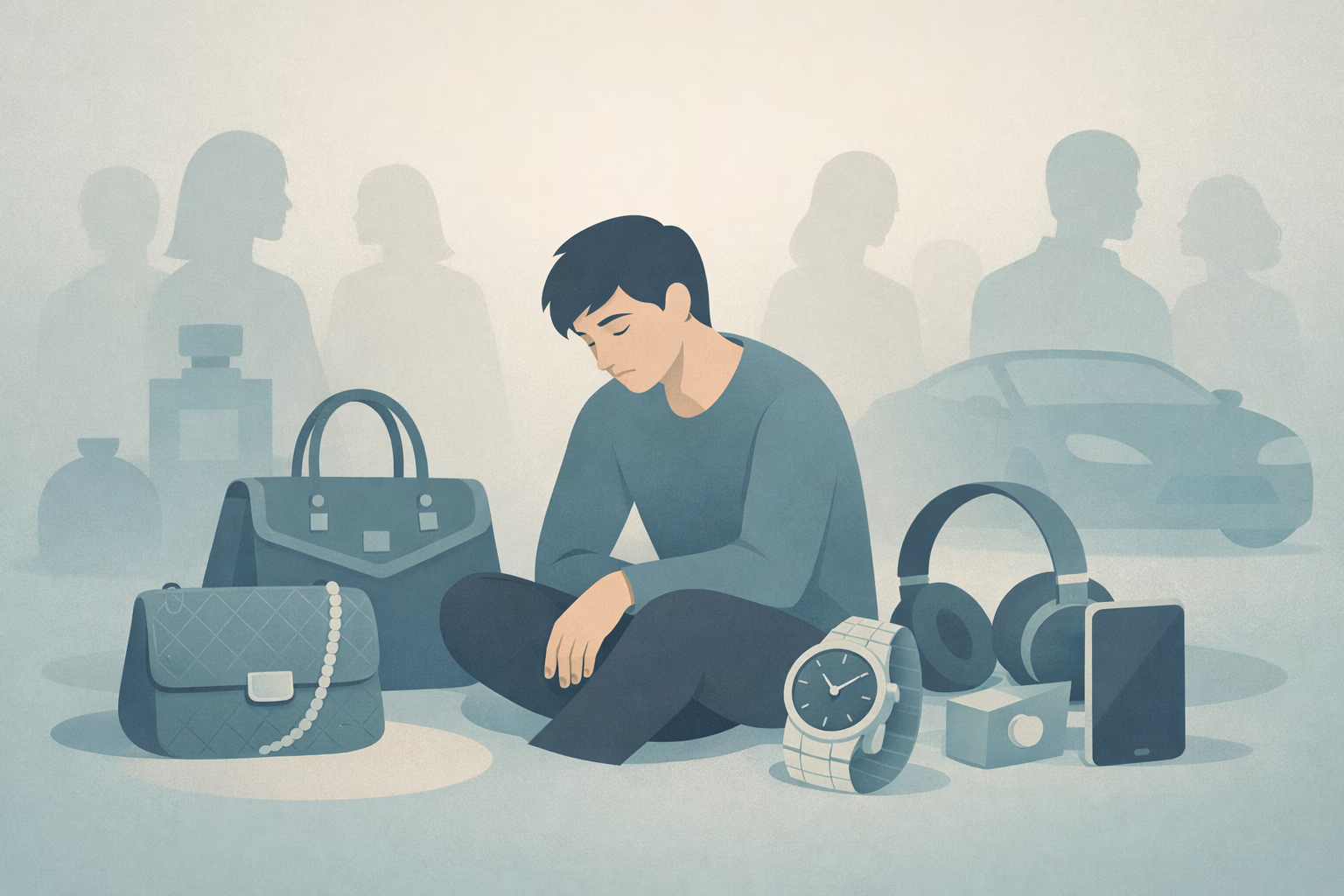
Then, often faster than expected, the shine thins. Restlessness returns. What you have starts to look slightly behind, slightly inadequate, slightly not-the-thing. Not because you’re shallow or broken, but because modern environments are built to keep your reward system oriented toward “next.”
What if the urge to upgrade isn’t a character flaw—but a predictable loop created by how the brain learns, predicts, and searches for closure?
The newer-better-next loop usually has a recognizable rhythm: excitement while researching, a spike of satisfaction at purchase or arrival, and a short-lived sense that something has been resolved. Soon after, comparison creeps in—another model, a better feature set, a person online who seems to have “done it right.”
This can feel confusing because the upgrade was real. The item works. The improvement is measurable. Yet the internal signal doesn’t stay “done.” The system remains slightly activated, as if it’s still scanning for a more complete answer. That isn’t immaturity—it’s how reward-learning tends to behave when the environment continually offers new options and new reference points. [Ref-1]
It’s not that the new thing wasn’t good. It’s that the feeling of completion didn’t land.
Your brain doesn’t only respond to rewards; it responds strongly to changes in expectation—especially when something is new, uncertain, or “better than predicted.” This is sometimes described through dopamine-based learning signals that amplify anticipation and decision energy, making the idea of the upgrade feel disproportionately promising before you even have it. [Ref-2]
Once the new becomes familiar, the prediction settles. The same object provides less informational “news,” so it generates less of that anticipatory lift. The drop can register as boredom, irritability, or a subtle sense that you chose wrong—even when you didn’t. This is one way novelty can keep desire active without delivering lasting completion.
Long before upgrades meant phones or cars, novelty meant information: a new water source, a new shelter option, a new alliance, a new route. In changing environments, systems that noticed opportunities quickly and explored efficiently had an advantage.
Research on dopamine and exploration suggests novelty can function like a signal that energizes learning and uncertainty-driven discovery. [Ref-3] In other words, “new” is not just entertainment; it can be interpreted by the nervous system as potentially valuable data.
So when modern culture offers an endless stream of newness, it isn’t surprising that many people feel pulled toward it. The system is doing what it evolved to do—only now it’s surrounded by synthetic abundance.
Upgrades often deliver three quick experiences: a burst of pleasure, a pocket of optimism (“this will make life easier”), and a kind of relief from dullness or dissatisfaction. Even without an explicit reward, novelty itself can energize behavior—nudging the body toward action, attention, and pursuit. [Ref-4]
That state shift can be genuinely soothing under load. If your days are dense with demands or fragmented by constant context-switching, novelty can temporarily gather attention into one channel. It creates a narrow tunnel of “this is what matters now,” which can feel like relief.
But state changes are not the same as closure. Relief can quiet discomfort; integration is what lets the system stand down because something is actually completed.
The loop is fueled by a believable story: the next version will be the one that settles everything. The better mattress will fix sleep. The upgraded laptop will fix focus. The perfect skincare routine will fix confidence. The right wardrobe will fix identity.
Yet the environment keeps moving the finish line. More options, more comparison, more micro-differences to evaluate. Neurocomputational accounts of reward and novelty suggest that novelty and reward signals can interact in ways that amplify pursuit while making satisfaction decay quickly. [Ref-5]
When the nervous system learns that “new” brings a surge of promise but not lasting completion, the result is often not contentment—it’s increased scanning. The question subtly shifts from “Do I have enough?” to “What am I missing?”
In this loop, the most reinforced moment isn’t ownership—it’s the runway: browsing, researching, imagining, comparing, anticipating. The desire state stays active because it’s continuously fed by prediction, not resolved by completion.
Some theories describe dopamine less as “pleasure itself” and more as a teaching and prediction signal—helping the brain adjust expectations and pursue what seems valuable. [Ref-6] In a high-novelty environment, that can mean the nervous system is repeatedly trained to stay oriented toward the next possibility.
Over time, it can start to feel normal to be slightly unsatisfied. Not dramatically unhappy—just perpetually “one upgrade away.”
The newer-better-next pattern can look very practical on the surface. It can even look like good taste, high standards, or responsible planning. But the internal signature is usually the same: a stable pull toward upgrading and an unstable ability to rest with what’s already here.
Relative value learning—where value is experienced in comparison to other available options—can intensify this dynamic when the comparison set is endless. [Ref-7]
Perpetual upgrading does more than cost money. It changes the nervous system’s relationship with enough. If satisfaction repeatedly evaporates, the body learns that completion is unreliable—so it keeps searching.
That search has real consequences: financial strain, decision fatigue, and a subtle form of chronic dissatisfaction where nothing feels like it lands. Research links novelty seeking with risk preference and specific brain activity patterns, highlighting that “chasing new” isn’t purely a moral choice—it’s also a temperament-and-context interaction. [Ref-8]
Even when finances are stable, the capacity to experience sufficiency can thin. Life begins to feel like a showroom rather than a home.
Every time novelty provides a quick lift, it reinforces the path: discomfort → search → anticipation → purchase → brief relief → discomfort again. The brain becomes tuned to the ramp-up, because that’s where the strongest “something is happening” signal lives.
In everyday language, this is close to the “hedonic treadmill” idea: gains are real, but the baseline adapts, and wanting reappears. [Ref-9] The result isn’t constant misery—it’s a persistent tilt toward the future, where satisfaction is always scheduled rather than inhabited.
Importantly, this isn’t about lacking gratitude. It’s about repeated incomplete loops. If the system rarely gets a true “done” signal, it keeps producing “go” signals.
One of the most disorienting parts of the newer-better-next loop is how urgent it can feel. The upgrade starts to register as not just desirable, but necessary—like you can’t settle until it’s resolved. That urgency is often a nervous system state, not a factual assessment of your current life.
When internal steadiness returns—when load reduces and experiences actually complete—wanting often becomes less sticky. The mind can still prefer improvements, but it no longer needs them to feel coherent. In that state, satisfaction is more likely to settle into the body as a “safe enough, good enough, finished enough” signal. [Ref-10]
What if the real shift isn’t forcing less desire—but restoring the conditions where completion can register?
Upgrade pressure is rarely just personal; it’s social. Many “needs” are shaped by visible comparison—what peers buy, what influencers normalize, what your workplace signals as competent or current. In those conditions, wanting can function like belonging-maintenance.
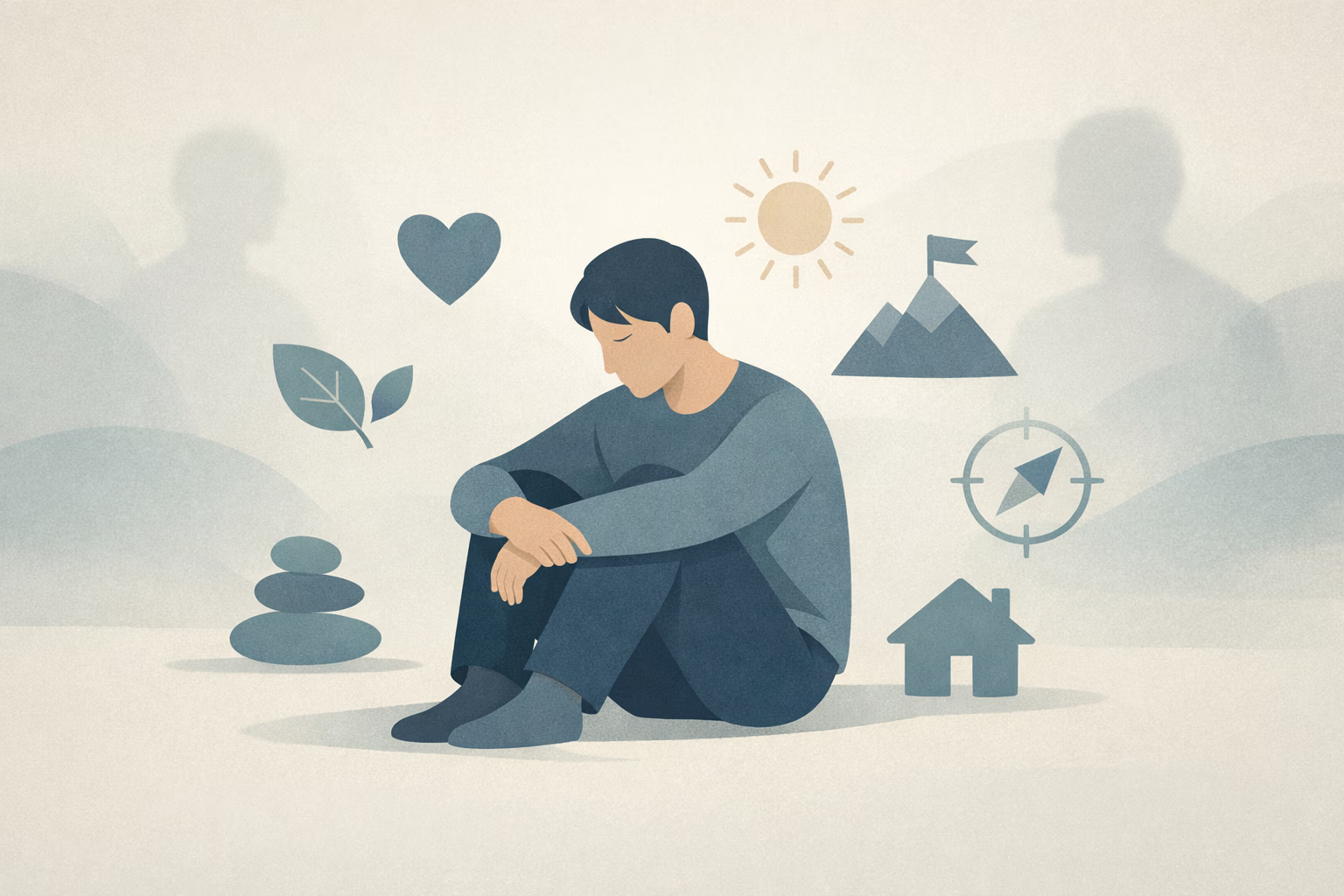
Shared values can counterbalance this—not through moralizing, but by providing a different reference point than competition. When people are grounded in commitments like care, stewardship, creativity, faith, simplicity, generosity, or long-term security, the nervous system gets clearer orientation cues about what matters. [Ref-11]
Relational grounding can also soften the loop. When connection feels stable, the body has less reason to outsource security to objects, brands, or status markers.
When the upgrade loop loosens, the change isn’t usually dramatic. It’s quieter: fewer internal negotiations, less background comparison, more ease with repetition. The same object can be “enough” for longer because the system isn’t constantly pushed into the next evaluation cycle.
People often describe a return of patience and appreciation—not as a performance, but as a capacity that reappears when the nervous system isn’t over-stimulated and under-finished. Instead of scanning for improvements, attention can rest on use: the life an object supports, the routines it fits into, the care it receives. [Ref-12]
Contentment isn’t excitement. It’s the feeling that nothing is urgently unresolved.
Desire doesn’t disappear; it changes shape. In a more coherent system, “new” is no longer the primary route to aliveness. Purchases become less like identity patches and more like tools within a lived story.
This is where ownership can become meaningful: items are chosen for fit, durability, and actual use; experiences with them accumulate; the nervous system gets repetition that can finally register as complete. Research on hedonic spending suggests that variety can influence happiness in nuanced ways—often depending on context and how quickly experiences lose impact. [Ref-13]
When the loop resolves, “better” isn’t a chase. It’s an occasional choice that doesn’t fracture your sense of enough.
The impulse to upgrade can be understood as a drive for vitality: a wish for freshness, possibility, and forward movement. In a fragmented world, it makes sense that the nervous system looks for fast, accessible signals of “life is improving.” [Ref-14]
But vitality isn’t only found in replacement. It can also emerge through depth—through care, repair, learning, maintenance, and the slow satisfaction of something that’s been fully lived with. When experiences are allowed to complete, meaning gets denser. The system stops searching because it finally receives the message it’s been chasing: this counts, this holds, this is real.
Agency often returns not as intense motivation, but as orientation—knowing what you’re building, and letting “enough” become a legitimate place to stand.
You don’t need to shame yourself for wanting upgrades in a culture designed to convert attention into longing. The newer-better-next loop is a predictable response to constant novelty, comparison, and unfinished internal “done” signals. [Ref-15]
Fulfillment tends to grow when desire is grounded in meaning—when choices add coherence to identity and life feels increasingly complete, not perpetually pending. In that kind of steadiness, wanting becomes simpler: not a treadmill, but a direction.
From theory to practice — meaning forms when insight meets action.
Because the brain doesn't only respond to rewards — it responds strongly to changes in expectation. The article frames this as anticipation amplifying the lift before you have something, then the prediction settling once new becomes familiar. Same object, less informational news, less anticipatory lift. The drop registers as boredom, irritability, or a subtle sense of having chosen wrong even when you didn't. It's not that the new thing wasn't good — it's that the feeling of completion didn't land. The nervous system stays slightly activated, scanning for a more complete answer, because reward-learning behaves this way when environments continually offer new reference points.
Because in this Pleasure Loop, the most reinforced moment isn't ownership — it's the runway. Browsing, researching, imagining, comparing, anticipating. The article frames the desire state as continuously fed by prediction rather than resolved by completion. Dopamine functions less as 'pleasure itself' and more as a teaching and prediction signal helping the brain pursue what seems valuable. In a high-novelty environment, the system gets repeatedly trained to stay oriented toward the next possibility. Over time it starts feeling normal to be slightly unsatisfied — not dramatically unhappy, just perpetually one upgrade away. The question shifts from 'do I have enough?' to 'what am I missing?'
By repeatedly evaporating satisfaction so the body learns completion is unreliable. The article frames the consequence: if 'done' keeps failing to land, the system keeps producing 'go' signals. Even when finances are stable, the capacity to experience sufficiency thins. Life starts to feel like a showroom rather than a home. Relative value learning intensifies this — value gets experienced in comparison to other available options, and modern environments offer endless comparison sets. The loop isn't moral failure; it's a nervous system tilted toward the future, where satisfaction is always scheduled rather than inhabited. The hedonic treadmill works exactly as designed.
Internal steadiness rather than forcing less desire. The article frames the real shift as restoring conditions where completion can register, not suppressing wanting. When load reduces and experiences actually complete, wanting becomes less sticky — the mind can still prefer improvements but no longer needs them to feel coherent. Values and shared commitments help because they provide a different reference point than competition. Relational grounding softens the loop because when connection feels stable, the body has less reason to outsource security to objects. Contentment isn't excitement — it's the feeling that nothing is urgently unresolved. 'Better' becomes an occasional choice that doesn't fracture your sense of enough.
From Science to Art.
Understanding explains what is happening. Art allows you to feel it—without fixing, judging, or naming. Pause here. Let the images work quietly. Sometimes meaning settles before words do.
One Quiet Window, one insight, one reflection — every Sunday