The Newer-Better-Next Loop: Why You Always Want Upgrades
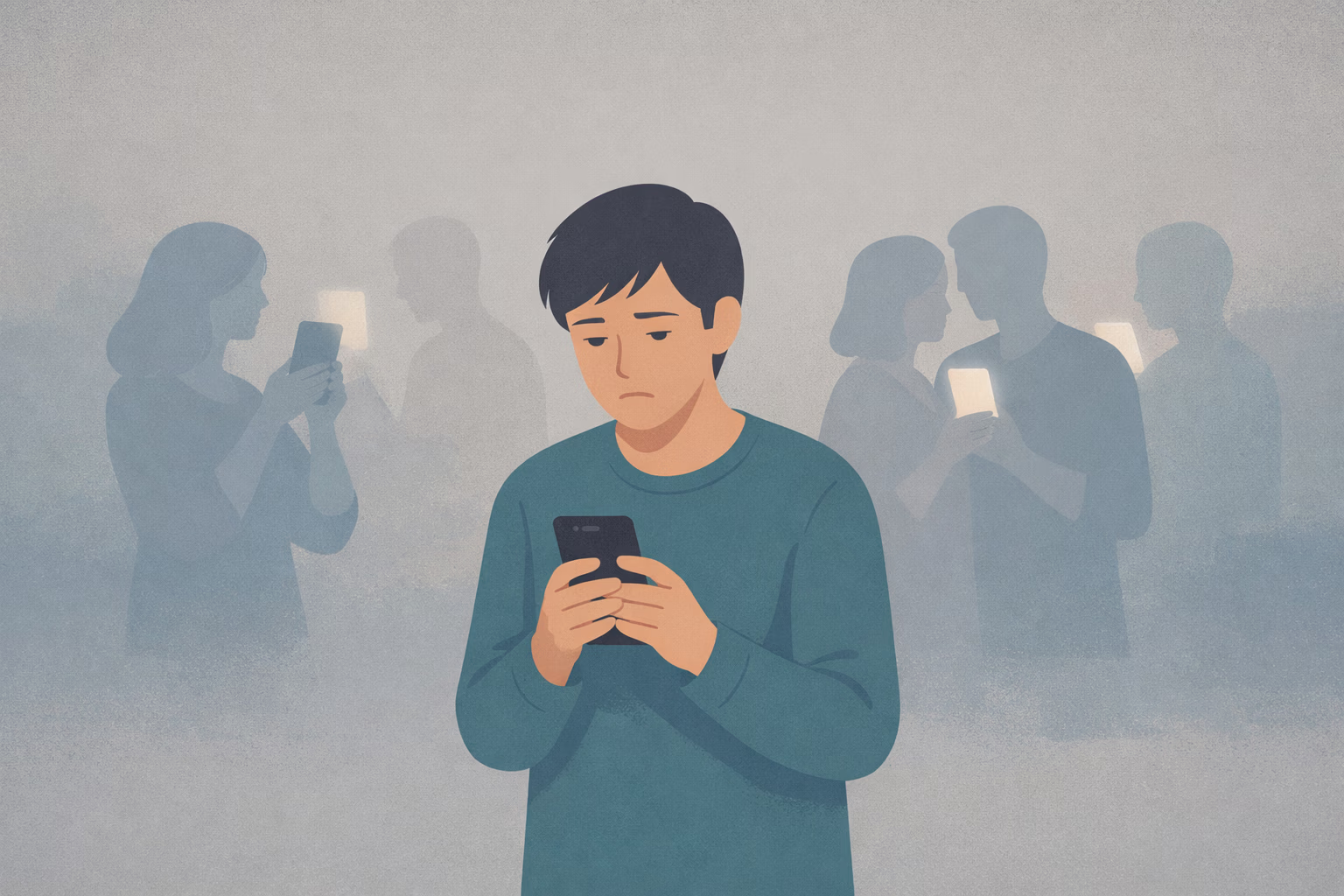
In short: There’s a particular kind of restlessness that shows up as a simple thought: Maybe I just need a better version. A newer phone, a smarter watch, a cleaner skincare routine, a more “right” couch, a more updated you.
There’s a particular kind of restlessness that shows up as a simple thought: Maybe I just need a better version. A newer phone, a smarter watch, a cleaner skincare routine, a more “right” couch, a more updated you. The purchase can feel oddly rational—almost responsible—until the excitement fades and the search quietly restarts.
What if the constant upgrading isn’t a character flaw, but a predictable regulatory loop?
In modern life, “new” often functions like a fast signal of relief: it briefly lifts boredom, reduces uncertainty, and supplies a clean sense of forward motion. But relief and forward motion aren’t the same as completion. And without completion, the nervous system stays recruited—still scanning for the next thing that will finally make the internal ledger feel settled.
People in the “newer, better, next” trap often recognize a pattern: the build-up feels energizing, the arrival feels good, and then—surprisingly quickly—life returns to a baseline that can feel flat or incomplete. The item works. Nothing is wrong. Yet the sense of “done” never fully arrives.
This isn’t because you’re incapable of satisfaction. It’s because human systems adapt. The brain and body recalibrate around what becomes normal, even when it’s objectively improved. That recalibration is efficient for survival, but it can also make upgrades feel like they evaporate. [Ref-1]
The strange part isn’t that I want nice things. It’s that “nice” doesn’t stay nice for very long.
Novelty is potent partly because the nervous system responds strongly to what’s coming next. Anticipation concentrates attention, increases energizing chemicals, and creates a clear target for pursuit. Then the brain habituates—what was new becomes familiar—and the spike drops off. [Ref-2]
When the drop happens, it can be misread as evidence that the purchase was wrong or that you chose poorly. But often it’s just the nervous system doing what it does: reducing response to repeated stimulation so you can notice changes in your environment. That normal habituation can accidentally set up a cycle where you keep seeking the “up” that only novelty reliably provides.
From an evolutionary angle, novelty-seeking is not random. In changing environments, exploration helped our ancestors find food, tools, allies, and safer terrain. A system that nudged attention toward “what’s different” supported learning and adaptation. [Ref-3]
But modern environments produce novelty at an unprecedented rate. Instead of discovering a new water source once in a while, we encounter new models, new drops, new features, new aesthetics, and new “must-haves” daily. The old exploration circuitry can be continuously recruited—without the natural endpoints that would ordinarily signal completion.
Upgrading doesn’t only provide pleasure. It can also provide a temporary reduction in internal friction: boredom eases, uncertainty narrows, and self-evaluation quiets for a moment. That’s why the urge can feel urgent, even when nothing is broken.
In this sense, an upgrade can function as a short-term stabilizer—an injected burst of optimism and order. It’s a quick “state change,” not a settled “life change.” And state changes are real; they simply don’t create lasting closure by themselves. [Ref-4]
When “new” arrives, what briefly goes quiet inside you?
The trap isn’t wanting improvement. The trap is the implicit promise attached to improvement: this next upgrade will finally make me feel satisfied. That promise makes the purchase feel like a solution rather than an addition.
Yet the system that responds to novelty is designed to move on. It doesn’t hold the feeling in place. So the “finally” keeps getting deferred, and the mind starts treating satisfaction as a destination just one more click away. Over time, appreciation can get thinner—not because you’re ungrateful, but because the signal for “enough” is being outcompeted by the signal for “new.” [Ref-5]
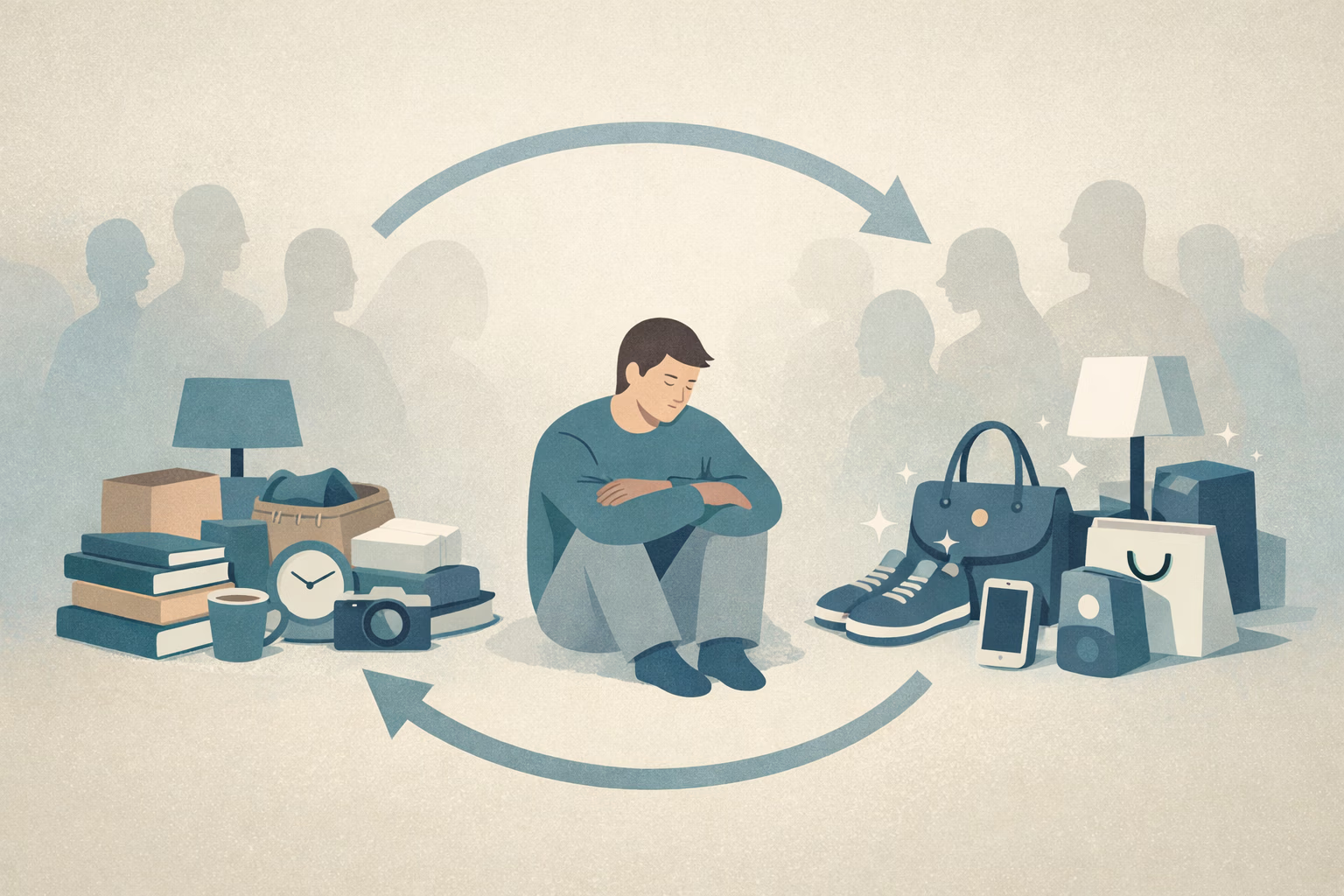
In a pleasure loop, the energizing part is not the using—it’s the seeking. The brain learns that browsing, comparing, tracking, and imagining provide a reliable lift. So the loop keeps you in a forward-leaning stance: a state of “not yet.” [Ref-6]
That forward-leaning stance can feel like momentum, but it’s also a form of ongoing activation. The body remains slightly geared up, because the story is incomplete. And incomplete stories tend to keep attention tethered.
It’s like my life is always in the draft stage—one more upgrade away from being ready.
People often recognize the “newer, better, next” pattern not as a single big purchase, but as a background hum—small micro-upgrades, constant monitoring, and subtle dissatisfaction with perfectly functional things.
Some common expressions of the loop include:
Under the hood, the system is learning prediction patterns: when novelty is expected, energizing signals increase; when novelty becomes known, signals decrease. That prediction cycling can become self-reinforcing. [Ref-7]
Constant upgrading has obvious costs—spending, clutter, waste—but the less discussed cost is nervous-system load. The search itself consumes attention, decision bandwidth, and mental space. It keeps the day organized around evaluation: better/worse, newer/older, right/wrong.
That evaluation stance can reduce the capacity for sufficiency—the ability to settle into “this works.” Not because you don’t want to settle, but because your system is repeatedly trained to stay alert for the next improvement. Over time, this can increase baseline restlessness and reduce the signal that says “we’re safe; we can stand down.” [Ref-8]
When everything is upgradable, where does “done” live?
As novelty fades, many people interpret the drop as a personal verdict: I’m never satisfied or I always choose wrong. But fading novelty is not a personality test—it’s a predictable feature of reward systems adapting to what’s familiar.
The problem is what happens next: the system explains the drop by pointing outward. It assigns the discomfort to the object and converts it into a new mission—find the next thing. That creates a tight coupling between mood and acquisition, making it feel as if satisfaction lives just ahead of you rather than inside a completed loop. [Ref-9]
It can help to hold a gentle distinction: novelty can energize action even when there is no direct reward, because the nervous system treats new stimuli as biologically relevant. [Ref-10] That’s not a defect; it’s a design feature.
What turns the feature into a trap is when novelty becomes the primary way the system returns to “okay.” If boredom, pressure, or self-evaluation are constant, then “new” starts functioning like a rapid regulator—a quick way to change state without addressing the underlying lack of closure.
In other words, the upgrading isn’t proof that you’re shallow. It may be proof that your system has been asked to carry too much unfinishedness—too many open tabs of life—and has learned that novelty is the fastest available relief.
In highly competitive, highly visible environments, upgrading can become a form of social weather—an implicit requirement to keep up. Even when nobody explicitly demands it, constant comparison cues can increase the sense that you’re behind, which keeps the body in a subtle effort state.
By contrast, in relationships and communities where worth isn’t constantly ranked, the pressure to prove progress through purchases often softens. Shared values—care, craft, stewardship, play, learning—offer alternative signals of “forward” that don’t rely on constant novelty.
When the surrounding context reduces evaluation and increases belonging, the nervous system often needs fewer external spikes to feel oriented. And effort starts to reorganize around what matters rather than what’s newest. [Ref-11]
When load drops and more experiences reach completion, something subtle changes: familiar things start to register again. The same mug, the same jacket, the same phone—still ordinary, but no longer faint. Appreciation is not forced; it becomes more available because the system isn’t perpetually scanning.
This is not about “being grateful” as a mental exercise. It’s about capacity returning—more room for signals of adequacy, more tolerance for the middle of a day, less urgency to manufacture a peak. Decision-making becomes less twitchy because reward circuits aren’t constantly recruited to solve unrelated discomfort. [Ref-12]
Nothing dramatic happened. It just started feeling like my life was already here.
As the loop loosens, desire often changes shape. Instead of a constant reach for replacement, people tend to feel a quieter orientation toward use: taking care of what they have, choosing for fit rather than hype, and letting objects become part of a coherent life story.
This isn’t the disappearance of wanting. It’s wanting that’s more integrated—less about chasing a dopamine lift and more about alignment with values and identity. In that shift, anticipation stops being the main event. Possession can actually land, because it’s not being used to postpone an internal sense of “not yet.” [Ref-13]
Under the upgrading urge is often a very human drive: vitality. Growth. The wish to feel alive, capable, and moving forward. In a fast marketplace, that drive gets translated into transactions—because transactions are clean, measurable, and instantly rewarded.
But meaning tends to arrive through depth, not acceleration. Through completion, not constant refresh. When life offers more “done signals”—moments that truly settle—novelty can return to its natural role: a spice, not a stabilizer. [Ref-14]
What would it mean if “enough” was a physiological settling, not a moral achievement?
You don’t need to erase your love of new things to regain steadiness. The goal isn’t to become someone who never wants. It’s to recognize when wanting has been drafted to do the job of completion.
When choices connect to values and lived identity, the nervous system is more likely to register closure. And when closure returns, “next” becomes an option instead of a compulsion—because your life no longer needs constant upgrading to feel like it’s allowed to be here. [Ref-15]
From theory to practice — meaning forms when insight meets action.
Because human systems adapt — the brain and body recalibrate around what becomes normal, even when it's objectively improved. That recalibration is efficient for survival, but it can make upgrades feel like they evaporate. Anticipation is potent because the nervous system responds strongly to what's coming next; it concentrates attention and creates a clear pursuit target. Then habituation removes the glow. The drop gets misread as evidence the purchase was wrong, but it's actually the system reducing response to repeated stimulation so you can notice changes. The strange part isn't wanting nice things — it's that 'nice' doesn't stay nice for very long.
Yes — and the energizing part isn't the using; it's the seeking. The brain learns that browsing, comparing, tracking, and imagining provide a reliable lift. So the loop keeps you forward-leaning, in a state of 'not yet.' That stance feels like momentum but is also ongoing activation — the body remains slightly geared up because the story is incomplete. Common expressions: replacing items earlier than needed, keeping carts and wishlists open, feeling a quick post-purchase dip followed by more research, assuming the right gear will unlock steadiness. It's like life is always in draft stage — one more upgrade away from being ready.
Because the trap isn't wanting improvement — it's the implicit promise attached: 'this next upgrade will finally make me feel satisfied.' That promise turns the purchase into a solution rather than an addition. But the system that responds to novelty is designed to move on; it doesn't hold the feeling in place. So 'finally' keeps getting deferred and the mind treats satisfaction as a destination one click away. Constant upgrading also has a hidden cost: nervous-system load. The search consumes attention and decision bandwidth, training the system to stay alert for the next improvement and reducing the signal that says 'we're safe; we can stand down.'
Novelty isn't the enemy — unfinished loops are. The upgrading isn't proof you're shallow; it may be proof your system has been asked to carry too much unfinishedness and learned that 'new' is the fastest available relief. When load drops and more experiences reach completion, familiar things start registering again. The same mug, jacket, phone — still ordinary, but no longer faint. As the loop loosens, desire matures from constant replacement toward purposeful use: taking care of what you have, choosing for fit rather than hype. Wanting becomes more integrated. 'Enough' becomes a physiological settling, not a moral achievement.
From Science to Art.
Understanding explains what is happening. Art allows you to feel it—without fixing, judging, or naming. Pause here. Let the images work quietly. Sometimes meaning settles before words do.
One Quiet Window, one insight, one reflection — every Sunday