The Newer-Better-Next Loop: Why You Always Want Upgrades
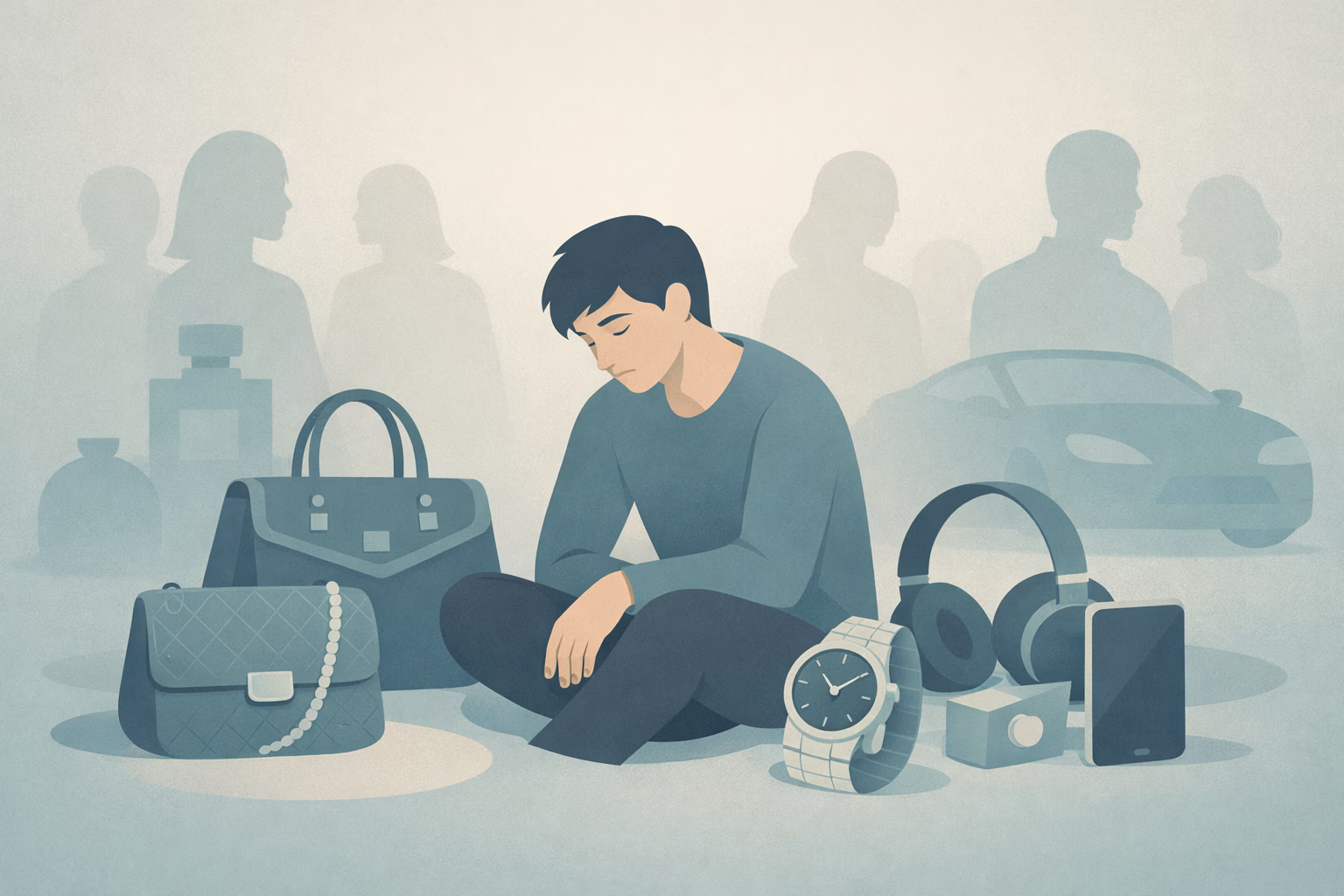
In short: Luxury can feel like a promise: Once I have that —the bag, the watch, the car, the upgrade—something inside will finally relax. Not because you’re shallow, but because your nervous system is tracking signals of safety, standing, and stability in a fast-moving world.
Luxury can feel like a promise: Once I have that—the bag, the watch, the car, the upgrade—something inside will finally relax. Not because you’re shallow, but because your nervous system is tracking signals of safety, standing, and stability in a fast-moving world.
When life is pressurized, fragmented, or constantly evaluated, the mind often looks for the quickest available “done” signal. High-end purchases are especially good at producing that signal: they’re visible, measurable, and socially legible. For a moment, they can create relief—like the internal debate about your worth goes quiet.
What if the emptiness isn’t a personal flaw—what if it’s an unfinished loop looking for closure?
There’s a specific kind of hope that appears right before a high-end purchase. The object starts to represent more than function or beauty—it becomes a symbolic finish line. You imagine the version of you who owns it: more secure, more respected, more “arrived.”
Often, the purchase lands with a real lift: pride, calm, a sense of being back in control. And then, quietly, the lift fades. Not because you did it wrong, but because novelty is temporary by design. The body can’t stay in “reward receipt” mode for long; it returns to baseline. [Ref-1]
When the baseline still contains unanswered questions—Am I safe here? Do I matter? Am I behind?—the mind may conclude the object wasn’t expensive enough, rare enough, or perfect enough. The loop restarts.
Luxury doesn’t only deliver a product. It delivers anticipation, social meaning, and a clear narrative: “This says something about me.” Anticipation itself is a powerful neurochemical event; the body mobilizes energy toward what it expects will resolve tension.
Because luxury is designed to be scarce, prestigious, and recognizable, it also plugs into social-ranking circuits. These systems evolved to monitor acceptance, exclusion, and relative position—because, historically, those signals shaped access to protection and resources. [Ref-2]
The important point is structural: reward can shift state quickly, but it can’t complete identity-level questions on its own. A dopamine rise can feel like certainty for a moment, without creating lasting internal “settledness.”
In many ancestral contexts, visible resources were not just “nice.” They signaled leverage: more allies, more options, more protection. Display could reduce threat—others might defer, cooperate, or compete less directly.
Luxury branding modernizes this old language. It takes ancient cues (rarity, craftsmanship, exclusivity) and turns them into portable signals. That’s why luxury can feel oddly primal: it communicates, quickly, without words. [Ref-3]
This doesn’t mean people are “wired to be materialistic.” It means status-signaling is one of the nervous system’s tools for negotiating uncertainty. Under higher load, the tool can become over-relied upon.
Many people describe the same subtle sequence: before the purchase, there’s agitation or restlessness; during the buying process, there’s focus and momentum; after, there’s a clean moment of confidence. The system reads: “I did something decisive. I improved my position.”
That confidence can be real—especially when it reduces social ambiguity. If others respond with admiration or deference, the body receives a powerful cue of “I’m okay here.” [Ref-4]
But reassurance is not the same as resolution. Reassurance often depends on repeating the signal. Resolution is what happens when the system no longer needs to generate the signal to feel stable.
The purchase can feel like a conclusion, even when it’s only an intermission.
The “internal void” isn’t usually a dramatic emptiness. It can be quieter: a chronic sense of not being anchored, a feeling of being behind, a suspicion that your value is conditional. In modern life, those sensations can arise simply from ongoing pressure and incomplete closure—too many open tabs in the nervous system.
Luxury offers a clean proof: a tangible marker that says, “I am not failing.” That’s why it can seem like it should work. But if the underlying sense of contingency remains—if worth still feels dependent on maintaining an image—then the proof has an expiration date. The body returns to scanning. [Ref-5]
This is not about lacking gratitude or having the wrong mindset. It’s about attempting to complete a living, identity-based question with a static object.
Luxury spending can become a specific kind of loop: tension builds (comparison, uncertainty, fatigue), a premium purchase creates relief (certainty, superiority, “I’m back”), and then the relief fades. The system learns that the quickest route out of discomfort is a high-status reward.
Notice the mechanics: the purchase doesn’t have to create joy for months. It only has to interrupt the discomfort reliably. That reliability is what trains repetition—especially in environments where other forms of completion are slower, messier, or less recognized.
Over time, the loop can shift from enjoyment to regulation: the object becomes less about pleasure and more about controlling internal noise. That’s a nervous system strategy, not a character verdict. [Ref-6]
When luxury becomes a regulatory substitute, the pattern often looks practical on the surface. It can sound like “quality” or “investment” or “I just know what I like.” Sometimes those are true. The giveaway isn’t the item—it’s the function the item is serving in the body.
Common structural signatures include:
These are not “materialistic thoughts.” They’re predictable outcomes when external validation is easier to obtain than internal closure. [Ref-7]
Here’s the paradox: the more a person uses luxury to stabilize worth, the more the nervous system learns that worth is outside. The signal becomes necessary, and necessity doesn’t feel like abundance—it feels like dependency.
External validation is also unstable by nature. Audiences change. Trends move. Someone always has the rarer item, the newer model, the more effortless status. So the system keeps scanning and updating, which keeps the “not enough” channel open.
Research on materialistic values and well-being consistently finds that heavier reliance on possessions for self-worth is linked with lower well-being and greater vulnerability to debt or distress—less because possessions are bad, and more because they can’t meet core needs for stable self-regard and belonging. [Ref-8]
Many reward-driven loops develop a tolerance effect: the first hit feels dramatic, and later hits feel thinner. This can happen with many high-stimulation experiences, including digital rewards and other novelty-heavy behaviors. The system adapts; what once created a strong “done” signal becomes ordinary.
In luxury, this can look like moving from one milestone to the next: entry-level premium to ultra-luxury, then limited editions, then experiences, then private access. The chase isn’t always about greed—it’s often about trying to recreate the original internal quiet.
The problem is structural: escalating the symbol doesn’t complete the underlying loop. It only raises the dosage needed to achieve the same temporary state shift. [Ref-9]
When people begin to feel steadier, they don’t usually report that they “understood” consumerism and then stopped wanting things. More often, the change is quieter: the body stops treating status as an emergency. The signal loses urgency.
This kind of steadiness isn’t created by insight alone. It tends to appear when life contains more genuine completion—moments that land as “finished,” “real,” and “mine.” When the nervous system receives enough closure, it can stand down from constant position-checking.
In that state, luxury becomes optional information rather than a life-raft. It can be appreciated as design, craftsmanship, or pleasure—without needing it to hold identity together. [Ref-10]
Status is one way to negotiate social reality, but it isn’t the only stabilizer. Humans also regulate through belonging, mutuality, and contribution—signals that say, “I have a place,” not just “I outrank.”
When connection and contribution are present, the nervous system doesn’t have to work as hard to prove legitimacy. There’s less need for constant evidence of worth, because worth is reflected through lived participation: being relied on, being known, being part of something that continues with you in it.
This doesn’t mean giving up ambition or beauty. It means the scoreboard changes. The self stops being evaluated only through dominance displays and starts being oriented by relationships and values. [Ref-11]
Grounded self-worth often feels unremarkable in the best way. There’s less compulsion to narrate purchases as proof. Less inner bargaining: “If I get this, I can relax.” And less crash afterward.
In this steadier posture, quality can be enjoyed without becoming a referendum on identity. A well-made object can be appreciated for comfort, longevity, artistry, or fit—without needing to carry the entire burden of “I am enough.”
Many perspectives on materialism and contentment converge on this point: possessions can add pleasure, but they don’t reliably produce lasting fulfillment when they’re tasked with solving belonging, meaning, or self-respect. [Ref-12]
When you no longer need the symbol to hold you up, you can finally feel what you actually like.
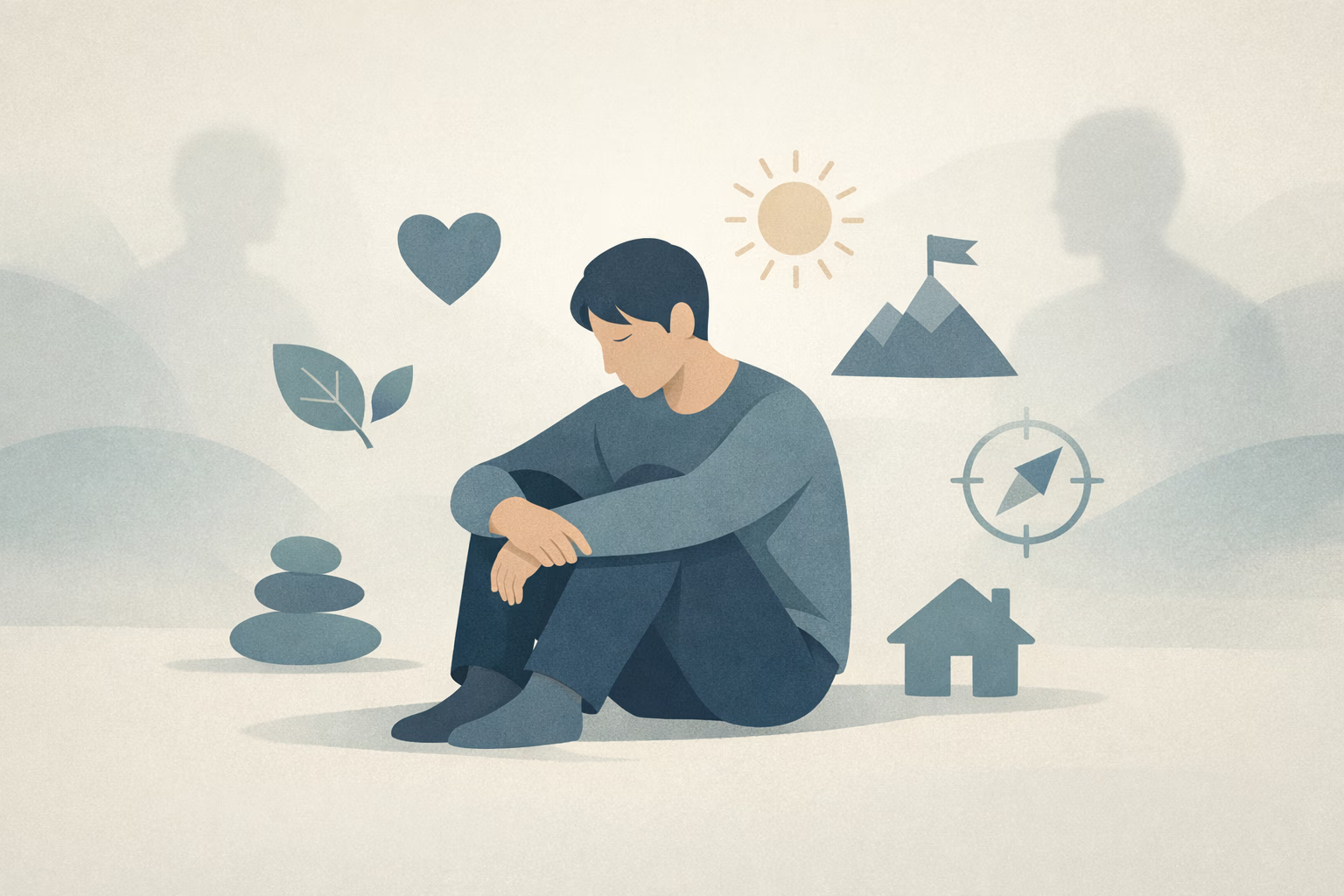
The most stabilizing shift is not “I stopped buying luxury.” It’s “I stopped needing luxury to settle my place in the world.” That’s an identity-level reorientation—from proving worth to expressing values.
When life is organized around proving, the nervous system stays on alert: it must keep producing evidence. When life is organized around values, the system gets more frequent closure. Actions land as coherent: “This is what I stand for,” not “This is what I must display.”
This is where meaning becomes protective. It reduces fragmentation because choices connect to a longer story—one that doesn’t require constant external confirmation to remain intact. [Ref-13]
The pull toward luxury often contains something dignified: a desire for recognition, respect, safety, and a life that feels solid. In a world that measures people quickly, symbols can seem like the most efficient language for that desire.
But dignity becomes durable when it is self-authored—when your worth is not continuously negotiated through displays, comparisons, or upgrades. The nervous system relaxes differently when the signal is coming from coherence: values lived, relationships held, contributions that are real and reciprocal. [Ref-14]
Luxury may still be part of your world. The shift is that it no longer has to function as a substitute for “I’m okay.”
Expensive symbols can be beautiful, and enjoyment is not the problem. The strain begins when an object is asked to complete what only lived meaning can complete.
Lasting fulfillment tends to arrive as a quieter kind of wealth: self-respect that doesn’t need to be announced, and a sense of enoughness that doesn’t expire when the novelty wears off. [Ref-15]
From theory to practice — meaning forms when insight meets action.
Because reassurance isn't resolution. Luxury delivers anticipation, social meaning, and a clear narrative — this says something about me — that hits reward and status circuits efficiently. The lift is real: pride, calm, a sense of being back in control. Then it fades, because novelty is temporary by design. The body can't stay in reward receipt mode for long; it returns to baseline. When the baseline still contains unanswered questions about safety and worth, the mind concludes the object wasn't expensive enough or perfect enough, and the loop restarts. The purchase felt like a conclusion but was only an intermission. Identity-level questions can't be completed by a static object.
Through reliable interruption of discomfort. Tension builds (comparison, uncertainty, fatigue), a premium purchase creates relief (certainty, superiority, I'm back), and the relief fades. The system learns that the quickest route out of discomfort is a high-status reward. The purchase doesn't have to create joy for months — it only has to interrupt the discomfort reliably. That reliability trains repetition. Over time, the loop shifts from enjoyment to regulation: the object becomes less about pleasure and more about controlling internal noise. The Pleasure Loop here is a nervous system strategy, not a character verdict — and luxury is unusually good at fitting the role.
Because the more a person uses luxury to stabilize worth, the more the nervous system learns that worth is outside. The signal becomes necessary, and necessity doesn't feel like abundance — it feels like dependency. External validation is also unstable by nature: audiences change, trends move, someone always has the rarer item or newer model. The system keeps scanning, which keeps the not enough channel open. Tolerance also kicks in — escalating from entry-level premium to ultra-luxury to limited editions, trying to recreate the original internal quiet. Raising the dosage doesn't complete the underlying loop; it only raises what's needed to achieve the same state shift.
The body stops treating status as an emergency. The signal loses urgency. This steadiness usually doesn't appear because someone understood consumerism and stopped wanting things — it appears because life contains more genuine completion. Moments that land as finished, real, and mine. When the nervous system receives enough closure, it can stand down from constant position-checking. Luxury becomes optional information rather than a life-raft, appreciated for design or craftsmanship without holding identity together. Within Loop Sovereignty, the deeper shift is from proving worth to expressing values — actions land as this is what I stand for rather than this is what I must display.
From Science to Art.
Understanding explains what is happening. Art allows you to feel it—without fixing, judging, or naming. Pause here. Let the images work quietly. Sometimes meaning settles before words do.
One Quiet Window, one insight, one reflection — every Sunday