The Economics of Distraction: Why Focus Is Under Attack
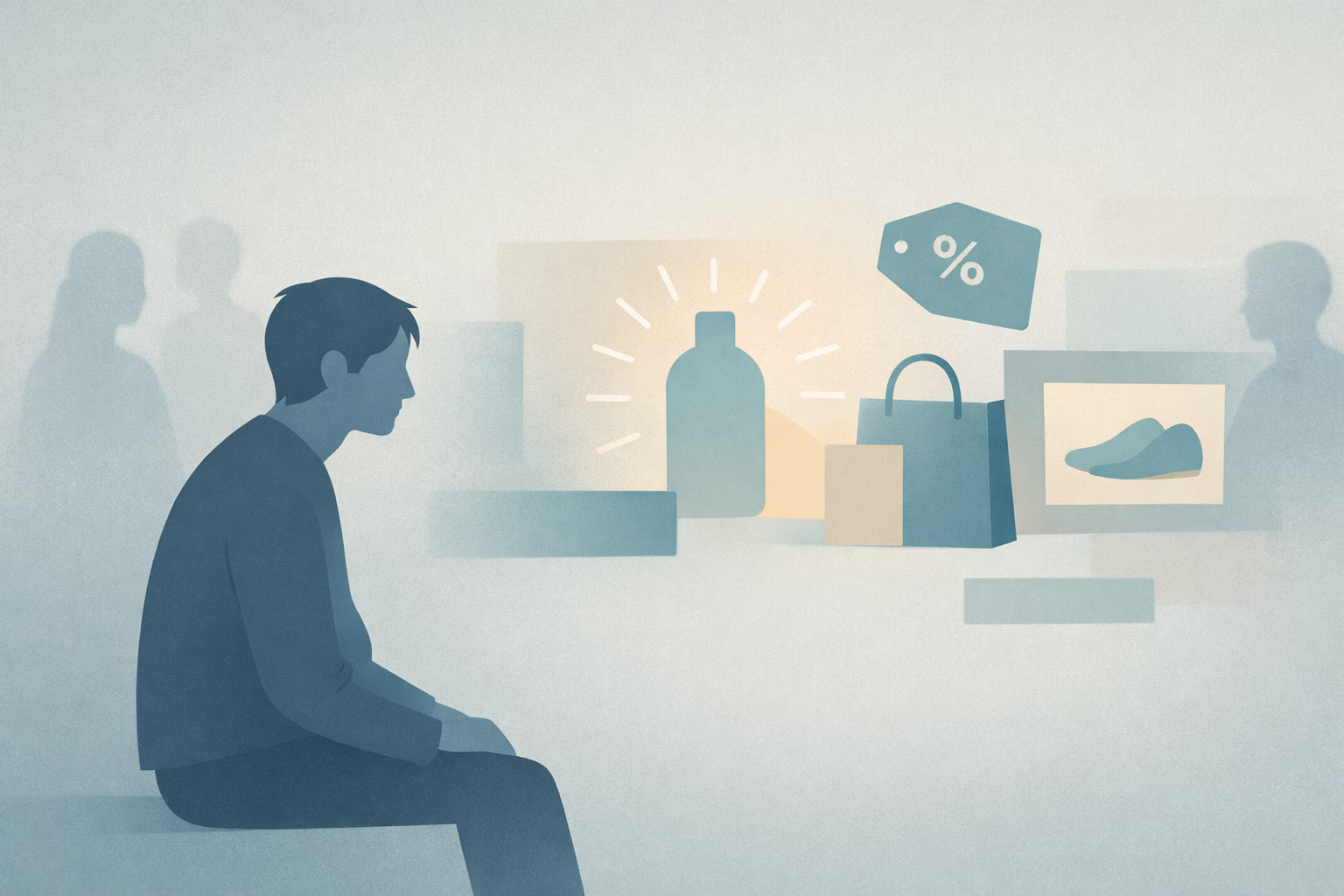
In short: Being impressed can feel clean and simple: a sleek image, a confident promise, a “limited” moment you don’t want to miss. For a second, your system clicks into readiness—like something important is happening, and you should move now.
Being impressed can feel clean and simple: a sleek image, a confident promise, a “limited” moment you don’t want to miss. For a second, your system clicks into readiness—like something important is happening, and you should move now.
What if that pull isn’t a character flaw, but an ancient safety-and-status detector getting pinged on purpose?
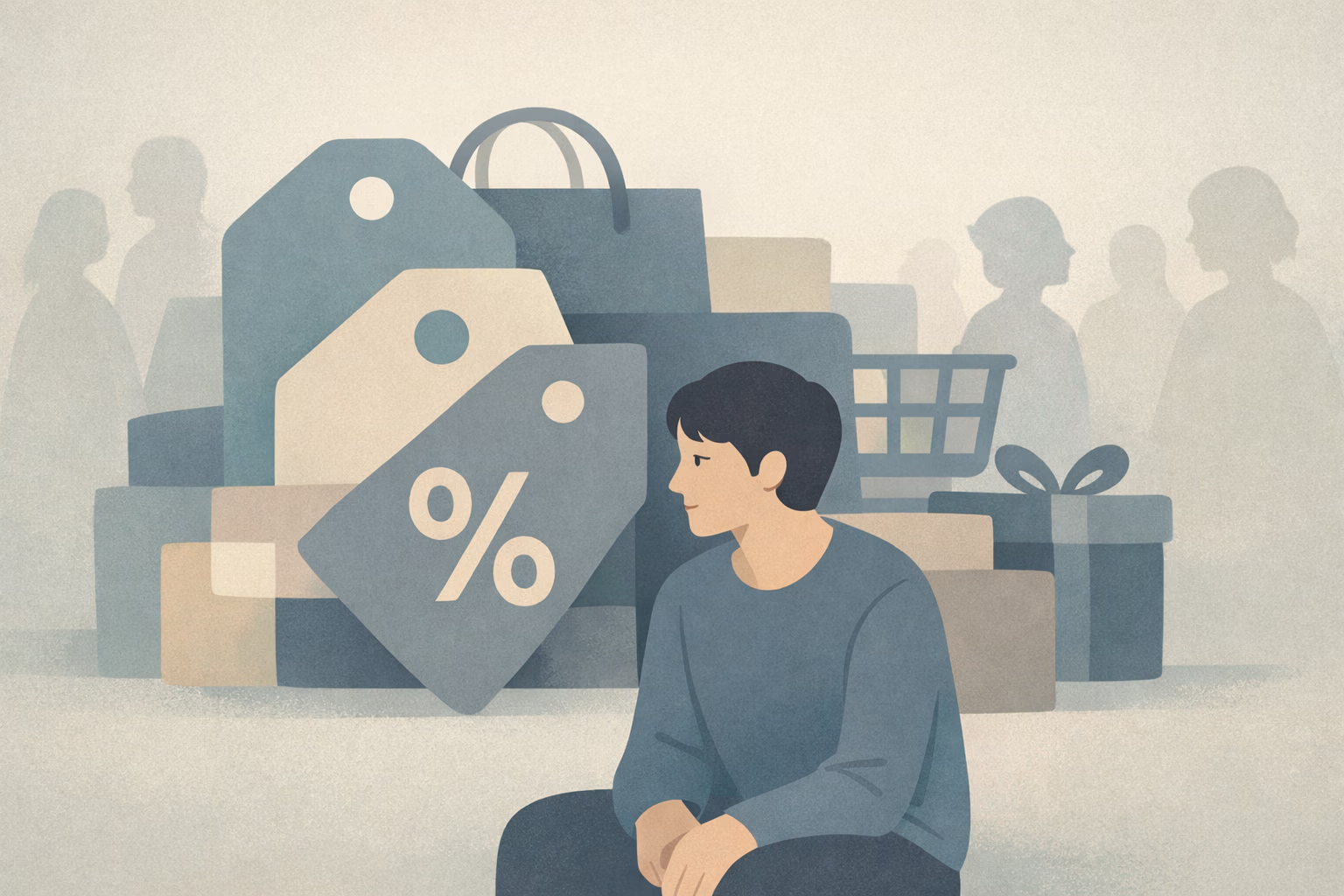
Advertising doesn’t need to overpower your intelligence to influence your choices. It often works by shaping the conditions around your nervous system: compressing time, borrowing social proof, and offering a fast sense of orientation. The hidden cost is not just money—it’s the quiet drift of meaning, when your “yes” is repeatedly steered by external cues instead of settling into your own values.
Many people recognize a familiar sequence: an ad lands, something in you brightens or tightens, and the purchase feels oddly inevitable. Later, the item arrives and the feeling is different—sometimes flat, sometimes vaguely regretful, sometimes simply disconnected from the person you know yourself to be. [Ref-1]
This isn’t about being gullible. “Impressed” often means your system registered a cue of advantage: safety, belonging, competence, attractiveness, efficiency, relief. Those cues are processed quickly, with real physiology behind them—attention narrows, urgency increases, and the story becomes “this matters.”
When the purchase doesn’t integrate—when it doesn’t settle into lived identity as “this is me, this is my life”—the nervous system doesn’t get a clean completion signal. So the loop stays partially open, making the next cue feel compelling again.
Modern ads are engineered to reach you before you deliberate. They use cues your brain treats as time-sensitive: scarcity (“only today”), status (“the people who know”), belonging (“join us”), and threat-of-missing (“don’t be left behind”). [Ref-2]
These cues compress evaluation. They don’t need to argue; they only need to trigger a quick internal shift from “considering” to “responding.” In that state, the mind often searches for reasons that match the body’s momentum, rather than the other way around.
In ancestral environments, quick responses to opportunity and social information were protective. A rare resource, a shift in group status, a sign of approval or exclusion—these were not “marketing,” they were survival-relevant data. So the human nervous system learned to prioritize speed when certain signals appear. [Ref-3]
Advertising takes advantage of that inheritance. It packages products as if they are pathways to safety: improved social standing, reduced effort, protection from embarrassment, membership in a desirable group, or a more secure future self. When your system detects those themes, it doesn’t wait for a spreadsheet.
This is why someone can be highly educated and still feel oddly moved by a brand. The influence is often upstream of conscious reasoning—more like a reflexive orientation than a considered preference.
A well-designed ad doesn’t only sell an object. It sells a state: anticipation, reassurance, novelty, a sense of being prepared, or the comfort of being aligned with what’s current. That state change can feel like a small nervous-system reset—especially when life already carries high load. [Ref-4]
In that moment, the product becomes a bridge to a “done” signal: done feeling behind, done feeling uncertain, done feeling invisible. The mind often experiences this as clarity: “This is what I need.”
“For a second, it feels like life will be smoother on the other side of this purchase.”
But state changes are not the same as completion. Excitement can spike and then drop; reassurance can fade when the package is opened. If the underlying loop—needing closure, orientation, or belonging—didn’t actually complete, the nervous system looks for another fast bridge.
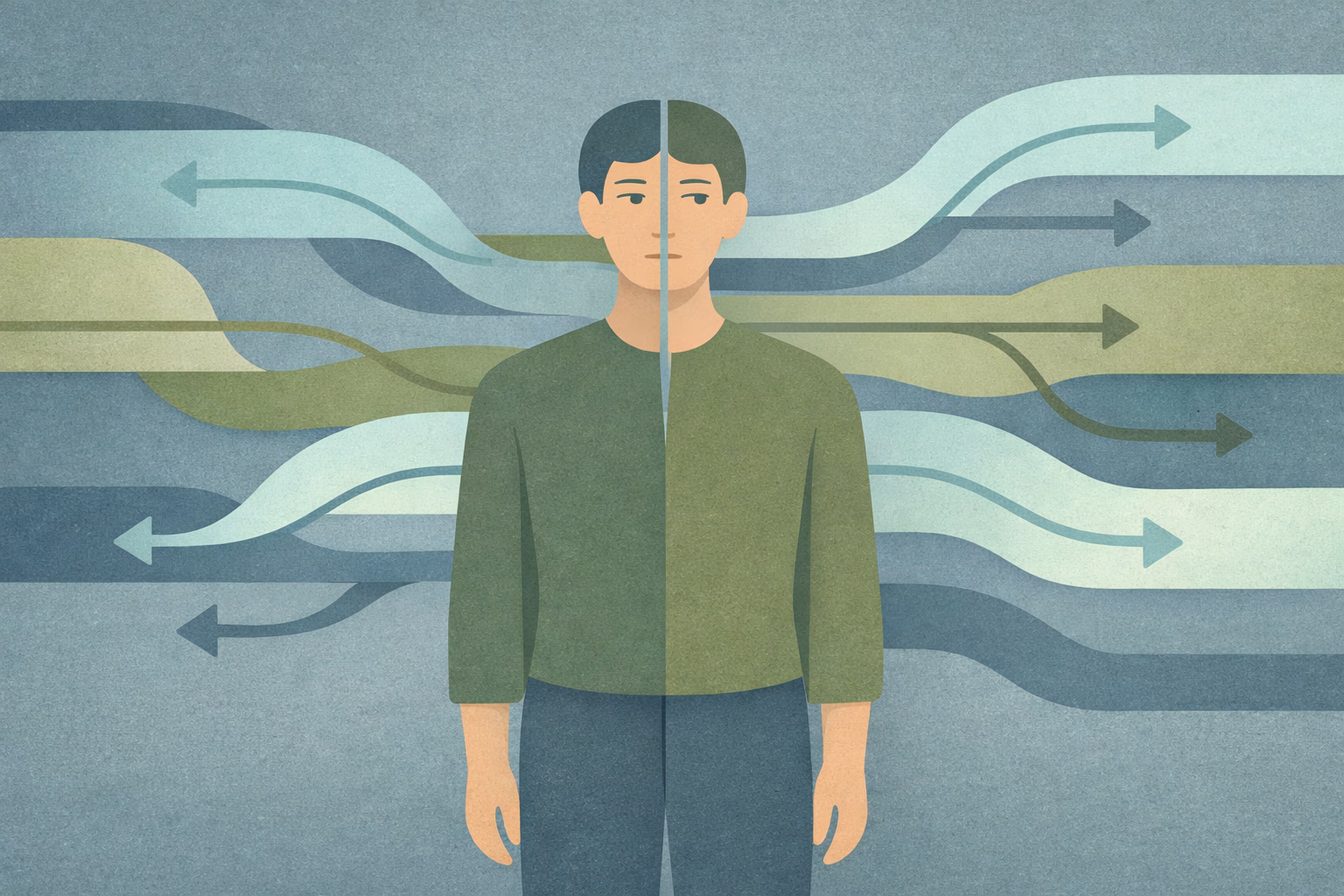
Most people experience themselves as choosing freely, and in many ways they are. But modern persuasion can quietly steer the menu of what feels desirable, urgent, or identity-relevant—so the “choice” happens inside a pre-shaped context. [Ref-5]
That’s why post-purchase dissonance can feel so strange. It’s not only buyer’s remorse; it’s a mismatch between two kinds of signals:
When activation wins repeatedly, coherence can start to feel faint—not because you lost values, but because the environment keeps interrupting the conditions that let values register as embodied “yes.”
Advertising influence often forms a “power loop”: you feel autonomous because you are making the purchase, but the timing and intensity of the desire were conditioned by external cues. The system learns, “When I see this kind of signal, I move.” [Ref-6]
Over time, the loop becomes efficient. The body recognizes the pattern, the mind supplies justification, and the purchase provides a short-lived payoff—novelty, relief, social comfort. Then the payoff fades, and the system becomes receptive again.
This can look like “lack of willpower,” but structurally it’s closer to repeated activation without closure. The loop keeps generating motion because it never fully lands in “complete and integrated.”
Persuasive design and neuromarketing approaches aim to measure and elicit attention, emotion, and approach behavior—often by refining cues that reliably produce a “go” response. [Ref-7]
In real life, that can show up as patterns like:
These are not random quirks. They are predictable responses when high-frequency cues meet a nervous system that wants quick orientation and a clean “done.”
Discernment isn’t only cognitive; it’s a capacity state. When attention is fragmented and the nervous system is repeatedly activated, the ability to sense what truly fits can weaken—not because you don’t care, but because the signal-to-noise ratio changes. [Ref-8]
Constant persuasion can also shift the internal baseline. If your system is frequently lifted by novelty and promise, ordinary life can feel comparatively muted. The result isn’t simply “wanting more”; it’s a reduced ability to detect satisfaction as completion.
In that landscape, values may still exist, but they can feel abstract. What’s immediate is what’s loud: urgency, aesthetics, social proof, and the promise of instant resolution.
Over time, the brain can learn to seek the micro-reward of being activated—anticipation, novelty, the hit of possibility—especially when other forms of completion are scarce. This is one reason feeds can feel magnetic even when they’re not enjoyable. [Ref-9]
Importantly, this isn’t the same as stable satisfaction. Stimulation changes state quickly; it does not necessarily produce the physiological stand-down that comes with something being truly finished.
So susceptibility can increase: not because a person becomes weaker, but because the system becomes trained to expect frequent external prompts for “upshift,” while fewer experiences provide closure and integration.
There’s a difference between noticing an ad and being moved by it. When internal steadiness is higher—when the nervous system isn’t carrying as much unresolved activation—the same cue can register as information instead of a directive. [Ref-10]
This is not about “being more aware” as a moral achievement. It’s about the conditions that allow the slower systems of evaluation to come online: time, capacity, and a sense that you don’t have to resolve everything immediately.
In that steadier state, wanting can become more nuanced. Desire is still allowed to exist, but it no longer has to borrow urgency to feel real. And the question shifts from “Can I resist?” to “Does this actually complete something true for me?”
One of the strongest antidotes to manipulation is not individual grit—it’s collective clarity. When people have shared language for how persuasion works, the spell breaks faster, because the nervous system gets an alternative explanation for the pull: “This is a cue set designed to activate me.” [Ref-11]
Education and dialogue create a social counter-signal: you are not alone, and you are not uniquely susceptible. That matters, because many advertising strategies rely on private urgency and silent comparison.
“When we can name the pattern together, it stops feeling like it’s just ‘me.’”
Over time, this kind of shared meaning can restore dignity. Not by fighting desire, but by re-locating authorship—bringing choices back into relationship with values and real life.
As capacity returns, a different experience becomes available: a pause that isn’t forced. Not a tense “no,” but a natural interval where the nervous system doesn’t have to rush to discharge activation through action. [Ref-12]
In that pause, evaluation becomes more embodied and practical. People often describe it as:
This is not a constant calm. It’s a more reliable ability to return to baseline after being pinged—because fewer loops are left hanging open.
When choices align with values and lived identity, consumption becomes quieter. Purchases can still be enjoyable, beautiful, or playful—but they no longer need to carry the weight of fixing your status, proving your worth, or delivering instant coherence. [Ref-13]
In a meaning-aligned pattern, the “done” signal arrives more often. Not because life is perfect, but because fewer decisions are made from borrowed urgency. The result is a subtle form of autonomy: wanting is present, but it’s not in charge.
Coherence can feel like a settled narrative: what you bring into your life matches the life you are actually living. And that match creates stability that stimulation can’t replicate.
If advertisers can reliably trigger urgency through scarcity and social cues, it’s because the human brain is designed to treat those cues as survival-relevant information. That design kept groups alive long before it sold products. [Ref-14]
What changes the equation isn’t self-blame or constant vigilance. It’s authorship: when desire is allowed to take its place inside a larger story—your values, your relationships, your sense of enough. In that story, ads become what they always were: signals competing for attention, not definitions of what matters.
Meaning doesn’t arrive through intensity. It arrives when life provides completion—when choices land, settle, and belong to you.
Advertising is skilled at making impressions feel like insights. But true autonomy isn’t the absence of influence—it’s the presence of coherence.
When what you choose reflects what you value, and when purchases integrate into a life that feels settled rather than stirred, you don’t need to be constantly impressed. You can simply recognize the cue, keep your dignity, and let your consumption serve your purpose instead of someone else’s leverage. [Ref-15]
From theory to practice — meaning forms when insight meets action.
Because being impressed is a body state, not a verdict on you. Modern ads use cues your brain treats as time-sensitive: scarcity, status, belonging, threat-of-missing. These compress evaluation — they don't argue, they trigger a quick internal shift from considering to responding. Attention narrows, urgency rises, and the story becomes "this matters." The mind then searches for reasons that match the body's momentum, rather than the other way around. The pull isn't a character flaw. It's an ancient safety-and-status detector getting pinged on purpose, by signals engineered to bypass deliberation.
Because state changes aren't the same as completion. A well-designed ad sells a state — anticipation, reassurance, novelty, the feeling of being prepared. The product becomes a bridge to a Done Signal: done feeling behind, uncertain, invisible. The mind experiences this as clarity. But excitement spikes and drops; reassurance fades when the package opens. If the underlying loop — needing closure, orientation, or belonging — didn't actually complete, the system looks for another fast bridge. Post-purchase dissonance is the mismatch between activation signals (urgency, social alignment) and coherence signals (fit with values, real need, lasting usefulness).
Not exactly — but the menu of what feels desirable is often pre-shaped. Modern persuasion can quietly steer the timing and intensity of desire, so the choice happens inside a conditioned context. That's the Power Loop: you feel autonomous because you're making the purchase, but the cues triggered the response. Susceptibility is human wiring, not a personal defect — your nervous system is designed to treat scarcity and social proof as survival-relevant data. What changes the equation isn't self-blame or constant vigilance. It's authorship: letting desire take its place inside a larger story of values, relationships, and a sense of enough.
Through steadiness rather than control. When internal load is lower and unresolved activation isn't carrying over, the same cue can register as information instead of a directive. The slower systems of evaluation come online: time, capacity, the sense that you don't have to resolve everything immediately. Wanting can become more nuanced — it doesn't have to borrow urgency to feel real. Shared language matters too: when people name how persuasion works together, the spell breaks faster because the nervous system gets an alternative explanation for the pull. Consumption serves meaning when it stops trying to serve the self.
From Science to Art.
Understanding explains what is happening. Art allows you to feel it—without fixing, judging, or naming. Pause here. Let the images work quietly. Sometimes meaning settles before words do.
One Quiet Window, one insight, one reflection — every Sunday