Instant Gratification Traps: The Hidden Cost of Quick Rewards
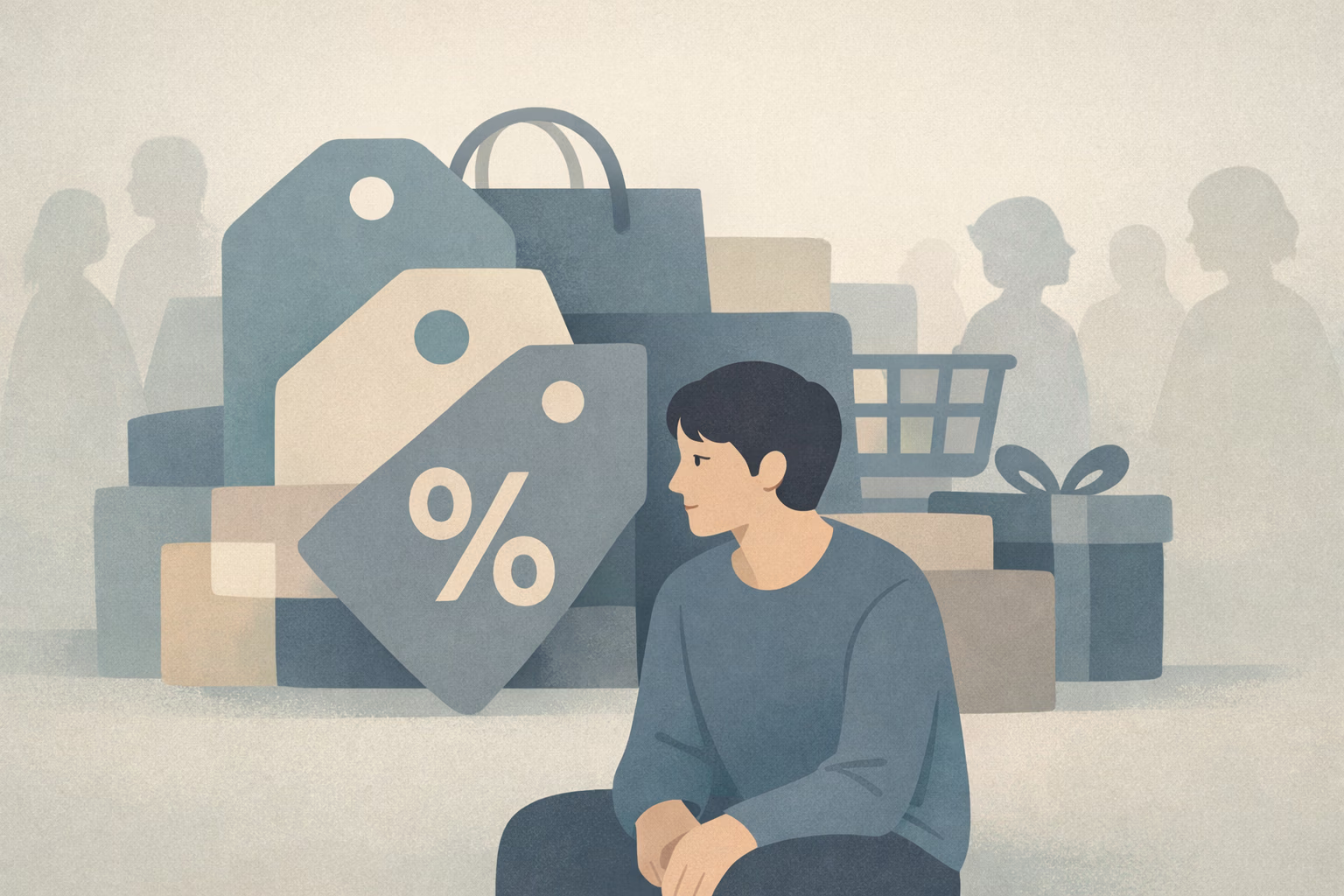
In short: A “deal” can feel strangely clarifying. The numbers look clean, the urgency feels practical, and the purchase can land with a quick sense of relief—like you just protected your future self from paying more.
A “deal” can feel strangely clarifying. The numbers look clean, the urgency feels practical, and the purchase can land with a quick sense of relief—like you just protected your future self from paying more.
But a lot of discount-driven buying isn’t really about the item. It’s about what the nervous system does under scarcity cues: it narrows attention, speeds up decision-making, and treats missed opportunities like a small threat. In that state, buying can feel not only satisfying, but reasonable.
What if the pull of a sale isn’t irrational—just perfectly matched to how humans are wired for scarcity?
Discount moments often follow a predictable rhythm: a flash of excitement, a quick scan for reasons it “makes sense,” and a tightening urgency that makes waiting feel costly. The mind becomes a skilled attorney for the purchase—highlighting savings, future usefulness, and limited availability.
Then the time pressure dissolves. The package arrives, the tab closes, and the emotional brightness drops. Sometimes there’s indifference (“It’s fine.”). Sometimes regret (“Why did I buy this?”). Often it’s simply confusion, because the earlier certainty felt so real. [Ref-1]
This swing doesn’t mean you’re inconsistent. It often means your system was responding to a short-lived scarcity signal, and once the signal passed, your baseline priorities returned.
Countdown timers, “limited stock,” and “ends tonight” prompts don’t just communicate information; they change state. They load the moment with potential loss, which increases arousal and prioritizes speed over depth. Under urgency, the brain leans on fast pattern-matching—what looks like a good outcome, what avoids regret, what secures the resource.
Dopamine is often discussed as “pleasure,” but it’s heavily involved in anticipation and prediction—energizing pursuit when a reward seems near. Sales environments are built to amplify that anticipatory signal, making the click feel like a clean resolution rather than a complex decision. [Ref-2]
In other words, the “logic” may be real, but it’s operating inside a narrowed time window where the nervous system is optimizing for capture, not reflection.
Humans evolved in conditions where resources were uncertain. When a valuable opportunity appeared—food, shelter materials, tools, social access—hesitation could mean losing it. Sensitivity to scarcity wasn’t a flaw; it was protective.
Discount cues mimic that ancient pattern: “This is rare,” “You may not get another chance,” “Secure it now.” Even when the modern context is safe, the underlying circuitry can treat the moment like a genuine resource event. [Ref-3]
This helps explain why deal sensitivity can show up even in people who are generally careful with money. It’s not purely about preference; it’s about a system designed to respond quickly when “availability” feels unstable.
Securing a deal can deliver a double reward. First, there’s relief: the sense that you avoided a future mistake (“I would’ve paid more later”). Second, there’s a subtle identity reward: feeling savvy, efficient, ahead of the curve.
That’s why discount buying can feel emotionally tidy. It offers a fast “done” signal—an ending to the tension created by the possibility of missing out. The purchase becomes a closure mechanism, not just a transaction. [Ref-4]
The deal doesn’t only buy the item. It buys a moment of safety: “I handled it.”
When the nervous system learns that buying ends the tension quickly, it starts to seek similar endings again—especially during periods of high load, fatigue, or constant evaluation.
The savings narrative is compelling because it’s measurable: percentage off, dollars saved, before-and-after. It creates a clean justification that feels responsible.
Yet the structural reality can be different: items purchased without true need, duplicates, subscription add-ons, returns not completed, and “small” purchases that leak money through repetition. The deal story stays vivid, while the long tail of accumulation is diffuse and easy to ignore. [Ref-5]
This isn’t about being careless. It’s about how urgency compresses attention: the brain tracks the immediate win more clearly than the slower costs (space, clutter, future budgeting friction, decision fatigue).
Many people notice that the strongest sensation isn’t owning the item—it’s the lead-up: searching, comparing, watching the timer, feeling the “now or never.” That’s a hallmark of a pleasure loop, where anticipation becomes the main reinforcement.
In that loop, the purchase is less about solving a real-life problem and more about completing an urgency sequence: cue → pursuit → capture → brief relief. Promotions and in-store triggers are known to increase impulse buying by strengthening this quick pathway. [Ref-6]
Importantly, this loop can coexist with intelligence and financial literacy. It’s not a knowledge gap. It’s a state-dependent pattern that becomes more likely when the system is already carrying unfinished tension.
Discount-driven buying often looks like rational decision-making because it uses rational language. The mind assembles reasons quickly, not as deception, but as a way to stabilize the urgency.
Flash-sale environments are especially effective at producing fast commitment because they compress time and reduce the window for slower evaluation. [Ref-7]
Repeated cycles of urgency buying can change how choices feel in the body. Over time, it may become harder to sense what’s genuinely useful versus what’s merely activated. The signal gets noisy: everything feels like it might matter, because scarcity cues train the system to treat “maybe” as “act now.”
As items accumulate, the environment itself becomes more fragmenting—more to manage, store, compare, and revisit. And when decisions are repeatedly made under pressure, self-trust can erode: not because you lack discipline, but because your system has practiced choosing in a narrowed state. [Ref-8]
That loss of clarity can then increase the appeal of the next sale, because sales temporarily restore clarity through urgency: “This one is obvious.”
When the nervous system gets a reward after responding to scarcity (“I got it before it was gone”), it becomes more attentive to similar signals in the future. This is basic reinforcement: the world starts to look full of “opportunities,” and missing one can register as a meaningful negative.
In that conditioned landscape, not buying doesn’t feel neutral. It can feel like a small deprivation, even when nothing essential is at stake. The body experiences “leaving value on the table” as if value were a resource that must be captured. [Ref-9]
This is one reason deal resistance can feel harder than other kinds of spending choices. You’re not just declining an item—you’re declining a fast resolution to a scarcity cue.
There’s a distinct difference between a decision made inside urgency and a decision made inside steadiness. When the system is calmer, it can hold more complexity: cost beyond price, maintenance, space, timing, and whether the purchase fits the actual contours of your life.
This isn’t about “being mindful” as a technique. It’s about capacity. Lower load allows signals to return: internal pacing, satiety, and the ability to let an uncompleted impulse remain uncompleted without it escalating into pressure.
Scarcity marketing works precisely because it reduces that space—making urgency feel like the most sensible state to operate from. [Ref-10]
Human nervous systems regulate in context. When money choices are isolated—private tabs, late-night scrolling, solo justification—the urgency loop gets to be the loudest voice in the room.
By contrast, shared values and transparent conversation can act like a stabilizing field. Not as accountability theater, but as coherence: “This is who we are and what we’re building.” In that environment, the decision isn’t only “Is it a good deal?” It becomes “Does this belong in our life?” [Ref-11]
When a purchase is connected to a shared story, urgency has less authority.
This kind of grounding doesn’t come from pressure. It comes from belonging and clarity—signals that reduce the need for scarcity-driven closure.
As reactivity decreases, the internal experience of sales can change. The same banner appears, but it lands differently—more like information than an alarm. The nervous system doesn’t need to mobilize to “handle” it.
Marketing tactics built on scarcity work by amplifying perceived rarity and compressing time; when the body no longer treats those cues as urgent, the spell naturally breaks more often. [Ref-12]
Over time, buying can shift from opportunity-capture to alignment. Not because you force yourself to resist, but because decisions start to settle into identity: what you actually use, what you maintain, what supports your days, what matches your definitions of sufficiency and care.
In that orientation, missing a sale is not a loss—it’s a neutral event. The “win” becomes coherence: fewer dangling purchases, fewer half-choices, fewer objects that represent a moment of urgency rather than a real need.
Scarcity marketing is widespread because it reliably increases perceived urgency and conversion, especially when it frames availability as limited. [Ref-13] The more clearly you can feel what is yours to choose, the less artificial scarcity gets to decide your pacing.
If sales and discounts pull you in, it may help to read that pull as a reflex—not a moral issue and not a sign you “can’t be trusted.” Scarcity cues are designed to recruit the nervous system’s resource-protection mode, and modern retail is saturated with timers, alerts, and “only a few left” prompts. [Ref-14]
When life is fragmented—too many tabs open internally and externally—the promise of a deal can feel like a rare moment of closure: a clean decision, a completed loop, a quick relief. Seeing that structure can reduce shame and restore orientation.
And in that orientation, “enough” stops being deprivation. It becomes a form of safety: a coherent sense that you’re not required to chase every opportunity in order to be secure.
Artificial scarcity is loud, immediate, and very convincing. It offers a fast story: act now, be smart, avoid regret. And for a moment, that story can feel like stability.
But deeper security tends to come from something quieter: clarity about what matters, and a lived sense that your choices belong to you—not to a timer. In a world built to keep signals unfinished, coherence is a form of steadiness—and steadiness is often what the system was seeking all along. [Ref-15]
From theory to practice — meaning forms when insight meets action.
Because scarcity cues change your state, not just your information. Countdown timers, 'limited stock,' and 'ends tonight' load the moment with potential loss, which increases arousal and prioritizes speed over depth. Under urgency, the brain leans on fast pattern-matching — what looks like a good outcome, what avoids regret. Dopamine isn't really 'pleasure' here; it's anticipation, energizing pursuit when reward seems near. Once the timer dissolves and the package arrives, the earlier certainty fades because your system was responding to a short-lived scarcity signal. The 'logic' was real, but it was operating inside a narrowed time window optimized for capture, not reflection.
Because it delivers a double reward. First, relief: the sense that you avoided a future mistake — 'I would've paid more later.' Second, a subtle identity boost: feeling savvy, efficient, ahead of the curve. Discount buying becomes emotionally tidy because it offers a fast Done Signal — an ending to the tension created by the possibility of missing out. The purchase becomes a closure mechanism, not just a transaction. The deal doesn't only buy the item; it buys a moment of safety: 'I handled it.' When the nervous system learns that buying ends tension quickly, it starts seeking similar endings — especially during periods of high load or fatigue.
Often, yes. The strongest sensation isn't owning the item — it's the lead-up: searching, comparing, watching the timer, feeling the 'now or never.' That's a hallmark of a Pleasure Loop where anticipation becomes the main reinforcement. The purchase is less about solving a real problem and more about completing an urgency sequence: cue, pursuit, capture, brief relief. This loop coexists comfortably with intelligence and financial literacy because it's not a knowledge gap. It's a state-dependent pattern that becomes more likely when the system is already carrying unfinished tension. Sales just provide a fast, repeatable, socially acceptable way to close it.
Because the nervous system has been conditioned. Each time you got a reward after responding to scarcity ('I got it before it was gone'), the brain became more attentive to similar signals. The world starts looking full of opportunities, and missing one registers as a meaningful negative. In that conditioned landscape, not buying doesn't feel neutral — it feels like a small deprivation, even when nothing essential is at stake. Your body experiences 'leaving value on the table' as if value were a resource that must be captured. That's why deal resistance feels harder than other spending choices: you're not just declining an item, you're declining a fast resolution to a scarcity cue.
From Science to Art.
Understanding explains what is happening. Art allows you to feel it—without fixing, judging, or naming. Pause here. Let the images work quietly. Sometimes meaning settles before words do.
One Quiet Window, one insight, one reflection — every Sunday