
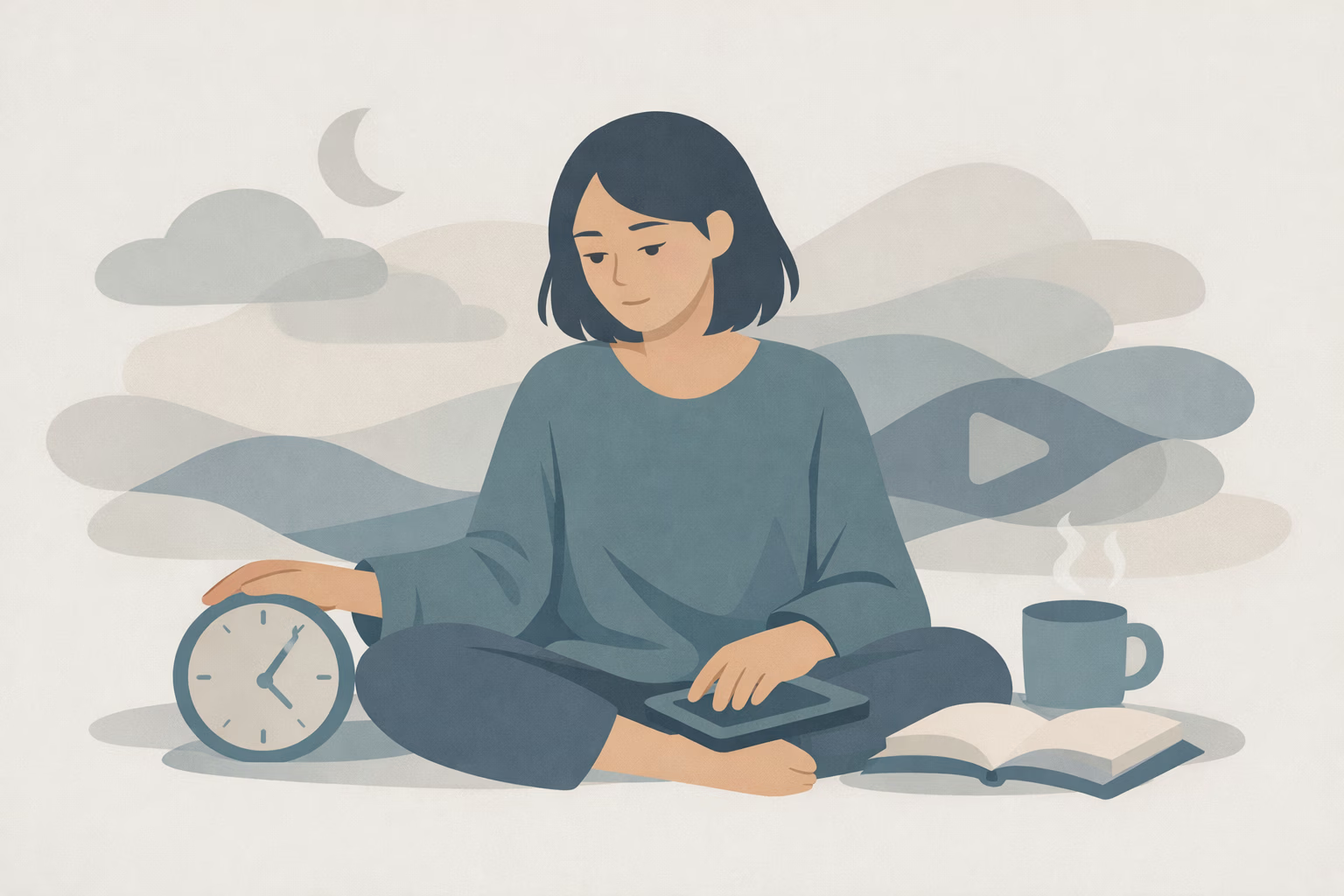
Revenge Bedtime Procrastination: Why You Delay Rest
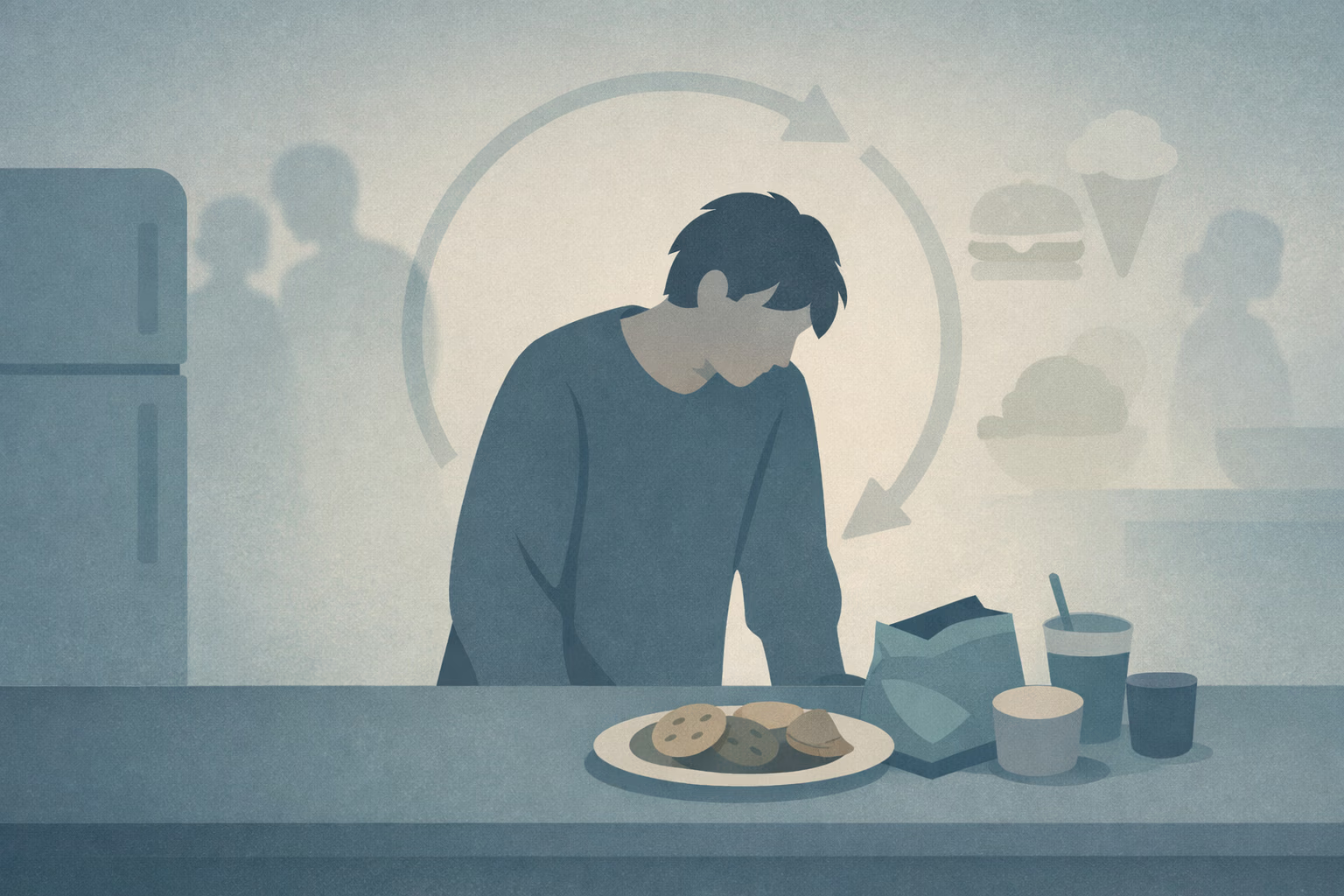
In short: You “should” be full, you “should” stop, you “should” go to bed. But many people who eat at night aren’t confused about nutrition.
Late-night eating is often described like a self-control problem: you “should” be full, you “should” stop, you “should” go to bed. But many people who eat at night aren’t confused about nutrition. They’re dealing with a nervous system that’s trying to settle after a long day of load, input, and unfinished mental loops.
What if late-night eating isn’t about willpower—what if it’s about the body reaching for completion?
In that frame, food becomes less of a moral issue and more of a reliable tool: quick sensory grounding, quick reward, quick quiet. The pattern can still be painful, but it stops looking like a personal defect and starts looking like an understandable response to evening vulnerability.
A common experience is feeling relatively functional during the day—handling tasks, communicating, making decisions—then hitting evening and suddenly feeling pulled toward the kitchen. It can show up as restlessness, a low-grade loneliness, or a sense that something is still “open” even if everything important is technically finished.
Late-night eating can also carry a particular emotional texture: the moment right before sleep can amplify what got postponed all day. Not necessarily big feelings—sometimes just unresolved mental noise. Food offers a rapid shift in state, and the body learns that this shift reliably arrives at night.
Many clinical descriptions of night-eating patterns note this timing: eating more in the evening, waking to eat, or feeling strong urges at night even when daytime intake is adequate. [Ref-1]
As the day runs on, the nervous system accumulates load. Fatigue doesn’t just mean tired muscles—it often means reduced capacity for complex inhibition, planning, and delay. At the same time, stress-related chemistry and reward sensitivity can become more influential in the evening for some people, making comfort cues feel louder and more urgent. [Ref-2]
This is not a character collapse. It’s a predictable shift: when the brain is less resourced for long-range thinking, it naturally leans toward immediate, reliable regulators. Food is one of the most available regulators we have—portable, fast, and socially permissible.
So the late-night urge can be understood as a state-based transition: not “I changed,” but “my system moved into a lower-capacity mode and reached for a proven stabilizer.”
Humans evolved with nighttime vulnerability. Darkness historically meant reduced visibility, greater uncertainty, and higher stakes for safety. It makes sense that evening hours can carry a subtle vigilance signature—especially when someone’s day has included conflict, evaluation, isolation, or unpredictability.
Circadian rhythms also shape appetite, alertness, and mood regulation, and in some night-eating presentations the timing systems themselves appear shifted or strained. [Ref-3] When the body’s internal clock and the demands of modern schedules don’t match well, evenings can feel like a confusing zone: wired but tired, full but still searching.
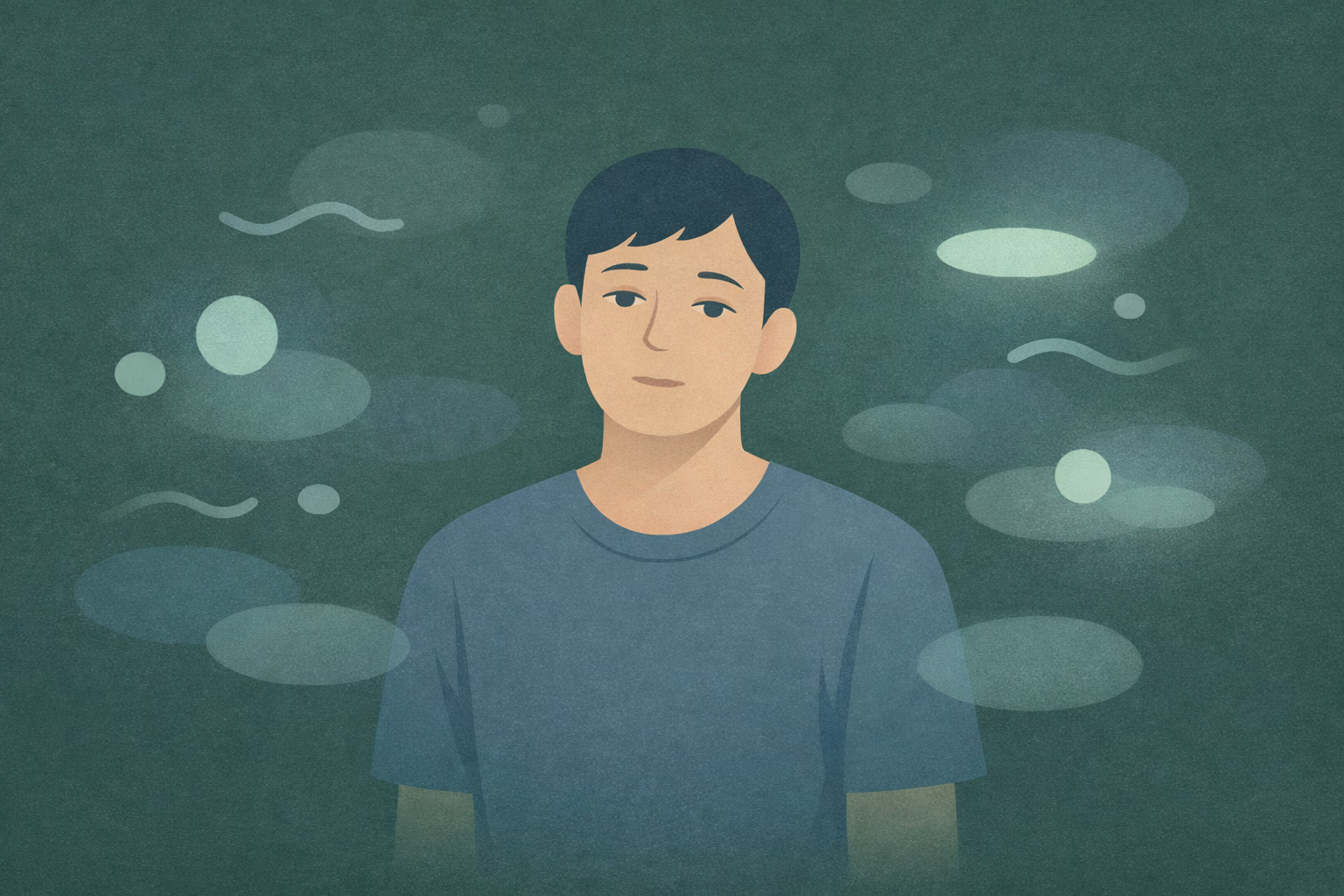
In that zone, the body may interpret quiet not as rest, but as an unstructured gap where unresolved signals return. Craving can be the form those signals take.
Late at night, food can function less like nourishment and more like a nervous-system tool. It narrows attention to taste, texture, temperature, and the immediate sequence of “get, eat, feel different.” That narrowing can be profoundly stabilizing when thoughts are spinning or the body is internally noisy.
It can also create a temporary sense of control: a clear beginning and end in a day that otherwise felt amorphous. From a brain perspective, choosing immediate reward over delayed reward is not simply a moral failure; it is strongly shaped by context, fatigue, and perceived safety. [Ref-4]
Sometimes it’s not hunger. It’s the first moment all day when my system realizes it’s still carrying everything.
The comfort is real. Eating can reduce agitation, soften loneliness, or mute the sense of internal pressure. The problem is that this relief often functions like a state change, not a completion signal. The nervous system gets a short quiet, but the original “open tabs” don’t actually close.
That’s why the pattern can carry an aftertaste: disrupted sleep, physical discomfort, or the next-morning sense of “I did it again.” Research and clinical descriptions link night eating with sleep disturbance and distress in some people, which can reinforce the cycle. [Ref-5]
Not because the person is weak—because the same conditions that created the late-night vulnerability are still present, and the body is using what works quickly.
“Avoidance” often gets translated into psychology words like fear or suppression. But structurally, avoidance loops can form anytime a system learns to bypass resistance and skip closure. Food becomes the bridge over an uncomfortable transition: from high stimulation to stillness, from doing to being done, from social roles to private silence.
In that sense, late-night eating is not primarily an emotional choice. It’s a learned regulation shortcut. The brain tracks that eating reliably shifts internal state, so the urge rises whenever the evening brings uncontained signals—restlessness, unfinished tasks, unresolved interactions, or the diffuse consequence of a pressured day.
Over time, the loop becomes self-reinforcing: the night becomes associated with needing food to land. Delay-of-gratification research repeatedly shows that what looks like “self-control” is often a context-dependent capacity, not a stable trait. [Ref-6]
Late-night eating has many faces. Some people eat a full second dinner. Some snack continuously. Some feel an almost magnetic pull toward certain foods. The details vary, but the structure is often similar: evening vulnerability + easy reward + temporary quiet.
From the outside, this can look like a discipline issue. From the inside, it often feels like a narrowing tunnel: fewer options feel possible, and the body chooses the one that reliably changes the state.
Repeated late-night eating can start to blur the body’s signals. Hunger and appetite cues can become less clear when eating is regularly paired with fatigue, stimulation, or emotional load rather than daytime metabolic need. Over time, the evening can become the primary window where appetite feels “real,” even if the body was underfed or overtaxed earlier.
This matters because circadian rhythm is not just about sleep; it helps coordinate digestion, energy use, and regulation. When eating is repeatedly shifted late, the body’s timing cues can become less coherent, which can make evenings feel even more dysregulated. Research connects eveningness patterns, night eating tendencies, and reward-driven eating in ways that suggest a broader timing-and-regulation mismatch. [Ref-8]
It’s less “bad habit” and more “the system adapted to a repeated schedule of late-day vulnerability.”
When late-night eating disrupts sleep—through digestion, blood sugar swings, or simply staying up later—the next day often starts with lower capacity. Lower sleep can mean higher irritability, higher stress sensitivity, and stronger pull toward quick rewards.
That sets up a predictable loop: the day is harder to regulate, which increases load; the evening arrives with less reserve; the body reaches again for the fastest regulator. Clinical overviews of night eating commonly note this interaction between sleep disruption and ongoing distress. [Ref-9]
So the pattern is not “night eating causes shame.” The pattern is “night eating sometimes prevents restoration,” and without restoration the same conditions reassemble.
If you zoom out, the late-night urge often carries a specific message: my system has not received a clear stand-down signal. It’s looking for containment—something that tells the body, “the day is finished, you are safe enough to stop scanning.”
This is where meaning matters. Not as an idea, and not as a mindset shift, but as a lived sense that the day has a coherent ending. When evenings include scattered input, unresolved conversations, or self-evaluation without closure, the nervous system can keep running a subtle threat-check. Food then becomes a ready-made “ending” because it is concrete, sensory, and finite.
Sleep-oriented resources often describe night eating within a broader picture of evening arousal and disrupted settling. [Ref-10] In that framing, the goal isn’t moral control; it’s creating conditions where the system can downshift without needing a substitute regulator.
Humans are regulated socially as much as internally. When connection is thin, conflict is unresolved, or days are spent performing competence, nighttime can feel like the first moment the system notices the cost. The urge to eat can be the body’s way of generating a “companion sensation”—warmth, fullness, heaviness—when interpersonal reassurance is absent or delayed.
Importantly, this isn’t about “processing feelings.” It’s about load and safety cues. When there is enough reassurance—through relationships, predictability, and gentle closure signals—the nervous system doesn’t need to manufacture the same level of internal containment through consumption.
Clinical discussions of nighttime binge patterns frequently highlight how stress, loneliness, and evening vulnerability can intensify urges, and how steadier support and structure can soften them. [Ref-11]
When the loop loosens, people often report a different quality of evening: less urgency, less tunneling, and more ability for the body to transition toward sleep. Not because the person is “trying harder,” but because their system is less overloaded and receives clearer signals of completion.
Restoration tends to show up as capacity returning: hunger cues feel more trustworthy, the evening feels less like a cliff-edge, and sleep becomes more available. Sources discussing night-only eating patterns often note that improving sleep and reducing nighttime distress can be associated with reduced late-night eating pressure over time. [Ref-12]
What changes when the day actually feels finished inside the body?
Often, the answer is simple: less need for a quick regulator, because the system has enough closure to stand down.
Repeated late-night eating can quietly shape identity: “I’m the kind of person who can’t stop,” “I always mess up at night,” “I don’t trust myself.” Those identities make evenings feel like a test—constant evaluation instead of recovery.
As coherence returns, the identity pressure often softens. Night becomes less of a battleground and more of a boundary: a time when the system expects restoration, not negotiation. That shift is not a motivational speech; it’s the byproduct of fewer unfinished loops and more reliable safety cues.
Resources on night eating emphasize that these patterns can be addressed within broader support for sleep, stress, and wellbeing—because the issue is rarely just food. [Ref-13]
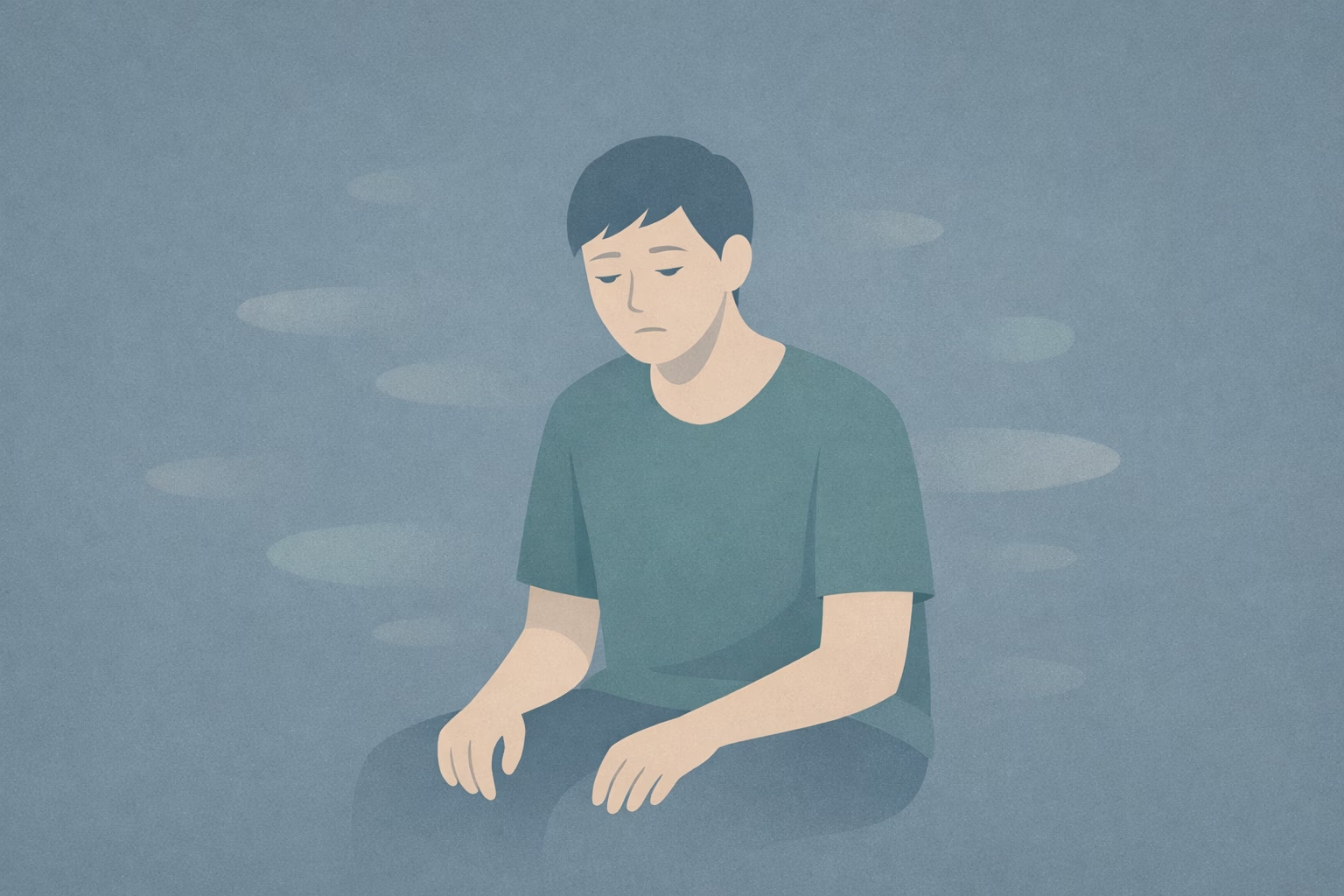
Late-night eating often makes sense when you see it as a signal: the day carried more load than your system could fully complete, and night is when that incompletion becomes audible. Food offers immediate quiet, so the brain recruits it—especially when capacity is low and the world finally stops demanding performance.
In a meaning-based frame, the central issue is not “how to stop eating.” It’s how often the day ends without closure—without a lived sense of completion, reassurance, and safety. When closure is missing, the nervous system keeps searching for something concrete enough to mark the transition. [Ref-14]
You deserve an interpretation that reduces shame: not “what’s wrong with me,” but “what was my system trying to finish?”
The most dignified understanding of late-night eating is that it’s a stabilizing response to a vulnerable time window. When the body can register safety and completion—when the day truly lands—there is less need for a fast substitute ending.
Not every night will be calm. But the direction of change is often recognizable: less urgency, fewer internal alarms, and more capacity for sleep to do what it’s built to do—restore. Descriptions of night eating consistently place it at the intersection of stress, sleep, and regulation, not personal failure. [Ref-15]
And that alone can be a form of relief: the pattern was never your identity. It was your nervous system trying to get you through the night.
From theory to practice — meaning forms when insight meets action.
Because the urge is often regulation, not nutrition. As the day runs on, the nervous system accumulates load and management capacity drops — reduced inhibition, planning, and delay, while reward sensitivity can become more influential. Food offers a fast change in internal state, and the body learns that this shift reliably arrives at night. The article frames this as evening vulnerability meeting an easy regulator. Not 'I changed,' but 'my system moved into a lower-capacity mode and reached for a proven stabilizer.' Late-night cravings can also amplify what got postponed all day — unresolved mental noise that becomes audible the moment the world stops demanding performance.
Not usefully framed that way. Delay-of-gratification research shows that what looks like 'self-control' is largely context-dependent — strongly shaped by fatigue, perceived safety, and load. By night the brain is less resourced for long-range thinking, so it leans toward immediate, reliable regulators. Food is one of the most available — portable, fast, socially permissible. The article reframes this as an Avoidance Loop where the body learned to bypass an uncomfortable transition with food: high stimulation to stillness, doing to being done, social roles to private silence. Not a moral failure; a learned regulation shortcut at a vulnerable time window.
Because the comfort is real but the original loops don't actually close. Eating produces a state change — agitation softens, loneliness mutes, internal pressure quiets — but functions like temporary quiet rather than completion. The aftertaste arrives later: disrupted sleep, physical discomfort, the morning sense of 'I did it again.' Sleep loss then feeds the next day with lower capacity, higher irritability, stronger pull toward quick rewards. The evening returns with even less reserve, and the body reaches again. Not because the person is weak — because the same conditions that created the late-night vulnerability are still present, and the body is using what works quickly.
Containment and an ending. The urge often carries a specific message: the system has not received a clear stand-down signal and is looking for something that says 'the day is finished, you are safe enough to stop scanning.' Food becomes a ready-made ending because it's concrete, sensory, and finite. The deeper shift comes when the day has lived closure rather than scattered input and unresolved interactions. Co-regulation matters — relational reassurance reduces the load on the nervous system to manufacture its own internal containment through consumption. When nights become genuinely restorative again, the identity pressure softens. The pattern was never identity; it was your nervous system getting you through the night.
From Science to Art.
Understanding explains what is happening. Art allows you to feel it—without fixing, judging, or naming. Pause here. Let the images work quietly. Sometimes meaning settles before words do.
One Quiet Window, one insight, one reflection — every Sunday