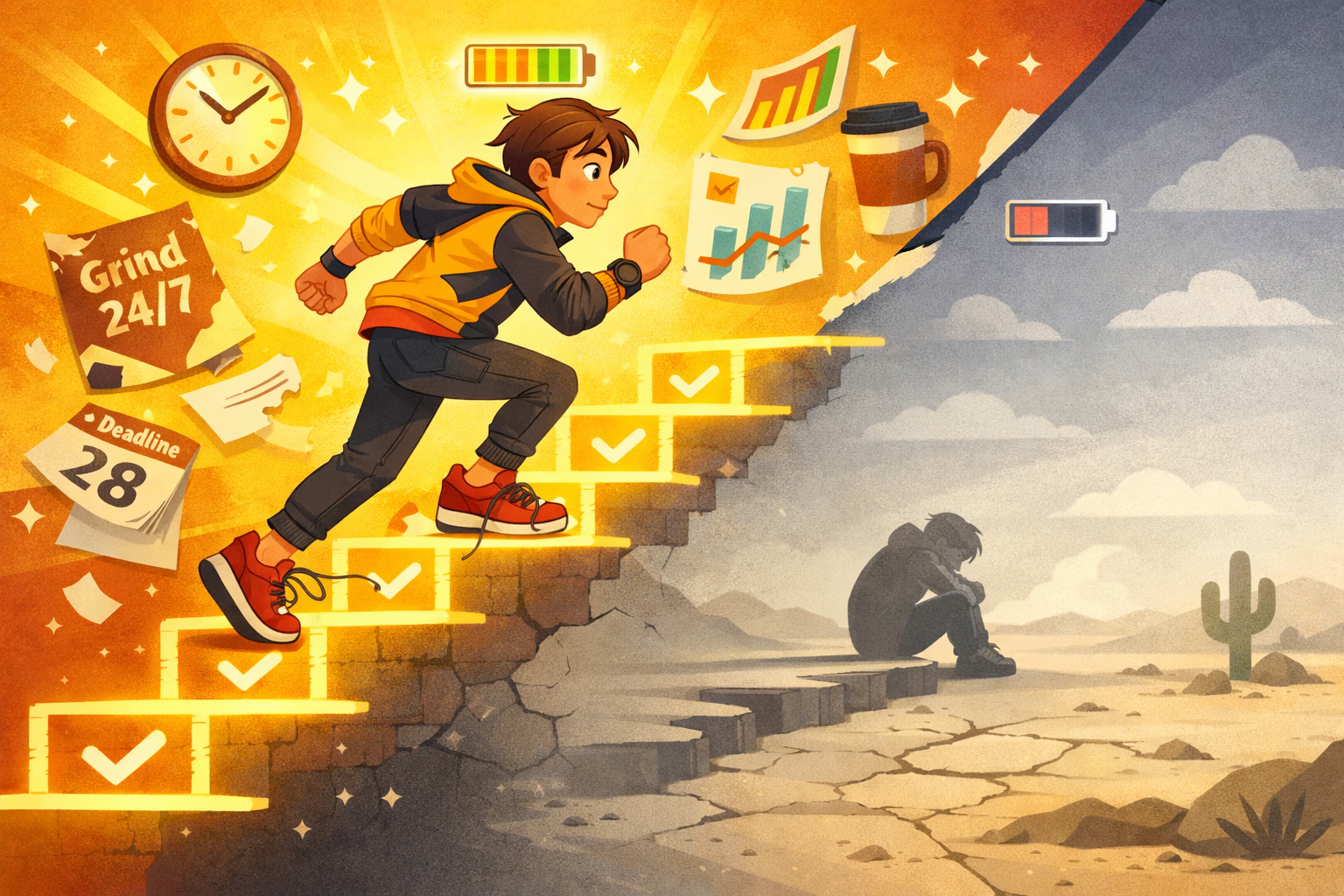
The Myth of Hustle Energy: Why You Crash Later
In short: Parental burnout isn’t a personality flaw or a parenting “mindset” problem. It’s what can happen when a caring nervous system is asked to stay responsive for too long without enough closure, support, or recovery—especially inside a digital environment that keeps demands, comparisons, and notifications continuously in reach.
Parental burnout isn’t a personality flaw or a parenting “mindset” problem. It’s what can happen when a caring nervous system is asked to stay responsive for too long without enough closure, support, or recovery—especially inside a digital environment that keeps demands, comparisons, and notifications continuously in reach.
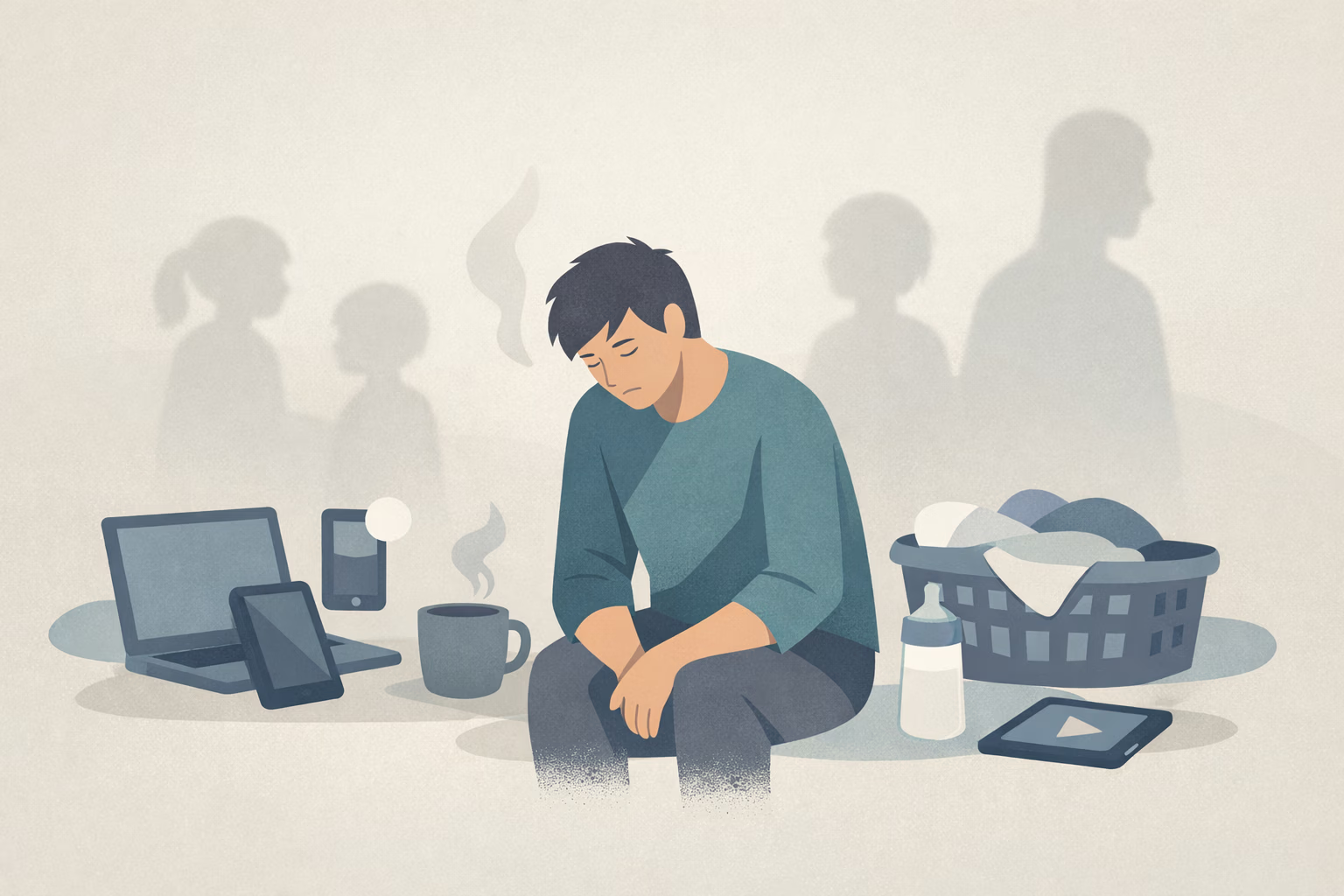
In the digital era, many parents are doing two hard jobs at once: raising children and managing a constant stream of information, logistics, and social evaluation. The result can look like depletion, irritability, numbness, or a sense of being strangely far away from your own life—even when you’re physically present.
What if burnout is less about “not trying hard enough,” and more about never getting a true done signal?
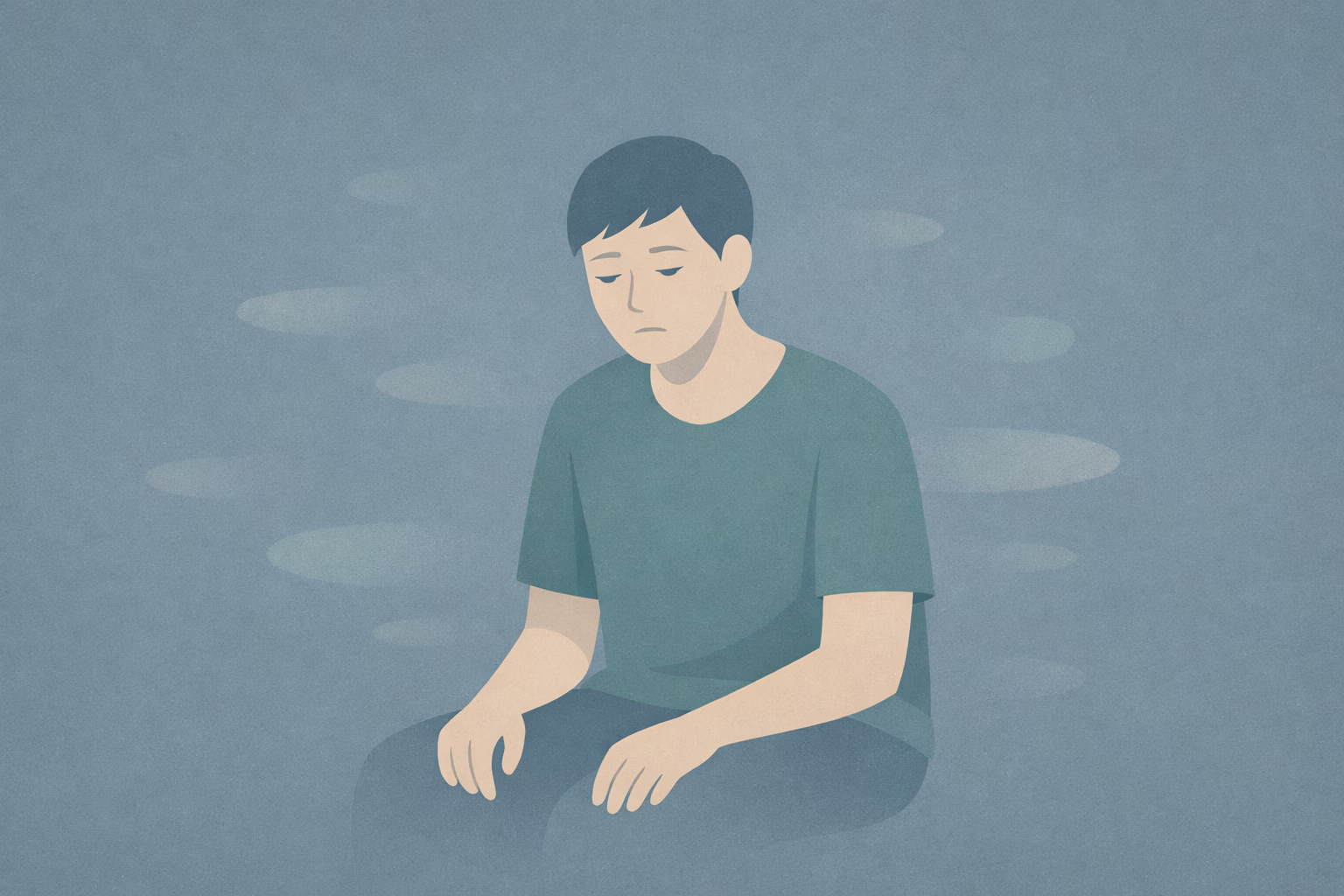
Many parents can recognize ordinary fatigue: you sleep, you reset, you return. Burnout is different. It’s persistent exhaustion paired with a shrinking sense of capacity—where even small needs feel like added weight, and recovery doesn’t arrive in the usual ways. [Ref-1]
This can include irritability, a shorter fuse, and a background guilt that says you should be more patient, more present, more grateful. But these signals often reflect load, not character. When the system is overdrawn, responsiveness becomes effortful, and effort feels endless.
Parenting already asks for frequent context-switching: feeding, soothing, teaching, planning, negotiating, cleaning, working. In a high-demand season, the nervous system can stay mobilized for long stretches—less “fight or flight” drama, more steady activation that never fully powers down. [Ref-2]
Digital life can intensify this by layering in extra micro-demands: pings, reminders, school portals, group chats, work messages, and constant “shoulds.” Even when nothing is overtly wrong, the body can interpret the pace as ongoing requirement, which limits the return of regulation signals that normally follow completion.
Over time, this can look like reduced tolerance for noise, touch, questions, or mess—not because the parent is uncaring, but because the system is trying to conserve what little bandwidth remains.
From an evolutionary perspective, caregiving was rarely a single-adult project. Children were held, watched, fed, and guided within wider networks. That distributed support did more than share tasks—it offered safety cues, social buffering, and natural pauses where the caregiver could stand down without fear that everything would fall apart.
In many modern contexts, parents have fewer built-in helpers, less intergenerational proximity, and more isolated responsibility. When support is fragmented, the attachment system can stay “on duty,” scanning for what’s next. The result is not simply tiredness; it’s the absence of a reliable off-switch.
Even when digital connection is available, it often arrives as information rather than embodied help—updates without relief, contact without load-sharing. That mismatch can quietly compound exhaustion. [Ref-3]
When a nervous system is overloaded, it naturally seeks rapid state-change. A brief scroll, a quick video, a few minutes of online shopping, a burst of cleaning, a new plan—these can create a momentary drop in felt pressure, partly because attention narrows and the brain receives a small reward signal.
This can resemble “taking a break,” but it often functions more like a detour: the body gets temporary relief without completing what it needed for closure. In parental burnout research, this kind of short-term soothing can coexist with deeper depletion, because it doesn’t reliably create the physiological conditions for recovery. [Ref-4]
Sometimes the problem isn’t that you can’t rest. It’s that your rest is being asked to compete with unfinished loops.
Digital tools can genuinely help parents coordinate life. But the same tools can also expand the work: more tracking, more visibility, more documentation, more expectations to respond quickly. This is where “efficiency” starts to look like ongoing exposure—an environment that keeps the mind partially activated even during downtime. [Ref-5]
Techno-distress isn’t only about screen hours. It’s about being continuously reachable, continuously evaluable, and continuously behind. The brain reads that as unresolved demand. Over time, this can flatten joy, reduce felt connection, and make caregiving feel like a sequence of tasks rather than a relationship.
When everything is measurable and shareable, where does “good enough and done” get to land?
In the Meaning Density Model frame, avoidance isn’t a moral failure or a fear-based quirk. It’s often a structural response: when load stays high and closure stays low, the nervous system leans toward whatever briefly reduces pressure. Screens, rigid control, over-planning, numbing, or checking out can become reliable ways to dampen intensity.
The catch is that these choices can also reduce the conditions that create true settling—like supported pauses, shared responsibility, and unfragmented presence. When guilt enters the loop (“I shouldn’t be on my phone”), pressure rises again, and relief-seeking can intensify. Research links parental stress, screen-related guilt, and relationship strain in ways that can keep this cycle running. [Ref-6]
Parental burnout often shows up as patterns, not a single symptom. Many of these are best understood as protective efficiency: the body and mind trying to reduce complexity and keep the day moving when there isn’t enough internal fuel.
In families, screens can also become a pressure valve—helping everyone get through the moment—while also contributing to more fragmentation and conflict about attention. These tensions are widely described in parenting and media discussions, even when the underlying driver is nervous-system load. [Ref-7]
Prolonged burnout doesn’t stay neatly contained. Over time it can shape the parent–child atmosphere: fewer spontaneous bids for connection, more reactive exchanges, and less consistent caregiving rhythms. Not from lack of love, but from reduced available capacity.
Chronic stress load can also ripple into physical health—headaches, body tension, immune changes—and into relational health, where partners or co-parents may misread depletion as indifference. In homes where screens are used heavily to manage strain, additional developmental and relational concerns may arise, especially when screens replace interactive time rather than supporting it. [Ref-8]
The biggest cost is often coherence: days blur together, nothing feels fully completed, and even “time off” can feel like a pause button rather than a reset.
Short-term coping often changes state, not structure. It can reduce felt intensity for a moment while leaving the underlying loops unfinished: unresolved tasks, unresolved social strain, unresolved fatigue, unresolved need for support. The nervous system remains partially mobilized because it has not received the cues that say, “You’re safe to stand down.”
Family research on stress and media use often describes a pathway where stress increases screen use, and screen use can then compound dysregulation—especially when it becomes the default relief channel rather than one tool among many. [Ref-9]
Relief is not the same as restoration. Relief quiets the alarm; restoration lets the system complete.
Reframing burnout through a coherence lens can be stabilizing: what hurts isn’t only how much you do, but how rarely your system gets to finish and settle. When the day is built from interruptions, partial attention, and constant evaluation, the body can stay in “monitoring mode.”
In this context, compassion isn’t a pep talk. It’s a recognition that your nervous system responds to conditions. The more an environment supports completion—fewer open loops, fewer competing cues, more predictable rhythms—the more likely capacity is to return without forcing motivation.
Screen exposure can play a role in how regulation develops and is supported in families, particularly when it displaces co-regulating interactions or contributes to rapid reward cycles. This doesn’t make screens “the villain”; it highlights how sensitive self-regulation is to context and pacing. [Ref-10]
Parents often report that what helps most isn’t a new system; it’s not being alone inside the system. Social support changes the math: tasks distribute, vigilance softens, and the nervous system receives cues of backup. That cue—“someone else is here”—is biologically meaningful.
Digital technology can sometimes strengthen social connection (especially when geography or schedules limit in-person support), but it matters whether connection translates into felt support rather than more comparison or obligation. Research during the pandemic, for example, described parents using technology to maintain social connection, with potential benefits when it reduced isolation. [Ref-11]
Small relational rituals—brief, reliable moments of being with someone without managing them—can also reintroduce a sense of belonging that calms the attachment system, even when life remains busy.
As load decreases and closure increases, improvement often looks less like a dramatic transformation and more like signal return: hunger cues make sense again, tiredness leads to settling more often, patience lasts longer, and there’s more flexibility when plans change.
Parents may notice fewer snaps, less scrolling-for-numbing, and more moments of genuine engagement. In children, healthier regulation is associated with the quality and context of media exposure and with the presence of responsive interaction around daily life. [Ref-12]
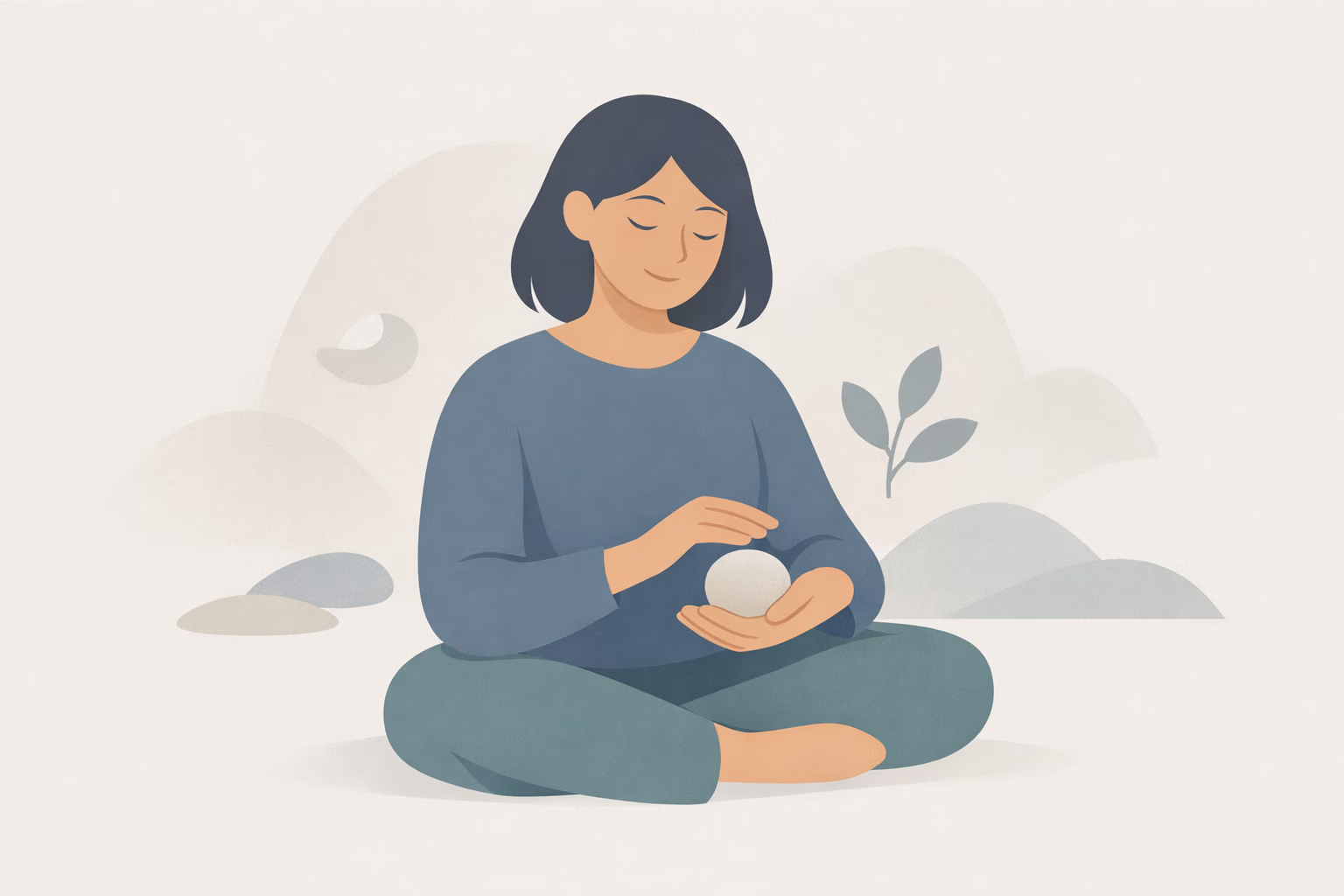
Importantly, this isn’t about becoming endlessly present. It’s about regaining the ability to shift states—mobilize when needed, then actually come down when the moment is over.
When caregiving becomes sustainable, it tends to feel more rhythmic than heroic. The parent is still busy, still imperfect, still human—but less trapped in urgent reactivity. There is more alignment between values (“how I want to be with my child”) and lived behavior because the body has enough capacity to follow through.
This is also where identity coherence quietly reforms. Instead of “I’m failing at parenting,” the story can become “I’m parenting under conditions that were over-demanding, and my system adapted.” That shift isn’t mere insight; it’s supported by the lived experience of more completion, more backup, and fewer unfinished loops.
When social wellbeing improves—through reduced isolation and more meaningful connection—digital tools can sometimes serve as bridges rather than drains, depending on how they shape attention and support. [Ref-13]
Parental burnout in the digital era often reflects a mismatch between what caregiving requires (support, pauses, closure, belonging) and what modern environments deliver (speed, fragmentation, evaluation, and constant reachability). Seeing it this way can reduce shame and return dignity: your system responded to conditions.
Meaning and agency tend to reappear when life contains more real completion—moments that land, relationships that share the weight, and rhythms that don’t demand constant self-interruption. Digital connection can help when it reduces isolation and increases felt support, but it can also drain coherence when it adds comparison and obligation. [Ref-14]
When the environment becomes more supportive, many parents don’t need to “become a new person.” They simply get to be themselves again—less pressured, more available, more able to recover.
Caregiving is one of the most meaning-rich roles humans take on, and it’s also one of the most demanding. When support and safety cues are present, sustainable energy and connection tend to return as a byproduct of reduced load and increased closure—not as a reward for pushing harder.
If burnout has been part of your story, it can be understood as adaptation under strain. With enough support—human, practical, and relational—the system often remembers how to settle. And when it settles, presence becomes less like performance and more like home. [Ref-15]
From theory to practice — meaning forms when insight meets action.
Ordinary fatigue resets — you sleep, recover, return. Burnout is persistent exhaustion paired with a shrinking sense of capacity, where small needs feel like added weight and recovery doesn't arrive in the usual ways. The article frames this as a nervous system asked to stay responsive too long without enough closure or recovery, especially in a digital environment that keeps demands continuously in reach. Signs include always-on vigilance, emotional flatness, over-responsibility, and shame after reactions. These signals reflect load, not character — when the system is overdrawn, responsiveness becomes effortful, and effort feels endless.
Because it changes state without restoring structure. A scroll, a quick video, a burst of online shopping creates momentary drops in felt pressure as attention narrows and the brain gets a small reward signal. The article distinguishes this from real recovery: relief quiets the alarm, restoration lets the system complete. Short-term coping leaves underlying loops unfinished — unresolved tasks, unresolved social strain, unresolved need for support. The nervous system stays partially mobilized because it hasn't received cues that say 'you're safe to stand down.' Relief and restoration aren't the same thing, even when they look similar.
Because the same tools that help coordinate life also expand the work — more tracking, more visibility, more documentation, more expectations to respond quickly. Efficiency becomes ongoing exposure: continuously reachable, continuously evaluable, continuously behind. The brain reads that as unresolved demand. The article frames this as an Avoidance Loop: high demand keeps the nervous system activated, activation without closure builds urgency and depletion, quick relief behaviors create temporary quiet, and temporary quiet without restoration shrinks capacity further. When everything is measurable and shareable, 'good enough and done' has fewer places to land.
Not a new system but not being alone inside the system. The article emphasizes that humans didn't evolve to parent alone, and many modern parents are functionally solo. Social support changes the math — tasks distribute, vigilance softens, the nervous system receives the biologically meaningful cue that someone else is here. Co-regulation through brief, reliable moments of being with someone without managing them recalibrates the attachment system. When load decreases and closure increases, what returns isn't a transformed personality — it's signal return: hunger makes sense, tiredness leads to settling, patience lasts longer, and presence becomes less performance and more home.
From Science to Art.
Understanding explains what is happening. Art allows you to feel it—without fixing, judging, or naming. Pause here. Let the images work quietly. Sometimes meaning settles before words do.
One Quiet Window, one insight, one reflection — every Sunday