Smartphone Addiction: How Tech Hijacks Your Dopamine System

In short: Many parents can describe the moment: a screen turns a tense afternoon into quiet, and then the quiet snaps—irritability, tears, refusal, or a tantrum that seems bigger than the situation. It can feel confusing because the screen looked like it helped.
Many parents can describe the moment: a screen turns a tense afternoon into quiet, and then the quiet snaps—irritability, tears, refusal, or a tantrum that seems bigger than the situation. It can feel confusing because the screen looked like it helped.
What if this isn’t a character issue in your child—or a parenting failure in you—but a nervous-system loop that never gets to “done”?
“Screen dysregulation” is a useful, non-shaming phrase for a pattern where a child’s attention, reward, and calming systems get pulled into fast, high-intensity digital stimulation more often than their developing brain can integrate. The result isn’t just more screen-seeking; it’s less capacity to return to baseline when the screen is gone.
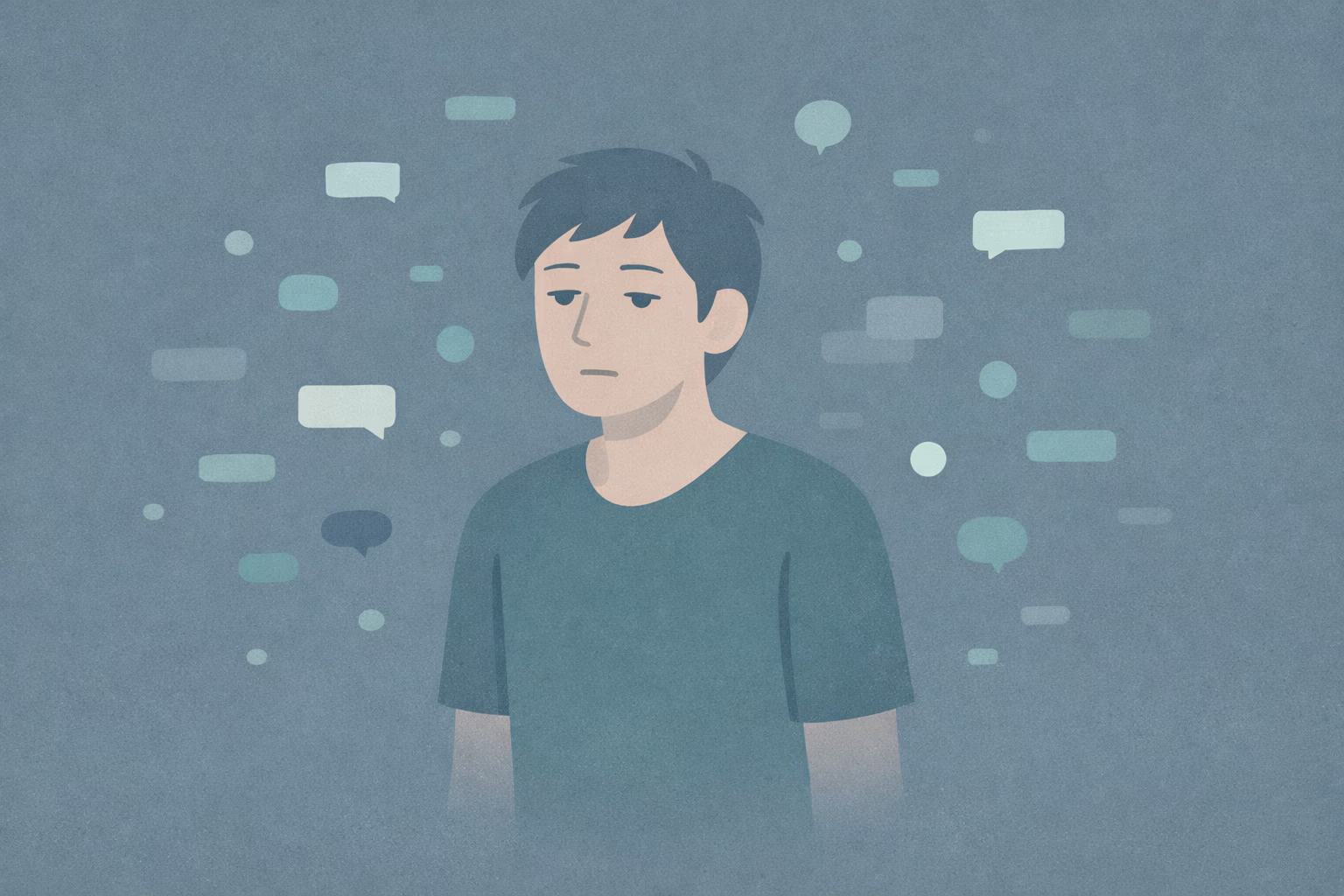
In many families, the first sign isn’t “too much screen time.” It’s a shift in the child’s baseline: more irritability, more volatility, more restlessness, and a shorter runway between “fine” and “flooded.” Parents often describe a child who can be delightful in one moment and unreachable the next.
This is also hard because it creates a relational echo. When a child is repeatedly hard to settle, the parent’s nervous system gets loaded too—more vigilance, more urgency, more depletion. Over time, both child and parent can start operating with less margin. Research has described screen use and emotional/behavioral challenges as a bidirectional pattern for some children, where distress and screen use can reinforce each other. [Ref-1]
When a child can’t come back down easily, the whole home starts living closer to the ceiling.
Screens are uniquely good at providing rapid novelty: quick scene changes, bright cues, sound effects, and frequent “wins.” For a developing brain, this can train attention toward speed and intensity—because those cues reliably deliver reward.
At the same time, the pathways that support slowing down—waiting, tolerating boredom, transitioning between activities—depend on repeated real-world cycles that include friction and completion. When digital stimulation is frequent, the nervous system practices “upshift” far more than “return.” Pediatric guidance often notes the connection between heavy screen use and stronger tantrum responses, especially around transitions or limits. [Ref-2]
Notice the structure here: the screen isn’t “causing bad behavior.” It can be changing the timing and training of the child’s attention-and-reward loops, which makes ordinary life feel comparatively underpowered.
Children didn’t evolve for an environment where stimulation is endless, portable, personalized, and friction-free. Human learning historically happened through sensory-rich repetition: physical play, faces and voices, shared routines, and gradual mastery. Those experiences come with natural pauses and “done” signals.
Digital content, by design, reduces the pause. It offers engagement without the same bodily effort, social negotiation, or time-based completion. In this mismatch, a child’s system can become more reactive to removal (because removal is a sudden drop in intensity) and less able to re-enter slower activities (because slower activities require more internal regulation). Clinicians and educators have described a “tablet-to-tantrum” cycle where dysregulation increases screen seeking, and screen seeking increases dysregulation. [Ref-3]
Screens can create a genuine short-term state change. A distressed child may become quiet, focused, or soothed. For a parent who is out of capacity, that shift can feel like air returning to the room—especially during dinner, errands, sibling conflict, or the last hour of the day.
It matters to name this without judgment: parents aren’t “taking the easy way out.” They are often making a regulation trade in the moment—choosing something that reduces immediate load. And many parents are also managing work pressure, limited childcare, and constant decision fatigue.
Evidence-informed parenting resources note that screens are commonly used to manage children’s emotions because they reliably capture attention fast. [Ref-4] The problem isn’t that the calm is fake. The problem is that the calm doesn’t complete the loop—it suspends it.
Modern screens come with reassuring narratives: learning apps, “STEM” videos, language exposure, social connection. Some content can be genuinely informative. But regulation isn’t the same as information intake.
A child can learn facts and still become more volatile around transitions, more rigid about access, or less resilient during ordinary friction. That’s because the nervous system is adapting not just to content, but to the pacing, reward schedule, and sensory intensity of the medium.
Reviews aimed at parents have highlighted that using electronic media to calm can be associated with more tantrums later—especially when a child comes to rely on that specific input as the primary downshift. [Ref-5]
In the Meaning Density Model™ lens, this isn’t a “bad habit.” It’s a loop shaped by conditions: high load, few pauses, constant demand, and a tool that reliably reduces friction right now.
An avoidance loop isn’t always conscious avoidance. Often it’s a structural bypass: the system skips the slower, messier pathway that would eventually create closure (settling after a hard moment, completing a transition, repairing after conflict). The screen provides a quick off-ramp—effective for state change, but not designed for completion.
Over time, the brain can learn: discomfort → screen → relief. The child’s system gets fewer chances to finish the discomfort-to-settled arc, and the parent’s system gets fewer chances to experience “we got through that.” Systematic research on early screen media exposure has examined links with self-regulation challenges, consistent with this kind of reinforcement loop. [Ref-6]
When a child is screen-dysregulated, the household often sees repeatable patterns. These aren’t moral indicators. They’re signals that the child’s regulation system is getting trained toward one specific kind of input and one specific kind of relief.
Research suggests effortful control and screen use can be bidirectionally linked in early childhood—meaning regulation challenges can increase screen use, and screen use can further challenge regulation. [Ref-7]
When high-intensity stimulation becomes a primary regulator, a child can have fewer opportunities to build the internal timing of settling. Not because they aren’t capable, but because their daily environment is giving them fewer complete regulation cycles.
Over months and years, this can show up as reduced stress tolerance (small frustrations feel huge), reduced patience for incremental mastery (practice feels intolerable), and a narrower window for social learning (faces and real-time conversation don’t deliver rapid reward). It can also affect sleep rhythms and family connection, which are major sources of nervous-system stability.
Longitudinal and review research has examined associations between early screen media use and effortful control/self-regulation, including the possibility of bidirectional influence over time. [Ref-8]
One reason this cycle is so sticky is that it works for both sides—briefly. The child gets rapid reward and relief; the parent gets a drop in household intensity. Both nervous systems learn that the screen is a powerful interrupter of strain.
But because the loop ends in interruption rather than completion, the underlying activation often returns quickly—sometimes with extra charge. That can look like bigger reactions, more insistence, or faster escalation the next time the screen is unavailable. And as the parent becomes more depleted, their threshold for another “hard moment” lowers—making the screen feel even more necessary.
Clinical commentary has increasingly discussed how increased screen time may relate to children’s emotional growth and regulation capacity, especially when screens become the default soothing pathway. [Ref-9]
It can be clarifying to shift the frame from “How do we stop screens?” to “What would help this child’s system reach completion more often?” That’s not a mindset trick; it’s a different way of naming the nervous-system task underneath the conflict.
When children regain balance, it typically isn’t because someone finally found the perfect rule. It’s because the pace of stimulation becomes more tolerable, and the child experiences repeated, embodied cycles of: activation → transition → settling → re-engagement. Those cycles create the physiological “done” signal that screens often postpone.
Many discussions of problematic digital use across ages describe how paced exposure and supportive routines can reduce compulsive pull by rebuilding regulation pathways. [Ref-10] In kids, the principle is similar even though the context is different: stability tends to return when the environment allows more predictable downshifts and fewer abrupt intensity cliffs.
Coherence isn’t control. It’s when the day has enough endings that the nervous system can stand down.
Children learn regulation inside relationship. This doesn’t mean parents must be endlessly calm or endlessly available. It means that consistent cues—voice tone, pace, predictable transitions, shared attention—help a child’s system borrow stability until it can generate more of it internally.
When screens have become the main downshift, co-regulation can look like restoring non-digital safety cues: faces, routines, movement, play, and small rituals that have a beginning and an end. Over time, these repeated sequences create closure pathways that don’t rely on high-intensity input.
Parenting resources focused on self-regulation emphasize that screen time can impact the development of these skills, and that relational scaffolding supports a child’s return to baseline. [Ref-11]
As load decreases and more daily loops reach completion, many families notice changes that are subtle at first: fewer sudden spikes, easier transitions, a bit more flexibility. Not perfection—just more capacity.
Importantly, restoration isn’t the child becoming “easy.” It’s the child’s system becoming less dependent on intensity to feel okay, and more able to engage ordinary life without constant external regulation. That can include more self-directed play, better tolerance for waiting, and more reliable sleep-wake rhythms.
In family systems, it also often includes a shift away from overmanagement—because when a child shows more internal stability, adults can step back from constant preemption. Research on overprotection and dependency attitudes highlights how chronic guarding can shape a child’s sense of capability, which is relevant when families are trying to rebuild autonomy after a high-control phase. [Ref-12]
When regulation returns, children don’t simply “use screens less.” They start to find other sources of reward that carry completion: building something, finishing a game with rules, making up a story, being part of a family task, connecting with a friend, moving their body and then resting.
This is where meaning shows up—not as a concept, but as lived orientation. The child experiences themselves as someone who can begin, persist, and finish. That identity-level settling is protective. It reduces the need for urgent escape because life contains more coherent arcs.
Families may also notice a healthier balance between guidance and autonomy: less rescuing, more confidence that the child can handle small frustrations without immediate replacement stimulation. Work on dependency and achievement attitudes suggests that how adults structure support can influence a child’s sense of agency over time. [Ref-13]
When a child looks “addicted to screens,” many parents feel panic or shame. But a more stabilizing interpretation is often available: the child’s nervous system is responding to an environment that delivers powerful stimulation with very few natural endings.
Seen this way, the central question becomes less about blame and more about coherence—how a family can hold modern digital life while still protecting the slow, completing experiences that build self-regulation. Pediatric parenting education has noted that screen time may impact self-regulation skills, which supports treating this as a developmental load issue rather than a moral one. [Ref-14]
Agency returns when the household has more moments that actually finish: meals that conclude, play that resolves, conflicts that repair, evenings that downshift. Not because anyone forces it—because the system finally gets enough closure to rest.
Children are not meant to self-regulate in a vacuum, and parents are not meant to carry constant intensity without support. When screen-driven stimulation has been doing the regulating, it makes sense that removal feels like a threat—there’s a real drop in nervous-system scaffolding.
The hopeful part is also biological: as a child’s days contain more predictable rhythm and more completed loops, the baseline can return. That looks like calmer attention, easier transitions, and a growing ability to engage without needing digital intensity as the primary regulator—an outcome consistent with mainstream pediatric guidance on screens and self-regulation. [Ref-15]
From theory to practice — meaning forms when insight meets action.
Because the screen suspended the loop, it didn't complete it. A distressed child becomes quiet and focused, but the underlying activation is still there — interruption isn't closure. When the screen turns off, the system experiences a sudden drop from high-intensity input back to ordinary life, and ordinary life feels comparatively underpowered. Screens train the brain on speed and rapid reward, while regulation depends on practicing 'return' — waiting, transitioning, tolerating boredom. When upshift is practiced far more than return, removal lands as a sharp intensity cliff. The tantrum isn't about the screen being taken away; it's about a nervous system that didn't get to finish the discomfort-to-settled arc.
It's a real short-term state change, but it isn't completion. Calm and closure aren't the same thing. The screen reliably reduces immediate load — for the child and the parent — which is why it feels like air returning to the room. But because the loop ends in interruption rather than completion, the underlying activation often returns quickly, sometimes with extra charge. Both nervous systems learn the screen is a powerful interrupter of strain. Over time the brain learns: discomfort → screen → relief, with no chance to practice settling. This isn't 'taking the easy way out' — it's a regulation trade in the moment. The cost shows up later, not now.
Because their brains evolved for slow learning — sensory-rich repetition, faces and voices, shared routines, gradual mastery. Those experiences come with natural pauses and Done Signals. Digital content reduces the pause by design. It offers engagement without the bodily effort, social negotiation, or time-based completion that build regulation pathways. In this mismatch, a child becomes more reactive to removal because removal is a sudden drop in intensity, and less able to re-enter slower activities because slower activities require internal regulation they haven't gotten to practice. Effortful control and screen use can become bidirectional: dysregulation increases screen seeking, and screen seeking further challenges regulation.
By shifting the frame from 'how do we stop screens?' to 'what helps this child reach completion more often?' Stability returns when daily life provides repeated embodied cycles of activation, transition, settling, and re-engagement. Co-regulation isn't fixing feelings — it's lending a stable rhythm: voice tone, pace, predictable transitions, shared attention. Non-digital safety cues like faces, routines, movement, and small rituals with a beginning and end create closure pathways that don't rely on high-intensity input. Restoration isn't the child becoming easy. It's the system becoming less dependent on intensity to feel okay, with more capacity to engage ordinary life without constant external regulation.
From Science to Art.
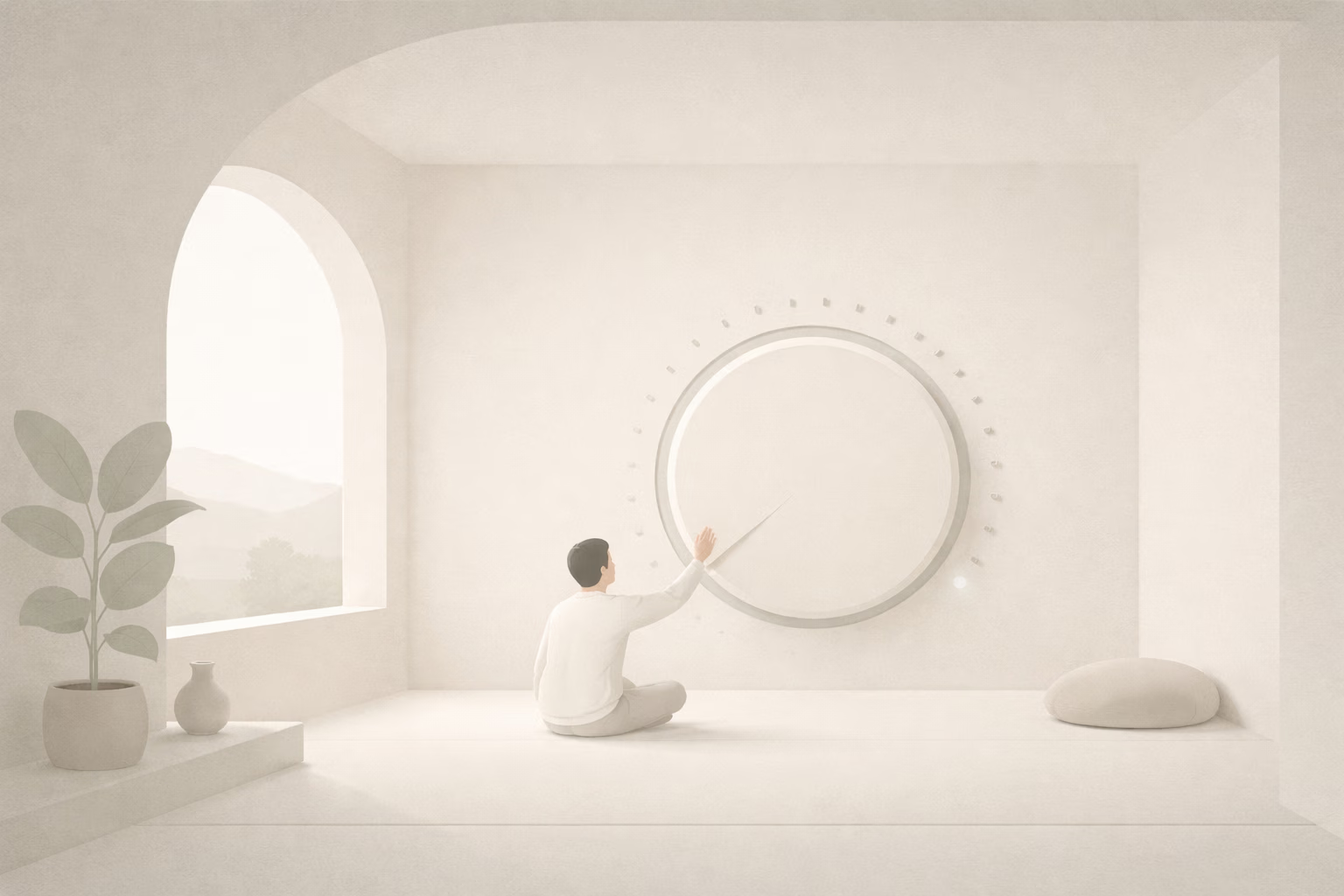
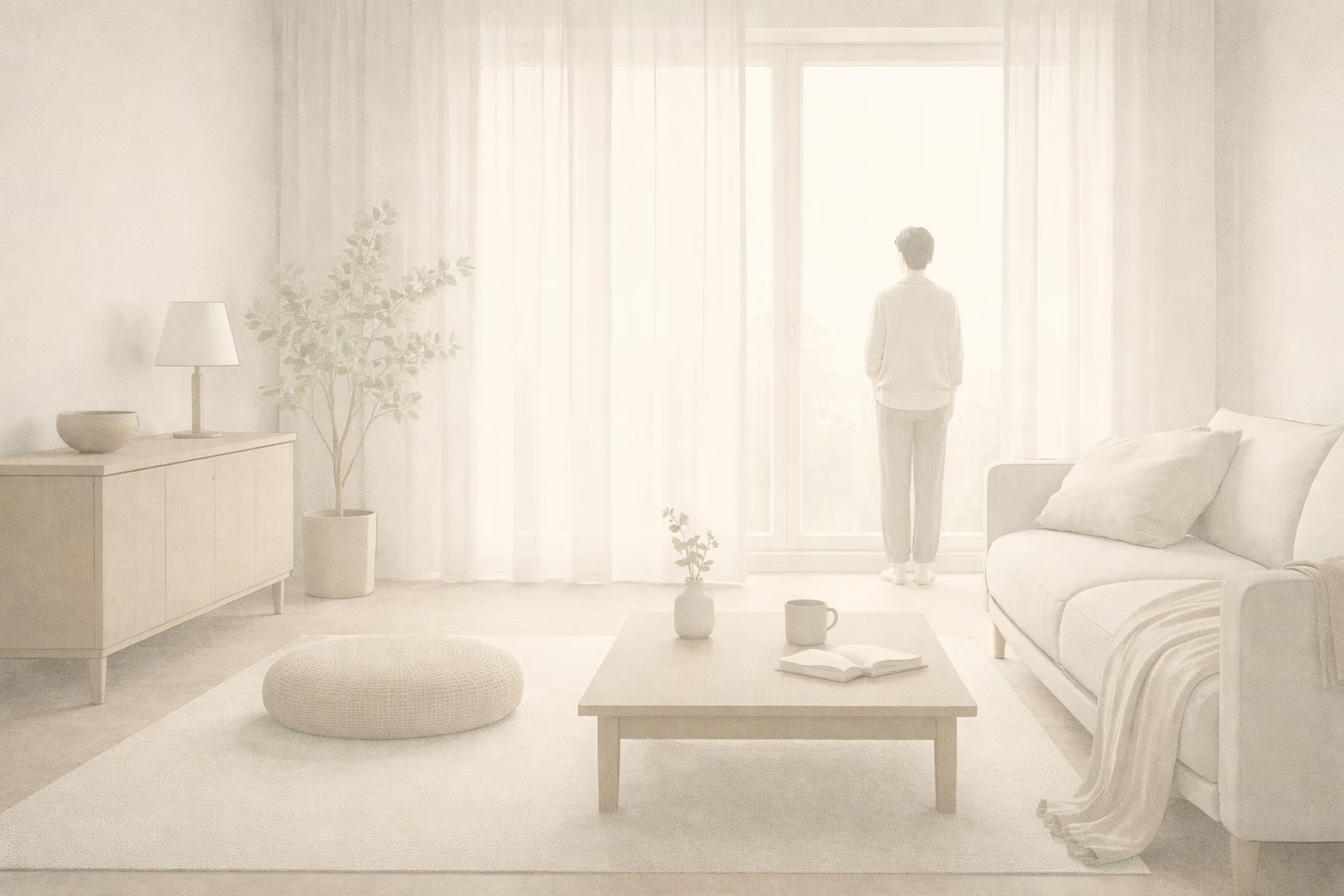
Understanding explains what is happening. Art allows you to feel it—without fixing, judging, or naming. Pause here. Let the images work quietly. Sometimes meaning settles before words do.
One Quiet Window, one insight, one reflection — every Sunday