The Psychology of Comfort Zones: Why Leaving Feels Impossible
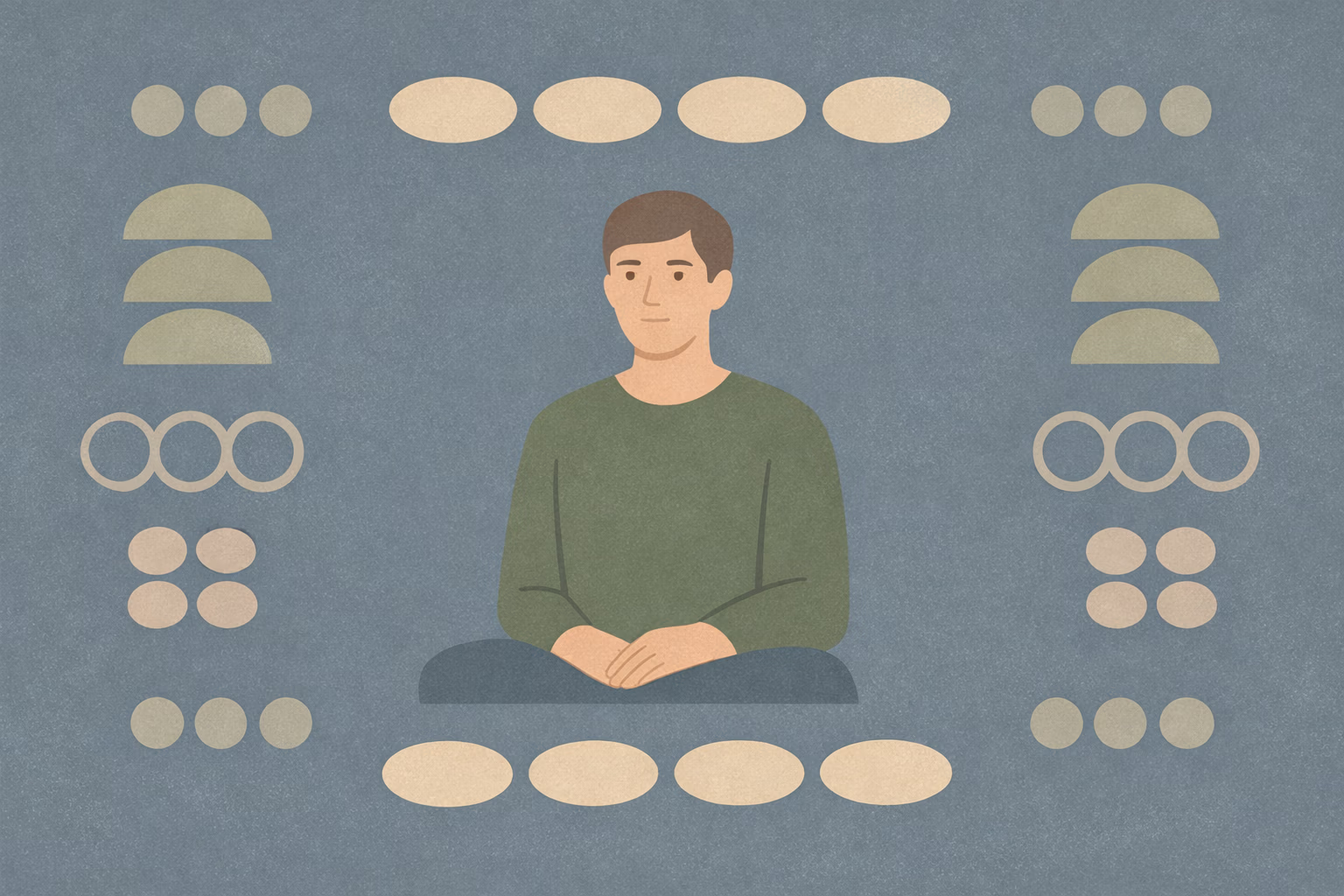
In short: It reduces decisions, lowers uncertainty, and gives the day a shape your nervous system can recognize. In a world that asks you to adapt constantly, that familiarity can feel like shelter.
Routine can be a relief. It reduces decisions, lowers uncertainty, and gives the day a shape your nervous system can recognize. In a world that asks you to adapt constantly, that familiarity can feel like shelter.
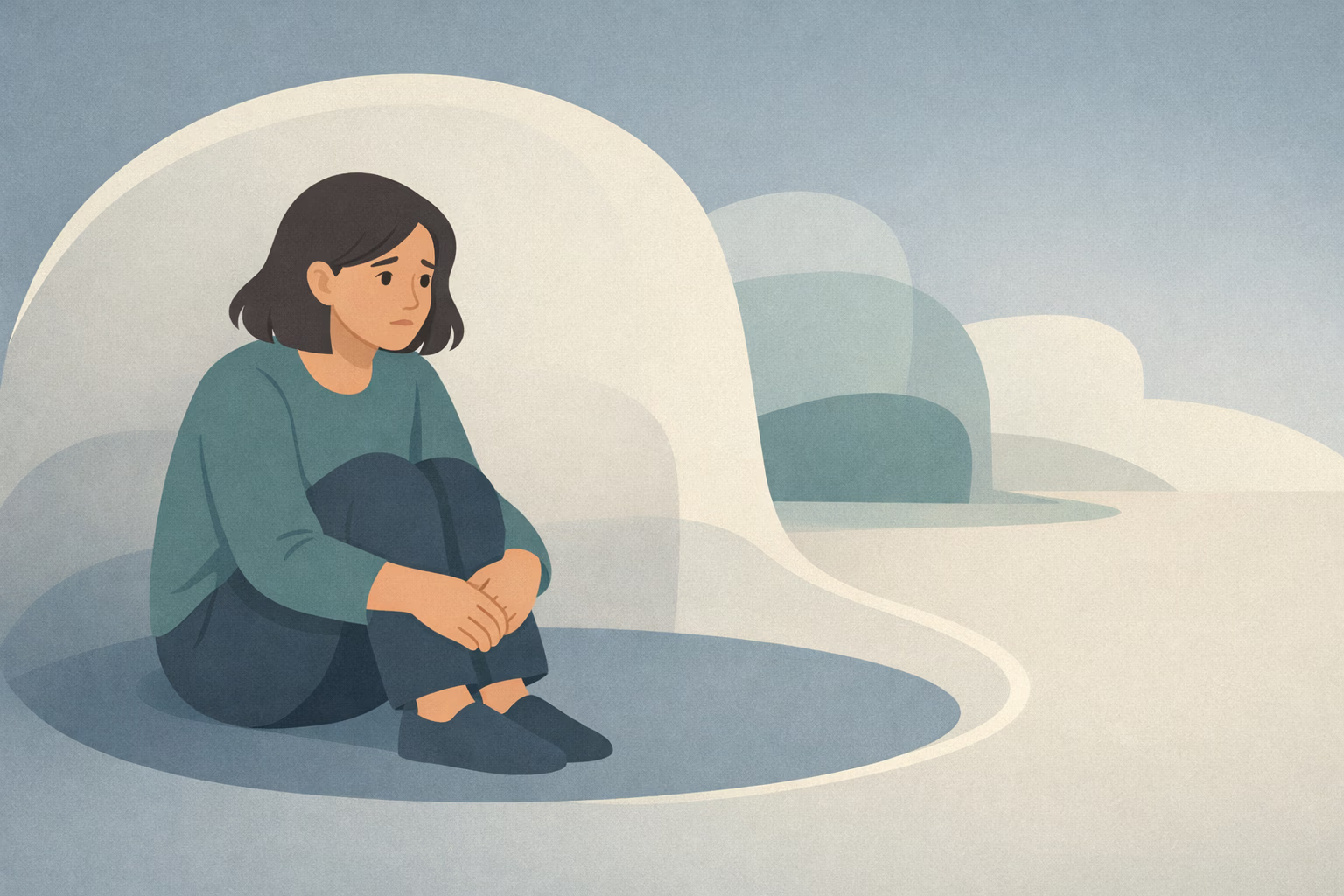
But sometimes the comfort of “same” becomes less like support and more like a soft enclosure. Not because anything is wrong with you—because predictability can stand in for closure, and relief can mimic stability. Over time, your life can look fine from the outside while feeling smaller from the inside.
What if your attachment to routine isn’t a personality trait—but a safety strategy that worked so well it started costing you range?
Many people can describe the feeling precisely: a quiet restlessness, a low-level boredom, a sense that something is “next,” paired with a strong pull to keep everything as it is. You might even like your routine, yet still feel a thin layer of dissatisfaction underneath it.
This is often framed as indecision or a lack of courage. A more accurate frame is tension between two valid system needs: the need to explore and the need to stay regulated. When your nervous system is carrying load, “new” can register as additional demand—so the familiar becomes the easiest place to land. [Ref-1]
Sometimes the day isn’t repetitive because you love it. It’s repetitive because it’s the only version of the day that doesn’t spike the internal volume.
Predictability lowers threat activation. When the brain can forecast what happens next, it spends less energy scanning, interpreting, and preparing for surprises. That reduction in uncertainty is physiologically soothing: fewer internal alarms, fewer micro-adjustments, less vigilance.
That’s why routines can feel like a balm—especially after periods of instability, high demand, social strain, or chronic overstimulation. The nervous system isn’t “attached” to the routine for sentimental reasons; it’s responding to the measurable difference between predictable and unpredictable inputs. [Ref-2]
When you’re already at capacity, routine functions like a low-noise channel. The catch is that calming is not the same as completion. You can be soothed while still unfinished.
From an evolutionary perspective, preference for the known makes sense. In uncertain environments, the safest route, the familiar food source, the known social rules, and the repeatable shelter increased survival. Novelty could mean opportunity—but it could also mean danger.
Modern life isn’t a savannah, but your nervous system still uses similar sorting: familiar often equals lower risk. So when life becomes complex, the system can default to what has historically kept you safe—repetition, controlled environments, and predictable sequences. [Ref-3]
Seen this way, clinging to routine isn’t a moral failure. It’s a protective bias that becomes more pronounced when stress load is high.
Routine is not the enemy. It can provide real benefits: stability, time structure, and an easier start-up for daily tasks. It can reduce decision fatigue by turning many choices into defaults, freeing energy for what matters.
It also provides safety cues: “I know how this goes.” Even subtle cues—same route, same playlist, same lunch—can signal to the body that it won’t need to mobilize extra resources.
The issue is not having routines. The issue is when routine becomes the primary method for regulating your internal state, rather than a supportive structure inside a larger life. [Ref-4]
Rigid routine can look like stability while functioning like contraction. The calendar stays neat, the choices stay narrow, the environment stays controlled—and the nervous system stays spared. But over time, that same predictability can reduce your contact with meaningful novelty: new skills, new relationships, new settings, new forms of contribution.
This is how stagnation can happen without drama. Not a crisis—just a gradual shrinking of options. Your world becomes easier to manage, but also less dimensional. The cost is often felt as muted excitement, reduced creativity, and a quieter sense of personal aliveness. [Ref-5]
Stability isn’t only “nothing goes wrong.” It’s also “life can move without breaking me.”
An avoidance loop doesn’t require conscious fear or dramatic resistance. Structurally, it can form when one behavior reliably reduces internal load and another behavior reliably increases it. Over time, the system selects the lower-load option—especially when resources are limited.
Rigid routine is one way this happens. Sameness reduces uncertainty, uncertainty raises activation, so the system learns: repeat to feel better. Relief arrives quickly, which strengthens the pattern. The loop can run quietly for years because it produces immediate calm while postponing the “done” signal that comes from completed experiences and integrated change. [Ref-6]
In this frame, the attachment is not about weakness. It’s about a nervous system that has learned which choices keep it inside tolerable ranges.
When routine is supportive, it feels like scaffolding—useful, but not controlling. When routine is serving as protection, it can start to feel like the only way the day works. The signals are often practical rather than emotional: narrowed behavior, tightened schedules, reduced spontaneity, and heightened sensitivity to disruption.
None of these make you broken. They suggest a system that has learned to treat novelty as a higher-cost input—and to conserve capacity by narrowing the field. [Ref-7]
Adaptability is not a personality trait; it’s a capacity state. When you have enough internal slack, variation is workable. When you don’t, variation feels expensive. Overreliance on routine can gradually reduce that slack even further, because the system gets fewer opportunities to complete new experiences and file them as safe, usable, and “known.”
In practical terms, this can limit creativity and problem-solving. Creativity often requires tolerating unfinishedness—drafts, experiments, uncertain outcomes. If your nervous system has learned to prioritize quick relief and predictability, creative loops can stay incomplete, and the sense of possibility can flatten. [Ref-8]
Life changes then feel more disruptive than they otherwise would, not because you can’t handle them, but because the system hasn’t been practicing flexible responses in low-stakes ways.
One of the most powerful reinforcers in the nervous system is relief. When something lowers activation quickly, the brain tags it as effective and worth repeating. Predictable routines often do this reliably: same inputs, same outcomes, lower uncertainty.
Over time, this can make novelty feel increasingly “loud.” Not because novelty objectively became more dangerous, but because the baseline has become more protected. The contrast sharpens: predictable feels soothing, unpredictable feels intense. The system then chooses predictability more often, which strengthens the loop further. [Ref-9]
This is how a routine can turn into a narrow hallway: not by force, but by repeated selection of what produces the fastest stand-down signal.
There’s a difference between external safety (controlling the environment to keep it predictable) and internal safety (having enough capacity to meet variation without overload). When internal safety is present, routine becomes optional support instead of a requirement.
Importantly, this isn’t about convincing yourself that uncertainty is fine. It’s about the nervous system learning, through completed action-outcome experiences, that you can influence what happens next and return to baseline afterward. When outcomes feel controllable in real, embodied ways, threat avoidance tends to decrease. [Ref-10]
Flexibility isn’t a mindset you force. It’s what shows up when your system trusts it can move and still come home to itself.
Humans regulate in context. Safe connection can reduce threat load because it provides cues of protection, shared attention, and social buffering. When you feel accompanied—seen, not evaluated—the nervous system often spends less energy on scanning and self-monitoring.
This matters because experimentation (new roles, new places, new conversations) is easier when the cost of error is lower. Supportive relationships can function like a stabilizing frame around change: not pushing you forward, but making it less risky to be in motion. [Ref-11]
In many lives, the biggest expansion doesn’t come from more willpower. It comes from having at least one place where you don’t have to hold everything alone.
As stress load decreases and life contains more completion—more experiences that end cleanly, resolve, and settle—curiosity often returns as a signal of available capacity. Curiosity is not a virtue. It’s a sign the system has enough bandwidth to approach without needing immediate certainty.
With more bandwidth, uncertainty becomes less of an emergency and more of a normal part of living. Openness can show up as a willingness to consider options, to let a day be slightly different, or to hold multiple possible outcomes without immediately collapsing into the safest one.
Routine still matters here, but it functions differently: it supports baseline well-being rather than acting as the sole regulator of state. In this way, daily structure can coexist with psychological flexibility. [Ref-12]
When routine is aligned with values, it feels like a chosen container for what matters—sleep, nourishment, movement, connection, focus, rest. It supports continuity without demanding sameness. It can bend without breaking.
In that mode, routine stops being a hiding place and becomes a platform. It helps you show up for your life while leaving room for variation, learning, and surprise. The nervous system doesn’t require identical days to stay regulated; it requires reliable signals that needs will be met and that experiences can reach completion. [Ref-13]
Routine becomes protective only when it must be perfect to keep you steady.
If familiarity has been holding you back, it may be because your system has been doing something intelligent: prioritizing safety in an environment that often feels too fast, too evaluative, or too fragmented. Seen this way, the attachment to routine is not a flaw—it’s a clue about what your life has been asking your nervous system to carry.
Meaning tends to grow where life feels coherent: where actions match values, where experiences complete instead of endlessly restarting, and where stability comes from reliable support rather than fixed sameness. Routine can be part of that coherence when it’s flexible enough to serve a living life. [Ref-14]
You don’t need to abandon structure to grow. You need structure that doesn’t require you to disappear inside it.
Predictability is a real form of care for the nervous system. And it’s also meant to be a base, not a boundary. Growth tends to emerge when safety supports exploration—when steadiness makes room for life to expand—rather than when safety replaces life itself. [Ref-15]
From theory to practice — meaning forms when insight meets action.
Because two valid system needs are in tension: the need to explore and the need to stay regulated. When your nervous system is carrying load, 'new' registers as additional demand, so the familiar becomes the easiest place to land. This isn't indecision or lack of courage. Predictability lowers threat activation — fewer alarms, fewer micro-adjustments, less vigilance. After periods of instability or chronic overstimulation, routine functions like a low-noise channel. Sometimes the day isn't repetitive because you love it; it's repetitive because it's the only version of the day that doesn't spike the internal volume. Calming is not the same as completion.
No — routine itself isn't the issue. It provides real benefits: stability, time structure, easier task start-up, and reduced decision fatigue. Subtle cues like same route, same playlist signal to the body that it won't need to mobilize extra resources. The problem is when routine becomes the primary method for regulating internal state rather than a supportive structure inside a larger life. Rigid routine can look like stability while functioning like contraction: the calendar stays neat, choices stay narrow, the nervous system stays spared, and contact with meaningful novelty decreases. Stability isn't only 'nothing goes wrong.' It's also 'life can move without breaking me.'
Structurally, not consciously. When one behavior reliably reduces internal load and another raises it, the system selects the lower-load option — especially when resources are limited. Sameness reduces uncertainty; uncertainty raises activation; the system learns repeat to feel better. Relief arrives quickly, which strengthens the pattern. The loop runs quietly for years because it produces immediate calm while postponing the Done Signal that comes from completed experiences and integrated change. Over time, novelty starts feeling louder — not because it became more dangerous, but because the baseline became more protected. The contrast sharpens, and predictability gets chosen more often.
Internal vs external safety. External safety controls the environment to keep it predictable. Internal safety has enough capacity to meet variation without overload. When internal safety is present, routine becomes optional support instead of a requirement. When routine is aligned with values, it's a chosen container for what matters — sleep, nourishment, movement, connection — supporting continuity without demanding sameness. It bends without breaking. Routine becomes protective only when it must be perfect to keep you steady. The nervous system doesn't require identical days to stay regulated; it requires reliable signals that needs will be met and experiences can reach completion. Structure that doesn't require you to disappear inside it.
From Science to Art.
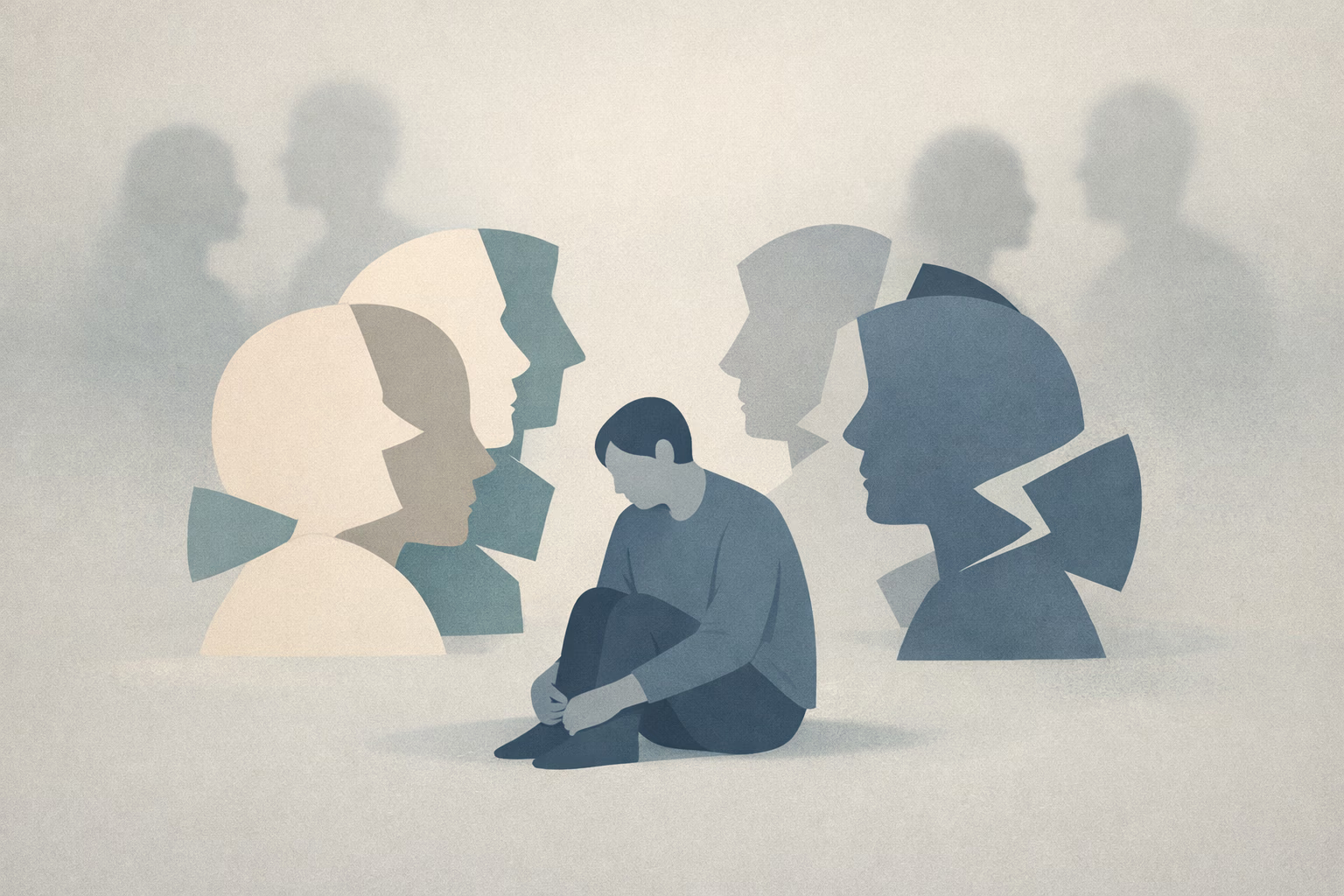
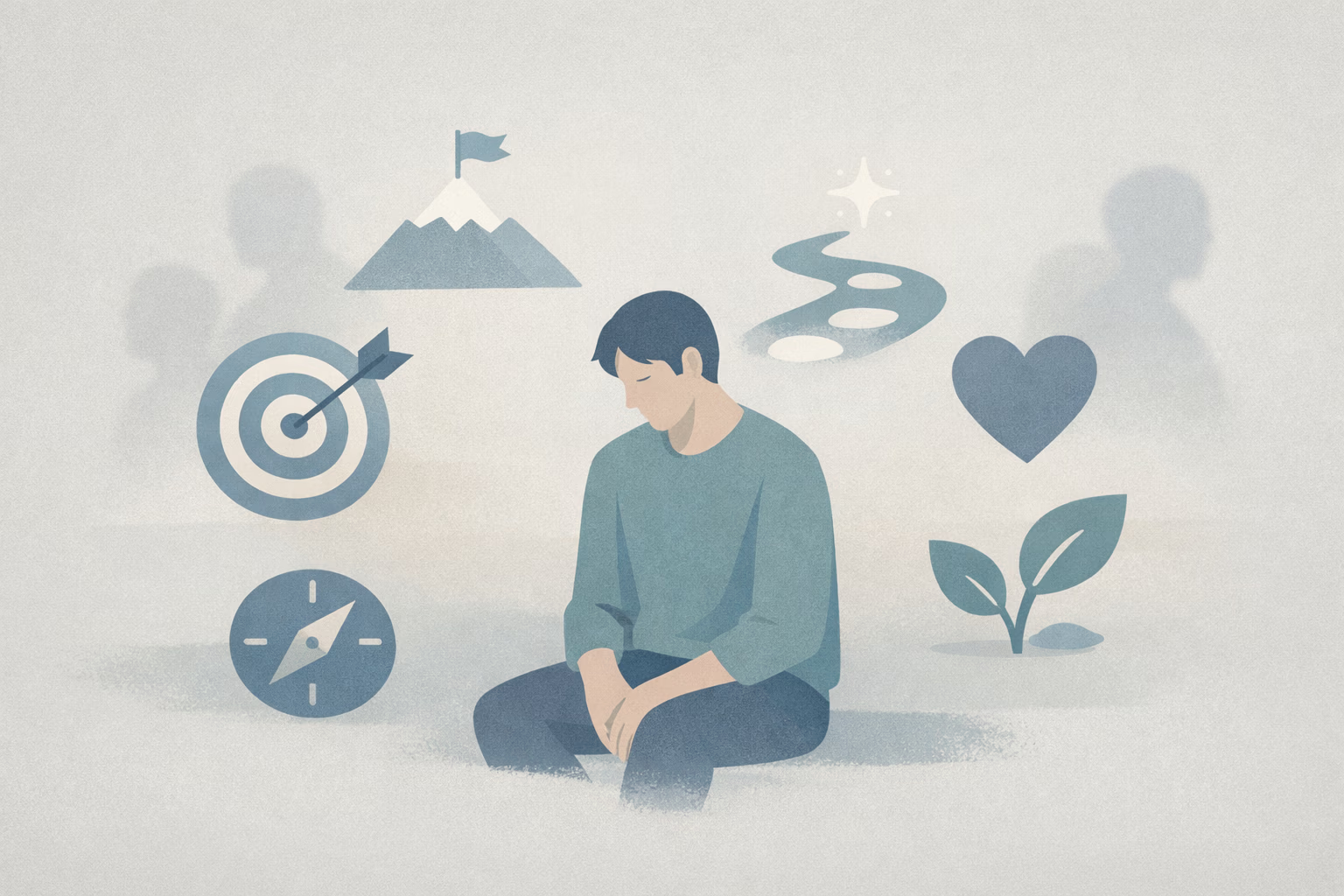
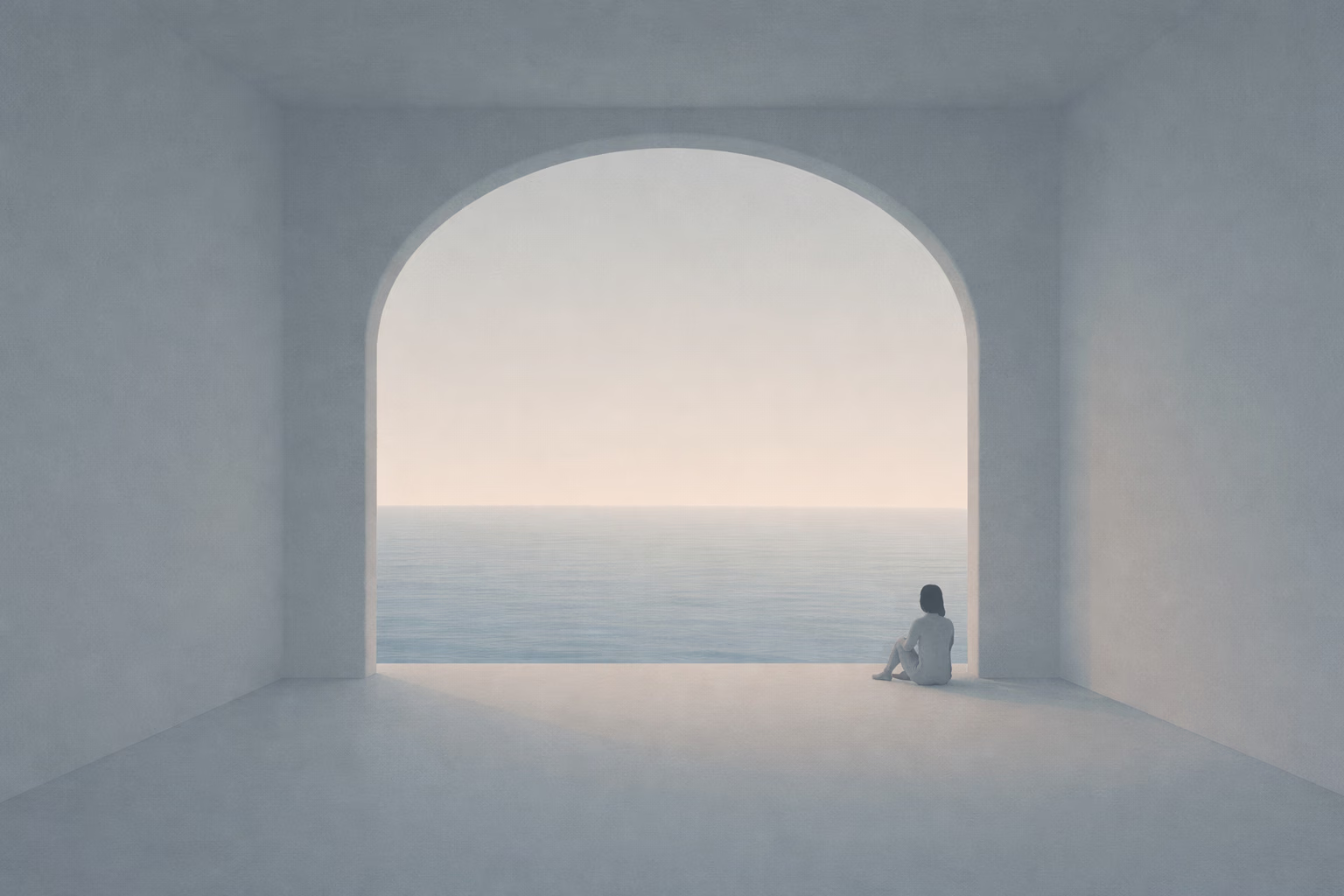
Understanding explains what is happening. Art allows you to feel it—without fixing, judging, or naming. Pause here. Let the images work quietly. Sometimes meaning settles before words do.
One Quiet Window, one insight, one reflection — every Sunday