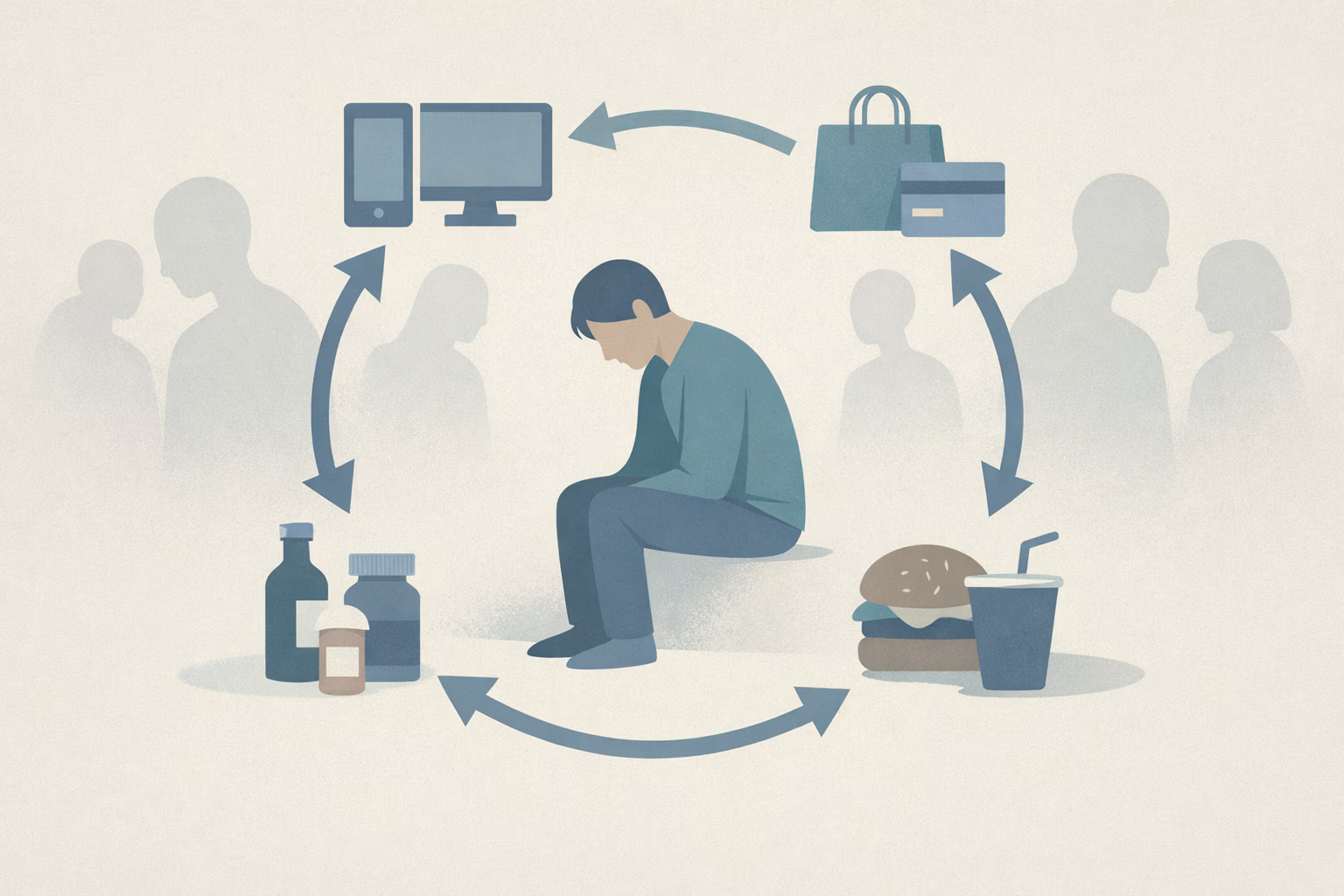
The Shame Cycle: Why Addictive Behaviors Feel Impossible to Stop
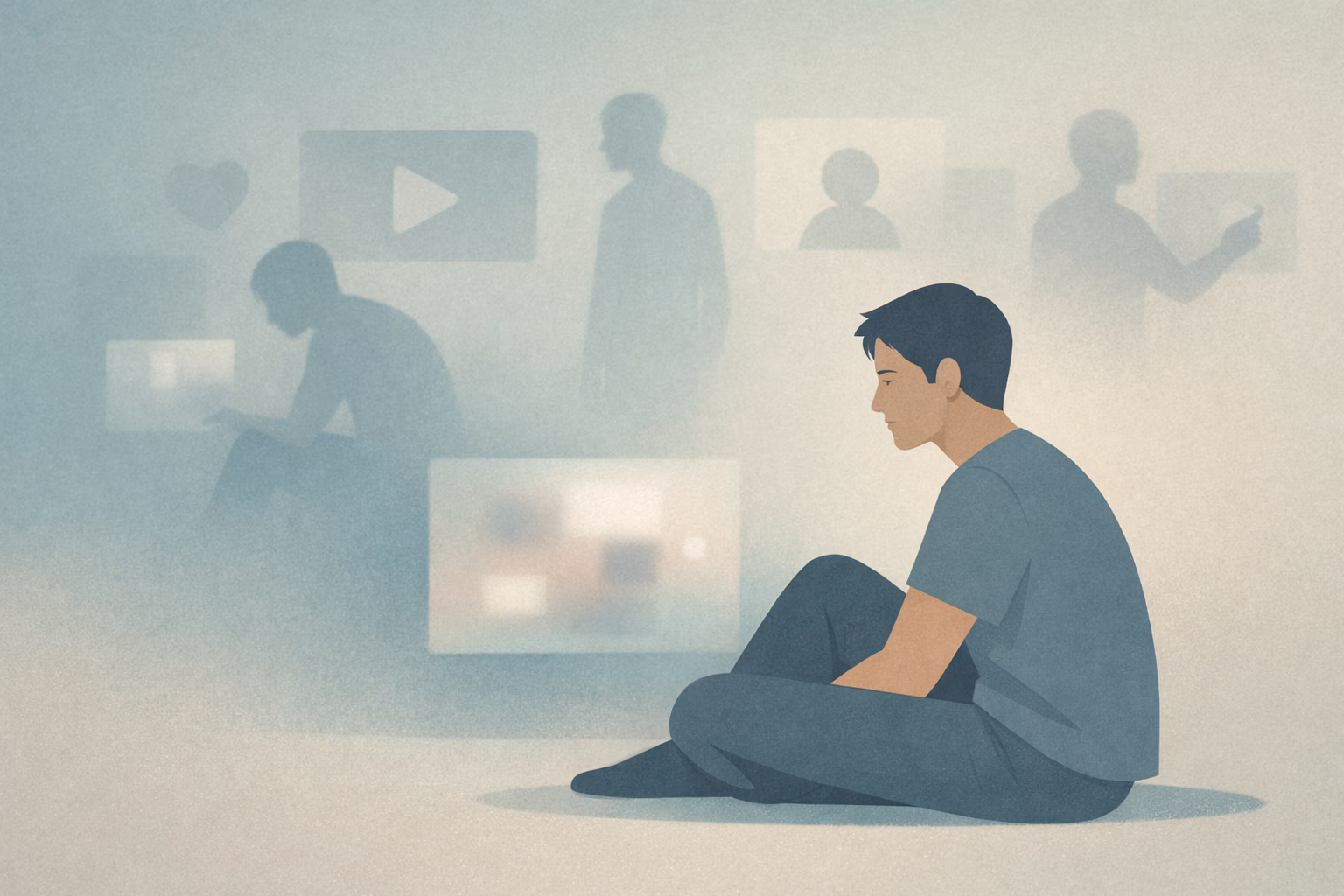
In short: Many people don’t describe porn use as simple “desire.” They describe a loop: a hard day, a restless body, a small sense of pressure building—then a familiar switch into numbness, followed by craving, followed by a return that feels almost automatic. If you’ve promised yourself “never again” and still ended up back here, what if that wasn’t a lack of willpower—what if it was a system trying to find relief?
Many people don’t describe porn use as simple “desire.” They describe a loop: a hard day, a restless body, a small sense of pressure building—then a familiar switch into numbness, followed by craving, followed by a return that feels almost automatic.
If you’ve promised yourself “never again” and still ended up back here, what if that wasn’t a lack of willpower—what if it was a system trying to find relief?
This article frames the numb–crave–relapse loop as a regulation pattern: a fast solution the nervous system learns when load is high and closure is low. Not an identity. Not a moral failure. A repeatable sequence that makes sense in the context of modern stress, modern access, and a brain that is designed to seek safety quickly.
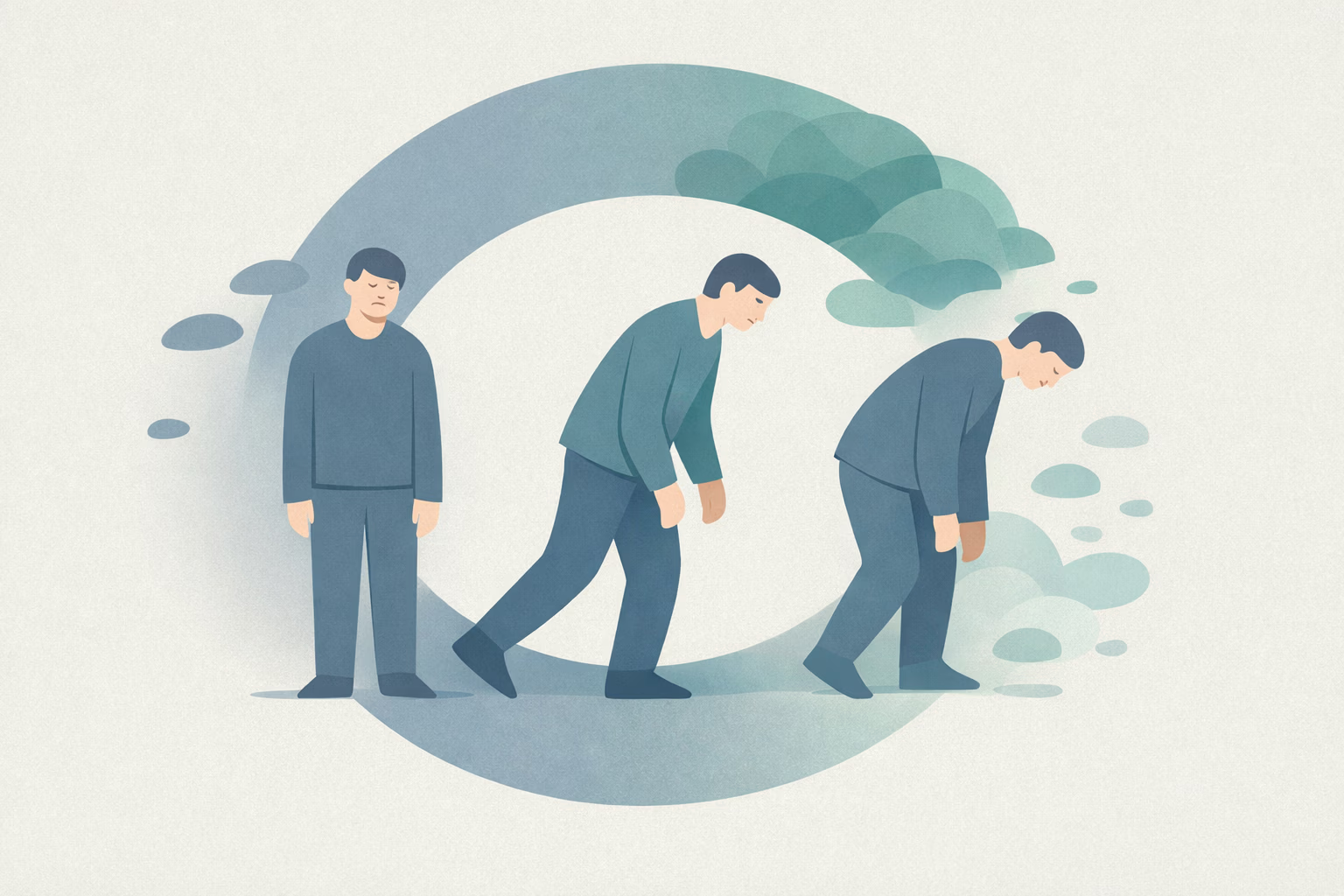
In the numb–crave–relapse loop, there’s often a recognizable rhythm: resolve in the morning, pressure by afternoon, collapse at night, and a heavy aftermath. Over time, the most painful part may not be the behavior itself—it’s the sense of being divided against yourself.
That “stuck” feeling is often a sign of competing systems. One part of you is oriented toward long-term integrity and relationships. Another part is oriented toward immediate stabilization when the body is overloaded. When load rises fast, the immediate system tends to win—not because it’s “stronger,” but because it’s built for urgency.
Research on problematic pornography use frequently links it with difficulties in emotion regulation and distress tolerance, which fits the lived experience of “I wasn’t even that turned on; I just needed out of my state.” [Ref-1]
The loop often starts with threat activation: not necessarily danger, but strain—social pressure, loneliness, conflict, fatigue, uncertainty, or internal self-evaluation. In a threat-leaning state, the body seeks a rapid downshift.
Porn offers a very efficient relief pathway. It can mute agitation and narrow attention to a single track. That relief is real in the moment: the nervous system experiences a short-term reduction in load. But because it’s fast and repeatable, the brain learns it as a dependable exit.
Then the avoidance fades. The body returns to baseline stressors (and sometimes an added “backlog” of unfinished pressure), and craving emerges as the nervous system remembers the quickest route to relief. This pattern—distress, mood modification, withdrawal-like discomfort, and relapse—has been described in research on compulsive sexual behavior. [Ref-2]
It’s easy to think of reward and threat as opposites: pleasure versus pain. But in real human behavior, they often braid together. The same brain that scans for what feels good is also scanning for what ends discomfort quickly.
When porn becomes a primary tool for state change, it can function less like “seeking pleasure” and more like “escaping activation.” The reward system doesn’t only reward joy; it rewards successful relief. In that sense, craving can be the nervous system re-issuing a learned strategy to restore equilibrium under pressure.
This is why the loop can feel confusing: the body may be chasing a quieter internal climate more than an erotic experience. The behavior becomes a regulation shortcut—one that works briefly, then costs later. [Ref-3]
Numbing often shows up as reduced internal signal: less aliveness, less clarity, less connection to consequences. It can feel like “finally, I can breathe,” even if nothing in life has actually resolved.
From a nervous-system perspective, this makes sense. When distress is high and closure is low, the system looks for a way to dampen intensity. Porn can provide a strong, immediate attentional capture—flooding the channel with a single focus and temporarily quieting competing inputs.
Some clinical approaches to compulsive sexual behavior emphasize relapse prevention skills and the ability to relate differently to urges and internal states, acknowledging that the urge often rides on top of distress rather than simple desire. [Ref-4]
One reason the loop persists is that it creates a convincing illusion: “I found something that works.” The body gets a downshift. Time passes. The intensity drops. In the short term, it can look like control has been restored.
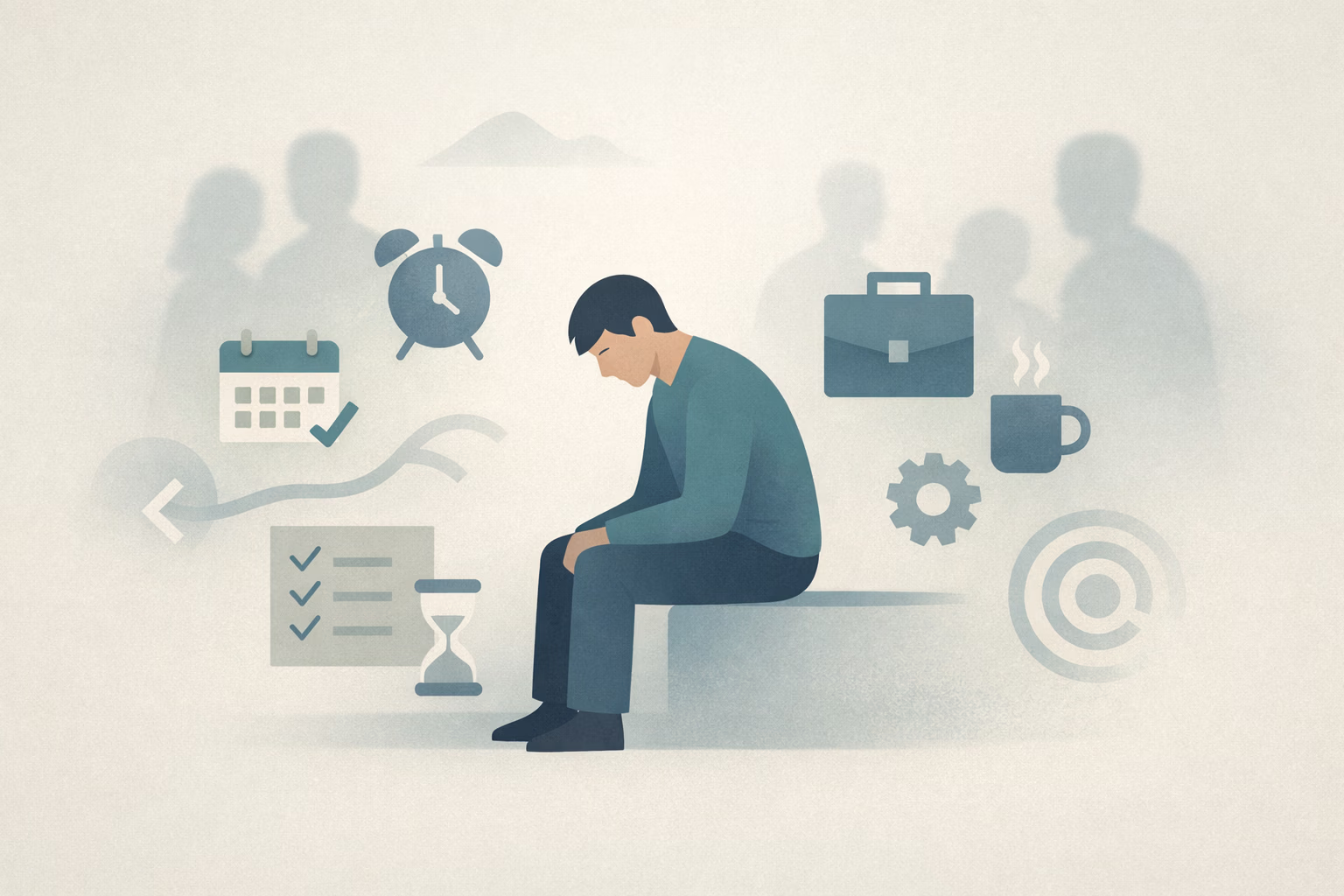
But the original pressure doesn’t complete—it pauses. The nervous system registers a bypass: a consequence muted, a difficult moment un-finished, a relational need un-met, a self-respect loop left open. Over time, that unfinished material doesn’t disappear; it accumulates as background load.
Research suggests that individuals with problematic pornography use may show heightened sensitivity to negative emotional material, which can make the urge for fast relief even more compelling. [Ref-5]
“It wasn’t that I wanted more pleasure. I wanted less pressure.”
Avoidance here isn’t a personality trait. It’s a structural outcome: when a system repeatedly reaches for the fastest exit, it gets fewer opportunities to reach a “done” signal through completion.
Completion isn’t the same as insight. Understanding why you use porn can coexist with the loop continuing. Completion is more like a physiological stand-down: the body no longer has to keep broadcasting urgency because something has actually resolved, connected, or closed.
When porn is the primary closing mechanism, the nervous system learns a substitute “done” signal—temporary, state-based, and fragile. And because it’s fragile, it has to be re-issued again and again. Distress-linked pornography consumption patterns are often discussed in this context of cognitive-affective strain and regulation difficulties. [Ref-6]
The loop often includes predictable elements—not because you’re predictable, but because nervous systems are pattern learners. When the environment repeats certain cues, the body prepares the same solution.
Relapse education resources often describe this repeating sequence—trigger, craving, use, shame, renewed resolve—highlighting how the pattern strengthens when it becomes the main coping route. [Ref-7]
Over time, the cost is not only time or content—it’s coherence. When behavior repeatedly contradicts what someone values, the self starts to feel less reliable. Not because the person is “weak,” but because the system is running two competing programs: immediate stabilization versus long-term alignment.
Intimacy can also get harder—not because a person “doesn’t care,” but because intimacy requires sustained presence, mutual feedback, and tolerance for imperfection. Porn is unilateral: it offers high intensity with low relational demand. When the nervous system gets used to that shape of relief, real closeness can feel effortful, noisy, or slow.
Relapse-cycle descriptions often emphasize the erosion of confidence and the relationship strain that can follow repeated returns to porn use. [Ref-8]
What if “lack of intimacy” isn’t a personal deficit, but a capacity issue under chronic load?
After relapse, many people experience a sharp spike of shame and stress: body heat, dread, self-attack, frantic bargaining, or a need to hide. Importantly, shame is not just a thought—it’s a threat state.
And threat states often increase the demand for immediate relief. This is how the loop tightens: the aftermath becomes a new trigger. The system tries to escape the internal alarm that shame creates, and porn remains the quickest learned exit.
Stress physiology research in adjacent compulsive patterns (like binge episodes after psychological stress) shows how stress hormones and heightened arousal can increase urgency for quick reward and relief. [Ref-9]
There’s a subtle but important shift available in how the loop is interpreted. “I keep failing” makes the self the problem. “My system keeps signaling” keeps the self intact while recognizing a real regulatory demand.
This isn’t about replacing shame with positive thinking. It’s about recognizing what the loop is doing structurally: when distress rises, the nervous system reaches for a proven off-switch. The urge is often a signal that your current load has exceeded your current closure.
In many discussions of the shame cycle in porn use, the central dynamic is that shame increases isolation and internal pressure, which then increases the pull toward the same numbing strategy. Naming that dynamic can restore orientation: the problem is the loop, not your worth. [Ref-10]
“An urge can be an alarm bell, not a verdict.”
Compulsion tends to grow in isolation. Not because people “choose secrecy,” but because secrecy reduces immediate social risk while increasing internal load. When a behavior becomes a private regulation tool, the nervous system loses access to co-regulation—signals of safety that come from being seen without collapse.
Connection doesn’t magically remove craving. But it can reduce the background conditions that amplify it: loneliness, chronic self-monitoring, and the sense that you must manage everything alone. A more supported nervous system has more capacity for delayed relief and less need for extreme state change.
Many recovery-oriented explanations emphasize how shame blocks openness, and how compassion and safe relationships reduce the isolation that fuels the cycle. [Ref-11]
As load reduces and more experiences reach closure, the internal environment often becomes less urgent. Not euphoric—more workable. The same stressors may still exist, but the body doesn’t treat them as immediate emergencies requiring an off-switch.
People often describe this shift in understated ways: less bargaining, fewer “last time” negotiations, more ability to wait, and a clearer sense of what matters without needing to force it. Urges may still appear, but they don’t hijack the whole system as easily.
Accounts of navigating shame cycles in compulsive sexual behavior recovery often describe a transition from reactive urgency to increased tolerance and stability—less driven by avoidance, more supported by a calmer baseline. [Ref-12]
The deepest change is often not “stronger resistance,” but a different life shape. When a person’s days contain more real closure—rest that restores, work that ends, relationships that feel mutual, self-respect that is lived rather than demanded—the need for escape can lose its job.
This is where meaning becomes stabilizing. Meaning isn’t a slogan. It’s the felt experience of alignment: actions making sense in the body, identity feeling continuous, and fewer open loops screaming for resolution. The system stands down because something is actually finished, not because it’s being commanded to calm down.
Stress research across compulsive relief behaviors (including eating patterns) highlights how chronic stress reactivity can push people toward rapid comfort strategies; shifting the stress landscape changes the pressure for those strategies. [Ref-13]
In a numb–crave–relapse loop, relapse is rarely “random.” It’s often a readable signal: load rose, closure was missing, and the nervous system reached for a known exit. Seeing it this way doesn’t excuse harm or erase responsibility—it simply removes the unnecessary layer of self-contempt that keeps the threat system online.
When porn use is tied to anxiety and overstimulation, the goal is often not more self-pressure but more coherence: less fragmentation, fewer open loops, more honest contact with what your system has been carrying. Anxiety-linked patterns around porn are commonly discussed as reciprocal—stress increases use, use can increase stress—making compassion and clarity more stabilizing than blame. [Ref-14]
“A loop can be interrupted when its message is finally received.”
Willpower can create temporary distance, but stability usually comes from something deeper: a nervous system with less load, more closure, and a life that supports continuity between values and behavior. In that kind of environment, urges don’t need to be fought as intensely because they arrive with less force.
The numb–crave–relapse loop is not proof that you are broken. It’s proof that your system learned a fast, effective state-change strategy in a world that rarely lets people fully settle. When settling becomes possible—physiologically and relationally—behavior often follows. Patterns across reward-driven coping (including overeating) show how powerful biology is; lasting change tends to involve regulation and meaning, not self-punishment. [Ref-15]
From theory to practice — meaning forms when insight meets action.
Because two systems are competing. One is oriented toward long-term integrity and relationships. The other is oriented toward immediate stabilization when the body is overloaded. When load rises fast, the immediate system wins — not because it's stronger, but because it's built for urgency. The most painful part often isn't the behavior itself but the sense of being divided against yourself. The urge usually rides on top of distress rather than simple desire: 'It wasn't that I wanted more pleasure. I wanted less pressure.' This isn't a willpower deficit; it's a regulation pattern the nervous system learned because it works fast at producing relief, even though it doesn't produce closure.
Because numbing creates a convincing illusion: 'I found something that works.' The body gets a downshift, time passes, intensity drops. In the short term, control looks restored. But the original pressure doesn't complete — it pauses. The system registers a bypass: a consequence muted, a difficult moment unfinished, a relational need unmet, a self-respect loop left open. That unfinished material doesn't disappear; it accumulates as background load. Numbing is a temporary shutdown signal — reduced internal signal, less aliveness, less clarity. The Avoidance Loop runs because it produces a fragile substitute Done Signal that has to be re-issued again and again.
Because shame is not just a thought — it's a threat state. After relapse comes a sharp spike: body heat, dread, self-attack, frantic bargaining, need to hide. Threat states increase the demand for immediate relief, and the loop tightens because the aftermath becomes a new trigger. The system tries to escape the internal alarm shame creates, and the same numbing strategy remains the quickest learned exit. This is how the cycle reinforces itself: shame increases isolation, isolation increases internal pressure, pressure increases the pull toward relief. Naming the loop structurally reduces the unnecessary layer of self-contempt that keeps the threat system online.
Not stronger willpower — different conditions. The deepest change is a different life shape: more real closure in daily life, rest that restores, work that ends, relationships that feel mutual, self-respect that's lived rather than demanded. When the system finds genuine completion, the need for a fast escape can lose its job. Compulsion grows in isolation — secrecy reduces immediate social risk while increasing internal load. Safe connection doesn't remove craving, but it reduces the background conditions that amplify it. As coherence returns, urges may still arise, but they don't hijack the whole system. Less internal sprinting, more return of consequence-sense, more continuity between values and behavior.
From Science to Art.
Understanding explains what is happening. Art allows you to feel it—without fixing, judging, or naming. Pause here. Let the images work quietly. Sometimes meaning settles before words do.
One Quiet Window, one insight, one reflection — every Sunday