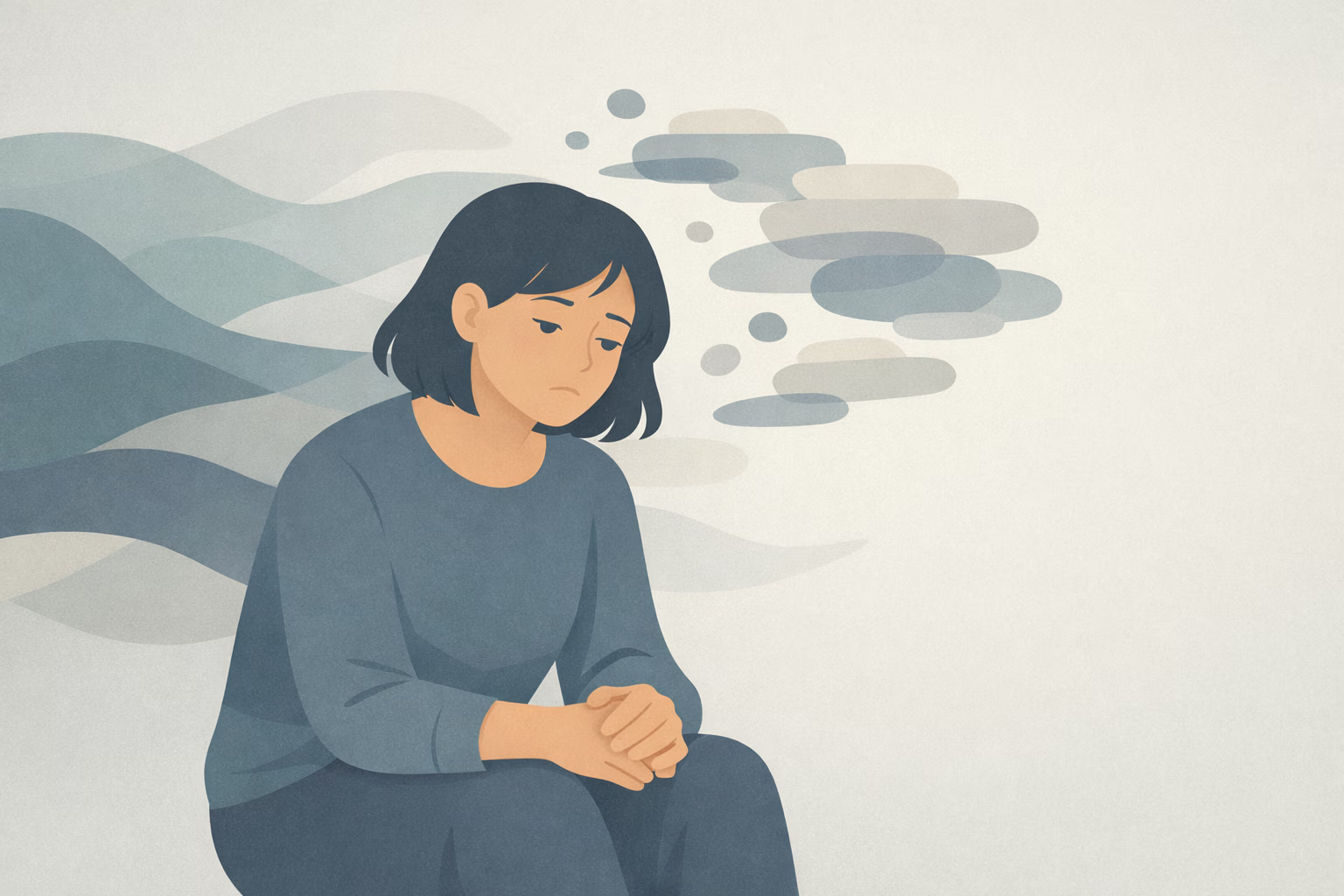
Cognitive Overload & Capacity Limits
Understand the signs and causes of cognitive overload.
In context: You are experiencing “Identity Softening.“ In the model, “solidity“ is often just a symptom of Chronic Bracing. When you stop the internal war, the “walls“ of your identity become less rigid. Naming this as “softening“ rather than “instability“ helps you realize it's a positive development. You are becoming Malleable—capable of adapting to reality without breaking.

When identity feels less solid, the edges blur.
Certainty gives way to softness, and definitions lose their sharpness.
This instability can feel unsettling, yet it often marks adaptation underway.
Naming the softness prevents collapse into fear and allows the system to remain upright while shape reforms naturally.
Stay grounded during identity shifts with DojoWell.
Explore DojowellArticles exploring the psychology behind these patterns.
You are experiencing "Identity Softening." In the model, "solidity" is often just a symptom of Chronic Bracing. When you stop the internal war, the "walls" of your identity become less rigid. Naming this as "softening" rather than "instability" helps you realize it’s a positive development. You are becoming Malleable—capable of adapting to reality without breaking.
You anchor in Physical Contiguity rather than Mental Solidity. Your thoughts might feel soft, but your body is still a solid, singular unit. By focusing on your breath and your immediate sensory environment, you find a different kind of "firmness"—one that is based on Presence rather than Performance. Softness is where the deepest integration happens.
One Quiet Window, one insight, one reflection — every Sunday