
The False Promise of Control
Understand why control is tempting and how surrender increases psychological freedom.
In context: This is Quiet Rigidity. It occurs when the Status & Control system uses subtle tension to maintain an “ideal“ image or state. Unlike a full brace, this rigidity is a background setting that prevents true settlement. In this model, we name this to help you realize that “stiffness“ is often a high-energy performance.
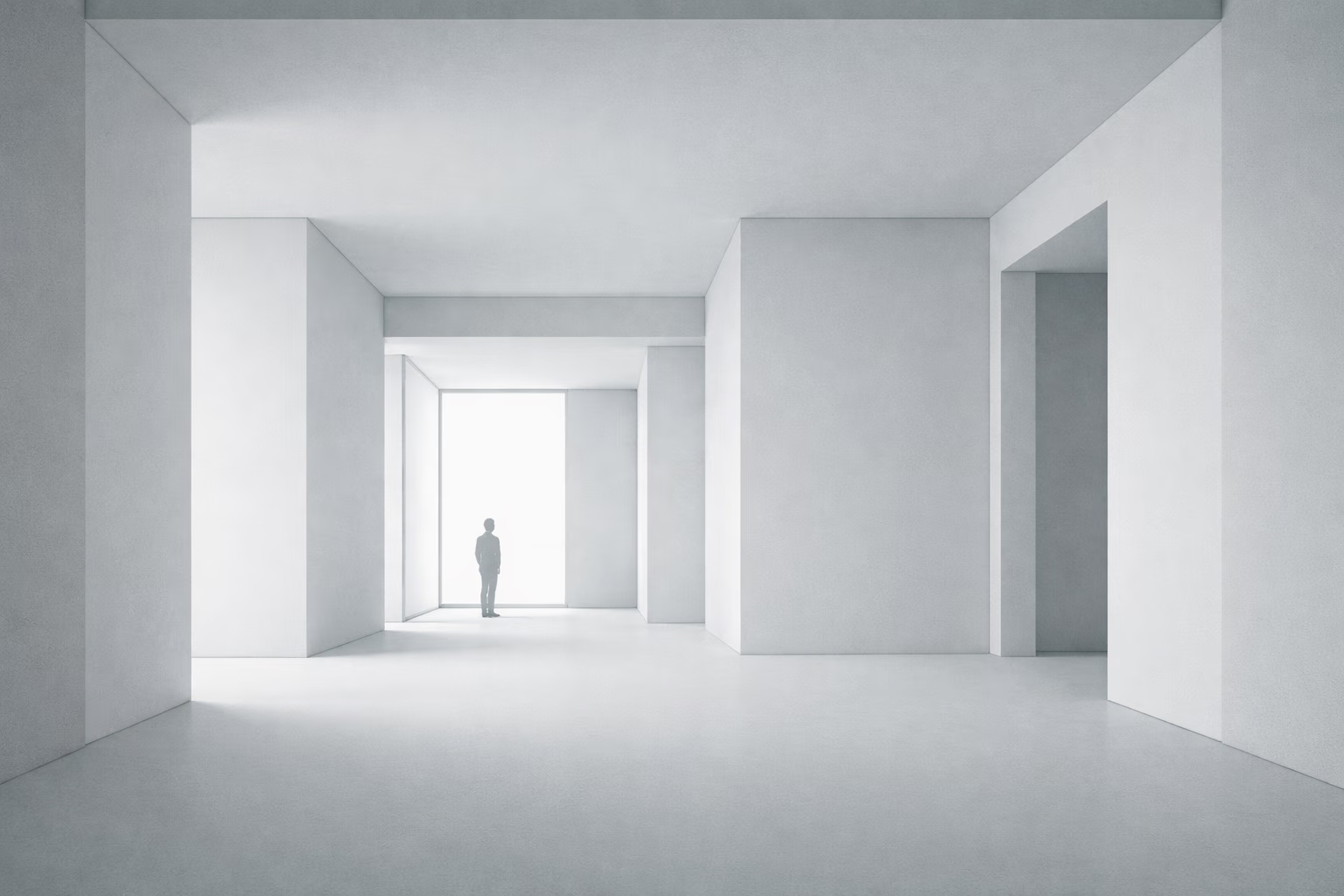
Order appears clean and sharp.
Lines stay straight, angles precise.
Inside that neatness, something resists bending.
You notice how rigidity can be quiet, even praised, while still requiring tension.
This window names that quality gently, without calling it wrong.
Recognize quiet rigidity with DojoWell.
Explore DojowellArticles exploring the psychology behind these patterns.
This is Quiet Rigidity. It occurs when the Status & Control system uses subtle tension to maintain an "ideal" image or state. Unlike a full brace, this rigidity is a background setting that prevents true settlement. In this model, we name this to help you realize that "stiffness" is often a high-energy performance. Recognizing the rigidity as an active "effort" allows you to periodically choose "non-refinement", which lowers the internal friction.
Rigidity is a protective mask, not a lack of authenticity. It’s a sign that your Narrative & Identity system feels the need for a "hard shell" to survive social or internal pressure. By naming the rigidity, you create a "soft interior" behind the shell. This "dual-awareness" allows you to be rigid on the outside while remaining coherent on the inside, eventually allowing the shell to thin as your internal safety increases.
One Quiet Window, one insight, one reflection — every Sunday